
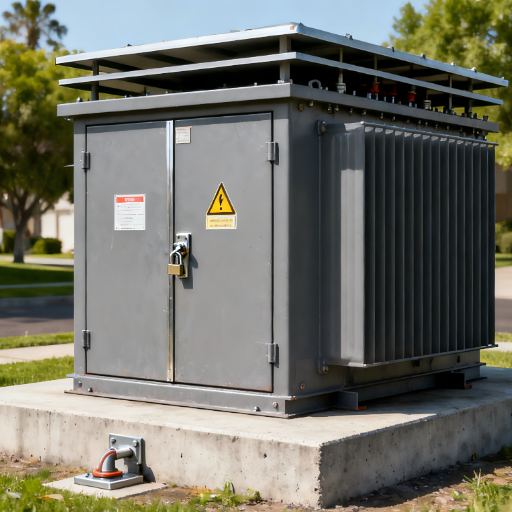
Transformer Ratings Explained: How to Select the Right kVA or MVA for Your Project

Rating a transformer in kVA or MVA means the apparent power that they can supply continuously without overheating. Choose a correct rating through taking your total load in kVA (voltage times current) or kW divided by power factor, adding an extra 20–25% capacity for emergency margin, and overtime scale-up to the next closest standard rating. An undersized transformer is sure to fail whereas an oversized one wastes energy and capital each passing day.
The procurement manager of a new industrial facility in Brazil received quotes for three transformers: 500 kVA, 750 kVA, and 1,000 kVA. The 500 kVA transformer was sized properly and carried a load margin. The 1,000 kVA transformer was much oversized and ran at 40% of its load, spilling needless core losses through the energy mechanism every hour of each day. The correct answer lay not in the highest number but in the number that best reflected the actual load profile, power factor, and plans for growth in the future.
As is presented with a step-by-step approach, this discourses on transformer ratings kVA MVA selection guide,how to determine, confirm and lay down an accurate transformer rating, focusing more on the significance of kVA with respect to kW, reading every critical value on the nameplate, and the factor to consider regarding safety factor for various project types.
Key Takeaways
- Transformers are rated in kVA or MVA (apparent power), not kW, because losses depend on voltage and current regardless of power factor.
- Calculate required kVA from load data using: kVA = (V x I x 1.732) / 1,000 for three-phase, or kVA = kW / Power Factor.
- Add a 20–25% safety margin above calculated load to account for future growth and avoid continuous overload.
- Four critical nameplate ratings govern selection: kVA/MVA, voltage ratio, frequency, and impedance percentage (%Z).
- Environmental conditions (altitude, temperature) may require derating the effective capacity by 10–30%.
For a more in-depth understanding of power transformers, (please refer to our complete guide to power transformers.)
Why Transformers Are Rated in kVA, Not kW
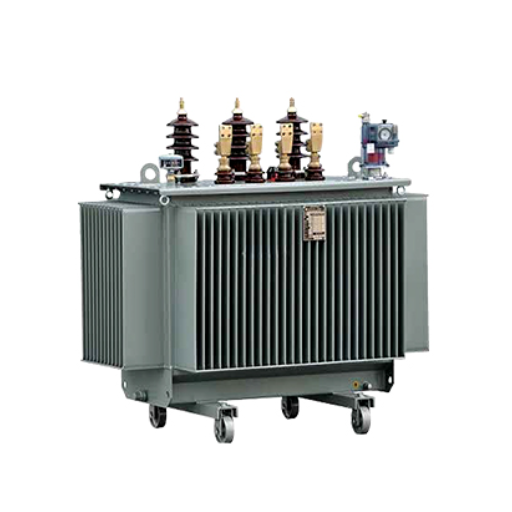
Transformers shift electrical power among circuits by electromagnetic induction. Their losses within and having altered temperatures depend on the sum of current and voltage across which use to flow via the windings. This quantity is called apparent power, measured in kilovolt-amperes (kVA) or megavolt-amperes (MVA).
Active power explains how much energy the load is useful in carrying out, measured in kilowatts (kW). Hence, many industrial loads, and especially motor loads, draw reactive power in addition to their real power, which does not perform any work itself yet heats transformer windings. The ratio between active power and apparent power is called the power factor.
Apparent Power vs Real Power
If a load draws 100 kW at a power factor of 0.85, the transformer must supply 117.6 kVA. A transformer rated at only 100 kVA would be undersized and would overheat. This is why sizing in kW alone is one of the most common and expensive specification mistakes.
The Role of Power Factor
Typical power factors vary by load type:
- Resistive loads (heaters, incandescent lighting): PF near 1.0
- Industrial machinery (motors, pumps): PF 0.80–0.88
- Mixed commercial facility: PF ~0.85
- With power factor correction: PF 0.90–0.95
Knowing your load’s power factor is essential for accurate sizing.
See our guide on transformer efficiency and how loading affects operating cost.
The Four Critical Ratings on Every Nameplate
Every transformer carries a nameplate that lists its design limits. Four ratings determine whether a unit fits your application.
kVA / MVA Rating
Such power is referred to as the apparent power maximum that could be continuously supplied by a three-phase transformer without overheating, at the nameplate voltage and frequency. Transformer ratings usually come in steps, as standardized in sizes. Common ratings in three-phase distribution are 75, 150, 300, 500, 750, 1,000, 1,500, 2,000, and 2,500 kVA. Power transformers switch to MVA ratings, such as 5, 10, 20, and 50, with the emphasis for machenery.
Voltage Ratio
The nameplate lists primary (input) and secondary (output) voltages. For example, “11,000 / 415 V” indicates a step-down transformer that takes 11 kV incoming and delivers 415V three-phase. Tap changers, if present, allow small adjustments to the ratio to compensate for voltage variations on the primary side.
Frequency
Transformers are designed for either 50 Hz or 60 Hz operation. The core steel, winding design, and flux density are all optimized for one frequency. A 60 Hz transformer operated on 50 Hz will saturate magnetically, overheat, and fail. Frequency must match exactly.
Impedance Percentage (%Z)
Percentage impedance is the price in volts for the excitation of full-load current in the winding by short-circuiting the other winding, expressed in terms of a percentage of the rated voltage. Common values go from 1.6% for the small units to 15% for the large power transformers. %Z defines the amount of short-circuit current, voltage regulation under load, and the load-sharing criteria in case transformers operate in parallel-operating scenarios.
How to Calculate Required Transformer kVA: Step-by-Step
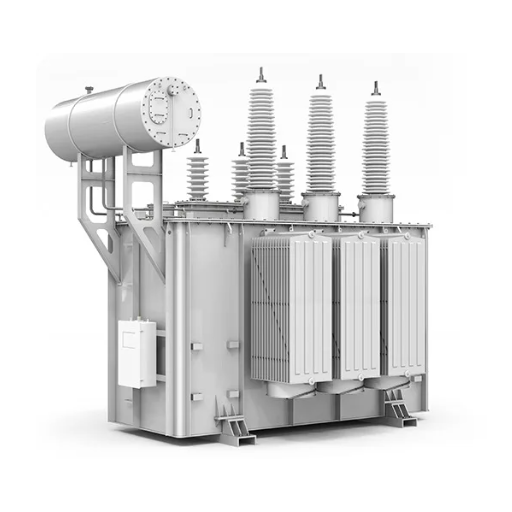
Selecting a transformer rating is not guesswork. Follow this process to arrive at a specification that protects both performance and budget.
Step 1: Inventory Your Loads
List every significant load the transformer will supply. Gather data from equipment nameplates or field measurements:
- Operating voltage
- Full-load current in amperes
- Power rating in kW or horsepower
- Power factor
- Phase configuration (single-phase or three-phase)
Step 2: Apply Demand and Diversity Factors
Not all equipment runs simultaneously at full load. The demand factor is the ratio of maximum demand to total connected load. The diversity factor accounts for different timing of peak loads across circuits.
Typical diversity factors:
- Residential: 1.5–2.0
- Commercial: 1.3–1.8
- Industrial: 1.1–1.3
Applying these prevents massive oversizing from simply adding every nameplate together.
Step 3: Convert to kVA
Use the appropriate formula based on your available data:
| Load Input | Formula |
|---|---|
| Voltage and Current (Single-Phase) | kVA = (V x I) / 1,000 |
| Voltage and Current (Three-Phase) | kVA = (V x I x 1.732) / 1,000 |
| Power in kW | kVA = kW / Power Factor |
| Power in HP (Motors) | kVA ≈ HP x 0.746 / (PF x Efficiency) |
Example (Three-Phase):
Load: 415V, 200A
kVA = (415 x 200 x 1.732) / 1,000 = 143.8 kVA
Example (From kW):
Load: 350 kW, PF = 0.85
kVA = 350 / 0.85 = 411.8 kVA
Step 4: Add Safety Margin for Growth
Industry best practice adds margin above the calculated load:
- Short-term projects (1–2 years): Add 10–15%
- Medium-term projects (3–5 years): Add 20–25%
- Long-term infrastructure: Add 25–30%
This accounts for load growth, measurement uncertainty, and the fact that continuous loading above 80% of nameplate rating accelerates insulation aging.
Continuing the example: 411.8 kVA x 1.25 = 514.7 kVA
Step 5: Select the Standard Size
Standard ratings of transformers are usually in order. All values must be rounded to the next standard size. For instance, 514.7 kVA rounds up to the next available standard, normally between 500 and 750 kVAs depending on the manufacturer’s standard series itself.
Upon starting a new production line expansion, which was done on behalf of a pharmaceutical plant, in Mexico, Maria, the plant’s facilities engineer, deliberated the following points: an inventory of twelve motor loads drew 280 kW, an industrial diversity factor of 1.2, conversion with a power factor of 0.87 to 322 kVA base, adding a 25% margin for future HVAC expansion was calculated to be around 402 kVA. Instead of considering the 300 kVA nameplate sum, she rose up to the 500 kVA. What she discovered after 6 months was that adding more packaging equipment did not overburden the transformer, rather it worked well.
kVA vs MVA: Selecting the Right Scale
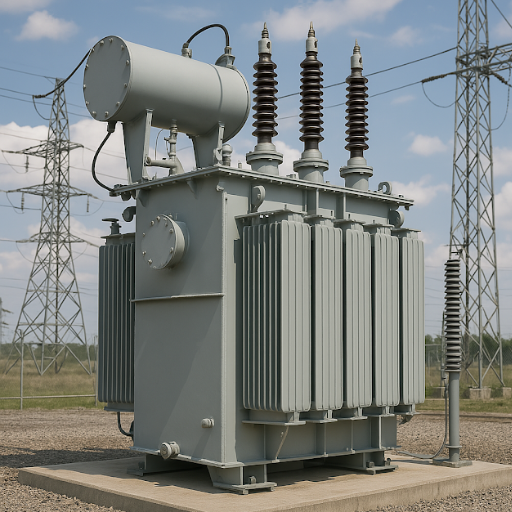
The scale of your project determines whether you work in kVA or MVA.
| Category | Typical Range | Common Applications |
|---|---|---|
| kVA Scale | 25 kVA – 2,500 kVA | Commercial buildings, small industrial plants, distribution networks, pole-mounted and pad-mounted units |
| MVA Scale | 2.5 MVA – 100+ MVA | Utility substations, heavy industry, solar and wind farms, grid interconnection |
For most facility managers, EPC contractors, and commercial buyers, kVA is the relevant unit. MVA enters the picture for utility procurement officers and large industrial projects.
Standard kVA Sizes (Three-Phase Distribution)
Standard ratings per NEMA and IEC conventions include:
15, 30, 45, 75, 112.5, 150, 225, 300, 500, 750, 1,000, 1,500, 2,000, 2,500, 3,000, 3,750, 5,000 kVA…
Always select the next standard size up. Custom ratings are possible but extend lead times and increase cost.
Learn more about distribution transformer types and common applications.
Beyond kVA: Other Ratings That Affect Selection
kVA is the starting point, not the endpoint. Several other nameplate ratings must match your system requirements.
Voltage Ratio and Tap Changers
The voltage ratio must match your supply voltage on the primary side and your equipment voltage on the secondary side. If your incoming utility voltage fluctuates seasonally, specify tap changers (typically ±2 x 2.5%) to maintain stable secondary voltage.
Impedance Percentage and Short-Circuit Duty
%Z defines the maximum short-circuit current. Lower impedance provides better voltage control but generates a greater fault current, which can potentially overload your switchgear. Higher impedance restricts the fault current while increasing voltage drop during full load. Where switchgear rating is limited, a higher %Z may be warranted.
Temperature Rise and Overload Capability
The rise in temperature could confirm the heat the windings sustain at full load over the ambient temperature, and the standard oil-immersed transformers are usually set at 55°C and 65°C. The dry-type transformers will have a 155°C, 115°C, or 150°C rise. With lower rise designs, there is an additional margin against thermal overloads and insulation with a longer life.
Cooling Method
- ONAN (Oil Natural Air Natural): Passive cooling for standard applications
- ONAF (Oil Natural Air Forced): Fan-assisted for higher capacity or hot climates
- Dry Type: Air or epoxy cooled for indoor, fire-sensitive installations
For a deeper technical breakdown of transformer cooling class ONAN, ONAF and OFAF procurement rules, see our Transformer Cooling Classes ONAN ONAF OFAF: A Procurement and Selection Guide.
To explore the differences between dry-type transformers and oil-immersed transformers, (please read three phase transformer vs single phase transformer)
Vector Group
The vector group defines how primary and secondary windings are connected and the phase displacement between them. Dyn11 is the most common configuration for industrial and commercial distribution. It provides a stable neutral, good harmonic suppression, and phase displacement that matches most protective relay settings.
Special Loading Conditions
Some applications require adjustments beyond standard sizing formulas.
Motor Starting and Inrush Currents
Large motors shall draw 6–8 times the running current during startup. Frequent starting of large motors relative to the transformer size can cause a considerable voltage dip, which will affect other connected equipment. Oversize the transformer, use soft starters, or check on the lower impedance if fault duty allows.
Harmonic Loads and K-Factor Transformers
Non-linear loads such as variable frequency drives (VFDs), LED drivers, and UPS systems create harmonic currents that increase heating in transformer windings and neutrals. For facilities with significant non-linear load, specify a K-rated transformer (typically K-4, K-13, or K-20) designed to handle harmonic heating without derating.
Load Balance Across Three Phases
Unbalanced single-phase loads across a three-phase transformer can overload one phase even when the total kVA is within rating. Size the transformer for the worst-phase current, not just the total. Phase unbalance should ideally remain below 5%.
Power Factor Correction Impact
If your facility has low power factor (below 0.85), installing capacitor banks reduces the required kVA, potentially allowing a smaller transformer or freeing capacity for expansion. It also reduces utility penalty charges.
Environmental Derating: When Conditions Change Your Rating
A transformer rated at 1,000 kVA at sea level and 40°C ambient may not deliver 1,000 kVA at 2,500m elevation and 50°C ambient. Environmental conditions reduce effective capacity.
Altitude Derating
Air density decreases with altitude, reducing the cooling effectiveness of both air and oil. IEEE C57 recommends derating by approximately 0.3% for every 100m above 1,000m. At 2,500m, a 1,000 kVA transformer effectively becomes roughly a 955 kVA unit unless specially designed for altitude.
Ambient Temperature Derating
Standard ratings assume a maximum ambient temperature of 40°C. For every 10°C above this, reduce capacity by approximately 8%. A transformer in a 50°C environment loses roughly 8% of its effective rating.
Enclosure and Ventilation Effects
The need for sufficient ventilation, especially while cooling, is paramount in indoor locations with meager air circulation. Dry-type transformers found in a crowded electrical room provide no less in terms of ventilation for arising problems or an imminent derating of some outdoor oil units for water cooling.
For a project at high elevation in the Andes in Chile at around 3,200 m, this concept turned out to be on point. The engineering team initially specified the standard 500 kVA transformer. Altitude for 300 ft. reduced effective capacity by some 435 kVA, with a load demand from 460 kVA down. The upgrade plan specified a 630 kVA unit, with altitude derating stipulated in the design, thereby precluding an enormous field failure.
Common Mistakes When Specifying Transformer Ratings
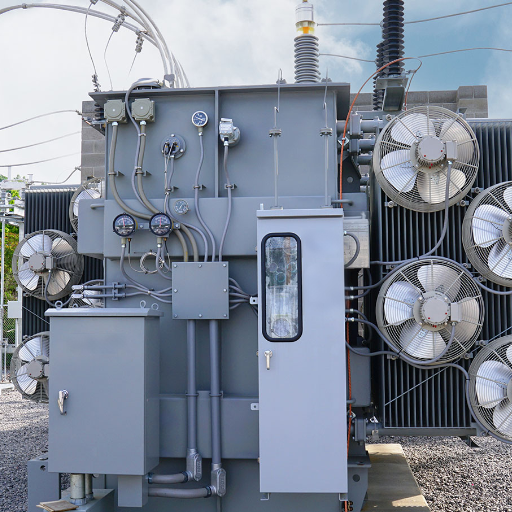
Even experienced engineers occasionally make these specification errors.
Mistake 1: Using kW Instead of kVA
Sizing by kW alone ignores power factor and reactive power. This is the single most common cause of undersizing.
Mistake 2: Ignoring Power Factor
Assuming a power factor of 1.0 when the actual load runs at 0.80 results in a 25% undersizing. Always measure or estimate actual power factor.
Mistake 3: Zero Safety Margin
Selecting exactly the calculated kVA leaves no room for load growth, measurement error, or temporary overloads. Always add margin.
Mistake 4: Wrong Impedance for the System
Low impedance improves voltage regulation but can create fault currents that exceed switchgear ratings. Verify that %Z is compatible with your system’s fault duty.
Mistake 5: Overlooking Harmonics
Specifying a standard transformer for a data center or VFD-heavy facility leads to premature failure from harmonic heating. Specify K-rated or harmonic-mitigating designs when non-linear loads exceed 15–20% of total load.
How to Request a Quotation: What Information Manufacturers Need
When you request a transformer quotation, providing complete information upfront produces a more accurate proposal and faster response. Include the following in your RFQ:
- Required kVA or MVA (calculated with margin)
- Primary voltage and secondary voltage
- Frequency (50 Hz or 60 Hz)
- Phase (single-phase or three-phase)
- Vector group preference (e.g., Dyn11)
- Impedance percentage or system fault level
- Cooling method (ONAN, ONAF, dry type)
- Temperature rise requirement
- Installation environment (indoor, outdoor, altitude, ambient temperature)
- Applicable standards (IEC 60076, IEEE C57, ANSI, IS 2026)
- Special requirements (K-rating, tap changers, specific enclosure)
The more detail you provide, the more practical and accurate the manufacturer’s recommendation will be.
Conclusion
Proper transformer sizing starts with an accurate load calculation, factors in appropriate growth space and verifies at least the name plate rating against the system requirements. The kVA rating or MVA rating becomes important, but impedance, ratio of voltage, frequency, cooling method, and environment determine whether the machine will run trouble-free over decades.
In properly sized transformers, electrical energy is transformed with less waste. Inappropriately sized transformers introduce much damage to the utility system as they can be hidden liabilities waiting to reveal themselves after many years of poor service.
Shandong Electric Co. Ltd. fabricates transformers ranging from the lower kVA to MVA range. These transformers are meant to supply utilities, industries, and infrastructural facilities worldwide. Our engineering team surveys load profiles, environmental conditions, and standards requirements to advice the most relevant and cost-effective transformer rating per project.
For a broader framework on vetting suppliers, see our manufacturer evaluation guide covering certifications, factory audits, and total cost of ownership.