

Power Transformer vs Distribution Transformer: A Complete Guide for Buyers

The power transformer transmits large quantities of electricity through transmission lines at high voltage while the distribution transformer reduces that electricity to safe levels which people can use near residential areas and commercial buildings and industrial facilities. The two are not interchangeable. Choosing the wrong type for your project leads to wasted capital, poor efficiency, and compliance problems.
The EPC contractor Marcus from Southeast Asia learned this lesson through his actual experience. His team presented power-rated units for all building substations during the industrial park bid. The quote came back at nearly double the budget. A review with the transformer manufacturer revealed the mistake: the buildings needed distribution transformers for local step-down, not power transformers designed for bulk transmission. The project maintained its schedule after the correction reduced transformer capital expenditure by 40 percent.
The article details the distinct characteristics of both transformer types while showing their proper applications and providing guidance for correct specification. The study will show how different types of measurement systems evaluate efficiency while showing which standards businesses need to follow when they buy products.
Key Takeaways
- Power transformers operate above 33 kV with ratings over 500 kVA for transmission networks; distribution transformers operate below 33 kVA with ratings from 3–500 kVA for end-user delivery.
- Power transformers are optimized for peak efficiency at or near full load; distribution transformers are optimized for all-day efficiency at 50–75% load.
- Specifying a power transformer for distribution duty wastes capital and reduces operating efficiency.
- Lifecycle cost, not purchase price, should drive transformer selection for long-term projects.
- IEC 60076 and IEEE C57 standards define ratings, testing, and efficiency requirements for both types.
For a more in-depth understanding of power transformers, (please refer to our complete guide to power transformers.)
What Is a Power Transformer?
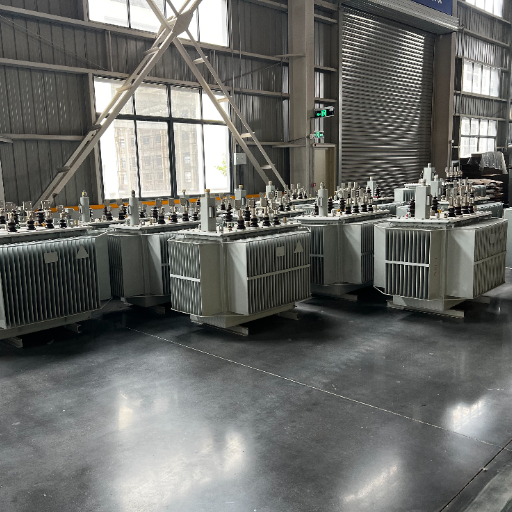
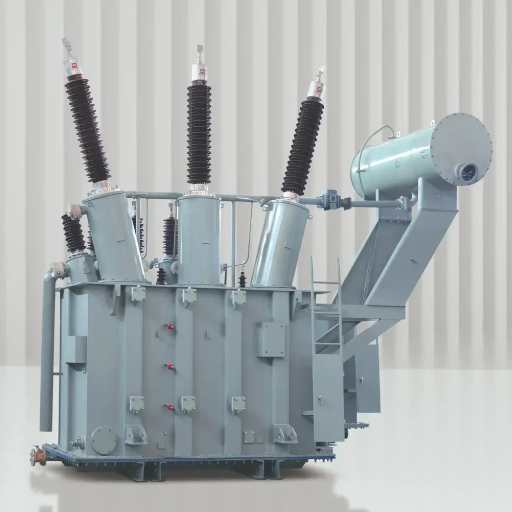
A power transformer is a large electrical device that transfers energy between circuits through electromagnetic induction. Its primary role is to step voltage up or down at high power levels for efficient long-distance transmission.
Voltage and Capacity Ratings
Power transformers typically handle voltages above 33 kV. Power transformers operate between power ratings of hundredsof kVA and hundreds of MVA. The system supports 66 kV, 110 kV, 220 kV, and 400 kV configurations as its standard operating modes. The units are designed to function continuously under conditions of full operational capacity.
Where Power Transformers Are Installed
You will find power transformers at generation stations and transmission substations and grid interconnection points. The transformers connect power plants to the transmission backbone and increase voltage levels for efficient transport before reducing voltage levels at regional substations which supply power to distribution networks.
Design Priorities
Power transformers operate their maximum efficiency during full load conditions. The unit’s efficiency improvement of 0.1% becomes significant when it operates at more than 100 megawatts of power. The systems use strong cooling solutions which include oil immersion and radiator and pump and forced air systems. The units operate on permanent substation foundations which make their physical dimensions and weight less important.
Learn more about oil immersed transformer specifications in our complete technical guide.
What Is a Distribution Transformer?
A distribution transformer serves as the final voltage reduction device which delivers electricity to end users. The system operates by receiving medium voltage electricity from the distribution network which typically uses 11 kV or 33 kV standards and transforms it into 400V three-phase or 230V single-phase power suitable for building and equipment use.
Voltage and Capacity Ratings
Distribution transformers generally operate below 33 kV on the primary side. IEEE C57.12.00 defines distribution transformers as units rated from 3 kVA to 500 kVA. In practice, ratings of 100 kVA, 250 kVA, 500 kVA, and 1000 kVA are the most commonly requested for commercial and industrial projects.
Where Distribution Transformers Are Installed
These units sit close to consumers. You will see them mounted on utility poles, installed on concrete pads in suburban areas, or placed in underground vaults in urban centers. Inside buildings, dry type distribution transformers provide safe indoor voltage conversion for hospitals, data centers, and commercial towers.
Design Priorities
The design of distribution transformers focuses on achieving minimal no-load losses because their operation continues throughout the entire day. Their peak efficiency typically occurs at 50-75% of rated load which reflects actual load patterns that change throughout the day. The physical dimensions of these units need to be compact because they must be installed on poles and in pads and in crowded electrical rooms.
Key Differences: Power Transformer vs Distribution Transformer
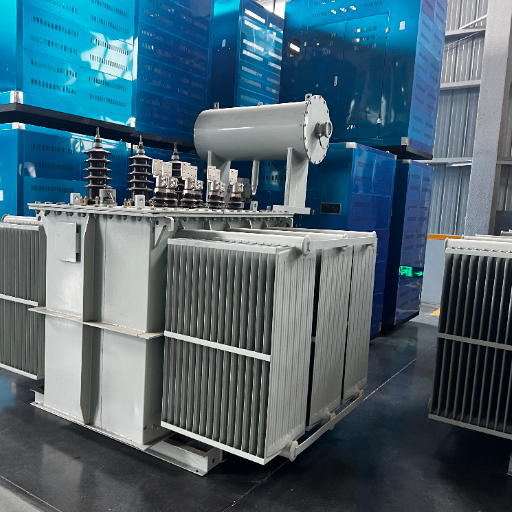
The distinction between these two categories comes down to function, scale, and operating profile. Below is a side-by-side comparison of the factors that matter most for buyers and engineers.
| Factor | Power Transformer | Distribution Transformer |
|---|---|---|
| Voltage Level | Above 33 kV (up to 400+ kV) | Below 33 kV (typically 11 kV primary) |
| Capacity Range | Above 500 kVA (often 10–500+ MVA) | 3 kVA to 500 kVA |
| Primary Function | Bulk power transfer in transmission | Final voltage step-down for end users |
| Efficiency Focus | Maximum at or near 100% full load | Maximum at 50–75% load (all-day efficiency) |
| Load Profile | Near-constant full load | Highly variable, partial load most of the day |
| Typical Location | Generation plants, transmission substations | Near consumers (poles, pads, indoor rooms) |
| Physical Size | Very large, heavy (10–400+ tons) | Compact, pole or pad mountable |
| Cooling Method | Oil immersed with radiators, pumps, fans | Oil immersed or dry type (air/epoxy cooled) |
| Lifespan | 25–40 years | 15–25 years |
| Initial Cost | High capital investment per unit | Lower cost, mass-produced for wide deployment |
Can You Use a Power Transformer as a Distribution Transformer?
The system operates effectively but requires additional work to function as intended. The distribution system requires an excessive design for its power transformer requirements. The system requires an unworkable design because its complete power needs to operate at full efficiency. The reverse situation presents matching difficulties. A distribution transformer cannot safely handle the voltage levels, fault currents, or continuous loading that power transmission demands.
Efficiency Deep Dive: Why the Design Philosophy Matters
Efficiency is where the difference between these two transformer types becomes most economically significant. Understanding how each is optimized helps buyers make smarter long-term decisions.
Two Types of Losses
Every transformer experiences two primary loss categories:
- Iron losses (no-load losses): Constant energy waste from magnetizing the core. These occur 24/7 regardless of load. Caused by hysteresis and eddy currents in the core steel.
- Copper losses (load losses): Variable energy waste from current flowing through windings. These scale with the square of the load. At half load, copper losses drop to one-quarter of full-load value.
Maximum Efficiency Conditions
Maximum efficiency occurs when copper losses equal iron losses. Power transformers are designed so this balance point sits at or near 100% rated load. Distribution transformers are designed so the balance point sits at roughly 50–75% of rated load. This reflects the reality that distribution transformers spend most of their lives at partial load.
All-Day Efficiency: The Metric That Matters for Distribution
Because distribution transformers serve fluctuating demand, instantaneous efficiency at one load point is misleading. All-day efficiency measures total energy output over 24 hours divided by total energy input over the same period. It accounts for overnight low-load periods when iron losses dominate total waste.
The formula is:
All-day efficiency = (Total Output Energy in kWh / Total Input Energy in kWh) x 100%
A distribution transformer with excellent full-load efficiency but high no-load losses will underperform in real-world service. That is why low-loss core materials, such as high-grade grain-oriented electrical steel, are critical for distribution designs even though they add upfront cost.
Sarah, a plant engineer at a textile factory in India, discovered this after installing ten 500 kVA distribution transformers. The units had competitive purchase prices but standard-grade cores. Over the first year, no-load losses added roughly 8% to the facility’s transformer-related energy cost. Replacing them with low-loss units at the next upgrade cycle cut that waste by nearly half.
How to Choose the Right Transformer for Your Project
Selecting between a power transformer and a distribution transformer is straightforward once you map your requirements against the comparison above. Follow this five-step process before requesting quotations.
Step 1: Define Your Voltage Requirements
Identify your incoming supply voltage and your required output voltage. If you are connecting to a high-voltage transmission line above 33 kV, you need a power transformer. If you are stepping down from a local distribution feeder at 11 kV or 33 kV to 400V or 230V, you need a distribution transformer.
Step 2: Analyze Your Load Profile
Will the transformer run near full load continuously, or will demand fluctuate significantly? Power transformers suit steady, heavy loading. Distribution transformers suit variable demand with significant low-load periods.
Step 3: Consider Installation Environment
Outdoor substation with space for oil cooling? A power transformer or oil immersed distribution unit fits. Indoor installation with fire safety requirements? A dry type distribution transformer is the safer choice.
Step 4: Calculate Lifecycle Cost, Not Just Purchase Price
Add 20-year energy losses to the purchase price. A more efficient transformer often pays back its premium within 3–7 years through reduced electricity waste. For distribution transformers running continuously, this calculation is especially important.
Step 5: Verify Standards Compliance
Confirm which standards your project or utility requires:
- IEC 60076 series for international projects
- IEEE C57 / ANSI C57.12 for North American markets
- DOE 2016 efficiency standards for U.S. distribution transformers
- Local utility specifications for grid-connected installations
Standards and Compliance: What Buyers Should Know
Standards ensure safety, interoperability, and predictable performance. Both power and distribution transformers are governed by well-established international and national codes.
IEC 60076 Series
The International Electrotechnical Commission defines power transformer ratings, testing methods, and efficiency classes in IEC 60076. The standard receives widespread use across Asia, Europe, Africa, the Middle East, and multiple international projects.
IEEE C57 and ANSI C57.12
The Institute of Electrical and Electronics Engineers publishes the C57 standard family, which ANSI adopted as the North American standard. The standards establish requirements for testing, rating systems, operational guidelines, and efficiency standards. IEEE C57.12. 00 provides a definition that separates distribution transformers (3-500 kVA) from power transformers (above 500 kVA).
Regional Efficiency Regulations
The U. S. Department of Energy (DOE) mandates minimum efficiency levels for distribution transformers under 10 CFR Part 431. The EU Ecodesign Directive sets similar requirements for transformers placed on the European market. Buyers should verify that quoted units meet the efficiency tier required for their region.
Common Mistakes When Specifying Transformers
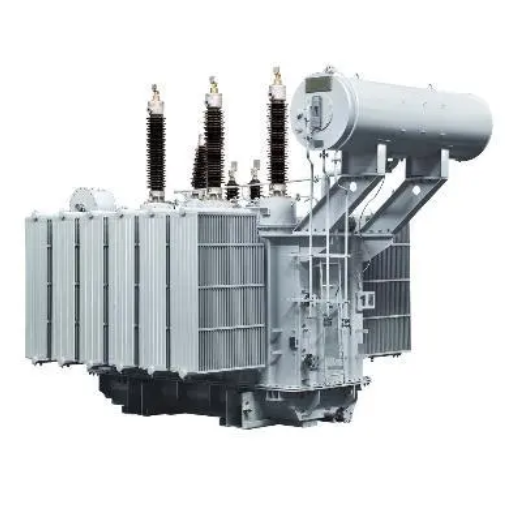
Even experienced engineers occasionally make specification errors. Here are the most common pitfalls and how to avoid them.
Mistake 1: Specifying Power Transformer for Distribution Duty
This adds unnecessary cost, size, and weight. It also reduces efficiency because the unit is optimized for a load profile it will never see.
Mistake 2: Ignoring All-Day Efficiency in Distribution Applications
Focusing only on full-load efficiency misses the economic impact of 24-hour no-load losses. Ask suppliers for no-load loss figures and calculate all-day efficiency for your expected load curve.
Mistake 3: Undersizing for Future Load Growth
Industrial expansions, EV charging additions, and new equipment can increase demand faster than expected. Size for projected 10-year load, not just today’s requirement.
Mistake 4: Overlooking Cooling and Environmental Requirements
An oil immersed unit specified for an indoor space with ventilation restrictions will overheat. A dry type unit specified for a harsh outdoor coastal environment without proper enclosure may fail prematurely. Match the cooling method and enclosure rating to the environment.
Mistake 5: Neglecting Voltage Regulation and Impedance
The output voltage drop during load conditions depends on the voltage regulation system. The protective devices require their short-circuiting current attributes to be established through direct measurement rather than automatic assumptions. Both must be specified for the application, not assumed.
David, a data center project manager in Northern Virginia, initially selected distribution transformers based solely on kVA rating and purchase price. The server rack startup loads caused voltage regulation problems which resulted in nuisance trips during the commissioning process. A revised specification with tighter regulation requirements and properly sized impedance solved the problem, but the delay cost three weeks. Transformer selection requires attention to more than capacity alone.
The Bigger Picture: How They Work Together
Power transformers and distribution transformers are not competitors. They are sequential stages in the same delivery chain.
Electricity departs from a generating station at moderate voltage. The step-up power transformer increases voltage to 110 kV 220 kV and higher levels for efficient transmission across distances exceeding 100 kilometers. Regional substations use step-down power transformers to decrease voltage levels to 33 kV and 66 kV for distribution purposes. The distribution transformers reduce medium voltage to 400V or 230V which is used in homes offices and factories.
Learn more about step-up and step-down transformer roles in our industrial guide.
Understanding this chain helps buyers specify the right unit for their position in the system. A utility procurement officer needs power transformers for substation expansion. A commercial facility manager needs distribution transformers for building electrical rooms. An EPC contractor building a solar farm may need both: power transformers to step up inverter output to transmission voltage, and distribution transformers for on-site facility loads.
Conclusion
The distinction between power transformers and distribution transformers extends beyond their physical dimensions and operating voltage. The distinctive features of power transformers include their ability to transmit high-voltage bulk electricity through transmission networks which maintains continuous energy flow. Distribution transformers supply power to customers in a secure manner while achieving minimal energy losses during highly variable daily energy requirements.
Operational problems arise when organizations select incorrect equipment types because this decision leads to reduced productivity and financial losses. The essential requirements for making a correct decision start with truthful responses to three fundamental interrogatives. What is the voltage range for your operations? What does your load profile look like? What is your actual cost throughout the entire duration of service?
Shandong Electric Co., Ltd. produces power transformers and distribution transformers which we export to electric utilities and industrial plants and infrastructure development projects worldwide. The engineering department assesses voltage needs and load patterns and site conditions to find the most efficient and budget-friendly solution for every project.