
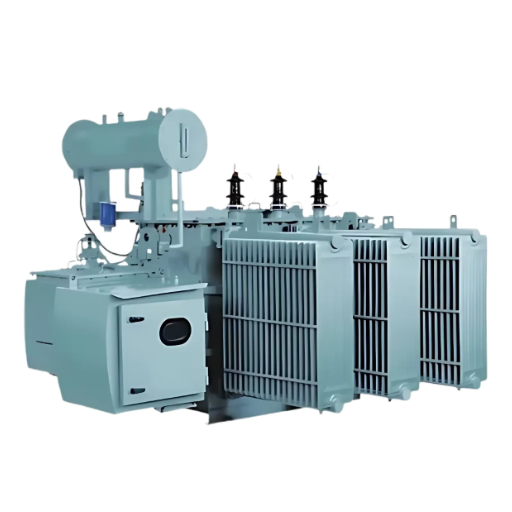
Oil Cooled Transformer: Cooling Modes, Design and Selection Guide

An oil-cooled transformer uses insulating liquid to absorb and transport heat away from the core and windings, enabling reliable operation at power levels that air or solid insulation cannot match. The cooling mode you select determines not just how much heat the transformer can dissipate, but also its physical size, maintenance requirements, noise level, and total cost of ownership over decades of service.
In 2021, a data center operator in Dubai commissioned three 3.15 MVA transformers for a new facility expansion. The engineering team specified standard ONAN cooling, the default choice for distribution transformers worldwide. They did not account for the local climate. Summer ambient temperatures at the outdoor transformer pad reached 48 degrees Celsius, well above the 30 degrees Celsius baseline assumed in standard IEC 60076-2 temperature rise calculations. With only natural convection to cool the oil, the transformers exceeded their rated temperature rise during peak load periods. Protection relays tripped on high winding temperature three times in one July week. The facility faced cooling failure during its highest-revenue season. Emergency remediation required retrofitting ONAF fan kits, upgrading control systems, and adding sun shields. The cooling mode mismatch cost $28,000 in hardware and three days of engineering time. The transformers were correctly rated. The cooling was not.
This guide explains how oil cooled transformers work, compares the four standard cooling modes, and provides a selection framework that matches cooling design to load profile, environment, and lifecycle cost objectives.
Key Takeaways
- Oil cooled transformers use four standardized cooling modes: ONAN (both natural), ONAF (forced air), OFAF (forced oil and air), and ODAF (directed oil flow).
- ONAN suits most distribution transformers up to approximately 5 MVA with minimal maintenance; ONAF extends capacity 20-30% without increasing unit size.
- For every 6 degrees Celsius that hot-spot temperature exceeds 98 degrees Celsius, insulation aging rate doubles, making cooling design critical for service life.
- Altitude above 1,000 meters reduces air cooling effectiveness by approximately 10% per 500 meters, requiring derating or forced cooling.
- Cooling mode selection must balance initial cost, auxiliary energy consumption, noise limits, maintenance burden, and available space.
How Oil Cooling Works in Transformers
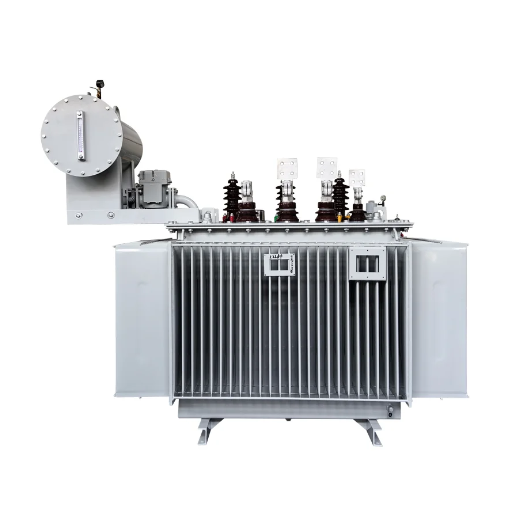
A transformer generates heat in two places. Core losses come from hysteresis and eddy currents in the laminated steel. Load losses come from resistive heating in the copper or aluminum windings. At full load, a 1,000 kVA transformer can produce 8-12 kilowatts of heat that must leave the unit continuously. Without effective heat removal, winding insulation temperature climbs until it degrades and fails.
Oil performs this heat removal better than any practical alternative. Mineral oil has approximately 2.5 times the volumetric heat capacity of air. It absorbs heat at the winding surface, rises through natural or forced convection, flows through external radiators where it releases heat to ambient air, and returns to the bottom of the tank to repeat the cycle.
The cooling mode defines how the oil moves and how air removes heat from the radiators. IEC 60076-2 standardizes four codes that describe every oil cooled transformer design.
For a complete overview of oil filled transformer technology and construction, see our oil filled transformer guide.
The Four Standard Cooling Modes
ONAN: Oil Natural, Air Natural
ONAN cooling relies entirely on natural convection. Hot oil rises from the top of the windings, flows through radiators mounted on the tank walls, cools as it releases heat to ambient air, and sinks back to the bottom of the tank. No pumps. No fans. No moving parts.
This is the simplest, most reliable, and lowest-maintenance cooling mode. It dominates distribution transformer applications from 50 kVA to approximately 5 MVA. A 2,500 kVA ONAN unit in a 30 degrees Celsius ambient environment operates comfortably within IEC temperature rise limits with adequate radiator surface area.
The trade-off is physical size. ONAN transformers require more radiator surface area than forced-cooled alternatives of equivalent rating. For applications where space is limited, ONAN may not be practical at higher kVA levels.
ONAN is the right choice when:
- Reliability and minimal maintenance are priorities
- Ambient temperatures remain moderate (below 35 degrees Celsius typically)
- Adequate space exists for radiator banks
- Noise restrictions prevent fan operation
- Load is continuous and predictable
ONAF: Oil Natural, Air Forced
ONAF cooling adds fans to the radiator banks. The oil still circulates naturally, but forced air across the radiator surfaces increases heat transfer by 20-30% compared to natural air flow. This allows a higher kVA rating from the same transformer tank, or the same kVA rating from a more compact design.
A typical ONAF upgrade adds two to six fans per radiator bank, controlled by winding temperature or top-oil temperature sensors. When the transformer approaches thermal limits, the fans activate automatically. During light load or cool weather, the fans remain off and the unit operates as ONAN.
Fan energy consumption is modest, typically 200-800 watts per fan. Noise increases by 5-10 decibels when fans operate, which matters in residential or noise-sensitive areas. Fan motors require periodic inspection and bearing replacement every 5-10 years.
When a utility in Northern Europe upgraded a 2,500 kVA substation in 2022, they faced a site constraint. The existing substation compound could not accommodate larger ONAN radiators. The utility specified ONAF cooling, which delivered the required capacity within the existing footprint. The fans operate approximately 30% of the year during summer peaks. Energy cost is negligible. The space savings eliminated a $15,000 civil works expansion.
ONAF is the right choice when:
- Space constraints prevent larger ONAN radiators
- Peak loads exceed continuous ONAN capacity but only seasonally
- Moderate noise increase is acceptable
- Auxiliary power is available for fan operation
OFAF: Oil Forced, Air Forced
OFAF cooling uses oil pumps to circulate fluid through the radiators and fans to cool the radiator surfaces. Both the oil and the air move by forced convection. This removes substantially more heat than either ONAN or ONAF, enabling compact designs at ratings above 20 MVA.
Oil pumps draw fluid from the bottom of the tank, push it through radiators or external heat exchangers, and return cooled oil to the top of the tank. The pump flow rate is designed to maintain a specific temperature differential between top and bottom oil, typically 15-20 degrees Celsius.
The trade-offs are significant. Pumps and fans add moving parts that require maintenance. Pump failures can cause rapid overheating if not detected quickly. Auxiliary power consumption is higher than ONAF. The control system is more complex, with interlocks that trip the transformer if cooling flow is inadequate.
OFAF is the right choice when:
- Power ratings exceed 20 MVA
- Physical size must be minimized
- High continuous loads leave no margin for natural cooling
- Maintenance staff and spare parts are readily available
ODAF: Oil Directed, Air Forced
ODAF cooling is the most advanced and highest-capacity mode. Oil pumps direct flow specifically through cooling ducts within the winding assemblies, not just through the main tank and radiators. This targets the hottest regions of the winding directly, achieving the lowest hot-spot temperatures of any cooling mode.
The directed flow follows carefully designed paths through the winding disc or layer structure. Cooling ducts separate winding sections, and oil flows through these ducts at controlled velocities. This design allows the highest power density of any transformer cooling system.
ODAF is reserved for large power transformers, typically 50 MVA and above, and extra-high-voltage units where hot-spot temperature control is critical for insulation life. The complexity, cost, and maintenance requirements are the highest of all four modes.
ODAF is the right choice when:
- Ratings exceed 50 MVA
- Extra-high-voltage insulation demands precise hot-spot control
- Maximum power density is essential
- Full-time maintenance staff and condition monitoring are available
For substation-specific cooling design guidance, see our oil filled transformer for substation guide.
Cooling Mode Comparison
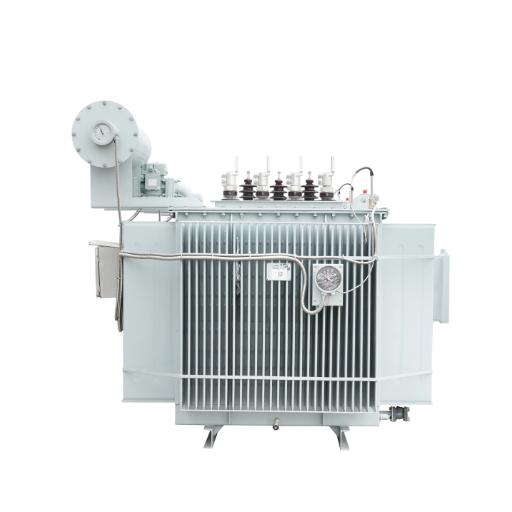
| Cooling Mode | Oil Flow | Air Flow | Typical Rating | Maintenance | Noise Level | Cost Factor |
|---|---|---|---|---|---|---|
| ONAN | Natural | Natural | Up to ~5 MVA | Minimal | Low (~55 dB) | 1.0x |
| ONAF | Natural | Forced | ~5-20 MVA | Moderate | Medium (~65 dB) | 1.05-1.10x |
| OFAF | Forced | Forced | ~20-100 MVA | High | High (~70 dB) | 1.15-1.25x |
| ODAF | Directed | Forced | 50 MVA+ | High | High (~70 dB) | 1.20-1.30x |
Cost factors are approximate and vary by manufacturer, rating, and region. The cost difference includes the cooling equipment, controls, and increased design complexity. Operating costs (fan and pump energy, maintenance) add to the total cost of ownership over the transformer life.
Temperature Rise and Insulation Aging
Cooling mode selection directly affects transformer life because temperature determines how quickly insulation paper ages.
IEC 60076-2 Limits
IEC 60076-2 specifies the following temperature rise limits for oil cooled transformers, measured by resistance above ambient temperature:
- Average winding temperature rise: 60 degrees Celsius
- Top oil temperature rise: 50 degrees Celsius
- Hot-spot temperature rise: 78 degrees Celsius (implied from average plus gradient)
The hot-spot temperature, typically 10-15 degrees Celsius above the average winding temperature, is the critical factor. It represents the hottest point in the winding insulation, usually in the upper portion of the winding where oil is warmest and cooling is least effective.
The 6-Degree Rule
For every 6 degrees Celsius that hot-spot temperature exceeds 98 degrees Celsius, the rate of insulation paper aging doubles. This means:
- At 98 degrees Celsius hot spot: normal aging rate, approximately 180,000 hours to end of life
- At 104 degrees Celsius: aging rate doubles, approximately 90,000 hours to end of life
- At 110 degrees Celsius: aging rate quadruples, approximately 45,000 hours to end of life
Proper cooling design keeps hot-spot temperature within the rated limit under normal load. Inadequate cooling or excessive overload pushes hot-spot temperature into the accelerated aging zone.
How Cooling Mode Affects Hot Spot
ONAN cooling produces the highest hot-spot temperatures for a given load because natural convection is least efficient. ONAF reduces hot spot by improving air-side heat transfer. OFAF and ODAF produce the lowest hot spots by actively circulating oil and, in the case of ODAF, directing flow through winding hot spots.
Overload Capacity by Cooling Mode
Transformers can carry loads above their nameplate rating for limited periods. The allowable overload depends on the cooling mode, the starting temperature, and the duration.
| Cooling Mode | Continuous Overload | 2-Hour Emergency Overload | 30-Minute Emergency Overload |
|---|---|---|---|
| ONAN | 105-110% | 120-130% | 140-150% |
| ONAF (fans on) | 110-120% | 130-140% | 150-160% |
| OFAF (pumps and fans on) | 120-130% | 140-150% | 160-170% |
| ODAF | 125-135% | 145-155% | 165-175% |
Values are approximate and depend on initial temperature, ambient conditions, and manufacturer design. Always consult the manufacturer for specific overload capabilities.
Emergency overloads accelerate insulation aging. A 150% overload for 30 minutes may consume as much insulation life as several weeks of normal operation. Use emergency overloads only when necessary and return to normal load as soon as possible.
Selecting the Right Cooling Mode
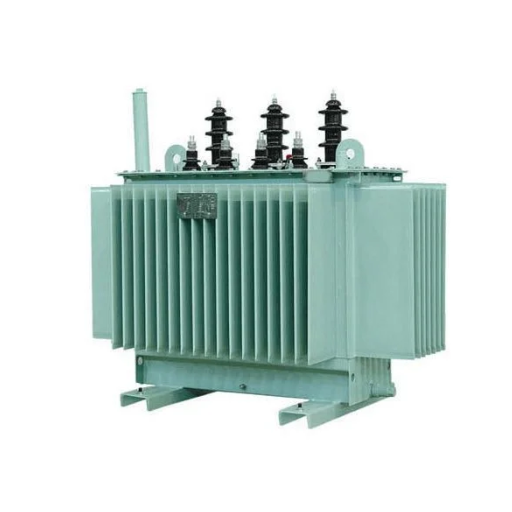
Cooling mode selection is a multi-step process that matches technical requirements to environmental constraints and lifecycle cost objectives.
Step 1: Define Load Profile
Start with how the transformer will actually operate. A transformer running at 90% load for 20 hours per day needs different cooling than one cycling between 50% and 110% load. Continuous high loads favor ONAN with larger radiators or ONAF. Cyclic loads with long light-load periods may be satisfied by ONAN with adequate thermal capacity.
Step 2: Evaluate Ambient Conditions
Ambient temperature is the single most important environmental factor. Standard ratings assume 30 degrees Celsius maximum ambient. For every 1 degree Celsius above 30, the transformer must be derated by approximately 1% for ONAN cooling.
| Maximum Ambient | ONAN Derating | ONAF Derating | Recommended Action |
|---|---|---|---|
| 30 degrees C | 0% | 0% | Standard design |
| 35 degrees C | -5% | -2% | Consider ONAF |
| 40 degrees C | -10% | -5% | ONAF recommended |
| 45 degrees C | -15% | -8% | ONAF or OFAF |
| 50 degrees C | -20% | -10% | OFAF or special design |
Altitude also matters. Air density decreases with altitude, reducing the effectiveness of air-cooled radiators. Above 1,000 meters, derate by approximately 10% per 500 meters of additional altitude for natural air cooling. Forced air cooling is less affected.
Step 3: Consider Site Constraints
- Space: ONAN requires the largest radiator footprint. ONAF, OFAF, and ODAF achieve higher capacity in smaller spaces.
- Noise: ONAN is quietest. Fans add 5-10 dB. In residential or hospital areas, noise limits may dictate ONAN.
- Maintenance access: OFAF and ODAF require regular pump and fan maintenance. Verify that skilled staff and spare parts are available.
- Auxiliary power: ONAF, OFAF, and ODAF require electrical power for fans and pumps. Confirm supply reliability.
Step 4: Evaluate Lifecycle Cost
The lowest purchase price is rarely the lowest total cost. Compare options over the expected service life:
| Cost Factor | ONAN | ONAF | OFAF |
|---|---|---|---|
| Initial cost | Baseline | +5-10% | +15-25% |
| Annual fan/pump energy | 0 | $200-800 | $1,000-3,000 |
| Annual maintenance | Minimal | $300-500 | $1,000-2,000 |
| 25-year operating cost | Lowest | Low | Moderate |
| Outage risk | Lowest | Low | Moderate |
For a 2,500 kVA transformer in a temperate climate with moderate load, ONAN almost always delivers the lowest total cost of ownership. In hot climates or space-constrained sites, ONAF may be justified despite higher operating costs. OFAF and ODAF are justified only when the application requires ratings or power densities that natural cooling cannot achieve.
Cooling System Components
Radiators and Cooling Banks
Radiators provide the surface area where oil releases heat to ambient air. Two types dominate:
Panel radiators: Flat steel panels welded into rectangular sections. Simple, durable, and cost-effective. Standard for distribution transformers up to 5 MVA.
Tubular radiators: Round or elliptical tubes with headers at top and bottom. Higher heat transfer per unit of surface area. Common for medium-power transformers.
Radiator sizing is determined by thermal calculations that balance heat generation, oil flow rate, air flow rate, and allowable temperature rise. Manufacturers use proprietary algorithms, but the fundamental physics is consistent: more surface area and better air flow remove more heat.
Fans and Controls
ONAF, OFAF, and ODAF systems use axial or mixed-flow fans mounted on radiator banks. Control strategies include:
- Thermostat control: Fans start when top-oil temperature exceeds a setpoint (typically 65-70 degrees Celsius)
- Winding temperature control: Fans respond to winding temperature, which is more closely tied to insulation stress
- Load-current control: Fans stage on at predetermined load percentages
- Ambient temperature control: Fans operate when ambient exceeds a threshold, regardless of load
Redundancy matters for critical applications. Specify dual fans per radiator section so that a single fan failure does not reduce cooling capacity below requirements.
Oil Pumps
OFAF and ODAF systems use centrifugal or gear pumps to circulate oil. Pump capacity is sized to maintain the designed oil flow rate through radiators and windings. Redundant pumps are standard for critical transformers. Pump seal failure is the most common maintenance issue; specify pumps with replaceable mechanical seals.
Common Cooling Problems and Solutions
| Problem | Cause | Solution |
|---|---|---|
| Excessive temperature rise | High ambient, blocked radiators, failed fans | Clean radiators, repair fans, consider sun shields, upgrade cooling if chronic |
| Fan failure | Bearing wear, motor burnout, control fault | Scheduled bearing replacement, temperature alarms, redundant fans |
| Pump cavitation | Low oil level, restricted suction, high viscosity | Maintain oil level, check suction strainers, verify oil temperature at start-up |
| Radiator blockage | Dust, pollen, industrial pollution | Annual cleaning, specify fin spacing appropriate for environment |
| Inadequate clearance | Vegetation, structures, adjacent transformers | Maintain 1-1.5 meters clear around radiator faces |
| High altitude derating | Reduced air density | Specify derating at altitude or select forced cooling |
When an industrial plant in South Asia installed two 5 MVA ONAF transformers in 2020, they located the units near a limestone processing facility. Fine dust coated the radiator fins within months, reducing air flow by an estimated 30%. Top-oil temperatures climbed 12 degrees Celsius above design. The maintenance team established a quarterly high-pressure washing schedule and added coarse pre-filters on the air intake side. Temperatures returned to normal. The filters require monthly cleaning but prevent radiator fouling.
Oil Cooled vs Dry Type: Cooling Comparison
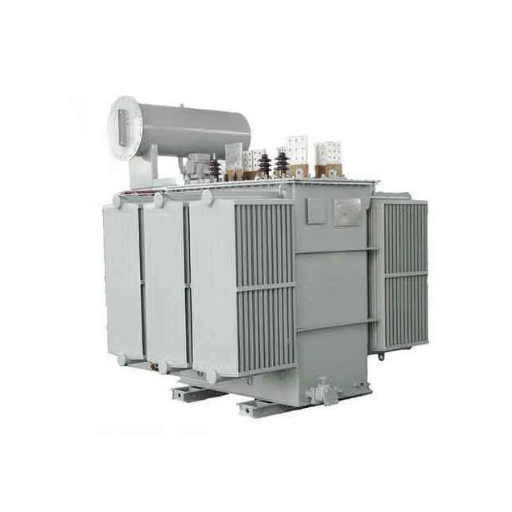
Buyers sometimes compare oil cooled and dry type transformers on cooling performance alone.
| Factor | Oil Cooled | Dry Type |
|---|---|---|
| Heat capacity | High (oil absorbs and transports heat efficiently) | Lower (air has less heat capacity) |
| Power density | Higher (compact at equivalent kVA) | Lower (larger physical size) |
| Maximum practical rating | Virtually unlimited (100+ MVA) | Typically up to 15-20 MVA |
| Operating temperature | Lower (oil removes heat effectively) | Higher (air cooling is less efficient) |
| Maintenance | Oil testing, cooling system maintenance | Cleaning, torque checks |
| Fire safety | Requires containment (mineral oil) or less-flammable fluid | No flammable liquid |
For outdoor applications above 2,500 kVA, oil cooled transformers dominate because their superior heat removal enables higher ratings in compact packages. For indoor applications below 2,500 kVA where fire safety is paramount, dry type is usually preferred.
For a complete comparison of oil filled and dry type transformers, see our dry type vs oil filled transformer guide.
Frequently Asked Questions
What does ONAN mean on a transformer nameplate?
ONAN stands for Oil Natural, Air Natural. It indicates that both oil circulation and air cooling occur by natural convection without pumps or fans. This is the simplest and most common cooling mode for distribution transformers.
Can I upgrade an ONAN transformer to ONAF?
Yes, in many cases. Retrofitting fan kits to existing ONAN radiators is a common upgrade. The manufacturer must verify that the radiator design can handle the increased heat transfer and that the structural mounting supports fan weight and vibration. Control wiring and temperature sensors must be added. Not all ONAN designs are suitable for ONAF retrofit; consult the manufacturer.
How much noise do cooling fans add?
Cooling fans typically add 5-10 dB to the base transformer sound level. An ONAN transformer rated at 55 dB becomes approximately 62-67 dB with ONAF fans operating. In noise-sensitive areas, specify low-noise fans or consider ONAN with larger radiators.
What happens if cooling fans fail?
An ONAF transformer with failed fans reverts to ONAN cooling capacity. If the load exceeds ONAN capability, temperature rise increases and protection relays may trip. Specify temperature alarms that alert operators before trip conditions. For critical applications, specify redundant fans.
How does altitude affect transformer cooling?
Air density decreases with altitude, reducing the heat transfer from radiator surfaces to ambient air. Above 1,000 meters, derate natural air cooling by approximately 10% per 500 meters of additional altitude. Forced air cooling is less affected because fans maintain air velocity. High-altitude installations may require ONAF or OFAF even at moderate kVA ratings.
What is the maximum temperature for transformer oil?
Standard mineral oil has a maximum recommended operating temperature of 105 degrees Celsius for top oil. Natural ester fluids can operate at similar temperatures. Some synthetic fluids tolerate higher temperatures. Exceeding the fluid’s thermal limit accelerates oxidation and shortens oil life.
Do all oil transformers need cooling fans?
No. ONAN transformers up to approximately 5 MVA operate without fans in moderate climates. Fans become necessary when ratings exceed natural cooling capacity, when ambient temperatures are high, or when physical size must be minimized.
How often should cooling fans be serviced?
Fan motors typically require bearing inspection every 2-3 years and bearing replacement every 5-10 years depending on operating hours and environment. Dusty or corrosive environments accelerate wear. Include fan maintenance in the transformer preventive maintenance schedule.
Conclusion
Cooling mode selection for an oil-cooled transformer is not an afterthought. It is a fundamental design decision that affects capacity, size, noise, maintenance, and lifecycle cost. The right cooling mode keeps the transformer within temperature limits under all operating conditions. The wrong one creates thermal stress that shortens insulation life and risks protection trips during peak demand.
ONAN is the default choice for good reasons. It is simple, reliable, quiet, and inexpensive to maintain. Specify ONAF when space constraints or high ambient temperatures require more heat removal than natural convection can provide. Reserve OFAF and ODAF for large power transformers where no other cooling mode can achieve the required capacity.
When the utility in Northern Europe selected ONAF for their space-constrained substation, they made a practical trade-off. They accepted modestly higher energy consumption and noise in exchange for avoiding a $15,000 civil works expansion. The fans run 30% of the year. The rest of the time, the transformer operates as quietly and reliably as any ONAN unit.
Start cooling selection with the load profile and ambient conditions. Calculate whether ONAN can handle the thermal load. If not, evaluate whether ONAF solves the problem within your noise and maintenance constraints. Only consider OFAF or ODAF when the application truly requires their higher capacity. And always model the total cost of ownership, not just the purchase price.
For a complete fluid comparison with selection guidance, see our transformer oil types guide.