
Dry Type Transformer vs Oil Filled Transformer: 2026 Selection Guide

When Riverside Medical Center opened the new wing in March 2024, the engineering staff specified an oil-filled transformer to meet the lowest capital cost. But within the next 18 months, they spent an additional $340,000 on a vault, oil containment pit, and ventilation system, which indeed would not have been necessary with dry type alternatives.
If you have ever found yourself looking at a transformer specification sheet, pondering which technology might be best suited for the job, you are not alone. Dry type or oil filled transformers—this is what engineers, procurement team and contractors wrestle with during each commercial or industrial build. All commitment to the wrong transformer sacrifices project cost. But, unmindful of future obligations, it gives safety concerns, numerous maintenance headaches, and compliance issues on which it has come off clean from the outset of the day.
This guidance nuances the principal distinctions between the two technologies. We mean to compare construction, safety, maintenance, total cost of ownership, and application fit, giving you the ability to discern with assurance. No matter if you are doing a hospital, a data center, or an outdoor substation, you ought to know precisely which transformer would turn out to earn its place in your electrical infrastructure.
Want the complete picture of all dry type transformer types? See our dry type transformer guide covering cast resin, VPI, and open ventilated designs.
What Is a Dry Type Transformer?
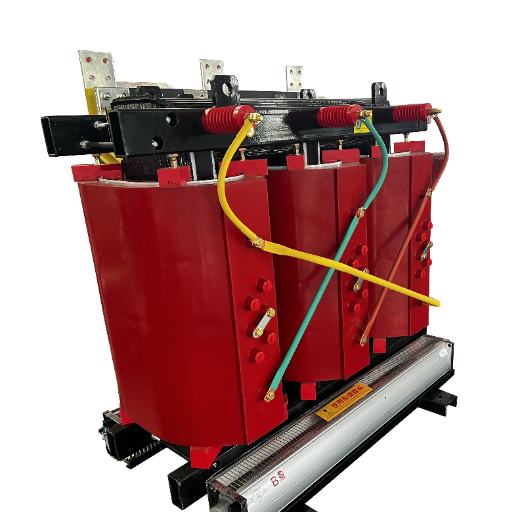
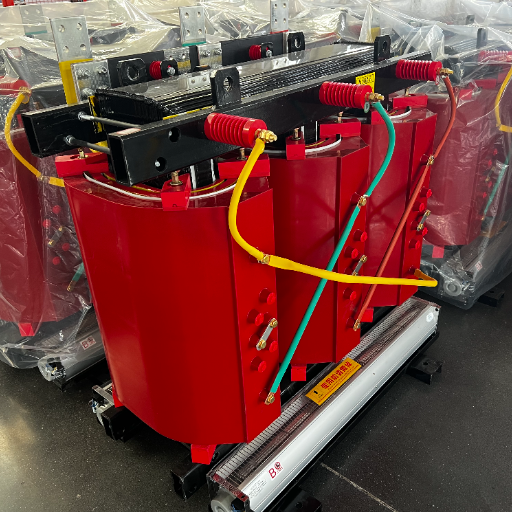
A transformer of dry type uses air and solid insulator mediums for circulation, while oil insulation also cools and insulates windings with cooling due to the existence of these two mediums inside the transformer. The cast resin scarf, paper, mylar, and epoxy are layers of protection and varnish that impregnate coils to protect them from shock or winding exposure to moisture and dust. Most modern VPI-type transformers are done with solid epoxy resin) or varnishes.
A transformer of dry type uses air and solid insulator mediums for circulation, while oil insulation also cools and insulates windings with cooling due to the existence of these two mediums inside the transformer. These units are self-contained, provided of course nothing more than their own winding and the assembly construction just for the sake of providing easy welding of the core. Some of the self-extinguishing materials of insulation are used to install them in the indoor places compacted with stringent building regulations.
These transformers are meant for voltages of distribution up to 36 kV with power ratings ranging from 25 kVA to 30-some MVA. Insulation classes F (155°C) and H (180°C) are standard, allowing these units higher operating temperatures than traditional oil-immersed designs while sacrificing their size. Because air is less effective at taking off heat compared to oil, a whole-size larger cabinet is required on dry-type units if compared to an oil-immersed unit, same power rating-wise.
The selling point for facility managers and contactors is very straightforward. Installation is quicker, maintenance low, and fire safety profile complex permitting for occupied buildings.
Key Construction Features
The core and windings are visible and accessible, which simplifies inspection. Cooling is achieved through natural convection (AN) or forced air (AF) with fans. Some designs use cast resin encapsulation, where the entire winding assembly is sealed in epoxy. This provides excellent moisture and contamination resistance.
What Is an Oil Filled Transformer?
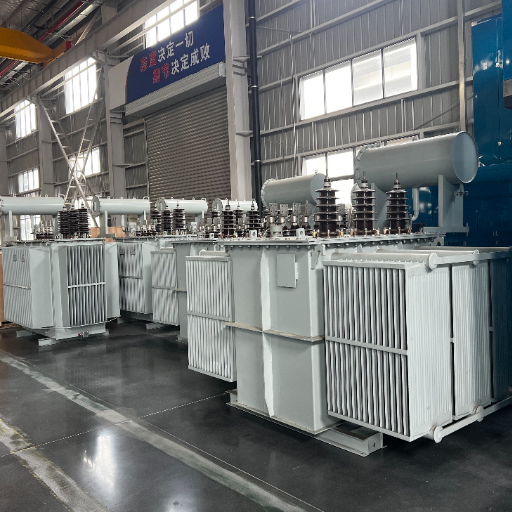
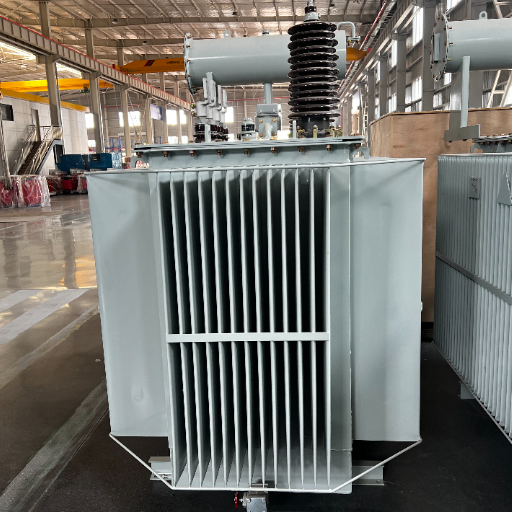
The core and windings of an oil-filled transformer are partially immersed in insulating oil which simultaneously serves as a dielectric and a heat transfer medium. Mineral oil has been used as a coolant for decades; however, modern units use natural ester fluids or synthetic esters for greater fire and environmental safety.
The cooling oil carries heat passively from the windings to external radiators, which remove it to the surrounding walls if the system is forced-air-cooled. The design of this choice of heat transfer medium is, more or less, everywhere. This is part of the reason why oil-filled transformers are able to operate at much higher power densities and voltages than dry-type transformers.
Bail-filled designs run the whole gamut of electrical infrastructure, whether that is from small distribution units to full-on grid-level setups. The list below identified in Part 8 disclosed exactly how step-up and step-down transformers contribute to this range, thereby facilitating the reasoning for oil-filled technology in high-voltage designs. Large power transformers can be as powerful (up to 1,500 MVA) and designed for operation at transmission voltages up to 765 kV. It is that reliable support which we now rely upon for utility substations, heavy-duty industrial plants, and systems built for renewable energies.
The efficiency benefits are real. The good and rapid conductivity of cool-off oil systems works especially better when the processing runs cooler than electrical distribution losses and the lifetime of windings is maximized as a consequence. However, all this better performance also concedes a little complexity. Oil-filled transformers need services such as containment systems, fire protection, and a more ordered maintenance schedule than air-cooled counterparts would.
Oil Types Explained
Mineral oil remains the most common and cost-effective option. Natural ester oils, derived from seed oils, offer higher flash points and full biodegradability. Synthetic esters provide the best fire resistance and oxidation stability but at a premium price point. The choice of fluid increasingly shapes the total risk profile of the installation.
Side-by-Side Comparison: Dry Type vs Oil Filled Transformer
Choosing between these technologies requires looking beyond the specification sheet. The table below summarizes the engineering, safety, and economic factors that drive real-world decisions.
| Feature | Dry Type Transformer | Oil Filled Transformer |
|---|---|---|
| Cooling Medium | Air / Solid insulation (epoxy, cast resin) | Mineral oil or ester fluid |
| Typical Voltage Range | Up to 36 kV | Up to 765 kV+ |
| Power Range | 25 kVA – 30 MVA | 50 kVA – 1,500 MVA |
| Efficiency | 96% – 98.5% | 98.5% – 99.7% |
| Overload Capacity | ~110–120% for 2 hours | ~130–150% for 2 hours |
| Fire Risk | Minimal; self-extinguishing insulation | Higher; requires vault / fire suppression |
| Environmental Risk | Zero spill risk | Oil spill / soil contamination risk |
| Maintenance | Low (visual inspection, cleaning) | Moderate–High (oil testing, filtration) |
| Expected Lifespan | 15 – 30 years | 25 – 40 years |
| Noise Level | 45 – 65 dB | 35 – 50 dB |
| Initial Cost (per kVA) | Higher (+35–50%) | Lower |
| Indoor Installation | Straightforward | Requires vault / containment |
| Outdoor Installation | Weatherproof enclosure needed | Standard with proper foundation |
When Marcus Chen reviewed this exact table for a 2,500 kVA installation at a commercial complex in Austin, Texas, he initially leaned toward oil filled units based on the lower purchase price. Then he priced the concrete vault, oil containment pit, and fire suppression system required by local code. The dry type specification saved his client $280,000 in construction costs and cut the project timeline by six weeks.
Efficiency and Energy Losses
Oil-filled transformers tend to perform better regarding no-load and load losses compared to dry-type transformers with similar rating. The overall performance of the oil-filled one is generally more efficient between half and 2% compared to the dry type. At such large industrial scales, small percentage losses add up to significantly costly failures. A transformer with a 10 MVA rating and 1% higher efficiency would save some 876 MWh of electricity every year, saving tens of thousands of dollars on energy over a twenty-year lifespan.
With smaller distribution transformers under 1 MVA, the efficiency difference between the two types is waning. Modern cast resin-based dry-type transformers with the amorphous metal cores can get very close to the efficiency of the conventional oil-filled units making them a good choice for applications in the commercial buildings where fire safety is the main concern.
Overload and Thermal Performance
Oil’s heat capacity gives oil filled transformers a clear advantage in overload situations. Short-term loading to 130% or 150% of nameplate rating is achievable without immediate thermal damage, a critical consideration for industrial plants with fluctuating demand. Dry type units are more thermally constrained. Exceeding rated capacity raises winding temperatures quickly and accelerates insulation aging.
Safety, Fire Risk, and Environmental Impact
Safety is often the deciding factor in the dry type transformer vs oil filled transformer debate. The presence of flammable liquid fundamentally changes how a transformer interacts with its environment.
Dry type transformers use insulation systems with high flash points and self-extinguishing properties. In the event of an internal fault, there is no combustible liquid to feed a fire. This characteristic makes them the default specification for hospitals, schools, data centers, underground stations, and any building where occupant safety is paramount.
Oil filled transformers, particularly those using traditional mineral oil, carry a measurable fire risk. A catastrophic winding failure can vaporize oil and create an explosive arc. For this reason, the [National Electrical Code (NEC)]and local fire codes impose strict requirements on indoor installations. These typically include a fire-rated vault, oil containment pits capable of holding 100% of the fluid volume, fire detection systems, and automatic suppression.
The environmental dimension is equally important. A single oil filled transformer can hold thousands of liters of insulating fluid. A leak or catastrophic failure can contaminate soil and groundwater, triggering EPA reporting requirements and costly remediation. Dry type transformers eliminate this risk entirely.
Indoor Installation Requirements
For dry type units, indoor installation is straightforward. Standard electrical rooms with adequate ventilation and clearances are sufficient. For oil filled units, the civil engineering requirements are substantial. Vault walls may need two-hour fire ratings. Ventilation must prevent oil vapor accumulation. Access doors must be rated and positioned for emergency response.
Modern Fluid Alternatives
Natural ester and synthetic ester fluids have changed the risk profile of oil filled transformers. These fluids offer flash points above 300°C compared to 140°C for mineral oil, and many are fully biodegradable. While they add 15–30% to the initial fluid cost, they can reduce or eliminate vault requirements in certain jurisdictions and significantly lower environmental liability.
Maintenance and Lifecycle Costs
The true cost of a transformer emerges over decades, not at purchase. Understanding the maintenance burden of each technology is essential for accurate budgeting.
Dry type transformers require minimal routine maintenance. Annual visual inspections, cleaning of cooling air paths, and infrared thermography to detect hot spots are typically sufficient. There is no oil to test, filter, or replace. This simplicity is a major advantage for facilities with limited maintenance staff or where access is difficult.
Oil filled transformers demand a structured maintenance program. Dissolved gas analysis (DGA) should be performed annually to detect internal faults by measuring gases in the oil. Oil dielectric strength and moisture content require periodic testing. Filtration or regeneration may be needed every two to five years depending on load and environmental conditions. Complete oil replacement is typically required every ten to fifteen years.
These activities require specialized contractors, sampling equipment, and oil handling procedures. Over a thirty-year service life, maintenance costs for an oil filled transformer can exceed 50,000foramid−sizedistributionunit,whileanequivalentdrytypeunitmightcostlessthan50,000foramid−sizedistributionunit,whileanequivalentdrytypeunitmightcostlessthan10,000.
Total Cost of Ownership
When Elena Rodriguez compared TCO for a 1,000 kVA installation at a pharmaceutical manufacturing facility, the numbers told a clear story. The dry type transformer carried a 28,000purchasepremium.However,iteliminated28,000purchasepremium.However,iteliminated45,000 in vault construction, saved 38,000inmaintenanceovertwentyyears,andreducedinsurancepremiumsby38,000inmaintenanceovertwentyyears,andreducedinsurancepremiumsby2,400 annually. The payback period was under four years, and the cumulative savings exceeded $120,000.
For outdoor utility applications, the calculus often reverses. Oil filled transformers require minimal civil works, offer lower upfront cost per kVA, and their efficiency advantage compounds energy savings at high load factors. In these scenarios, the oil filled design is the economically superior choice.
Planning a new facility and need application-specific guidance? [Request a specification review]from our team to align your power distribution and motor control requirements.
How to Choose: Application Selection Guide
Neither technology is universally better. The right choice depends on voltage requirements, installation environment, load profile, and regulatory constraints.
When to Choose a Dry Type Transformer
Specify dry type when the installation is indoors or near occupied spaces, fire codes are strict, maintenance resources are limited, and voltage requirements are moderate. Common applications include:
- Commercial office buildings and shopping centers
- Hospitals, clinics, and assisted living facilities
- Data centers and server rooms
- Schools and universities
- Underground substations and transit systems
- Indoor manufacturing plants below 35 kV
The fast commissioning and minimal infrastructure requirements also make dry type transformers attractive for retrofit projects where adding a vault is structurally impractical.
For a deeper technical breakdown of industrial transformer oil testing and maintenance practices, see our Transformer Oil Testing and Maintenance: A Practical Guide for Industrial Facilities.
When to Choose an Oil Filled Transformer
Specify oil filled when the installation is outdoors, power requirements are high, voltage exceeds 36 kV, or the lowest upfront cost per kVA is the priority. Common applications include:
- Outdoor utility substations and switchyards
- Solar and wind farm collection systems
- Heavy industrial plants with high load factors
- Large-scale three-phase power distribution systems
- Mining and oil and gas operations
- Rural distribution networks
- Bulk power transmission above 69 kV
For large-scale renewable projects, oil filled transformers remain the standard because they handle the voltage step-up from collection circuits to transmission levels with proven reliability and manageable cost.
Industry-Specific Recommendations
Data Centers: Dry type is the clear winner. Fire risk in high-value, densely occupied facilities makes oil-filled units impractical unless housed in separate structures.
Solar Farms: Oil filled dominates. Outdoor installation eliminates vault costs, and the efficiency advantage matters when every fractional percent improves project ROI.
Hospitals: Dry type is typically mandated by code. The consequence of a fire in a healthcare facility outweighs any cost advantage of oil-filled designs.
Manufacturing: Context-dependent. Indoor plants with clean environments favor dry type. For facilities combining transformer upgrades with low voltage VFD integration, specifying both components together ensures matched voltage ratings and harmonic performance. Heavy industrial sites with outdoor switchyards often use oil filled for primary distribution.
For outdoor installation details including foundation design and grounding, see our outdoor transformer installation guide.
Standards and Compliance
Transformer design, testing, and installation are governed by international standards that ensure safety, performance, and interoperability. A solid grasp of power transformer fundamentals makes these standards far easier to apply in practice.
Where IEC 60076 lays down general principles for power transformers, IEC 60076-11 that deals with dry-type transformers, IEC 60076-1 through 5 deals with the structure of the oil-immersed transformers. The standards give attention to temperature rise limits, ability of the transformer to withstand short circuits, insulating materials, and tests.
The standards for transformers in North America are IEEE C57 codes. Distribution transformers are dealt with by the C57.12. 00 series, while Transformer-type Winding Distribution Transformers are dealt with by C57.12. 01. Standards specify efficiency requirements, design features, and methods of test in conformity with the [Department of Energy (DOE) regulations] under 10 CFR Part 431, too.
IS 2026 is the Indian Standard which is commonly followed by the Indian, South Asian, and Middle- Eastern markets. The standard aligns closely with IEC 60076 but factors in regional environmental and operational considerations.
The US Department of Energy (DOE) revised distribution transformers efficiency standards in 2026 to tighten the restrictions on the maximum allowable losses of dry type and oil filled transformers. The US market requires all transformers sold to come under these regulations, and the efficiency-tiers are overlapping in closer proximity compared with past decades. The today’s dry type with advanced core materials can match the same efficiency requirements during the days of the traditional oil filling challenges at the distribution voltage class.
Make sure to know what specific standards are required within the destination market when specifying transformers for international projects. Manufacturers that are export-reliable often design and test for more than one standard in tandem, but as per the targeted local requirements, additional test documentation and certifications may be required.
Conclusion
The dry type vs oil filled type transformer decision is not a comparison of technology constraints. It is about stricking a balance between the two. Dry type transformers provide safety, simplicity, and quick indoor installation, while costing more to purchase and being less limited. Oil filled transformers deliver higher efficiency, greater modularity, and lower upfront expensive per kVA, with the extra baggage of safety risks, environmental challenges, and lifelong maintenance upset.
The five factors that should drive your specification are:
- Installation location and fire code requirements
- Voltage and power rating needs
- Total cost of ownership over the project lifecycle
- Maintenance capacity and access
- Environmental and regulatory constraints
Get these right, and your transformer will perform reliably for decades. Get them wrong, and the hidden costs will surface long after the initial purchase invoice is paid.
For a deeper technical breakdown of transformer cooling class ONAN, ONAF and OFAF procurement rules, see our Transformer Cooling Classes ONAN ONAF OFAF: A Procurement and Selection Guide.