
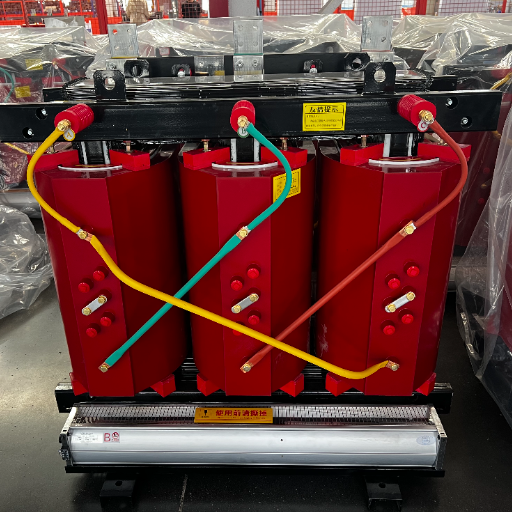
Transformer Factory China: A Buyer’s Guide to Manufacturing and Quality

A transformer factory in China produces approximately 40 to 50 percent of global transformer capacity. That scale offers buyers significant advantages in cost, lead time, and product range, but only if they know how to distinguish a fully integrated manufacturer from an assembler or trading company. The factory floor, not the sales brochure, reveals the difference.
Michael, a procurement director for an EPC contractor in the Middle East, learned this lesson the expensive way. He selected a transformer factory in China based on a competitive price and a polished website. After the first delivery, several units failed routine commissioning tests. When Michael visited the facility six months later, he discovered that core production was outsourced to a smaller workshop 40 kilometers away. The factory he thought he was buying from was actually an assembler with no in-house high-voltage testing. Units were being shipped without impulse testing. The project recovered, but only after eight weeks of replacement and rework.
By the end of this guide, you will understand what happens inside a transformer factory in China, which regional clusters specialize in which products, how to audit a facility remotely or in person, and which red flags should disqualify a supplier.
Key Takeaways
- China produces roughly 40-50% of global transformers, but factory quality and integration levels vary significantly.
- A fully integrated transformer factory in China controls core cutting, winding, tank fabrication, and high-voltage testing under one roof.
- Shandong, Jiangsu, and Zhejiang provinces are the three major transformer manufacturing clusters, each with different strengths.
- Factory audits should verify in-house capabilities, quality records, material traceability, and export documentation processes.
- Outsourced core or winding production, no high-voltage test bay, and refusal to show production areas are serious red flags.
For a broader overview of manufacturer capabilities, see our transformer manufacturer guide.
Why Buyers Source from a Transformer Factory in China
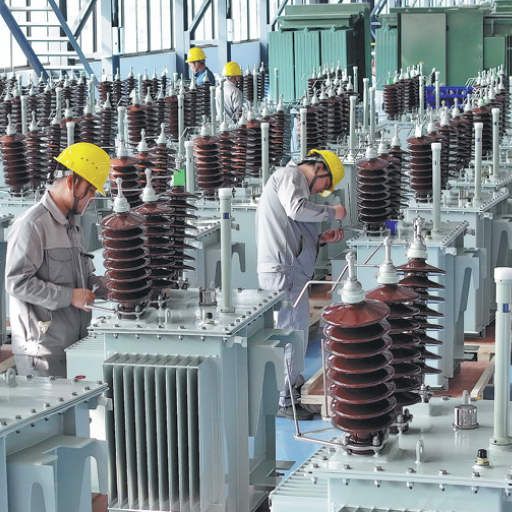
Chinese manufacturing dominates global transformer supply for practical reasons. The country has built an integrated electrical equipment ecosystem over several decades. Raw materials, component suppliers, skilled labor, testing infrastructure, and export logistics are concentrated in industrial regions.
The core cost structure benefits are real. Grain-oriented electrical steel, copper conductors, and insulation materials are sourced close to production centers. Labor costs, while rising, remain competitive for capital-intensive manufacturing. Energy supply for production is generally stable and affordable in major industrial zones. These factors combine to make a transformer factory in China cost-competitive without requiring corners to be cut.
Scale also matters. Large Chinese factories operate multiple production lines for cores, windings, tanks, and enclosures. This vertical integration improves quality control and reduces lead time variability. A factory that cuts its own core steel can verify lamination thickness and grade. A factory that winds its own coils can control conductor placement and insulation quality.
Export infrastructure is another advantage. Major transformer manufacturing regions are close to container ports and rail terminals. Experienced factories understand international packing requirements, moisture protection, customs documentation, and shipping terms. For international buyers, this export maturity reduces delivery risk.
For a broader framework on evaluating Chinese suppliers, see our guide on selecting the best transformer manufacturer in China.
What Happens Inside a Transformer Factory in China
Understanding the manufacturing process helps you evaluate what you are actually buying. A credible transformer factory in China should perform these core operations in-house.
Core Production
The transformer core is assembled from laminated sheets of grain-oriented silicon steel. An integrated factory operates automated cutting lines that shear steel into precise widths and lengths. Step-lap construction, where joints overlap in stepped segments, reduces no-load losses compared to simpler butt-joint designs.
After cutting, the core is assembled and measured for no-load loss before being transferred to the winding workshop. Core loss testing at this early stage prevents expensive rework later. If a factory outsources core production, they lose visibility into steel grade, thickness consistency, and cutting accuracy.
Winding Workshop
Windings are the current-carrying heart of the transformer. In a well-run transformer factory in China, windings are produced in-house using foil or wire techniques selected for the voltage class and kVA rating. Coil winding machines maintain tension and layer alignment. Insulation materials are applied between layers according to the design specification.
In-process checks include winding resistance measurements, turn ratio verification, and visual inspection of insulation placement. For dry type transformers, the workshop may include vacuum pressure impregnation or cast resin stations. For oil immersed units, the coils proceed to assembly after drying.
Tank and Enclosure Fabrication
Oil immersed transformers require welded steel tanks that must remain leak-free for decades. A capable factory operates tank fabrication lines with welding, pressure testing, and surface treatment. Tank welds are inspected, and tanks are pressure-tested before assembly.
Dry type transformers require enclosures that provide protection, ventilation, and safety barriers. Enclosure fabrication includes cutting, bending, welding, and painting. The quality of enclosure finishing affects corrosion resistance and aesthetic appearance.
Assembly and Testing
Final assembly joins the core, windings, and tank or enclosure. For oil immersed units, this includes vacuum drying and oil filling under controlled conditions. The oil acts as both coolant and insulation, so cleanliness and moisture control are critical.
Testing is the final gate. A professional transformer factory in China maintains a high-voltage test bay capable of routine tests, type tests, and special tests. At minimum, verify that the factory performs winding resistance, turn ratio, no-load loss, load loss, and insulation tests. For medium and high voltage units, impulse testing, heat run testing, and partial discharge measurement demonstrate deeper capability.
| Production Stage | What to Verify | Why It Matters |
|---|---|---|
| Core cutting | In-house automated line, grain-oriented steel, step-lap capability | Determines no-load losses and efficiency |
| Winding | Foil or wire winding in-house, insulation systems, in-process checks | Affects thermal performance and short-circuit withstand |
| Tank/enclosure | Welding quality, leak testing, surface treatment | Ensures long-term mechanical and environmental protection |
| Assembly | Core-coil fit, vacuum drying, oil filling cleanliness | Prevents insulation failures and contamination |
| Testing | High-voltage test bay, routine/type/special tests | Validates performance before shipping |
If you are evaluating a factory for large power units, our guide on selecting a power transformer manufacturer covers additional HV testing requirements.
Regional Manufacturing Clusters in China
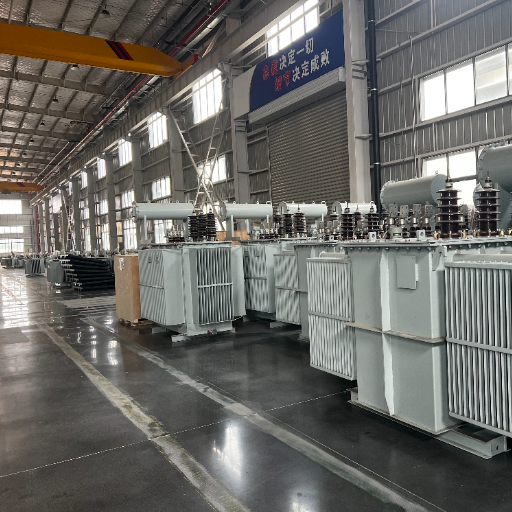
Not all transformer manufacturing regions in China are the same. Three provinces dominate production, each with distinct characteristics.
Shandong Province
Shandong is one of the most established transformer manufacturing bases in China. The province combines strong steel and copper supply chain access with coastal logistics advantages. Factories in Shandong typically serve export markets across Asia, the Middle East, Africa, and Latin America.
The region specializes in medium and large power transformers, distribution transformers, and custom industrial units. Shandong Electric Co., Ltd. operates from this cluster, leveraging the province’s mature supplier network and export infrastructure.
Jiangsu Province
Jiangsu has a dense ecosystem of electrical equipment suppliers and component manufacturers. The region is known for precision manufacturing and strong domestic utility supply. Factories here often excel at medium-voltage distribution transformers and specialized components.
Zhejiang Province
Zhejiang focuses on electrical equipment manufacturing with an emphasis on export-oriented production. The region has developed significant capability in compact transformers, electronic transformers, and smaller distribution units. Lead times can be shorter for standard products due to high production volumes.
| Region | Strengths | Typical Products | Export Focus |
|---|---|---|---|
| Shandong | Mature base, coastal logistics, integrated supply chain | Power, distribution, custom industrial transformers | Middle East, Africa, Southeast Asia, Latin America |
| Jiangsu | Precision manufacturing, dense supplier network | Medium-voltage distribution, specialized components | Domestic + selective export |
| Zhejiang | Export-oriented, high-volume production | Compact transformers, electronic transformers, small distribution | Global, especially standard products |
How to Audit a Transformer Factory in China
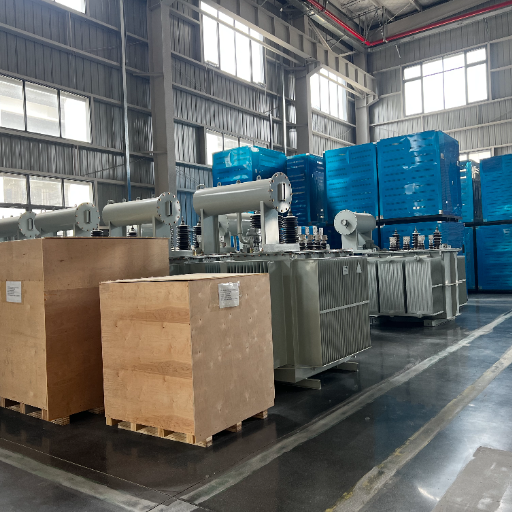
Whether you visit in person or conduct a virtual audit, the goal is the same: verify that the factory can actually do what it claims. A structured audit separates professional manufacturers from risky suppliers.
Pre-Visit Documentation Review
Before any factory tour, request and review key documents:
- Business license and registration details
- ISO 9001 certificate, plus ISO 14001 if available
- Export license and customs registration records
- Reference project list in your region or industry
- Inventory of test equipment with calibration records
- Quality control procedures and inspection records
Verify certificates directly with issuing bodies when possible. Some suppliers present outdated or even forged documentation.
On-Site Audit Checklist
During the visit, observe the following:
Core cutting line. Is it operating? Is the steel storage organized with mill certificates visible? Can operators explain lamination thickness and grade?
Winding workshop. How many winding stations are active? Is work in progress clearly identified? Are coils inspected during production?
High-voltage test bay. This is non-negotiable. A transformer factory in China without an in-house test bay cannot validate its own products. Check for impulse generators, heat run equipment, and partial discharge detectors.
Quality control records. Ask to see recent test reports for units similar to your requirements. Check for traceability from material receipt through final test.
Raw material storage. Organized steel and copper storage with material certificates indicates process discipline. Chaotic storage suggests weak incoming inspection.
Rework and rejection area. A professional factory has a designated area for non-conforming products. Hiding rework areas is a warning sign.
Virtual Audit Alternative
When travel is not practical, a virtual audit can still be effective. Liu, a consulting engineer in Southeast Asia, conducted a video factory audit for a utility project during travel restrictions. He required the supplier to walk him through the core cutting, winding, and testing areas in real time using a mobile camera. He asked for close-up shots of material certificates and test equipment calibration stickers. He also requested that the factory show him recent test reports while on the call.
The factory passed the audit. It delivered eight medium-voltage transformers on schedule, and all units passed witnessed acceptance tests. Liu’s experience shows that systematic remote evaluation can work when the buyer knows what to ask for.
If you want our team to walk you through our facilities and capabilities, request a virtual factory tour with our engineering staff.
Red Flags: When to Walk Away
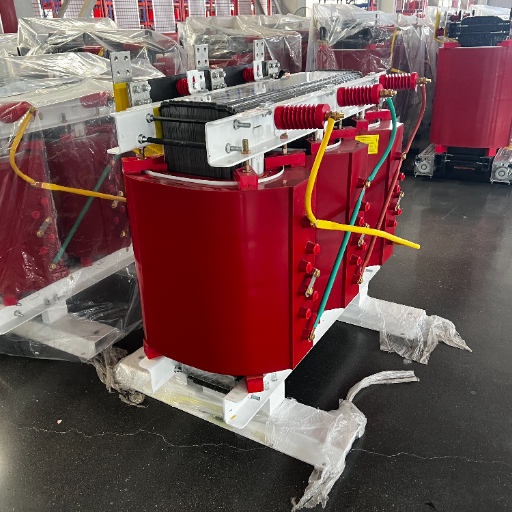
Some signs indicate that a transformer factory in China is not a safe manufacturing partner. Treat these as serious disqualifiers.
Outsourced core or winding production. If the factory cannot show you these operations, they are an assembler, not a manufacturer. Quality control becomes impossible.
No high-voltage test bay. A factory that sends units elsewhere for basic testing lacks the infrastructure to verify performance. This is unacceptable for critical power equipment.
Refusal to show production areas. A legitimate manufacturer has nothing to hide. Refusal suggests poor conditions, subcontracting, or worse.
Missing or suspicious certifications. Claims of ISO certification should be backed by verifiable certificates. Vague statements like “we follow ISO standards” are not the same as certification.
No export references. First-time exporters often struggle with documentation, packing, and logistics. Experienced factories can provide reference projects and contactable customers.
Inconsistent quality records. If test reports vary significantly for similar units, or if the factory cannot produce recent records, quality systems are weak.
Michael’s experience with the Middle East EPC project included several of these red flags. Had he audited the factory before placing the order, he would have discovered the outsourced core production and missing impulse testing capability. His story underscores why verification matters more than price.
China vs Other Manufacturing Regions
China is not always the right choice, but it often wins for integrated transformer manufacturing. Understanding the alternatives helps justify the decision.
India offers competitive labor costs and a growing manufacturing base. However, many Indian transformer factories rely more heavily on imported core steel and copper, which can create supply chain delays. Export documentation experience is also less mature than in China’s leading regions.
Turkey provides geographic advantages for European and Middle Eastern buyers. Logistics times can be shorter. However, production scale and vertical integration are generally lower than in China, leading to higher costs for large or complex units.
Eastern Europe offers strong technical capability and EU standards familiarity. Lead times to Europe are short. The limitation is cost; fully manufactured transformers in Eastern Europe are typically 30 to 50 percent more expensive than comparable Chinese units.
| Region | Cost | Scale | Export Experience | Lead Time to Europe | Lead Time to Middle East/Africa |
|---|---|---|---|---|---|
| China | Low | Very High | Very High | 6-8 weeks sea freight | 4-6 weeks sea freight |
| India | Low-Medium | Medium | Medium | 7-9 weeks sea freight | 5-7 weeks sea freight |
| Turkey | Medium | Medium | Medium-High | 1-2 weeks land/sea | 2-3 weeks sea freight |
| Eastern Europe | High | Medium | High | 1-2 weeks land | 3-4 weeks sea freight |
Sophie, a sourcing manager for an African utility, compared these options for a 20-unit order. The transformer factory in China she selected offered integrated production, stronger export documentation, and a total landed cost 12 percent lower than India and 18 percent lower than Turkey. The project completed three weeks ahead of schedule because documentation and logistics were handled smoothly.
For buyers focused on non-standard specifications, our custom transformer manufacturer guide explains how to evaluate custom engineering capability alongside manufacturing scale.
Conclusion
Sourcing from a transformer factory in China offers significant advantages, but only when you verify what is actually happening inside the facility. Scale, cost, and export experience matter, but they cannot compensate for weak quality control or outsourced critical processes.
Use the audit framework in this guide for your next supplier evaluation. Verify core cutting, winding, tank fabrication, and high-voltage testing. Check certifications directly with issuing bodies. Ask for reference projects in your region. And never let price alone drive the decision.
The right transformer factory in China becomes a long-term manufacturing partner. Send your project requirements to Shandong Electric Co., Ltd. for a factory capability review, virtual tour, and detailed quotation.