
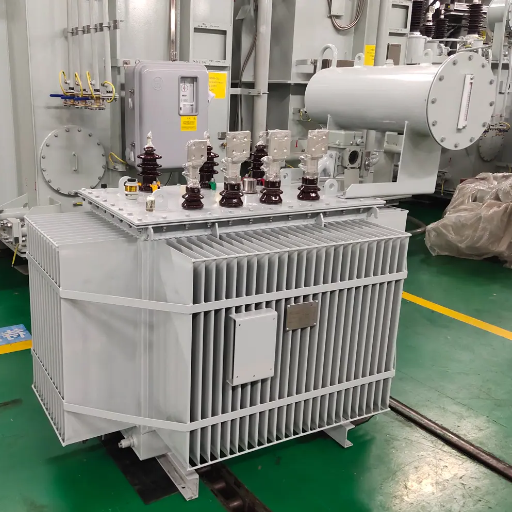
Custom Transformer Manufacturer: When and How to Specify Non-Standard Designs

A custom transformer manufacturer engineers and builds units for applications where standard catalog specifications do not match real operating conditions. Standard transformers fit roughly 60 to 70 percent of typical installations. The remaining 30 to 40 percent require modified voltage ratios, special tapping ranges, non-standard frequencies, or enhanced insulation systems that only a custom engineering partner can deliver.
Anita, a procurement manager for a steel rolling mill in India, assumed custom meant unnecessarily expensive. She ordered standard 2,500 kVA distribution transformers for a line heavy with variable frequency drives. Within six months, harmonic currents caused excessive heating. Insulation degraded. Two units failed prematurely. The second time around, she worked with a custom transformer manufacturer that specified K-factor 20 windings, oversized neutral conductors, and derated capacity for harmonic duty. Those custom units have operated four years without a single thermal alarm. The total cost of the failed standard units, including emergency replacement and lost production, exceeded the custom premium by a factor of three.
By the end of this guide, you will know when a custom transformer is genuinely necessary, what the design process involves, how lead times and costs compare to standard units, and how to evaluate a custom transformer manufacturer before placing an order.
Key Takeaways
- Standard catalog transformers cover roughly 60-70% of applications; the rest need custom engineering for voltage, load profile, or environment.
- A custom transformer manufacturer should control design validation, prototype testing, and material traceability in-house.
- Harmonic-rich loads, altitude derating, and non-standard voltages are the most common reasons to specify custom designs.
- Custom lead times range from 6-20 weeks depending on complexity; simple voltage modifications take less time than full special designs.
- OEM partnerships require manufacturer commitment to consistent quality, branded documentation, and IP protection, not just production capacity.
What Makes a Transformer “Custom”?
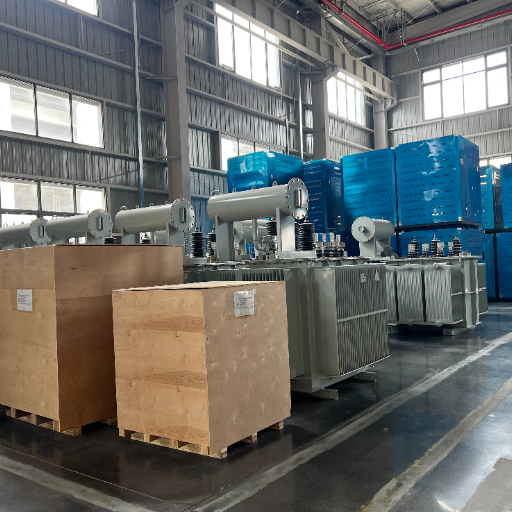
The word custom gets overused in transformer marketing. A truly custom transformer is one where engineering design changes are required to meet operating conditions that fall outside standard catalog parameters. This is different from a modified standard unit, where a manufacturer adjusts taps or enclosures within existing design frames.
Custom engineering typically involves one or more of the following:
- Non-standard voltage ratios or multi-voltage output configurations
- Special tapping ranges beyond standard plus-or-minus 2.5 percent steps
- Modified impedance voltage for fault current limitation or motor starting
- Non-standard frequency, such as 50 Hz equipment operating on 60 Hz networks
- Enhanced insulation systems for high-temperature rise or altitude derating
- Special winding configurations, including K-factor ratings for harmonic loads
- Custom enclosures for corrosive, hazardous, or space-constrained environments
A modified standard unit might change the secondary voltage from 415V to 400V within the same frame design. A custom unit might require entirely new magnetic circuit calculations, thermal modeling, and verification testing because the load profile or environment differs fundamentally from standard assumptions.
For a broader overview of manufacturer capabilities, see our transformer manufacturer guide.
When Do You Actually Need a Custom Transformer?
Not every non-standard requirement justifies full custom engineering. Understanding the boundary between standard, modified, and custom saves both time and money.
Non-Standard Voltage Requirements
Voltage mismatches are the most common driver for custom work. Pierre, a plant engineer at a French manufacturing facility, faced exactly this problem when his company relocated a production line from Germany. The German equipment was designed for 400V three-phase supply with TN-S grounding. The French facility provided 380V with TT grounding configuration. A standard 400/230V transformer could not deliver the correct voltage or safety grounding arrangement.
Pierre engaged a custom transformer manufacturer that designed a 380/400V step-up unit with a special vector group to match the German equipment’s earthing requirements. Because the line ran on 400V three-phase supply, he prioritized a proven three phase transformer manufacturer that could match the German equipment’s vector group and earthing arrangement exactly. The project commissioned without modifying a single motor drive or control panel. The custom transformer cost 18 percent more than a standard equivalent, but it saved an estimated €80,000 in equipment replacement and re-engineering.
If your project involves step up transformer vs step down transformer decisions with non-standard ratios, custom engineering is often the only practical path.
Special Load Profiles
Standard transformers are designed for linear loads with predictable current waveforms. Modern industrial plants frequently operate in conditions that violate those assumptions.
Variable frequency drives, rectifiers, UPS systems, and arc furnaces generate harmonic currents that increase heating in transformer windings and neutrals. A standard transformer may overheat even when the measured kVA load appears within its nameplate rating. K-factor rated windings, oversized neutrals, and derated capacity are custom engineering responses to these conditions.For plants running this kind of harmonic-rich duty, an experienced industrial transformer supplier can match the winding and neutral design to your actual load spectrum rather than a generic nameplate rating.
Anita’s experience with the steel rolling mill is a textbook example. The VFD loads created harmonic spectra that standard transformers were never designed to handle. Her custom transformer manufacturer analyzed the harmonic profile, calculated the additional eddy current losses, and specified K-factor 20 windings with 200 percent rated neutral busbars. The result was reliable operation where standard units had failed.
Environmental and Installation Constraints
High altitude reduces air density and cooling effectiveness. For every 100 meters above 1,000 meters, transformer temperature rise increases unless the unit is custom derated or fitted with enhanced cooling. Extreme ambient temperatures, corrosive atmospheres, and seismic requirements also push designs beyond standard catalog limits.
Space-constrained installations may require custom dimensions that do not match standard frame sizes. Underground vaults, shipboard applications, and offshore platforms frequently need special enclosure shapes, mounting arrangements, or cooling configurations that only a custom transformer manufacturer can engineer.
Regulatory and Efficiency Requirements
Regional efficiency regulations sometimes exceed standard catalog offerings. The U.S. DOE 2016 standard and EU Ecodesign directives mandate specific maximum loss levels. If your project must meet these requirements and standard units do not comply, custom low-loss designs become necessary.
Special certifications for marine, mining, nuclear, or explosive atmosphere applications also demand custom engineering. A standard industrial transformer will not meet DNV marine certification or ATEX hazardous area requirements without significant redesign.For high-MVA substation or transmission-grade units in this category, you may also need a dedicated power transformer manufacturer with the heavy fabrication and high-voltage test capability that these ratings demand.
The Custom Design Process: What to Expect
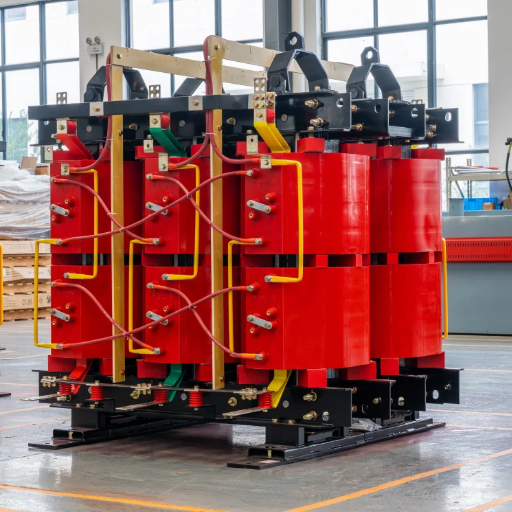
Working with a custom transformer manufacturer follows a structured engineering workflow. Understanding each phase helps you provide the right information at the right time and avoids costly redesign cycles.
Step 1: Technical Requirements Gathering
The manufacturer begins by reviewing your single-line drawings, load schedules, and installation data. Key inputs include:
- Primary and secondary voltage requirements
- Load profile, including power factor and harmonic spectrum
- Maximum and continuous kVA demand
- Ambient temperature range and altitude
- Installation environment (indoor, outdoor, vault, hazardous area)
- Regulatory standards and certification requirements
- Physical size constraints and mounting arrangement
A capable custom transformer manufacturer asks detailed questions during this phase. If a supplier sends a quotation without requesting this information, they are selling modified standard units, not performing custom engineering.
Step 2: Design Validation
Once requirements are established, the engineering team performs magnetic circuit calculations, thermal modeling, and short-circuit force analysis. This phase determines:
- Core dimensions and steel grade for the required flux density
- Winding conductor size, arrangement, and insulation system
- Temperature rise under rated and overload conditions
- Impedance voltage and losses
- Mechanical withstand for through-fault currents
Computer-aided design tools speed this process, but experienced engineers must validate the results. Thermal modeling is particularly critical for custom units because standard heat run data does not apply to non-standard designs.
Step 3: Manufacturing with Traceability
Custom manufacturing requires tighter process control than standard production. The custom transformer manufacturer should maintain:
- Core steel mill certificates verifying grain orientation and thickness
- Copper or aluminum conductor purity documentation
- Insulation material traceability to temperature class ratings
- In-process winding resistance and ratio checks
- Photographic or video documentation of critical assembly stages
Material traceability protects both parties if field issues arise later. It also supports warranty claims and third-party inspection requirements.
Step 4: Verification Testing
Custom transformers require testing beyond routine factory tests. Depending on the design changes, verification may include:
- Standard routine tests: winding resistance, turn ratio, no-load loss, load loss
- Heat run test to verify temperature rise predictions
- Noise level measurement for urban or indoor installations
- Partial discharge measurement for medium and high voltage designs
- Impulse testing for special insulation arrangements
Third-party witnessed tests add credibility and are often required for utility or critical infrastructure projects. Confirm that your custom transformer manufacturer can accommodate witnessed testing before placing the order.
OEM and Private-Label Partnerships
Custom transformer manufacturing extends beyond one-off project engineering. OEM buyers, system integrators, and private-label distributors need consistent, repeatable custom production with branded documentation.
Robert, an OEM product manager for an industrial power distribution company in the United States, learned the difference between a project shop and a true OEM partner the hard way. His first custom transformer manufacturer delivered acceptable quality on small batches but could not maintain consistency when volumes grew from 50 to 400 units annually. Test reports varied in format. Lead times stretched unpredictably. Documentation was often delayed.
Robert evaluated four manufacturers using OEM-specific criteria: dedicated account engineering, standardized test report templates, scheduled production slots, and shared inventory programs. The partner he selected committed to a formal OEM program with consistent quality systems and branded documentation. Over three years, the relationship scaled smoothly and reduced his average procurement cycle by four weeks.
An OEM-ready custom transformer manufacturer should offer:
- Consistent quality systems with statistical process control
- Branded nameplates, test reports, and manuals
- Scheduled production with volume-based pricing
- Design stability and change control procedures
- Intellectual property protection through NDAs and restricted design access
- Shared or consignment inventory for fast fulfillment
If you are evaluating manufacturers for OEM partnership, contact our team to discuss dedicated program structures and volume commitments.
Custom Transformer Cost and Lead Time Factors
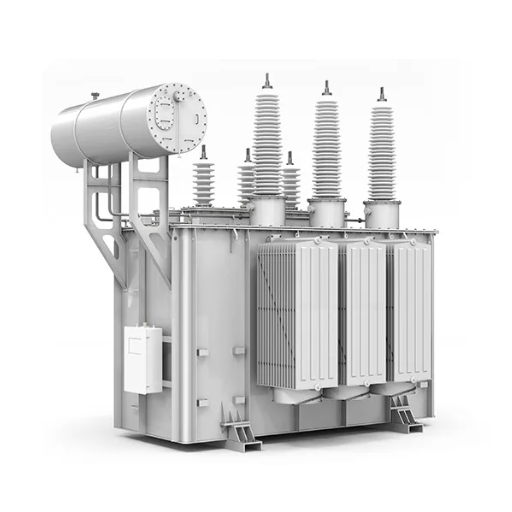
Buyers naturally want to understand the premium associated with custom engineering. The answer depends on what type of customization is required.
Cost Drivers
Custom transformer costs typically run 20 to 40 percent above equivalent standard units. The premium comes from:
- Engineering design time for magnetic and thermal calculations
- Non-standard materials, such as higher-grade core steel or enhanced insulation
- Special tooling or fixtures for unique dimensions
- Enhanced testing requirements, including heat runs or witnessed tests
- Low-volume production inefficiency when only one or two units are ordered
The key is comparing the total cost of ownership, not just the purchase price. Pierre’s custom 380/400V transformer cost 18 percent more than standard, but saved €80,000 in equipment changes. Anita’s custom K-factor units cost 25 percent more, but they eliminated premature failure and production losses.
Lead Time Range
| Customization Level | Typical Lead Time | Examples |
|---|---|---|
| Simple voltage modification | 6-8 weeks | Standard tap adjustment, voltage ratio change |
| Moderate custom engineering | 10-14 weeks | Special taps, impedance changes, K-factor windings |
| Complex special design | 16-20 weeks | Multi-voltage output, non-standard frequency, marine certification |
| Prototype plus production | Add 4-6 weeks | First article approval before production release |
Simple voltage modifications within existing frame designs can sometimes match standard lead times. Complex special designs requiring new magnetic circuits and prototype validation extend the schedule significantly.
Cost-Saving Strategies
Smart procurement reduces custom premiums without sacrificing engineering quality:
- Standardize where possible by using manufacturer standard frame sizes as the design baseline
- Bundle multiple units into one order to amortize engineering costs
- Provide complete technical data upfront to avoid redesign cycles
- Engage the custom transformer manufacturer early in your project design phase
- Consider annual or multi-year agreements for recurring custom requirements
For a detailed breakdown of lead time planning, see our guide on selecting an electrical transformer manufacturer.
How to Evaluate a Custom Transformer Manufacturer
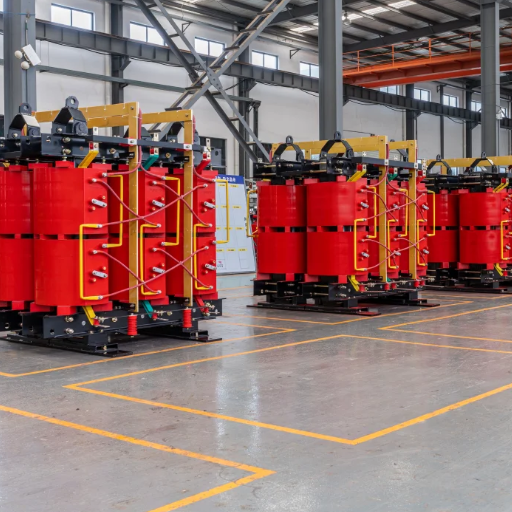
Not every manufacturer claiming custom capability delivers true engineering partnership. Evaluate potential partners across six dimensions.
Engineering team capability. Ask about the size and experience of the design engineering staff. Do they perform magnetic circuit calculations in-house, or outsource to third-party consultants? Can they provide sample design calculations for review?
CAD and simulation tools. Modern custom design relies on thermal modeling software, finite element analysis for short-circuit forces, and electromagnetic field simulation. Confirm the manufacturer uses these tools and can share methodology.
Prototype production capability. For complex custom designs, a prototype or first article unit validates the engineering before full production. Verify the manufacturer can build prototypes without disrupting standard production schedules.
Special test equipment. Custom designs often require testing beyond routine factory tests. Confirm the manufacturer maintains heat run chambers, noise measurement facilities, and partial discharge detection equipment.
Reference projects with similar complexity. Ask for case studies or references involving custom designs comparable to your requirements. A manufacturer experienced in K-factor windings may not have expertise in marine certification.
IP protection and confidentiality. Custom designs often involve proprietary process information or unique specifications. Confirm the manufacturer will sign NDAs, restrict design access to essential personnel, and protect your intellectual property.
| Evaluation Dimension | What to Ask | Strong Signal | Warning Sign |
|---|---|---|---|
| Engineering team | Size, experience, calculation capability | In-house team with 10+ years of average experience | No dedicated design engineers |
| Simulation tools | Thermal, magnetic, and mechanical modeling | Uses commercial FEA and thermal software | No simulation, rule-of-thumb only |
| Prototype capability | First article process, timeline | Clear prototype-to-production workflow | No prototype option |
| Test equipment | Special test availability | Heat run, noise, partial discharge in-house | Sends special tests to third parties |
| Reference projects | Similar complexity examples | Detailed case studies with photos, data | Vague claims, no specifics |
| IP protection | NDA, confidentiality practices | Formal NDA process, restricted file access | Refuses to discuss IP terms |
Conclusion
Custom transformer manufacturing solves real engineering problems that standard catalog units cannot address. The decision to specify custom should be driven by technical necessity, not preference. Voltage mismatches, harmonic-rich loads, extreme environments, and special regulatory requirements are all valid reasons to engage a custom transformer manufacturer.
The custom design process follows a predictable path: requirements gathering, design validation, controlled manufacturing, and verification testing. Understanding each phase helps you provide better inputs and avoid surprises. OEM partnerships add another layer, requiring consistency, documentation quality, and intellectual property protection beyond project-based custom work.
Start by confirming whether your requirements truly fall outside standard parameters. If they do, select a manufacturer with demonstrated engineering depth, simulation capability, and special test infrastructure. The right custom transformer manufacturer reduces total project cost, prevents field failures, and delivers equipment that performs reliably for decades.
Send your voltage, load profile, and installation requirements to Shandong Electric Co., Ltd. for a custom engineering review and quotation.