
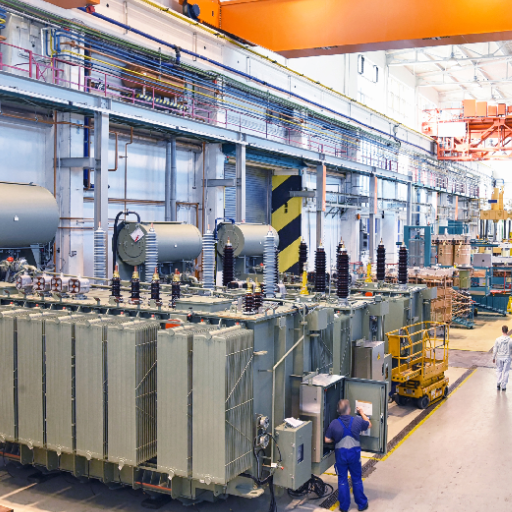
Power Transformer Manufacturer: How to Source High-Capacity Units for Substations and Industry

A power transformer manufacturer designs, engineers, and produces high-voltage, high-capacity transformers typically rated from 2.5 MVA to over 300 MVA. Unlike distribution transformer manufacturers, who specialize in smaller units for end-user delivery, a power transformer manufacturer operates large core cutting equipment, heavy tank fabrication shops, and high-voltage test bays capable of performing full type test suites including heat run, impulse voltage, and short-circuit withstand tests.
When a procurement manager in the Middle East requested a 50 MVA transformer from a manufacturer that had only ever built distribution units up to 5 MVA, the result was predictable: the unit failed its factory acceptance heat run test, delayed the substation project by four months, and cost the contractor an additional $80,000 in rework and liquidated damages. The manufacturer simply lacked the core diameter capability, winding expertise, and test bay capacity that a true power transformer manufacturer brings to high-MVA projects.
If you are specifying transformers for a substation, industrial plant, or renewable energy installation, this guide explains how a power transformer manufacturer differs from a general manufacturer, which capabilities matter at each MVA level, what type of tests prove reliability, and how to plan realistic lead times for your project.
Key Takeaways
- A power transformer manufacturer specializes in units from 2.5 MVA to 300+ MVA, requiring fundamentally different equipment and expertise than distribution-focused manufacturers.
- Key differentiators include large-diameter core cutting, heavy tank fabrication, high-voltage test bays, and full type test capability (heat run, impulse, short circuit).
- Most power transformers above 10 MVA are oil immersed, making vacuum drying and oil processing capability essential.
- Lead times range from 8 weeks for small power transformers to 40+ weeks for units above 100 MVA, with core steel availability and test bay scheduling as critical bottlenecks.
- Substation procurement requires grid code compliance and on-load tap changer specification; industrial procurement requires harmonic load assessment and fire protection planning.
What Is a Power Transformer Manufacturer?
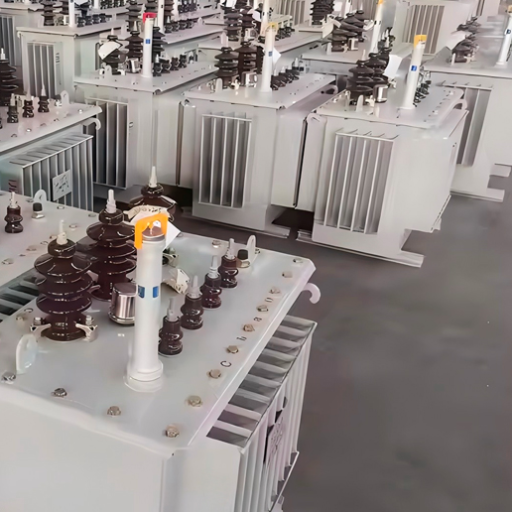
A power transformer manufacturer is a factory that designs, builds, and tests transformers in the high-voltage, high-capacity range. These units serve transmission networks, utility substations, heavy industrial facilities, and large renewable energy projects where voltage transformation occurs at the bulk power level rather than at the distribution edge.
The term “power transformer” is defined by IEC 60076-1 as a transformer with ratings above a threshold that varies by application, but in practice the distinction is clear: distribution transformers typically top out at 5 MVA and 36 kV, while power transformers start at approximately 2.5 MVA and extend to 765 kV or higher. A manufacturer that builds only distribution units cannot simply scale up its process to build a 100 MVA unit. The core diameter, winding machines, tank welding, and test equipment are an order of magnitude larger and more specialized.
Power Transformer vs. Distribution Transformer Manufacturing
| Factor | Power Transformer | Distribution Transformer |
|---|---|---|
| Typical MVA range | 2.5 to 300+ MVA | 25 kVA to 5 MVA |
| Typical voltage | 33 kV to 765 kV | Up to 36 kV |
| Core cutting | Large-diameter, step-lap construction | Standard butt-lap, smaller diameters |
| Winding | Disc and interleaved windings, CTC conductors | Layer or helical windings |
| Tank fabrication | Heavy welded steel, radiators, conservator | Simple tank or enclosure |
| Testing | Full type tests required | Routine tests only |
| Transport | Often ships in components; on-site assembly | Ships as complete unit |
| Lead time | 8 to 40+ weeks | 4 to 8 weeks |
The cost of failure is the most important difference. A failed distribution transformer affects a neighborhood. A failed power transformer can interrupt supply to an entire industrial zone or transmission corridor. That risk difference drives every aspect of how a power transformer manufacturer approaches design, materials, testing, and quality assurance.
Want a general framework for evaluating any transformer manufacturer before you request quotations? See our guide on how to choose a transformer manufacturer for a complete capability checklist.
Key Manufacturing Capabilities for Power Transformers
When evaluating a power transformer manufacturer, verify these five core capabilities before requesting a detailed quotation. Each capability must match the MVA and voltage class of your project.
Core Steel Processing
Transformer cores are built from grain-oriented silicon steel laminations. For power transformers, the core diameter can exceed one meter, requiring specialized cutting and stacking equipment that smaller manufacturers simply do not possess. The manufacturer should source CRGO (cold-rolled grain-oriented) steel from reputable mills and offer material certificates tracing each coil back to the steel producer.
Step-lap construction, where overlapping joints are staggered across multiple steps rather than simple butt joints, reduces no-load losses and magnetostrictive noise. A capable power transformer manufacturer should have automated step-lap cutting and stacking lines. For a 100 MVA unit, a 0.1 W/kg improvement in core steel grade can save over $50,000 in electricity costs across the transformer service life.
Winding Capability
Power transformer windings are more complex than distribution windings. At higher voltages and currents, manufacturers use disc windings with interleaved sections to improve impulse voltage distribution. For high-current low-voltage windings, continuous transposed conductors (CTC) reduce eddy current losses by transposing individual strands throughout the winding length.
Ask the manufacturer about their largest winding machine capacity. A power transformer manufacturer should have multiple winding machines capable of handling conductors for units up to their rated MVA maximum. If your project requires 132 kV or higher, confirm that the manufacturer has experience with that voltage class, not just lower tiers.When your specification falls outside standard voltage ratios, tap ranges, or winding configurations, it pays to work with a dedicated custom transformer manufacturer that can engineer the windings to your exact requirements rather than forcing your project into a catalog design.
Tank Fabrication and Cooling Systems
Power transformer tanks are welded steel structures that must contain the insulating oil, support the core and windings, and integrate cooling radiators or coolers. For units above 50 MVA, the tank and oil weight can exceed 50 metric tons, requiring heavy fabrication shops with crane capacity and radiographic welding inspection.
The cooling system design also differs. Small units rely on natural oil circulation and radiator cooling. Large units may require forced oil and forced air (OFAF) or even forced oil and water (OFWF) cooling. The manufacturer must design the cooling system to maintain winding temperatures within IEC or IEEE limits under rated load and overload conditions.
Vacuum Drying and Oil Processing
Most power transformers above 10 MVA are oil-immersed, making vacuum drying and oil processing essential. The manufacturer must operate vacuum ovens large enough to hold the complete core and winding assembly, heating it under vacuum to remove all moisture before oil filling.
After drying, the unit is filled with insulating oil that has been filtered, degassed, and dried to precise specifications. Some manufacturers also perform hot oil circulation after filling to ensure complete impregnation of cellulose insulation. Without this capability, moisture remains trapped in the insulation, leading to accelerated aging and potential dielectric failure.
Testing Laboratory
This is the single most critical differentiator. A legitimate power transformer manufacturer operates a high-voltage test laboratory with equipment capable of performing routine tests on every unit and type tests on representative designs.
Routine tests include winding resistance, turns ratio, no-load loss, load loss, and applied voltage tests. Type tests, which verify the design under extreme conditions, include temperature rise (heat run), lightning impulse, switching impulse (for 220 kV and above), short-circuit withstand, sound level measurement, and partial discharge testing.
A manufacturer without an in-house test bay for power transformers cannot guarantee compliance with IEC 60076 or IEEE C57.12.00. Third-party testing is possible but adds weeks to lead time and tens of thousands of dollars to cost.
Voltage Classes and MVA Ratings
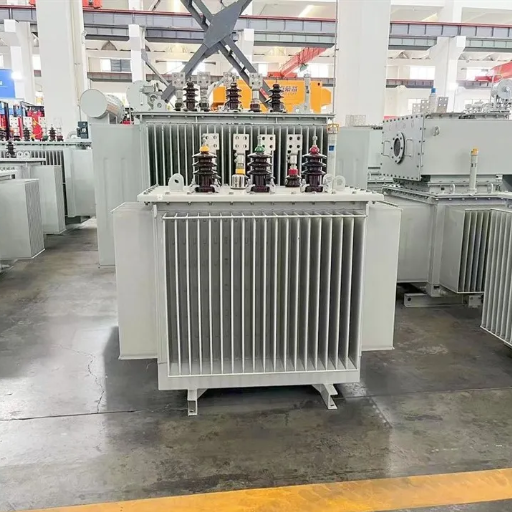
Power transformers are categorized by voltage class and MVA rating. Understanding where your project fits helps you identify the right power transformer manufacturer and set realistic expectations for lead time and cost.
Standard Voltage Classes
Common voltage classes for power transformers include 33 kV, 66 kV, 110 kV, 132 kV, 220 kV, 400 kV, and 765 kV. The primary voltage is determined by the grid connection point, while the secondary voltage depends on the substation or industrial load requirements.
Not every manufacturer covers every voltage class. Many regional manufacturers specialize in 33 kV to 132 kV units, while only a handful of global manufacturers routinely produce 400 kV and 765 kV transformers. If your project requires 220 kV or above, verify that the manufacturer has delivered units in that class before and can provide type test reports.
Typical MVA Ratings by Application
| Application | Typical MVA Range | Common Voltages |
|---|---|---|
| Industrial substations | 5 to 50 MVA | 33/11 kV, 66/11 kV |
| Utility distribution substations | 20 to 100 MVA | 132/33 kV, 220/66 kV |
| Transmission substations | 100 to 300 MVA | 400/220 kV, 220/132 kV |
| Generator step-up (GSU) | 200 to 1,000+ MVA | 15.75/400 kV, 24/765 kV |
Auto transformers, which share a common winding between primary and secondary, are common in transmission applications where the voltage ratio is moderate (for example, 400 kV to 220 kV). Two-winding transformers are standard for larger voltage ratios and industrial applications.Because nearly all substation and industrial units at these ratings are three-phase, it helps to source from an experienced three phase transformer manufacturer that understands balanced load design, vector group selection, and neutral handling for high-MVA applications.
When specifying MVA rating, always include an allowance for future load growth. A common rule is 20 to 25 percent above present maximum demand. Undersizing leads to overheating and premature insulation aging. Oversizing reduces efficiency at partial load and increases upfront cost.
Standards and Type Testing for Power Transformers
Power transformers must comply with international or national standards depending on the target market. A credible power transformer manufacturer designs to these standards and verifies compliance through comprehensive testing.
IEC 60076 Series
The IEC 60076 standards govern power transformer design, testing, and performance for global markets. Key parts include:
- IEC 60076-1: General requirements and definitions
- IEC 60076-2: Temperature rise for liquid-immersed transformers
- IEC 60076-3: Insulation levels, dielectric tests, and external clearances
- IEC 60076-5: Ability to withstand short circuit
- IEC 60076-10: Determination of sound levels
- IEC 60076-11: Dry-type transformers
- IEC 60076-14: Design and application of liquid-immersed power transformers under overload conditions
For markets in Asia, Africa, Europe, the Middle East, and Latin America, IEC compliance is typically mandatory for utility acceptance.
IEEE C57.12.00 and C57.12.90
IEEE standards serve North American and several Latin American markets. IEEE C57.12.00 defines performance requirements, while C57.12.90 specifies test codes. A power transformer manufacturer serving global markets should understand both IEC and IEEE requirements and be able to design to either standard on request.
Key Type Tests
Type tests verify that a transformer design can withstand operating stresses and fault conditions. These tests are performed on a representative unit of each design family, not on every individual transformer.
| Type Test | What It Verifies | Typical Voltage Threshold |
|---|---|---|
| Temperature rise (heat run) | Winding hot spot temperature under rated load | All ratings |
| Lightning impulse (LI) | Dielectric strength against lightning surges | All ratings |
| Switching impulse (SI) | Dielectric strength against switching surges | 220 kV and above |
| Short-circuit withstand | Mechanical strength against fault currents | All ratings |
| Sound level measurement | Noise emissions under load | All ratings |
| Partial discharge | Insulation integrity and void detection | Typically 72.5 kV and above |
Why Type Tests Matter More for Power Transformers
The cost of a power transformer failure is exponentially higher than a distribution transformer failure. A single 100 MVA unit can cost 500,000to500,000to2,000,000 depending on specifications. If that unit fails in service, the replacement cost is only part of the damage: outage penalties, lost production, emergency procurement premiums, and reputational damage can multiply the financial impact tenfold.
Type tests provide the engineering confidence that the design will perform as specified under real-world stress. Grid codes in most countries require type test certificates before a power transformer can be connected to the transmission system. Insurance underwriters and utility procurement departments routinely demand copies of type test reports as a condition of purchase.
When Lisa, a utility procurement manager in Southeast Asia, needed two 100 MVA auto transformers for a transmission upgrade, she requested type test reports from three manufacturers. One supplier provided only routine test summaries. The second provided a partial discharge report but no heat run data. The third supplier delivered complete IEC 60076-1 type test reports with third-party witness signatures. She selected the third manufacturer and received units that passed site acceptance testing on the first attempt.
Understanding transformer efficiency standards helps you evaluate loss data in test reports. Learn more about transformer efficiency ratings and testing protocols to interpret no-load and load loss figures.
Procurement Checklist: Substation vs. Industrial Applications
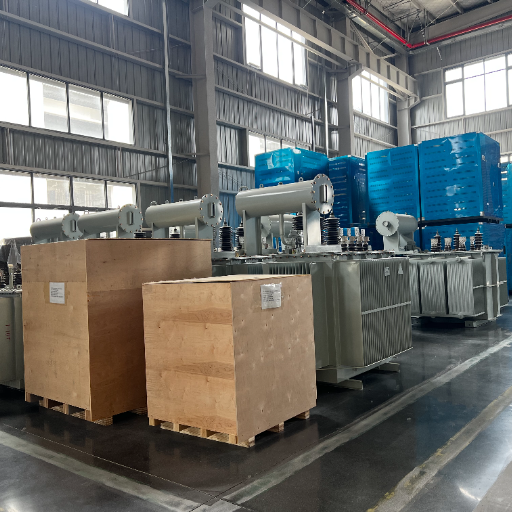
The procurement requirements for a power transformer depend on whether the unit serves a utility substation or an industrial facility. A power transformer manufacturer should be evaluated against the specific checklist for your application.
Substation and Utility Procurement
Utility and transmission procurement emphasizes grid code compliance, interoperability, and long-term reliability. Key requirements include:
Grid code compliance verification: The transformer must meet the grid code of the connecting utility, which specifies voltage regulation, impedance, overload capability, and protection coordination. Request a copy of the grid code and ask the manufacturer to confirm compliance in writing.
On-load tap changer (OLTC) specification: Most substation transformers include an OLTC to maintain secondary voltage within narrow bands as primary voltage and load vary. Specify the OLTC make, model, voltage range, and step size. The OLTC is often the most failure-prone component of a power transformer, so manufacturer experience with your preferred OLTC brand matters.
Parallel operation requirements: If the transformer will operate in parallel with existing units, the vector group, impedance, and tap range must match within tight tolerances. Provide the manufacturer with the specifications of existing transformers to ensure compatibility.
Spare parts and service availability: A power transformer has a 30 to 40 year service life. Confirm that the manufacturer can supply spare bushings, gaskets, OLTC contacts, and control equipment over that timeframe. Ask about service technician availability for on-site maintenance and emergency response.
Warranty terms: Standard warranty for power transformers is typically 24 to 36 months from energization. Some manufacturers offer extended warranties with preventive maintenance agreements. Clarify what the warranty covers: manufacturing defects only, or does it include premature failure due to design issues?
Industrial Procurement
Industrial procurement focuses on load characteristics, environmental conditions, and integration with existing switchgear. Key requirements include:
Motor starting and harmonic load assessment: Industrial loads include large motors with high inrush current and variable frequency drives that generate harmonic currents. These loads increase transformer heating beyond nameplate ratings. Specify the motor starting kVA, harmonic spectrum, and any K-factor requirements. A power transformer manufacturer with industrial experience will size the unit accordingly and may recommend a K-13 or K-20 rated design for high-harmonic environments.
Duty cycle and overload profile: Some industrial processes require frequent overloads or cyclic loading. Furnace transformers, for example, operate at high overload for short periods. Provide the manufacturer with a load profile graph showing kVA versus time over a 24-hour cycle.
When Chen, an industrial plant engineer in eastern China, specified a 31.5 MVA furnace transformer for a steel mill expansion, the general transformer manufacturer he initially approached lacked experience with high-harmonic loads. The manufacturer’s standard design used a conventional neutral bushing rated for balanced three-phase current. A specialized power transformer manufacturer redesigned the unit with an increased neutral capacity, K-factor rating, and forced oil cooling. The transformer has operated for three years without the overheating issues that had plagued the plant’s previous 20 MVA unit.
Indoor vs. outdoor installation constraints: Outdoor installations require weatherproof tanks, bushings with adequate creepage distance, and oil containment systems. Indoor installations may require fire protection systems, oil pits, or even dry-type alternatives. For indoor safety-critical applications, a dry type transformer may be a better fit than an oil-filled unit.
Fire protection and oil containment: Large oil-filled power transformers contain thousands of liters of insulating oil. Local regulations may require oil containment pits, fire walls, or water spray protection systems. The manufacturer should provide oil volume, flash point, and fire risk data to support your fire protection engineering.
Integration with existing switchgear: The transformer bushings must physically and electrically match the existing switchgear buswork and cable terminations. Provide the manufacturer with dimensional drawings of the switchgear interface and specify bushing types, orientations, and heights.
Lead Times and Project Planning
Power transformer lead times are longer than distribution transformer lead times, and the range varies significantly with MVA rating, voltage class, and material availability. A realistic lead time estimate is essential for project scheduling.
Typical Lead Time Ranges
| MVA Range | Typical Lead Time | Key Bottlenecks |
|---|---|---|
| 5 to 30 MVA | 8 to 12 weeks | Core steel, winding schedule |
| 30 to 100 MVA | 12 to 20 weeks | Core steel, OLTC procurement, test bay |
| 100+ MVA | 20 to 40+ weeks | Core steel, specialized components, test scheduling |
These ranges assume a manufacturer with in-house capability and available capacity. During periods of high demand, such as post-grid-expansion cycles or supply chain disruptions, lead times can extend by 50 to 100 percent.
Factors That Affect Lead Time
Core steel availability: Grain-oriented silicon steel is produced by a limited number of mills globally. Supply shortages can add 4 to 8 weeks to lead time. Some manufacturers maintain strategic steel inventories that buffer against shortages.
OLTC procurement: On-load tap changers from major brands like MR (Reinhausen) or ABB can have their own lead times of 8 to 16 weeks. If the OLTC is not in stock, the transformer cannot be completed until it arrives.
Test bay scheduling: High-voltage test bays are a bottleneck at many manufacturers. A single heat run test can occupy the bay for several days. If the manufacturer has multiple test bays, scheduling is more flexible.
Export documentation and shipping: For international projects, add 2 to 4 weeks for export documentation, customs clearance, and shipping arrangements. Large power transformers often require special heavy-haul permits and route surveys.
Why power transformers cannot be pulled from stock: Unlike distribution transformers, which are produced in standardized ratings and can sometimes be sourced from inventory, power transformers are almost always built to order. Each unit is designed for a specific voltage ratio, impedance, tap range, cooling method, and bushing configuration. The engineering design phase alone can take 2 to 4 weeks before production begins.
Choosing a Power Transformer Manufacturer for Export
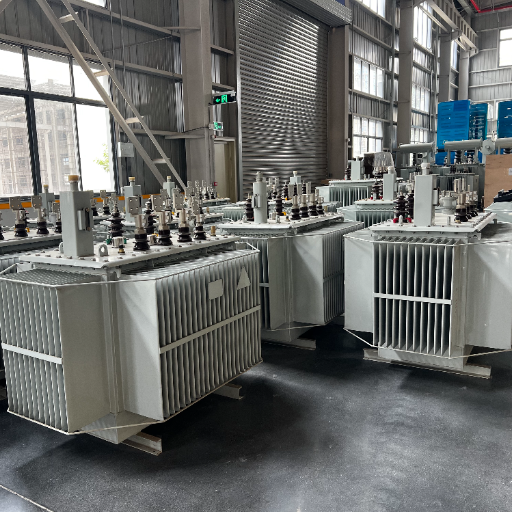
International buyers face additional considerations when sourcing power transformers from overseas manufacturers. These considerations affect specification, packaging, documentation, and commissioning.
Voltage Compatibility and Standards
Verify that the manufacturer understands the grid standards of your destination country. Voltage levels, frequency, insulation coordination, and earthing practices vary by region. A manufacturer experienced in export markets will request your local grid code and design accordingly. For a comparison of international standards, see our guide on step up vs step down transformer applications to understand voltage transformation requirements.
Packaging for Sea Freight
Power transformers for export are typically shipped filled with dry nitrogen gas to prevent moisture ingress during transit. The tank is sealed with a slight positive pressure, and a pressure-vacuum gauge monitors integrity. Shock recorders and tilt indicators are attached to detect mishandling. Desiccant breathers protect against humidity during the voyage.
For large units that ship in components, the manufacturer provides assembly instructions and sends a commissioning engineer to supervise reassembly and oil filling on site.
Documentation Requirements
Export shipments require comprehensive documentation:
- Factory test reports (routine and type tests)
- Material certificates for core steel, copper, and insulating oil
- Packing list with weights and dimensions
- Certificate of origin
- Bill of lading or airway bill
- Commercial invoice
- Insurance certificate
- Installation and operation manual
- Maintenance schedule and spare parts list
Missing or incorrect documentation can delay customs clearance by weeks. Confirm with the manufacturer that they have experience with export documentation for your destination country.
Installation Supervision and Commissioning
Most power transformer manufacturers offer installation supervision as an optional service. A factory engineer visits the site to supervise unloading, positioning, bushing installation, oil filling, and commissioning tests. This service is highly recommended for units above 50 MVA or for first-time buyers who lack in-house transformer commissioning expertise.
Spare Parts Strategy
Include a first-fill spare parts package in your purchase order. Essential spares include:
- Gasket set for tank covers and inspection openings
- One set of HV and LV bushings (if lead times are long)
- OLTC maintenance kit (contacts, springs, oil)
- Additional insulating oil for topping up
- Breather silica gel cartridges
For remote sites where logistics are difficult, a more comprehensive spare parts inventory is justified.
Conclusion
A power transformer manufacturer is defined not just by the MVA ratings it advertises, but by the depth of its engineering, the scale of its equipment, and the rigor of its testing. Core steel processing for large diameters, heavy tank fabrication, high-voltage test bays, and full type test capability are the capabilities that separate a genuine power transformer manufacturer from a generalist.
When sourcing for a substation or industrial project, match the manufacturer’s proven experience to your specific voltage class and MVA rating. Verify type test reports for representative designs. Clarify lead time bottlenecks before committing to a project schedule. And plan for export documentation, shipping logistics, and commissioning support if you are buying from an overseas supplier.
The right power transformer manufacturer delivers equipment that operates reliably for 30 to 40 years. The wrong choice delivers delays, cost overruns, and premature failure. Use the checklists in this guide to make your evaluation systematic and your procurement decision confident.
If you need help specifying a power transformer for your substation or industrial project, send your voltage, MVA rating, and application details to our engineering team. We manufacture power transformers to IEC and IEEE standards, with ratings from 5 MVA to 100 MVA and voltages up to 220 kV, for export worldwide.Contact our engineering team for specifications and custom configurations