
What is a Phase Shifting Transformers?
A transformer adapts voltage and impedance via electromagnetic induction to improve transmission efficiency. It comprises magnetic coupling that transfers energy between windings, maintaining frequency while adapting output voltage to network specifications.A PST shifts phase angle between two systems to steer power transmission and optimize grid utilization. Utilities deploy PSTs in substations to control active power.
Comparing Traditional and Phase-Shifting Transformers
Technical Specifications
PSTs integrate a regulating transformer (quadrature voltage) and a series transformer (insertion). Key specifications include MVA, tap range, impedance, vector group, insulation, thermal design, and controls.
Performance Metrics
Phase shift range, impedance, losses, response time, and availability gauge performance; effectiveness is seen in overload relief, loop flow reduction, and transfer capability improvements.
Cost-Benefit Analysis
PST investments are justified by deferred lines, reduced congestion costs, loss reductions, and enhanced security margins, with lifecycle economics considering CAPEX, O&M, and risk avoidance.
Technical Specifications & Standards
| Specification | Details |
|---|---|
| Rated Voltage | 110 kV – 765 kV (or as per client requirements) |
| Rated Power Capacity | 100 MVA – 2000 MVA |
| Rated Frequency | 50 Hz / 60 Hz |
| Phase Angle Regulation | Symmetrical or asymmetrical control; up to ±70° (customizable) |
| Control Type | On-Load Tap Changer (OLTC) for continuous, precise regulation under load |
| Cooling Method | ONAN (Oil Natural Air Natural) / ONAF (Oil Natural Air Forced) / OFAF (Oil Forced Air Forced) / ODAF (Oil Directed Air Forced) |
| Insulation Fluid | High-grade Mineral Insulating Oil or Ester Fluid (biodegradable option) |
| Insulation Level | In accordance with IEC 60076-3 and IEEE C57.12 standards |
| Vector Group | YN-yn0d11, YN-d1-d11, or other customized configurations |
| Short-Circuit Impedance | Designed based on system requirements and fault level analysis |
| Winding Material | Electrolytic grade Copper (Cu) |
| Monitoring Systems | Dissolved Gas Analysis (DGA), fiber-optic temperature sensors, bushing monitors, OLTC motor drive diagnostics |
| Tank Construction | Welded steel tank with corrosion-resistant finish (e.g., hot-dip galvanized, multi-layer paint) |
| Safety Features | Pressure relief device, Buchholz relay, oil level indicator, winding temperature indicator |
Advantages of Phase Shifting Transformers
Optimized Power Flow
Phase Shifting Transformers (PSTs) allow precise control over the direction and magnitude of power flow in transmission lines. By redistributing power from overloaded lines to underutilized ones, they maximize the efficiency of the existing grid infrastructure, reducing congestion and ensuring a balanced load across the network.
Enhanced Grid Stability
PSTs play a critical role in maintaining grid stability by mitigating loop flows and parallel path issues. These problems often arise in interconnected networks, where power flows unpredictably. By controlling phase angles, PSTs ensure a stable and predictable power flow, reducing the risk of outages and system failures.
Cost-Effective Solution
Instead of investing in new transmission lines, which can be expensive and time-consuming, PSTs enable utilities to optimize the use of their current infrastructure. This significantly lowers capital expenditure while still addressing the challenges of growing energy demand and grid congestion.
Seamless Renewable Integration
With the increasing adoption of renewable energy sources like wind and solar, grid operators face challenges due to their variable and intermittent nature. PSTs help stabilize transmission corridors by managing the fluctuating power output from these sources, ensuring consistent and reliable energy delivery to load centers.
Customizable Phase Angle Control
PSTs are designed to provide symmetrical or asymmetrical phase angle regulation, tailored to the specific needs of the grid. This flexibility allows utilities to address unique challenges, such as managing cross-border power exchanges or integrating diverse energy sources.
Improved System Reliability
By preventing overloads and managing power flows effectively, PSTs protect critical transmission lines from cascading failures during peak demand or contingency events. This ensures uninterrupted power supply and enhances the overall reliability of the grid.
Phase Shifting Transformers Applications & Industries

Interconnecting Grids
PSTs manage power exchanges between regional or national grids, ensuring safe and efficient energy transfer across borders.

Renewable Energy Integration
Stabilize transmission lines carrying power from remote wind farms, solar plants, or other renewable energy sources to urban load centers.
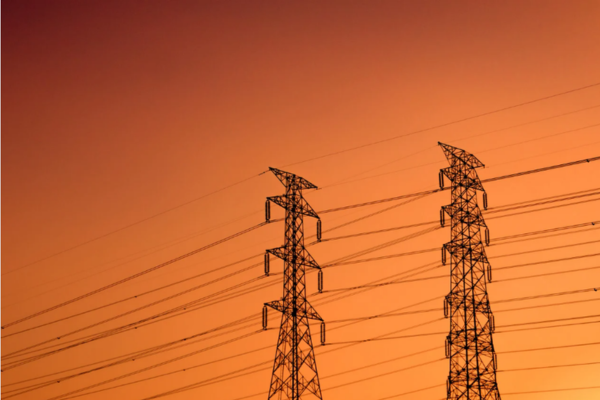
Transmission Line Protection
Protect critical transmission lines from cascading failures during peak demand or contingency events, ensuring uninterrupted power supply.
What Our Clients Say
We installed the Phase Shifting Transformers in our substation to improve load balancing. Performance exceeded expectations and the unit has been reliable with clear phase control. Support was responsive and installation went smoothly.

Michael Turner
Electrical Engineer
The Phase Shifting Transformers delivered precise phase adjustment and reduced congestion on critical lines. Operation is stable and the device integrates well with our control systems. Very satisfied with the results.

Sarah Patel
Grid Operations Manager
Latest Insights

A low-loss dry-type transformer is a dry-type unit designed to reduce no-load (core) loss and load (copper) loss below standard…
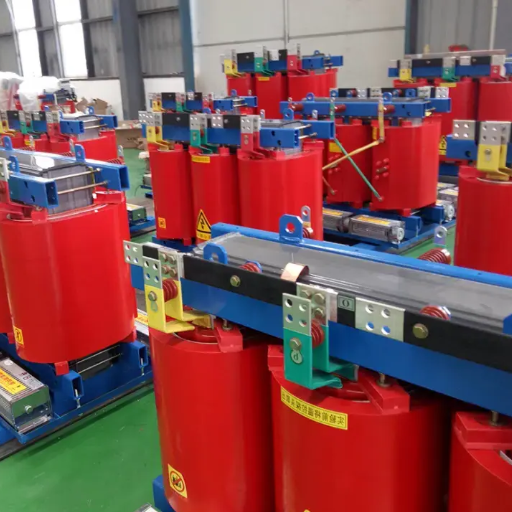
An IEC dry type transformer supplier is a manufacturer that builds dry type units to IEC 60076-11 and can prove…

For a hospital project, a dry-type transformer is the standard indoor choice because it contains no flammable oil, needs almost…

For most indoor installations, a cast resin dry type transformer is the best choice. Its epoxy-sealed windings handle humidity, dust, and strict…
Frequently Asked Questions (FAQs)
Many PST designs adjust the phase angle by changing the transformer tap settings or by using tap-changers in the secondary circuit to alter winding connections. The transformer tap changes the effective turns ratio and can produce a controllable phase angle shift per phase, so the operator can adjust the phase angle to guide power flow and influence complex power and power factor across the transmission network.
Common PST types include dual-tank phase shifters, single-phase phase angle regulators, and asymmetrical PSTs. Dual-tank phase shifters separate the regulating and series windings into different tank assemblies for thermal and maintenance benefits. Asymmetrical PSTs are used when different phase shifts or ratings per phase are required, offering specialized control for unbalanced conditions or to manage short circuit contributions and reactive power interactions.
PSTs are used to control the flow of power through the transmission by intentionally creating a new phase angle between buses, thus redistributing power flows and relieving overloaded power lines. In power engineering, they provide efficient power flow control solutions that improve system security, reduce congestion, and coordinate power transfer from multiple power generation sources, including conventional power plants and renewable power.
Yes. Because a PST changes phase relationships and can alter the distribution of active power, it also affects system impedance seen during faults and can change short circuit contributions from connected sources. Its interactions with reactive power and power factor are important: PSTs can indirectly influence reactive power flows and voltage profiles, so coordination with shunt transformers, reactive compensation, and power electronics is often required.
PSTs provide controllable phase shifts with relatively low losses and high robustness for bulk power flow control, while power electronics (HVDC converters, FACTS) offer faster and more flexible control, including independent control of magnitude and phase. PSTs remain an economical and proven solution for high-power, per phase bulk control where the primary need is to control the phase angle rather than perform fast modulation of power.
PSTs are rated per phase for voltage and current and have a maximum achievable desired phase shift determined by design; typical ranges are ±30° or more, but reaching near 90° is uncommon because it would severely limit steady-state power transfer and complicate protection. The magnitude and phase capabilities must match the flow of power requirements and short circuit ratings of the connected network.
-

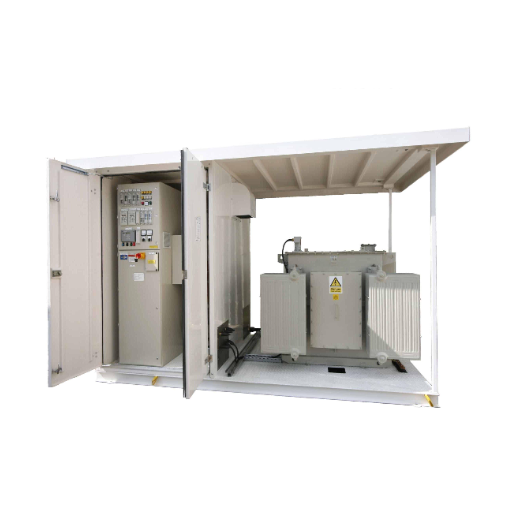
Substation Container
-
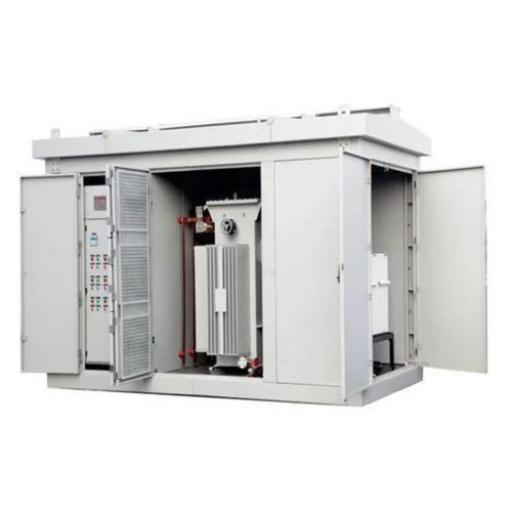
Compact Substation
-
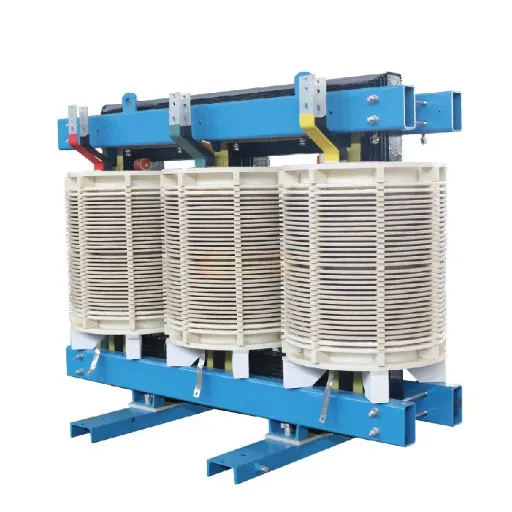
VPI Dry Type Transformers
-
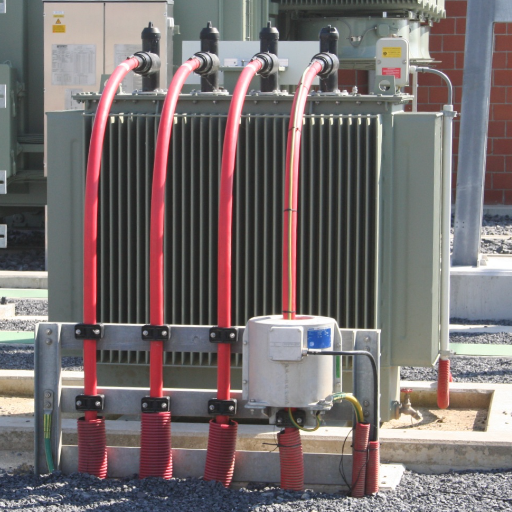
Utilities & Power Generation