
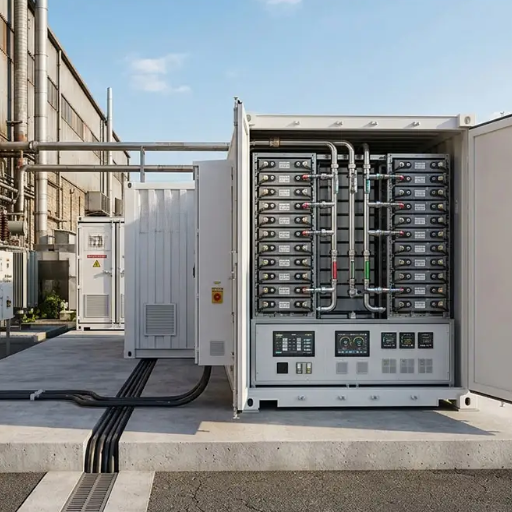
BESS Transformer Selection: A Guide to PCS and Grid Interfaces

Last updated:
Start BESS transformer selection with the PCS AC data, the required duty and the grid connection. A battery’s energy capacity alone cannot tell you which transformer to buy.
A battery energy storage system (BESS) joins units with distinct roles. The power conversion system (PCS) converts between battery direct current (DC) and alternating current (AC). The transformer changes the AC voltage.
Where do these roles meet? Set that boundary before you compare offers.
For engineering, procurement and construction (EPC) teams, a shared input sheet is a useful starting point. This guide explains what to collect and who to involve. Use it to move BESS transformer selection from a broad inquiry to clear bid questions. Ask each bidder to use the same basis.
Key takeaways
- Define whether you need a PCS-side transformer, a separate grid transformer, or both.
- Collect voltage, power ratings and limits; the battery’s MWh figure is not enough.
- Review charge and export duty, waveform data and site limits before you accept a rating.
- Compare electrical interfaces and supply scope, as well as type and price.
Where the transformer fits in a BESS
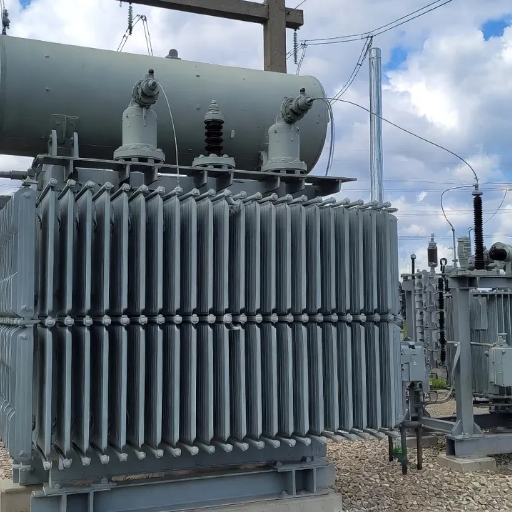
Battery DC, PCS AC and the MV connection
A conceptual AC-coupled arrangement is:
Battery DC ↔ bidirectional PCS ↔ AC transformer ↔ medium-voltage equipment ↔ grid connection
Medium voltage (MV) is the AC level used to collect power or connect to the grid here. The arrows show charge and discharge paths in a system designed for them. They don’t prove that a given PCS and transformer will work together. This drawing is a concept, not an approved site design.
The PCS performs DC/AC conversion. The transformer changes voltage between its AC windings. The term “BESS step-up transformer” names its role during export. BESS transformer selection must also address charging from the grid.
Section 2.1 of the SMA MV Power Station system manual gives a specific storage example. Its system feeds battery energy into an MV grid and uses grid power to charge batteries. The November 17, 2022 manual covers a specific US package.
Use its design as an example. Your site needs its own specification.
A power block and the whole site have different boundaries
A site may have one transformer at each PCS block and another at the grid connection. Check the approved single-line diagram. Does it show a second voltage stage? Which part does your purchase cover?
Hitachi Energy’s solar and BESS guidance separates power-conversion transformers from grid-connection transformers. This helps set the scope of BESS transformer selection before anyone quotes a model.
For a hybrid site, keep the solar and storage interfaces clear on the drawing. Our solar plant transformer guide offers solar-specific background. Storage duty still needs its own review.
Already gathering inputs? Send your single-line diagram and PCS AC data with your transformer inquiry. Mark the equipment boundary you want to discuss.
Start BESS transformer selection with interface data
Confirm voltage, frequency and document revisions
Start with the PCS AC datasheet and the latest approved single-line diagram. Ask the grid engineer to confirm the grid voltage and frequency. Obtain the project requirements too.
Record which drawing and data revisions each bidder uses. If the PCS changes, flag the old inputs before the next bid review.
Use this table to organize BESS transformer selection. The review roles are a guide. Your contract sets who is responsible.
| Input | Document to request | Suggested reviewer |
|---|---|---|
| PCS AC interface | Datasheet with voltage, frequency, power ratings and limits | PCS supplier and transformer designer |
| Charge and discharge duty | Duty schedule and allowed operating modes | System integrator and PCS supplier |
| Reactive power | Grid requirement and PCS operating envelope | Grid engineer, PCS supplier and transformer designer |
| Grid interface | Approved single-line diagram and connection requirements | Grid engineer and network representative |
| Site conditions | Ambient, altitude, cooling, enclosure and layout data | Site designer and equipment suppliers |
| Proposed transformer | Rating conditions, winding data, losses and test scope | Transformer designer and project electrical engineer |
Keep approved data apart from assumptions. Label each input with its source and revision. If the PCS changes, ask which checks must be reopened.
Keep both revisions so bidders can see the change. Use this to track changes. Follow the project approval process as well.
Separate stored energy from power ratings
Megawatt-hours (MWh) describe stored energy. Megawatts (MW) describe active power: how fast energy moves. The US Department of Energy’s storage basics explains this difference. BESS transformer selection needs the AC power data, not an assumed conversion from energy capacity.
Transformer offers use apparent-power ratings in kilovolt-amperes (kVA) or megavolt-amperes (MVA). Collect the PCS limits for active and reactive power too. Reactive power is an AC quantity linked to voltage support. Ask which modes can run together and what limits apply.
Illustrative scenario: An inquiry gives only the battery’s MWh capacity. Request the PCS AC ratings and required operating envelope next. Adding a percentage to the energy figure won’t answer the voltage, power or duty questions.
Our transformer rating terminology guide provides general kVA/MVA background. BESS transformer selection still needs project inputs rather than a blanket capacity margin.
Once you have those inputs, use the BESS transformer sizing guide. It covers active and reactive power, current checks and PCS ratings. Use it for the math once the inputs are clear.
BESS transformer selection: match duty before construction
Review the intended operating states
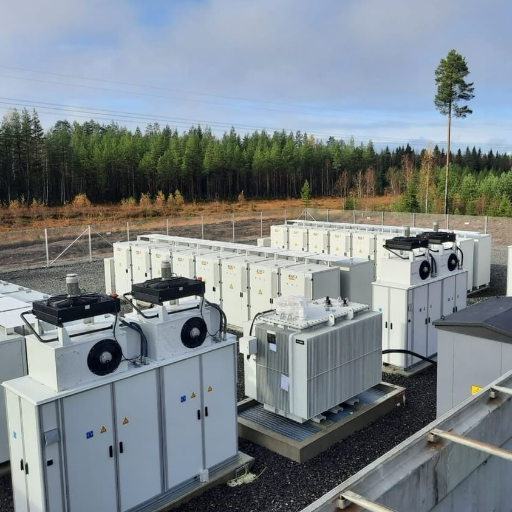
Give suppliers a schedule for charging, discharge and any energized idle periods. Include expected cycles and required reactive-power operation. Ask the PCS supplier which modes it permits together. Have the transformer designer review the same envelope, with the same site conditions.
In BESS transformer selection, “bidirectional” is not a duty schedule. Record the modes checked and the limits stated in the offer. List the open questions too. Don’t treat a broad product label as evidence that a particular mode has been checked.
Illustrative scenario: A schedule lists export and charging but leaves the overnight interval blank. Does the transformer stay energized? Is reactive operation required?
Record the answers before comparing offers. The example shows missing inputs. It does not predict heat or approve a rating.
Request waveform and switching data
Hitachi Energy’s application guidance identifies inverter harmonics, switching behavior and cyclic loading as issues for the design review. Harmonics are waveform components at multiples of the fundamental frequency. Give the designer data for the proposed PCS and layout. Ask how these affect the design.
Ask what waveform data the PCS supplier can provide and what else the transformer designer needs. A label such as “inverter duty” cannot replace that exchange. Don’t assume a universal harmonic limit, K-factor or derating allowance.
For this part of BESS transformer selection, use the BESS transformer harmonics and PCS data checklist. It separates the designer’s data needs from grid power-quality checks. A grid test result does not answer every transformer design question.
Check the conditions attached to the rating
Ask which ambient temperature, altitude and cooling basis support the offer. Check the airflow needs too. Match that basis to the site. Check the offered enclosure too.
A rating needs its stated conditions. The nameplate alone does not close the review.
The SMA manual’s technical-data sections show why this matters: package power data have temperature conditions. Those values belong to that model. In your BESS transformer selection, request the conditions for each offered item. Keep transformer ratings distinct from inverter or switchgear limits.
Compare dry-type and liquid-filled options for the installation
Hitachi Energy’s power-conversion portfolio includes dry-type and liquid-filled options. Which offered design fits the duty, layout and site needs? Start there.
BESS transformer selection should compare real designs. The storage label alone cannot settle the type.
| Installation issue | What to establish before choosing |
|---|---|
| Indoor, outdoor or packaged location | Is the offered equipment and enclosure suitable for this location? |
| Fire and environmental review | Which measures apply, including fluid data and containment where relevant? |
| Cooling and ventilation | Do the supplier’s assumptions match the building or package layout? |
| Footprint and access | Are clearances, cable space, transport and service access addressed? |
| Operation and maintenance | What inspections and service tasks are proposed, and can staff reach the equipment? |
Request a drawing that shows the enclosure and access spaces. Where does cooling air enter and leave? How will staff reach the cable ends? What must be removed for service?
Ask the site designer to review those details against project requirements. Don’t infer access from the equipment name.
Use the same site conditions for both options. For example, if one bidder assumes open air and another includes an enclosure, ask each to state its rating basis. For BESS transformer selection, put these assumptions beside the rating. Keep the basis easy to find in each offer.
Construction type alone does not settle the review. Ask suppliers to state the measures and limits tied to their offers. The site designer should review them together. This guide sets no blanket indoor/dry-type or outdoor/liquid-filled rule.
Our container substation guide covers the wider package discussion. For a containerized BESS transformer selection, keep cooling, cable and service interfaces visible within that package. Ask for drawings for the offered layout, not just a generic brochure.
Resolve electrical and package interfaces together
Agree winding, grounding and impedance requirements
Ask the project electrical engineer, PCS supplier and transformer designer to agree winding and grounding details. A vector group identifies winding connections and phase relationship. BESS transformer selection needs a project review of that choice; don’t assume one group suits all storage systems.
Request the proposed transformer impedance and its stated basis. Grid and protection engineers need that input for their studies. This overview does not prescribe a percentage or relay setting. Record which study and drawing revisions the suppliers have reviewed.
For each open interface, list the missing document. Note who should supply it and which choice depends on it. Keep winding details that need PCS review visible on the bid sheet. A blank cell is not agreement.
The contract sets who must close the issue.
Check what the package includes
A transformer offer and an MV-station offer can cover different equipment. Check switchgear, cables, protection, auxiliary supplies and monitoring. Ask where each supply stops and who handles the next connection. BESS transformer selection should identify those boundaries before prices are compared.
SMA’s November 26, 2025 announcement describes two inverters, two transformers and MV switchgear in one package. That is a specific SMA design. It shows a scope example. Ask each supplier what its own offer includes.
The May 21, 2026 Metelen announcement shows a wider boundary. SMA describes MV power stations and a separate high-voltage substation in one storage project. This is an SMA/Altenso project example, not an Eilite project.
For a visual package reference, SMA’s 2021 MVPS tour shows its inverter, transformer and switchgear arrangement. Use it to frame scope questions, not to approve compatibility or infer today’s offered equipment.
Compare BESS transformer selection proposals on the same basis
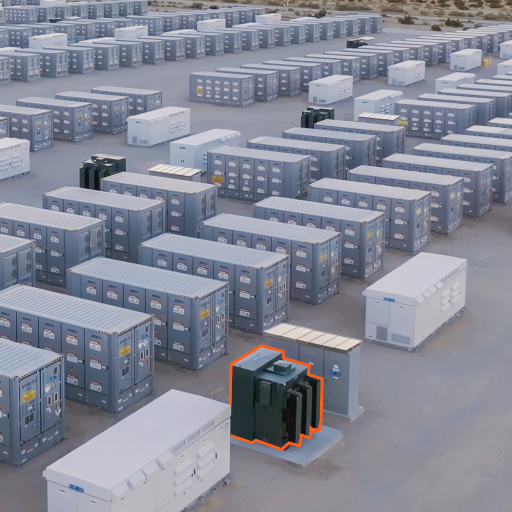
Before comparing prices, check that bidders answered the same question. Use a common document revision. Ask each bidder to list assumptions and exclusions.
A useful BESS transformer selection review makes scope gaps clear. A headline price may leave them hidden.
- Rating basis: Are AC voltage, frequency, duty and site conditions aligned?
- PCS review: Has the supplier addressed the submitted PCS data and named unresolved inputs?
- Loss data: Are declared losses and their reference conditions available on a common basis?
- Test scope: Which tests and reports are included, and what acceptance points remain open?
- Supply boundary: Who covers switchgear, cables, auxiliaries, monitoring and installation?
Our transformer testing guide provides general background. Agree the actual project test plan separately. A factory report about the transformer does not approve the whole plant.
The PCS, station and grid link need their own evidence. Ask which later system checks remain and who agrees their basis.
Illustrative scenario: One bidder quotes a transformer alone. Another includes MV switchgear and auxiliary equipment. Put both against the same scope list before comparing totals.
Assign an owner to each scope gap. No cost saving or customer outcome is implied by this example.
To compare BESS transformer losses across the operating profile, first collect the loss values and reference conditions. Keep transformer losses separate from plant-wide energy use. The linked guide develops that calculation rather than repeating it here.
Move BESS transformer selection forward by checking the assumptions that affect each bid. Define the boundary, exchange PCS and grid data, review duty and site conditions, then resolve interfaces. Sizing, harmonic assessment and loss calculations each need their own detailed work.
Prepare the next engineering discussion
Collect the approved single-line diagram, PCS AC datasheet, charge and discharge duty, grid voltage and frequency, and site conditions. Mark preliminary data clearly. Ask each supplier which inputs its offer uses and what remains subject to review. Keep open questions beside the affected item.
Is battery MWh enough to select a BESS transformer?
No. MWh describes energy capacity. BESS transformer selection also needs PCS AC ratings and duty limits.
Collect the voltage, grid needs and site conditions too. Return to the missing inputs before asking bidders to select a rating.
Can a solar transformer automatically be reused for storage?
Don’t assume compatibility from its solar label. Ask suppliers to review the proposed PCS, charging and discharge duty, electrical interfaces and site conditions against that transformer’s documented design. BESS transformer selection still needs proof that the design suits its proposed use.
Does the transformer alone determine grid-forming performance?
No. The DOE inverter and grid-services explainer describes functions provided through inverter controls. A transformer specification does not establish PCS controls or approved system modes. Obtain the PCS supported-mode documents and ask the grid engineer to review the arrangement.
For your next BESS transformer selection discussion, share these documents with your transformer inquiry. Mark the PCS-side transformer, MV station or separate grid transformer you want to discuss. Request a clear statement of scope and open assumptions.