
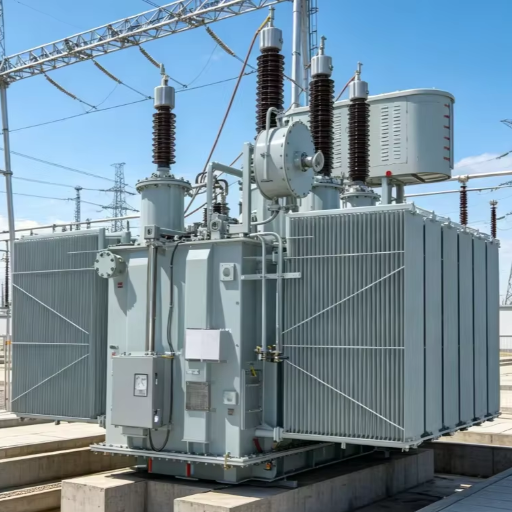
BESS Transformer Losses: Comparing Bids Across the Operating Profile

Compare BESS transformer losses by applying each bid’s matched loss data to the same current and time profile. Include energized standby and reactive duty before you add an energy cost or rank the bids.
Two bids can change order when dispatch changes. A lower no-load loss may suit long idle periods with the core live. A lower load loss may matter more during heavy cycling. One efficiency figure can’t show that tradeoff.
This guide turns those differences into a worksheet you can check and a worked comparison. Start with offers that meet the same technical needs, using the broader BESS transformer selection guide for system interfaces. Check loss cost after that.
Key Takeaways
- For BESS transformer losses, count actual energized hours, including standby.
- Weight each interval by current squared; do not square average loading.
- Match loss guarantees and test conditions across bids, and check which auxiliary loads each includes.
- Keep energy ranking, commercial value and technical acceptance as separate decisions.
Preparing an inquiry? Send your single-line diagram and intended operating schedule so the equipment discussion starts from the same operating basis.
Define the boundary for BESS transformer losses
Identify the winding, meter and auxiliary routes
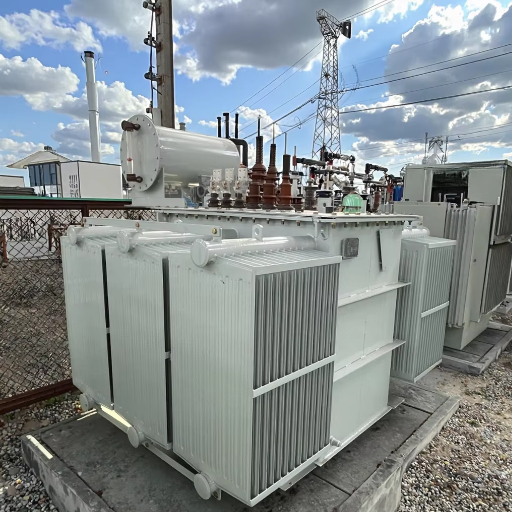
To assess BESS transformer losses, mark the transformer on the single-line diagram. Identify the PCS connection, grid connection, meters and auxiliary supplies. Decide whether the comparison covers one transformer, several units or the complete MV package.
An open low-voltage breaker does not prove the core is off. Check which winding is still connected to a live source. Likewise, a package efficiency figure may include equipment outside your chosen boundary.
For context, SMA’s November 26, 2025 announcement describes a package with two inverters, two transformers and MV switchgear; its package description does not make inverter and transformer losses interchangeable.
Illustrative scenario: A buyer receives two efficiency percentages. Before comparing them, the buyer asks what equipment, load point and auxiliary loads each figure covers. The next step is a shared loss schedule, not a preferred percentage.
Separate no-load, load and auxiliary terms
For BESS transformer losses, use P0 for no-load loss at the stated voltage and frequency. Use Pk for rated-current load loss at the stated reference conditions. Treat both as power values, usually in kW. The guide to transformer no-load and load losses explains the underlying mechanisms.
Add separately supplied auxiliaries only where the chosen boundary requires them. If the boundary current already includes a load, don’t add that same consumption twice. Record whether each quoted value is typical, guaranteed or measured. Those labels show how firmly you can rely on each input.
Build the profile for BESS transformer losses before comparing bids
Use intervals with a clear current base
Build the BESS transformer losses worksheet from a schedule the owner has approved. Include charge, discharge, reactive support and standby. For each interval, record the following fields. Mark missing data as open until its owner supplies it.
| Profile field | What to record |
|---|---|
| Time | Timestamp, timezone and interval hours |
| Energized state | Which transformer winding is connected to a live source |
| Electrical duty | Simultaneous signed P and Q at one stated boundary |
| Current base | Winding RMS current, voltage and corresponding rated current |
| Site conditions | Ambient conditions and cooling state |
| Data status | Measured, approved assumption or missing; file revision and owner |
Define x as the winding RMS current divided by its matched rated current. Use the same site duty for both bids. If ratings differ, work out x for each bid on its own valid base. Don’t reuse x blindly.
The BESS transformer sizing guide addresses the P/Q operating cases behind that current requirement. Check which cases are allowed before using their hours to compare BESS transformer losses.
Include standby and reactive support
When checking BESS transformer losses, zero active power does not establish zero current. Reactive support can keep current flowing, and an energized transformer still has no-load loss. Ask the PCS supplier for the permitted reactive-service cases rather than using battery MW alone.
Illustrative scenario: A profile initially lists standby as zero current. The service schedule then shows reactive support during part of that period. The engineer splits the row into reactive duty and standby, then asks for the current in each. No measured loss reduction is assumed.
Missing dispatch data isn’t an approved zero. Keep the file in time order. The thermal check needs the sequence of heavy and light loads, even when their energy sum stays the same.
Why average current is insufficient
To estimate BESS transformer losses at fixed reference conditions, add up hours times current fraction squared. As a simple illustration, half-time full current and half-time zero current give average current of 0.5 per unit. Constant half current has the same average. Their mean squared fractions are 0.5 and 0.25.
The first profile has twice the current-based loss energy in this simple model. Don’t let signed charge and discharge MW cancel the heat terms. Total RMS current alone can’t describe how a converter waveform changes stray losses.
For multiwinding designs, ask the designer how each winding’s duty enters the loss model. One current fraction may not cover the full design.
Calculate BESS transformer losses for two bids
Sum energized and squared-current hours
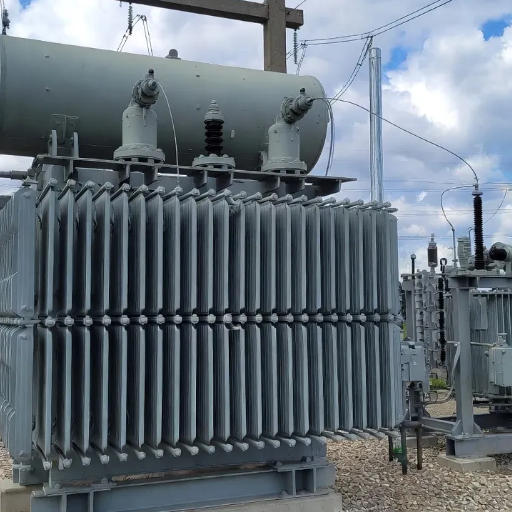
Schneider Electric’s loss calculation example scales rated load loss by current fraction squared. Apply that model to each time interval to estimate BESS transformer losses:
E_loss = sum(h_i * [z_i * P0 + x_i^2 * Pk + P_aux,i])
Here, h is interval hours, z is 1 while energized and 0 while de-energized, and x is the current fraction. P_aux is separately included auxiliary power. Power in kW multiplied by hours gives energy in kWh. Set x to zero for a truly de-energized transformer; model any separately powered auxiliaries on their actual supply route.
Treat P0 as approximately fixed only under the stated voltage and frequency. This first comparison uses matched reference conditions. It doesn’t predict loss changes due to winding heat or harmonics. Ask the designer to assess those effects when they matter.
Show the daily comparison
Illustrative scenario: hypothetical bids and dispatch. Both offers have the same rating and reference basis. Bid A has P0 = 3 kW and Pk = 40 kW. Bid B has P0 = 5 kW and Pk = 28 kW.
Both remain energized for 24 hours. This teaching example leaves out separate auxiliary energy.
| Daily mode | Hours | Current fraction x | Hours multiplied by x squared |
|---|---|---|---|
| Charge | 3 | 0.60 | 1.080 |
| Discharge | 3 | 0.80 | 1.920 |
| Reactive support | 2 | 0.35 | 0.245 |
| Energized standby | 16 | 0.05 | 0.040 |
| Total | 24 | , | 3.285 |
The last column totals 3.285 equivalent full-current hours. For these BESS transformer losses, daily no-load energy is 24 × P0. Daily load-loss energy is 3.285 × Pk.
| Calculated energy | Bid A | Bid B |
|---|---|---|
| No-load energy | 72 kWh | 120 kWh |
| Current-dependent energy | 131.4 kWh | 91.98 kWh |
| Total | 203.4 kWh | 211.98 kWh |
Bid A has lower modeled loss energy on this schedule. These figures come from invented teaching inputs. They aren’t supplier quotes, typical BESS transformer losses or test results.
Change the duty and locate the crossover
To test BESS transformer losses under heavier duty, use four hours of charge and four hours of discharge, both at 0.9 current fraction. Add four hours of reactive duty at 0.4 and twelve hours of standby at 0.05. Squared-current hours become 7.15. Bid A gives 358 kWh/day; Bid B gives 320.2 kWh/day.
For these exact bids, equality occurs when 24*3 + 40*H = 24*5 + 28*H, giving H = 4 equivalent full-current hours per day. Change the energized hours or bid losses, and this result changes too. It is not a universal dispatch threshold.
To check the first row by hand, Bid A gives 3 * (3 + 0.60^2 * 40) = 52.2 kWh. Bid B gives 3 * (5 + 0.60^2 * 28) = 45.24 kWh. Repeat that row method for the other modes to check the totals above. The standby row is included, not treated as zero.
If all 365 days repeated the first schedule, BESS transformer losses would total 74,241 kWh for A and 77,372.7 kWh for B. That annual result is valid only for the stated repeated-day assumption. Use the real year file when seasonal duty differs.
Keep the model’s limits beside the result. Pk includes load-loss effects beyond simple conductor heating. A changed waveform or winding temperature needs assessed loss data; don’t add an arbitrary correction to this table.
Use the same controlled profile file for every supplier. Engineering Devotion’s lesson below gives classroom background on efficiency and energy over a day. It isn’t evidence of BESS performance; the comparison here stands on its own.
Value BESS transformer losses without counting system losses twice

Apply owner-approved interval values
Lower BESS transformer losses needn’t mean lower total cost. Compare purchase price plus the present value of included energy costs, auxiliary costs and any unequal lifecycle costs. State the study period, discount rate and what each cost line covers.
In its April 20, 2011 transformer selection presentation, ABB explains owner-specific loss capitalization. That older method helps frame the choice. Its example factors aren’t today’s project prices.
To value BESS transformer losses with an interval model, multiply loss energy by the owner’s approved value for that interval, then discount future costs on the agreed basis. Charging losses may require purchased energy. Discharge losses may reduce export value. The settlement rules and dispatch model set the right approach.
Check whether transformer losses are already included in a plant simulation. Adding their cost again would distort the comparison. Do the same boundary check for cooling, PCS consumption and station auxiliaries.
If prices can be negative, keep those rows in the agreed cost method. Don’t promise a benefit from higher losses.
Test uncertain duty before award
Test BESS transformer losses under low, base and high duty cases approved by the owner. Change duty hours, current, energized time and energy values one at a time. This shows why the ranking changed. Show which uncertain inputs could change the choice.
With owner-derived A/B factors, evaluated cost is price plus A times P0 plus B times Pk. Check units: a factor in currency per watt needs losses in watts.
Illustrative scenario: Finance revises export values while engineering keeps the same loss schedule. The cost ranking may change while the design stays the same. Save both the loss-energy result and cost assumptions to show why.
Don’t assign payback without an actual price premium and an approved cost model. Treat installation and maintenance costs as equal only when the bid scopes support that choice.
| If this input changes | Recheck this result |
|---|---|
| Current or energized hours | BESS transformer losses in kWh |
| Energy value or discount rate | Cost of losses over the study period |
| Guaranteed P0 or Pk | Both energy and cost ranking |
| Waveform or cooling duty | Technical approval and loss-model inputs |
Normalize the loss schedule and acceptance evidence
Match test and commercial bases
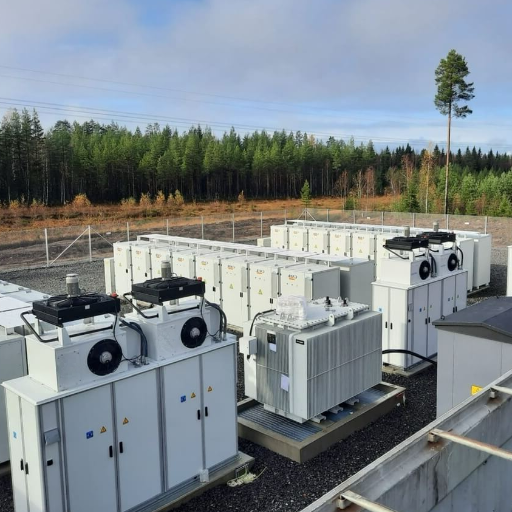
A worksheet for BESS transformer losses needs inputs tied to the offered design. Match the rating, voltage ratio, frequency, tap and winding pair. Check impedance and cooling needs before you compare energy totals. Ask for the loss reference temperature and a list of included auxiliary loads.
Keep a short comparison sheet alongside the profile:
| Comparison item | Bid A | Bid B |
|---|---|---|
| Offered design and revision | To complete | To complete |
| P0 and stated voltage/frequency | To complete | To complete |
| Pk, rated current and reference temperature | To complete | To complete |
| Typical, guaranteed or measured status | To complete | To complete |
| Cooling and auxiliary boundary | To complete | To complete |
| Test basis and agreed acceptance treatment | To complete | To complete |
For example, SMA’s MVPS_2SC-DS-en-40 datasheet lists separate transformer no-load and short-circuit losses alongside inverter efficiency. That layout shows why the fields must stay separate. It doesn’t set values for another offered design.
Keep energy ranking separate from technical acceptance
The public scope of IEC 60076-19-1:2023 covers uncertainty in loss measurements. Agree in writing how to handle uncertainty, tolerances and acceptance. The abstract does not provide a universal commercial tolerance or penalty.
Use the BESS transformer harmonics guide to prepare waveform data for the separate design check. Annual kWh can’t prove that hot-spot limits are met. Don’t replace that check with an arbitrary harmonic multiplier. Keep the original time sequence and site conditions available to the designer.
Also separate the cost of BESS transformer losses from transformer efficiency ratings. A rating or compliance statement doesn’t compare cost over the duty profile. If a supplier revises guaranteed losses, rerun the calculation before award and retain the revised schedule with the result.
Questions about comparing BESS transformer losses
Do charging and discharging losses cancel?
BESS transformer losses don’t cancel when power flow reverses, because current-based heating stays positive. In the simplified loss model, both directions contribute through current magnitude squared. Keep signed power for dispatch and settlement, but use positive loss-energy terms. Confirm the current base and conditions for each winding and flow direction.
Does zero active power mean zero transformer loss?
No. An energized transformer still has no-load loss at its stated voltage and frequency. Reactive service can also produce current when active power is near zero. Check the simultaneous P/Q case, transformer connection state and auxiliary supply path before you enter losses for a zero-MW row.
Can average loading replace interval current?
No, it can’t give the same current-based loss energy when load varies. Square each interval’s current fraction before weighting it by time. Squaring average current can conceal peaks and understate that term. Ask for the approved interval file, and retain its time order for a separate thermal check as well.
Is the lowest P0 always the best bid?
No. A lower P0 favors long energized periods, while lower Pk can favor a profile with more squared-current hours. The worked example changes ranking when duty changes. Purchase price, energy valuation and technical suitability also matter. Compare both loss terms on matched conditions instead of choosing one headline number.
Can the transformer be de-energized during standby?
Only if the project design and service duties allow it. Ask the project engineers to check switching, auxiliary supply, restart needs and reactive-service duties. Don’t assume an idle battery lets you shut down the transformer. Use approved energized hours, keeping a proposed shutdown case separate from the base case.
Does lower transformer loss guarantee better plant round-trip efficiency?
Lower BESS transformer losses alone can’t guarantee a better plant result. Round-trip efficiency depends on where you meter charge and discharge energy, with battery, PCS, cable and auxiliary losses treated on the same basis. This method compares the transformer under stated assumptions. A plant claim needs a full energy balance.
Prepare a comparison package suppliers can evaluate
Input package and open items
The goal is a comparison another engineer can check. Assemble the single-line diagram, boundary sketch, current profile, PCS operating cases and matched loss schedules. Attach file revisions and mark which values are guaranteed, measured or assumed.
Keep open items beside the result. Missing reactive-duty current, an unclear auxiliary route or a typical loss figure needs an owner and a resolution date. Don’t hide those gaps behind a precise annual total.
For BESS transformer losses, ask which suitable offer does better over the approved duty and cost basis. Keep the energy result, cost assumptions and technical approval as linked records. Update the comparison when any input changes.
Send your diagram, operating profile, PCS data and proposed loss schedule through our contact page for your transformer inquiry. Include the unresolved inputs so the discussion can address the actual project conditions rather than a single efficiency percentage.