
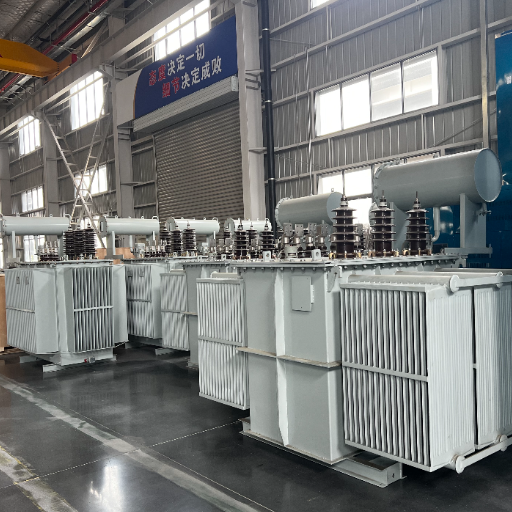
Oil Transformer Manufacturer: How to Evaluate and Source with Confidence

The right oil transformer manufacturer is verifiable through factory capability, not just a polished website. Evaluate tank fabrication, core winding, vacuum drying, oil filling systems, testing laboratory equipment, ISO quality systems, raw material traceability, production consistency, export documentation experience, and warranty support before placing any order.
In 2019, a procurement manager named Ravi sourced twelve 5 MVA oil immersed transformers for a utility expansion in Southeast Asia. He reviewed spec sheets, compared prices, and selected a supplier with an impressive online catalog. He never visited the factory. The transformers arrived on time and passed a basic visual inspection. Six months later, dissolved gas analysis revealed acetylene in three units, a clear sign of internal arcing. The root cause was moisture. The factory had outsourced core winding to a third party and performed vacuum drying at insufficient temperature and duration. Insulation moisture levels were three times the IEC 60076-1 limit of 0.5 percent. The replacement cost, emergency removal, and project delay exceeded $180,000. Ravi had checked the price, the specifications, and the delivery date. He had not checked the manufacturing process.
Oil transformers contain steps that are invisible in the finished product but critical to decades of reliable service. Vacuum drying removes moisture from insulation before oil filling. Oil filtration removes particulates and dissolved gases. Impulse testing verifies lightning withstand capability. These processes happen behind factory walls. A buyer who understands what to verify and what to request can avoid the failure that specification sheets alone cannot prevent.
This guide provides a practical framework for evaluating any oil transformer manufacturer. It covers the manufacturing steps that distinguish capable factories from assemblers, a ten-point factory audit checklist, oil-specific quality verification, export documentation requirements, and the red flags that should stop a procurement process immediately.
Key Takeaways
- Oil transformer manufacturing requires four specialized processes that dry type production does not: tank pressure testing, vacuum drying, oil filling and filtration, and insulating oil quality verification.
- Capable manufacturers perform in-house core winding, vacuum drying, oil filling, and full IEC 60076 testing. Assemblers outsource one or more of these steps. Trading companies hold no manufacturing capability at all.
- A factory heat run test adds 8-12 hours to production but verifies temperature rise under actual load. Impulse testing requires equipment that costs $500,000 or more.
- Oil filled transformers require MSDS documentation, oil test certificates, and UN shipping compliance that dry type units do not, making export documentation capability a critical supplier qualification.
- The lowest price often signals outsourced production, missing testing, or uncertified oil. Total cost of ownership includes failure risk, replacement logistics, and project delay that cheap sourcing can create.
What Makes Oil Transformer Manufacturing Different
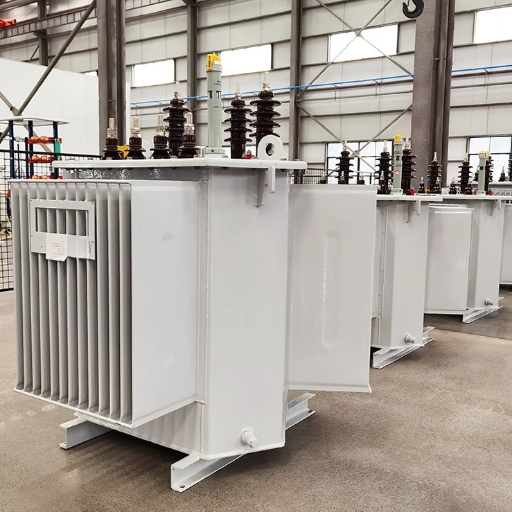
Oil immersed transformers share core construction principles with dry type units. Both require laminated steel cores, precision-wound copper or aluminum coils, and robust structural frames. However, oil transformers add four manufacturing steps that are invisible in the final product but essential to long-term reliability.
Tank Fabrication and Welding
The transformer tank is a pressure vessel. It must contain insulating oil across decades of thermal cycling, vibration, and occasional internal fault pressure. Tank fabrication requires certified welders, radiographic or ultrasonic weld inspection, and pressure testing at 1.5 times the maximum operating pressure. A leaking tank is not a cosmetic defect. It is a safety and environmental hazard that can shut down a substation.
Core Stacking and Winding
Core assembly uses grain-oriented silicon steel laminations stacked to minimize no-load losses. Winding requires precision layer or disc construction with controlled insulation thickness. For oil transformers, the winding must withstand oil immersion temperatures up to 105 degrees Celsius continuously. Any insulation defect becomes a long-term failure point after oil filling.
Vacuum Drying and Oil Filling
This is the step that separates reliable oil transformers from premature failures. After core and winding assembly, the entire active part enters a vacuum drying oven. IEC 60076-1 requires insulation moisture content below 0.5 percent before oil introduction. The drying process typically runs at 110-130 degrees Celsius under vacuum for 24-72 hours depending on unit size. Inadequate drying leaves moisture in cellulose insulation. That moisture slowly migrates into the oil, reduces dielectric strength, and accelerates insulation aging. For every 6 degrees Celsius that hot-spot temperature exceeds 98 degrees Celsius, insulation aging rate doubles. Poor vacuum drying raises that baseline temperature from the first day of operation.
After drying, the unit fills with filtered insulating oil under vacuum. The oil must meet IEC 60296 or ASTM D3487 standards for breakdown voltage, moisture content, and dissolved gas levels. Filling under vacuum prevents air bubbles that create partial discharge sites.
Testing Requirements Beyond Dry Type
Oil transformers require testing that dry type units do not. Routine tests include winding resistance, turns ratio, no-load and load loss measurement, and induced overvoltage testing. Type tests include lightning impulse testing with a 1.2/50 microsecond waveform generator, heat run testing under full load conditions for 8-12 hours, and partial discharge measurement targeting levels below 100 pC for premium units. A manufacturer without impulse testing equipment cannot verify lightning withstand capability. That equipment costs $500,000 or more.
For a complete technical overview of oil filled transformer design and applications, see our oil filled transformer guide.
Manufacturer vs. Assembler vs. Trading Company
Not every company that sells oil transformers manufactures them. Understanding the difference protects buyers from misaligned expectations and hidden risks.
| Capability | Genuine Manufacturer | Assembler | Trading Company |
|---|---|---|---|
| Tank fabrication | In-house | Sometimes in-house | Outsourced |
| Core winding | In-house | Often outsourced | Outsourced |
| Vacuum drying | In-house ovens | Often outsourced | Outsourced |
| Oil filling | In-house filtration | Sometimes outsourced | Outsourced |
| Full testing lab | In-house (impulse, heat run, PD) | Limited or outsourced | None |
| ISO certification | Active, auditable | May be expired or borrowed | None |
| Material traceability | Documented | Limited | None |
| Export documentation | Direct experience | Limited | Variable |
| Warranty support | Direct, parts available | Limited | None |
| Risk level | Lowest | Moderate | Highest |
A genuine manufacturer controls every critical process. An assembler may build tanks but outsource winding and drying. A trading company sources finished units from unnamed factories and adds a margin. For a 10 MVA substation transformer, the difference between a manufacturer and a trading company can mean the difference between 30 years of service and a moisture-related failure in year two.
Red flags for assemblers and traders: Inability to describe vacuum drying parameters, no test lab photographs, vague answers about core steel grade, refusal to provide factory audit access, and prices that seem impossibly low for the claimed specifications.
The 10-Point Factory Audit Checklist
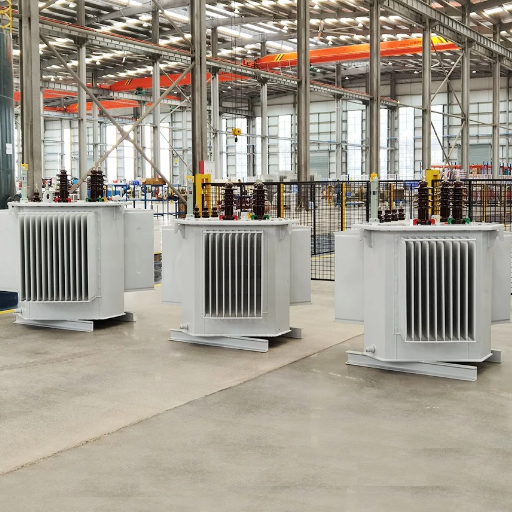
Use this checklist during a factory visit, virtual tour, or detailed supplier questionnaire. A capable oil transformer manufacturer should demonstrate competence in every area.
1. Welding and Tank Pressure Testing
Inspect tank weld quality. Ask for pressure test records from recent production. Verify that welders hold relevant certifications. Check whether the factory performs radiographic or ultrasonic weld inspection on a sampling basis.
2. Core Winding Equipment and Clean Room Standards
Core winding requires clean, climate-controlled space. Dust and metal particles on winding insulation create conductive paths after oil filling. Verify that the winding area is separated from general fabrication and that humidity is controlled.
3. Vacuum Drying Oven Capacity
Ask for oven specifications: maximum temperature, vacuum level, and physical dimensions. Request drying records from a recent unit similar to your specification. Verify that the oven is large enough for your target kVA rating.
4. Oil Filling and Filtration Systems
Inspect oil storage tanks, filtration equipment, and filling procedures. Ask about oil quality standards (IEC 60296, ASTM D3487) and whether the factory maintains oil certificates from the refinery. Verify that filling occurs under vacuum, not atmospheric pressure.
5. Testing Laboratory Equipment
A capable manufacturer maintains at minimum: a turns ratio tester, winding resistance bridge, power analyzer for loss measurement, high-voltage test set for induced overvoltage, impulse voltage generator, and partial discharge detector. Ask to see calibration certificates for test equipment. Request a witnessed test if your order justifies the travel cost.
6. Quality Management System
Verify active ISO 9001 certification for quality management and ISO 14001 for environmental management. Check certificate validity dates and the issuing body’s accreditation. Ask for a copy of the most recent audit report.
7. Raw Material Traceability
Core steel grade affects no-load losses. Copper or aluminum purity affects load losses and hot-spot temperature. Oil quality affects dielectric performance. A quality manufacturer maintains material certificates from suppliers and can trace batch numbers to finished units.
8. Production Volume and Lead Time Consistency
Ask for typical monthly production volume and current order backlog. A factory that claims 50 MVA monthly capacity but has 200 MVA in backlog will deliver late or outsource. Verify that quoted lead times align with demonstrated throughput.
9. Export Experience and Documentation Capability
Oil filled transformers require export documentation that dry type units do not. Verify that the manufacturer has shipped to your target region and understands local certification requirements. Ask for examples of MSDS sheets, oil test certificates, and customs documentation from past shipments.
10. Warranty Terms and Aftermarket Support
Standard warranty for oil transformers is 12-24 months from commissioning or 24-36 months from dispatch. Ask what the warranty covers, whether on-site service is available, and how spare parts are supplied after warranty expiration. A manufacturer with no spare parts program may not support the product long-term.
Want to understand the oil types that affect manufacturer selection? See our guide to transformer oil types and their quality requirements.
Oil-Specific Quality Verification
Oil quality is the single variable that distinguishes a reliable oil transformer from a long-term maintenance burden. Buyers must verify oil quality at three points: before filling, at dispatch, and after commissioning.
Insulating Oil Certificates and Standards
Insulating mineral oil must meet IEC 60296 or ASTM D3477 specifications. Natural ester fluids meet IEC 62770. Synthetic esters meet IEC 61099. Silicone fluids meet IEC 60836. Request the oil supplier’s certificate of analysis for the batch used in your transformer. The certificate should list breakdown voltage (minimum 30 kV for new mineral oil), moisture content (maximum 30 ppm), and interfacial tension (minimum 40 mN/m).
Moisture Content and Breakdown Voltage at Dispatch
Before shipment, the manufacturer should test oil breakdown voltage and moisture content and provide a dispatch certificate. For mineral oil, breakdown voltage should exceed 50 kV and moisture should be below 15 ppm. Higher moisture at dispatch suggests inadequate vacuum drying or contaminated oil storage.
Oil Sampling and Retest Protocol
Establish a sampling schedule after installation. IEEE C57.106 recommends testing at 3 months, 6 months, and 12 months after commissioning, then annually. Track breakdown voltage, moisture, acidity, and dissolved gas analysis over time. A manufacturer who provides baseline values and trending guidance adds value beyond the unit price.
Export Documentation for Oil Filled Transformers
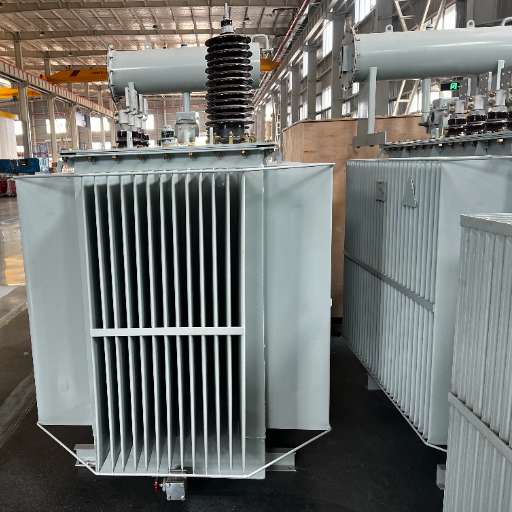
Oil filled transformers face shipping and customs requirements that dry type units do not. A manufacturer without export experience can delay delivery by weeks.
MSDS and Hazardous Material Classifications
Insulating mineral oil is classified as a hazardous material under UN 3082 (Environmentally Hazardous Substance, Liquid). The manufacturer must provide a current Material Safety Data Sheet (MSDS) or Safety Data Sheet (SDS) that identifies the oil composition, hazard classification, and handling requirements. Some countries require this documentation before customs clearance.
Oil Test Certificates for Customs
Customs authorities in several jurisdictions require oil test certificates to verify that the insulating fluid meets import standards. The certificate should show breakdown voltage, moisture content, and sometimes polychlorinated biphenyl (PCB) content verification. PCB-free certification is mandatory in the European Union and increasingly required elsewhere.
UN Shipping Compliance
Oil filled transformers ship as dangerous goods when the oil volume exceeds certain thresholds. The manufacturer must provide proper UN packaging certification, shipping labels, and emergency response information. A supplier who has never shipped oil transformers internationally may not understand these requirements.
Country-Specific Certifications
Different markets require different standards. IEC 60076 applies to most international markets. IEEE C57 applies to North America. GOST-R is required for Russia and some CIS countries. SASO certification is required for Saudi Arabia. A manufacturer with multi-standard experience reduces certification delay and rework risk.
For cooling mode considerations that affect manufacturer capability, see our oil-cooled transformer guide.
Warning Signs and Red Flags
Some supplier behaviors should end the evaluation immediately. These red flags indicate either insufficient capability or deliberate misrepresentation.
Cannot provide recent factory test reports. A manufacturer with active production generates test reports daily. Refusal to share recent reports suggests either no recent production or consistent failures.
No vacuum drying capability is described. If a supplier cannot explain vacuum drying temperature, duration, and oven capacity, they likely outsource this step or skip it.
Outsourced oil filling. Oil filling under vacuum is a core manufacturing step. A factory that sends windings elsewhere for oil filling loses quality control at the most critical stage.
Missing or expired ISO certification. ISO 9001 certification is foundational. An expired certificate or a certificate issued by a non-accredited body indicates weak quality management.
Unrealistic lead times or prices. A 10 MVA oil transformer requires 6-10 weeks of production for a capable manufacturer. A quote promising 3 weeks or a price 40 percent below market average signals corners being cut.
Identical test reports across different orders. When a utility buyer in Africa requested impulse test reports from three suppliers, two provided documents with identical waveforms and timestamps. The reports were copied, not generated. The third supplier was invited a witness test. That supplier has delivered zero failures in five years.
How to Structure Your RFQ for Oil Transformers
A well-structured Request for Quotation separates capable manufacturers from unprepared suppliers. Include these elements in every oil transformer RFQ.
Specification Checklist
- Rated power (kVA) and voltage ratio
- Vector group and tap changer range
- Cooling mode (ONAN, ONAF, OFAF)
- Insulation class and temperature rise limits
- Impedance voltage
- Noise level requirements
- Bushing type and arrangement
- Conservator or hermetically sealed design
Testing Requirements
- Routine tests per IEC 60076-1 (winding resistance, turns ratio, no-load and load losses, induced overvoltage)
- Type tests if required (lightning impulse, heat run, partial discharge)
- Oil quality test at dispatch (breakdown voltage, moisture, acidity)
- Witness testing availability
Documentation Requirements
- Factory test reports with raw data
- Oil quality certificates
- Core steel and copper material certificates
- ISO 9001 and ISO 14001 copies
- MSDS or SDS for insulating oil
- Packing list and shipping documentation
- Warranty terms in writing
Delivery and Warranty Terms
- Delivery schedule with milestone dates
- Incoterms (FOB, CIF, DAP)
- Installation supervision availability
- Commissioning support scope
- Warranty period and coverage definition
- Spare parts availability after warranty
For hermetically sealed design requirements that affect manufacturer capability, see our hermetically sealed transformer guide.
Cost Factors and What Drives Price
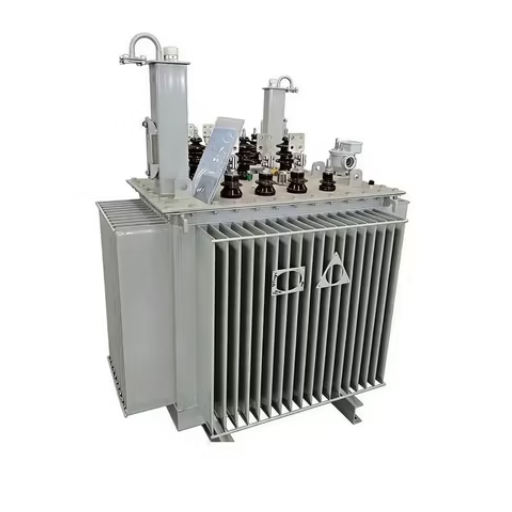
Oil transformer pricing varies based on material choices, design complexity, and testing scope. Understanding these drivers helps buyers evaluate whether a low price represents efficiency or omission.
Core Material Grade
Cold-rolled grain-oriented (CRGO) silicon steel determines no-load losses. Higher-grade steel (lower watts per kilogram) costs more upfront but reduces operating cost over decades. Ask for the core steel grade and no-load loss guarantee.
Copper vs. Aluminum Windings
Copper windings carry higher current density with lower resistive losses but cost more than aluminum. For high-load-factor applications, copper often provides lower total cost of ownership. For lower load factors, aluminum may be acceptable.
Oil Type
Mineral oil is standard and lowest cost. Natural ester fluids cost 2-3 times more but offer higher fire safety and biodegradability. Synthetic esters and silicone fluids cost significantly more. The oil type affects tank design, cooling capacity, and sometimes shipping classification.
Cooling Mode Complexity
ONAN cooling is simplest and lowest cost. ONAF adds fans and controls. OFAF adds oil pumps and complex control interlocks. Each level increases manufacturing complexity, testing requirements, and price. Match cooling mode to actual load profile rather than overspecifying.
Testing Scope
Routine testing is standard. Type testing (impulse, heat run, partial discharge) adds cost but verifies design margins. Special testing (sound level, short-circuit withstand) adds further cost. Specify only the tests your application requires.
A Middle Eastern EPC contractor learned this lesson when sourcing transformers for a hospital project. One supplier quoted 15 percent below competitors. The contractor required MSDS and oil test certificates. That supplier could not provide them. The contractor switched to a manufacturer with in-house oil testing and export documentation capability. The project passed customs inspection in two days instead of three weeks. The slightly higher unit price eliminated customs delays, storage fees, and project schedule risk.
Conclusion
Choosing an oil transformer manufacturer is not a price-comparison exercise. It is a capability verification process. The manufacturing steps that matter most, vacuum drying, oil filling, and comprehensive testing, are invisible in a finished transformer. A buyer who verifies these capabilities before placing an order avoids the failures that specification sheets cannot prevent.
Use the ten-point factory audit checklist to evaluate any supplier. Verify oil quality certificates and export documentation capability. Watch for red flags that indicate outsourced production or inadequate testing. Structure your RFQ to require the documentation and testing that prove capability, not just claim it.
The right oil transformer manufacturer welcomes scrutiny. They invite factory visits. They share test reports. They explain their vacuum drying process in detail. They understand that a transformer is a 30-year asset, and the manufacturing quality behind it determines whether those years are reliable or expensive.
Shandong Electric Co., Ltd. manufactures oil immersed transformers from 50 kVA to 50 MVA with IEC 60076 certification, in-house vacuum drying, full testing laboratory capability, and export documentation experience across 50-plus countries. Contact our engineering team to request a factory audit, virtual tour, or custom quotation for your project.