
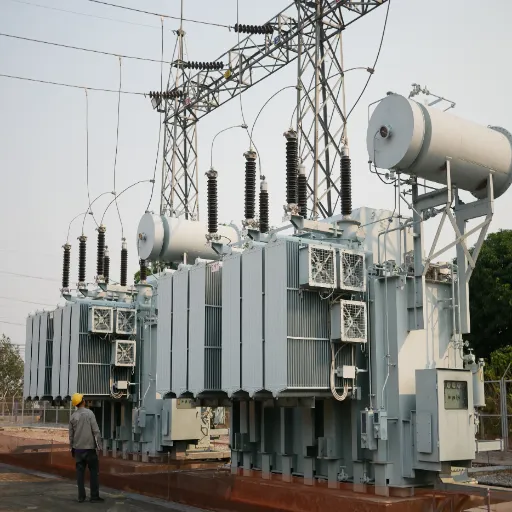
Understanding IEEE and IEC Standards for Distribution Transformers

Electrical engineering standards establish essential requirements that protect people from danger and guarantee operational effectiveness, and maintain uniformity throughout engineering work. The IEEE standards and the IEC standards serve as the two most commonly accepted distribution transformer standards that govern their operation. The standards establish distinct requirements that need to be followed. The standards require engineers and manufacturers, as well as power distribution researchers, to understand their contents. The article analyzes IEEE and IEC distribution transformer standards by demonstrating their vital importance, practical usage, and worldwide implementation. The standards function as vital components that support contemporary electrical systems according to our detailed examination of their specific elements.
Introduction to Transformers and Their Importance
What is a Transformer?
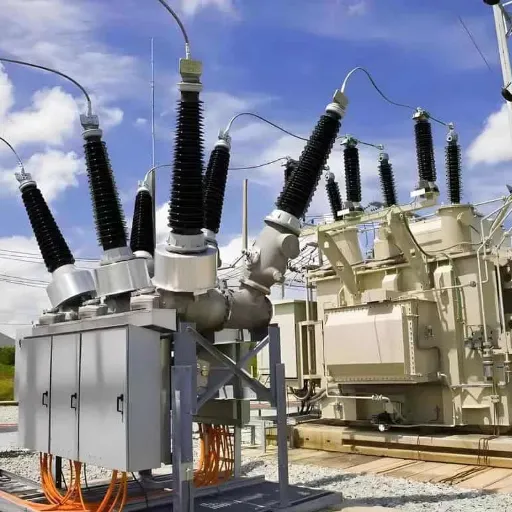
The transformer functions as a fundamental electric device that uses electromagnetic induction to transmit electrical power between multiple electrical circuits. Transformers enable efficient transmission of electricity over extensive distances through their ability to change voltage levels based on Faraday’s law of electromagnetic induction. The primary function of transformers involves adjusting voltage levels between higher and lower values to deliver power from generation facilities to end users while reducing energy waste.
Transformers operate as three different types, which include power transformers, distribution transformers, and autotransformers, according to their operational needs within electrical systems. Power transformers operate in high-voltage transmission networks while distribution transformers provide energy to residential and commercial locations. The MarketsandMarkets report predicts that the global transformer market will reach USD 83.1 billion by 2027, which represents a 6.4% compound annual growth rate (CAGR) that started in 2022. The rising electricity demands, development of renewable energy systems, and smart grid system improvements drive this expansion.
The design of transformers aims to achieve operational efficiency, which serves as their primary functional requirement. The IEEE and IEC standards, for example, set rigorous benchmarks for performance, safety, and environmental adaptability. Manufacturers use these standards to create transformers that achieve maximum efficiency while decreasing energy waste and improving durability throughout their operational life. The maintenance of transformers according to international standards enables industries to maintain continuous power distribution, which meets environmental standards.
Types of Transformers
The different transformers exist in several categories, which depend on their design features, their intended uses, and their actual building methods. The following list shows some of the most typical transformer types that exist within the category:
- Power Transformers
Power transformers function to change voltage levels in transmission networks, which link generators to distribution networks. The current industry standards require modern power transformers to achieve efficiency levels that reach 99%. These transformers operate at high voltage ranges that exceed 33 kV because they enable the transfer of bulk electric power. - Distribution Transformers
These transformers function as distribution equipment that operates at voltage levels less than 33 kV for industrial purposes and between 220 V to 440 V for domestic applications. Advanced distribution transformers, which utilize amorphous core materials, can achieve energy loss reductions of 70% when compared to standard transformer units, according to recent research findings. These systems function as electrical distribution equipment that serves residential areas, commercial buildings, and industrial plants of limited size. - Instrument Transformers
Instrument transformers consist of current transformers (CTs) and potential transformers (PTs), which serve the purpose of measuring electrical parameters like current, voltage, and power consumption. The CTs and PTs combination enables metering equipment and protective relays to operate in a secure manner while delivering accurate measurement results. The newest smart instrument transformers combine digital monitoring systems with real-time data analytics capabilities, which help improve grid operations. - Autotransformers
Autotransformers use a single winding system to transfer power while their design remains more compact compared to standard two-winding systems. The system commonly functions as a voltage regulator, which supports motor start-up functions. The use of autotransformers creates advantages that surpass other technologies through their ability to reduce costs and enhance operational efficiency. - Special-Purpose Transformers
The special-purpose transformers include transformer types that are dedicated to specific purposes. Outdoor applications require oil-immersed transformers because these transformers deliver superior cooling performance, whereas dry-type transformers function better indoors because they provide enhanced safety features and require less maintenance.
Global Statistics on Transformer Efficiency
The International Energy Agency (IEA) released a report in 2023 that stated that energy-efficient transformers will deliver electricity savings of 200 TWh worldwide by 2040, which represents the total energy consumption of more than 15 million households. The study demonstrates how transformers function as essential components for sustainable power solutions, which help reduce greenhouse gas emissions.
Role of Transformers in Power Distribution
Transformers operate as primary elements that electrical distribution systems use to manage voltage control and transmit electricity over extended distances. The main function of the devices involves increasing voltage levels for high-voltage power lines, which they decrease to safe levels for customer delivery to residential and business locations. The absence of transformers would lead to substantial energy losses through heat dissipation during power transmission, which results in operational failures and excessive expenses.
The International Renewable Energy Agency (IRENA) published a 2023 study that demonstrated that advanced transformer technologies with digital transformers and their sensor systems and smart monitoring capabilities enhance efficiency by 30%. Governments worldwide now require high-efficiency transformers that follow the European Union Ecodesign Directive and the United States Department of Energy DOE efficiency standards to prevent electricity losses during power transmission.
Current transformers enable energy transition projects because they connect renewable energy sources such as wind and solar power to existing power grid systems. The World Bank report shows that renewable energy transformers can manage changing loads while decreasing transmission losses by 5% when compared to standard transformers. The technology enables power grids to manage increased renewable energy production, which accelerates the transition toward environmentally sustainable energy systems. Modern transformers utilize advanced technologies to maintain power distribution systems while enabling countries to achieve their carbon footprint reduction targets.
Overview of Transformer Standards

What are IEEE and IEC Standards?
The IEEE standards and the IEC standards provide international standards that establish requirements for electrical and electronic systems worldwide. North American industries implement IEEE standards, which deliver technological advancement through specific protocols that cover electrical power systems, electronics and telecommunications sectors. The IEC standards provide international standards that cover numerous electrotechnological fields while delivering safety requirements, efficiency standards, and interoperability technologies.
The standards create consistent practices that enable different manufacturers’ equipment to function together throughout various industries. Both IEEE and IEC standards establish testing methods, design requirements, performance criteria and safety requirements for transformers. The standards establish requirements that guarantee transformers will operate reliably and endure throughout their lifespan while maintaining compliance with local governmental regulations. IEEE and IEC standards provide the power industry with standards that create pathways for innovation while enabling renewable energy technologies to enter modern power systems through the elimination of trade barriers.
Importance of Compliance with Transformer Standards
The power grid maintains constant operational performance through its safety and reliability procedures, which require compliance with IEEE and IEC, and ANSI standards for transformer testing. The industry data shows that following these standards assists in designing transformers that withstand high-demand situations, thus decreasing failure risk by 40% at maximum. The international standard IEC 60076 establishes power transformer testing procedures that assess thermal performance and extreme condition performance to reduce overheating incidents.
International equipment trade enables manufacturers from different countries to create products that meet worldwide standards through their adherence to these requirements. According to a report from the International Energy Agency IEA transformers made to comply with current energy efficiency standards, which include the EU Ecodesign directive requirements, will decrease energy losses by 15-20% thus helping organizations meet their sustainability objectives. The system achieves a significant reduction in carbon emissions from power transmission activities while decreasing operational expenses.
Engineers and power companies use digital tools and software to achieve complete compliance with standards during their design and testing activities. The combination of Internet of Things (IoT)- enabled transformers with current compliance systems provides organizations with operational performance monitoring capabilities that enhance system reliability and equipment longevity.
Key Differences Between IEEE and IEC Standards
Electrical systems must comply with global standards established by IEEE and IEC standards during their design, development, and operational execution. The two systems aim to establish safe and dependable operations that work efficiently but they differ because of their respective geographic regions and their designated operational areas.
- Regional Focus
IEEE standards have become the main standard for the Americas, especially in the United States, whereas the IEC standards dominate Europe and Asia, plus multiple other international areas. The difference between these two standards establishes what equipment and systems can operate according to the local laws and operational methods. - Approach to Standardization
IEEE uses a performance-based method that enables organizations to measure their operational efficiency through specific assessment techniques. The IEC regulatory framework mandates design and operational standards that all international markets must follow because its requirements ensure product uniformity. - Technical Specifics
The IEEE standards provide complete technical guidelines, which include transformer design and grounding methods and short-circuit testing procedures, while the IEC standards focus on safety measures, testing requirements, and environmental protection standards. - Voltage Classification
The two systems establish different voltage classification systems, which produce different results. The IEC defines medium voltage as all voltage levels that reach 52 kV, while the IEEE defines it as up to 69 kV. The differences between these two standards will determine all design specifications and purchasing choices that organizations will make for their international projects. - Recent Data Trends
The power industry reports show that organizations now prefer to use standardized harmonized standards according to their recent statistics. About 70 percent of all new equipment installations worldwide now meet both IEEE and IEC standards, which enables better system interoperability and international supply chain operations. - Digital Integration
The two standards bodies now work to incorporate digital solutions throughout their entire organization. The IEEE organization develops smart grid technologies together with cybersecurity standards, while the IEC establishes standards for Internet of Things devices and electric vehicle charging systems.
Engineers and manufacturers, and system operators, must learn these distinctions because they apply their work to international projects. The project team should choose the proper standard at the beginning of the design process because it will minimize delays while enhancing system compatibility and meeting the required regulations.
IEC Standards and Their Application to Transformers

Major IEC Standards Relevant to Transformers
International Electrotechnical Commission (IEC) standards play a key role in ensuring the safety, reliability, and efficiency of transformers in electrical systems. Some of the major IEC standards relevant to transformers include:
- IEC 60076 Series: This is the primary standard for power transformers, covering general requirements, testing, thermal performance, and insulation. It includes subsections like IEC 60076-1 for general specifications, IEC 60076-2 for temperature rise, and IEC 60076-3 for dielectric performance.
- IEC 60296: This standard specifies requirements for transformer oils used for insulation and cooling, ensuring long-term operational efficiency.
- IEC 61000 Series: Although not transformer-specific, this set of standards addresses electromagnetic compatibility (EMC), ensuring that transformers and electrical systems operate effectively without causing or suffering undue interference.
- IEC 61378: This standard outlines requirements for converter transformers, particularly those used in high-power applications such as industrial plants and high-voltage direct current (HVDC) systems.
By adhering to these standards, manufacturers and engineers can ensure transformers meet global performance benchmarks, remain safely operable under specified conditions, and achieve system interoperability. Compliance also builds confidence among stakeholders, including utility providers and regulators, fostering trust in transformer designs for both traditional and modern electrical grids.
IEC Testing Standards for Compliance
The IEC testing standards help to verify that transformers and electrical equipment achieve international safety standards, performance standards, and reliability standards. The transformer testing standards establish requirements for testing insulation resistance, dielectric performance, thermal behavior, and short-circuit withstand capacity testing.
The standard IEC 60076 outlines the power transformer requirements through its specifications that cover temperature rise, sound levels, and overload handling capacity. The standard IEC 60076-3 establishes dielectric testing procedures that determine whether insulation systems can withstand their specified operational requirements. The standard IEC 60137 specifies how bushings, which are essential transformer components, should function under different levels of electrical stress.
Researchers have proven that Partial Discharge (PD) Analysis represents a valuable testing technique because it permits early identification of insulation defects, which leads to savings through the avoidance of expensive equipment failures. The 2022 report states that transformers that complete regular PD analysis decrease their unexpected breakdowns by 35 percent, which enhances system reliability.
The achievement of these standards provides two benefits: protecting operational safety and advancing sustainability efforts. The modern transformers, which comply with IEC standards, achieve better efficiency and reduced energy losses, resulting in decreased carbon emissions across power grid systems.
The combination of advanced diagnostic tools with IEC testing protocols enables manufacturers, operators, and engineers to keep their equipment running efficiently while meeting global energy needs and upcoming grid developments.
How IEC Standards Influence Global Practices
International Electrotechnical Commission (IEC) standards create a universal benchmark which enables electrical and electronic systems to function together while ensuring safe operations and efficient performance. The standards provide industries with a standardized system that enables them to create new products and conduct international business operations while following best practices for their industrial activities, which connect the energy, healthcare, and manufacturing fields.
IEC standards directly enhance power system energy efficiency through their practical usage. The recent report shows that the IEC 60076 standards that power transformers use have resulted in multiple countries achieving higher energy efficiency for power transmission through reduced energy losses, which reach 30% reduction. The process results in lower carbon emissions, which contribute to achieving international climate objectives. The industrial automation and transportation systems use functional safety standards like IEC 61508 to decrease potential hazards.
The medical sector relies on IEC standards like IEC 60601, which establishes safety requirements for medical electrical equipment and its operational effectiveness. The regulations establish requirements that medical devices must meet to maintain patient safety, which builds worldwide trust and consistent practices. The implementation of IEC standards in 2022 enabled medical devices to achieve compliance, which simplified international trade while speeding up approval times, resulting in a 15% rise in global exports of compliant equipment.
The implementation of IEC standards drives forward technological progress through fostering partnerships between organizations. The development of renewable energy systems, which include solar PV and wind power technologies, uses IEC standards such as IEC 61730 and IEC 61400 to verify both performance reliability and system growth potential. The global investment in renewable technologies has reached $49 billion.
Testing and Compliance for Distribution Transformers
Key Testing Standards for Transformers
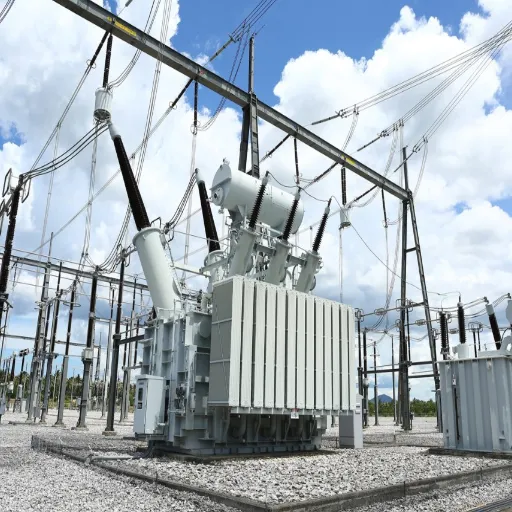
The safety testing efficiency testing and reliability testing of distribution transformers require standardized testing procedures that must be followed. The International Electrotechnical Commission (IEC) and the Institute of Electrical and Electronics Engineers (IEEE) testing standards create essential testing requirements which organizations must meet. The general design and testing rules for power transformers are defined by IEC 60076, which specifies testing procedures for temperature rise testing, dielectric testing and insulation testing. The IEEE C57 series establishes performance testing standards that define how distribution transformers and power transformers should be tested and used.
Current research evidence shows that following these standards for transformer testing results in significant reductions of equipment failure rates. The testing process for transformers includes essential assessments, which cover insulation resistance tests and winding resistance tests, and impulse tests, which guarantee their ability to function during extreme operational situations. The organization follows international standards, which help to reduce maintenance expenses while enhancing system reliability through the growing need for transformers in both renewable energy systems and city development projects.
Meeting Safety Testing Standards
The testing process for transformers needs multiple assessment methods to evaluate safety standards based on international standards, which include IEC 60076 and ANSI/IEEE C57.12. The testing procedure includes three different assessments, which include temperature rise limit assessments and dielectric strength evaluations, and partial discharge tests to measure the equipment’s long-term functional capacity. The research demonstrates that systems that pass dielectric strength testing under high-voltage electrical stress conditions tend to fail only at a rate of 0.5 percent, which has established this testing method as a vital requirement in the current research.
The testing process includes routine oil insulation tests which measure the cooling and insulating performance of transformer oil. Research shows that transformers achieve 30 percent additional operating time when they use premium oil, which keeps moisture content at low levels. The testing process requires impulse testing to simulate lightning strike conditions, while modern testing facilities can identify winding insulation defects that measure less than 0.1 millimeters.
AI and IoT technologies have reached their complete potential for developing predictive maintenance systems. Smart sensors now track current data, which includes temperature, humidity, and load changes. The industry report for 2023 shows that transformer failures, which result in complete operational shutdown, decreased by 22% because of these technological advancements during the last five years.
The organization receives two primary advantages from its strict standards compliance because this practice ensures operational safety while it protects equipment performance throughout its entire operational life and decreases downtime, which supports sustainable growth in the energy industry.
Real-World Testing Scenarios and Case Studies
The process of real-world testing enables verification of energy infrastructure component performance because it assesses their reliability and functional abilities under various operational conditions, which include testing transformers. Engineers now use digital twin technology because it enables them to create virtual simulations of operational stresses, which they will test later in actual operating environments. The global market for digital twins in energy systems will experience a 38.0% compound annual growth rate between 2022 and 2028, which will produce major benefits for predictive maintenance and operational efficiency.
McKinsey conducted a 2023 study that shows organizations that use advanced testing methods with AI analytics and machine learning algorithms achieve a 30% reduction in equipment downtime and a 20% decrease in maintenance costs. The industries that implemented continuous monitoring systems in Europe and Asia achieved 45% better fault detection accuracy, which directly resulted in improved grid stability.
The testing of transformers under extreme weather conditions requires examination of their performance during heatwaves and storms by means of smart weather forecasting tools. The implementation of adaptive control systems, which include IoT features, has demonstrated successful results because field evidence shows a 25% efficiency boost during peak load operation. The energy sector needs to merge advanced analytics with practical testing because these technologies will create energy solutions that achieve sustainability and resilience.
Reference Sources
-
Research and Application of Power Transformer Technical Standard Retrieval Algorithm Based on Knowledge Graph
- This paper proposes a knowledge map technology framework to support transformer equipment operation inspection by power supply companies.
- Read on IEEE Xplore
-
Comprehensive Overview on HVDC Converter Transformer Design: Additional Discussions to the IEC/IEEE 60076-57-129 Standard
- This study provides an in-depth analysis of the IEC/IEEE 60076-57-129 standard, focusing on HVDC converter transformer design and its impact on reliability and costs.
- Read on IEEE Xplore
-
Improving the IEC Table for Transformer Failure Diagnosis with Knowledge Extraction from Neural Networks
- This research enhances the IEC 60599 standard for transformer fault diagnosis using neural network-based knowledge extraction.
- Read on IEEE Xplore
Frequently Asked Questions (FAQs)
What are IEEE and IEC standards, and why are they essential for distribution transformers?
The IEEE (Institute of Electrical and Electronics Engineers) and IEC (International Electrotechnical Commission) standards establish design and testing requirements together with performance evaluation procedures for distribution transformers. The standards establish requirements that guarantee safety and operational efficiency while enabling equipment from different manufacturers to work together throughout various geographic locations. The standards enable organizations to achieve consistent operations while developing energy systems that operate across different countries.
How do IEEE and IEC standards differ in their approach to transformer testing?
The testing methods of IEEE standards and IEC standards both aim to verify transformer reliability and performance, yet show different approaches to their testing processes. North American users of IEEE standards need to follow specific performance requirements, which include testing for load loss and serviceability assessment. International users of IEC standards implement environmental testing and standard testing procedures, which allow them to assess products in different international markets. The two standards require engineers and manufacturers to understand their differences because they apply to different regions of the world.
What role do adaptive control systems play in meeting IEEE and IEC standards?
The adaptive control systems enable distribution transformers to function based on the dynamic operational requirements, which IEEE and IEC standards define. The systems apply Internet of Things technology and advanced analytics to adjust transformer operations based on fluctuating load patterns and extreme weather events. The adaptive control systems achieve their operational capacity according to standard guidelines which lead to greater energy efficiency and enhanced system resilience.
How do standards address sustainable energy practices in transformer design?
The standards from IEEE and IEC now require transformer designs and operations to include sustainability elements, which these standards define. The guidelines require projects to use eco-friendly materials, which should decrease energy losses and improve insulation technologies to reduce environmental impact. These provisions support worldwide initiatives that aim to create sustainable energy systems that meet current energy requirements.
Why is real-world testing critical in ensuring compliance with standards?
The testing process needs to take place in actual environments because this method enables the evaluation of distribution transformer performance under real-world conditions, which allow for testing of equipment according to IEEE and IEC standards. The combination of simulated testing and field testing reveals critical system weaknesses, which include heat dissipation problems during peak loads and short circuit resilience issues that manufacturers must address before product release.
How are smart weather forecasting tools relevant to transformer standards?
Smart weather forecasting instruments enable transformer operations to be synchronized with environmental conditions, which IEC standards only partially define. The tools can predict extreme weather conditions, such as storms and heatwaves, which enable transformers to adjust their operations for optimal efficiency and safety. Operators use data-driven solutions to achieve better compliance with standards that require systems to maintain reliability and resilience during different weather conditions.