
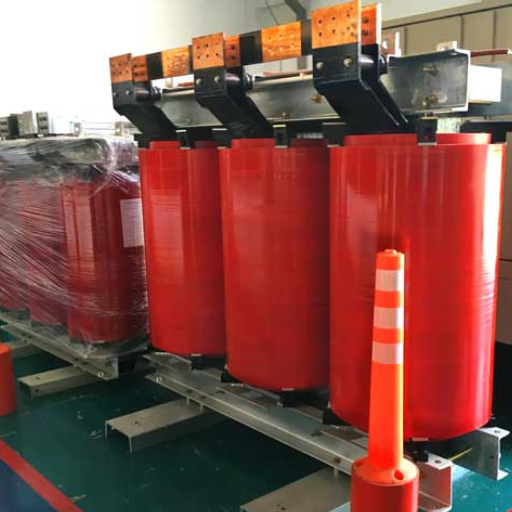
Dry Type Transformer Manufacturer: How to Evaluate and Source with Confidence

A dry type transformer manufacturer designs, builds, and tests transformers that use air or solid insulation instead of liquid oil, with capabilities ranging from standard catalog units to fully custom-engineered systems. The global market for these transformers reached approximately $6.5 billion in 2025, and China produces roughly 40-45% of global transformer capacity. Yet for every capable manufacturer, there is a trading company, an assembler, or a workshop that looks similar on a website but delivers very different results.
An EPC contractor in Southeast Asia learned this the expensive way. The procurement team awarded a 1,600 kVA dry type order to the lowest bidder from an online marketplace. The units arrived on time and looked correct, but the tap changer configuration was set for 400 V secondary when the project required 415 V. There was no engineering review before production. The units had to be partially rewound on-site. The retrofit cost $14,000 and delayed commissioning by two weeks. The manufacturer had a factory photo on its website, but it was actually a trading company that forwarded the order to a small workshop without technical oversight.
This guide gives you a practical framework for evaluating, comparing, and sourcing from a dry type transformer manufacturer so you avoid surprises like that one.
Key Takeaways
- A true dry type transformer manufacturer performs core cutting, winding, and resin casting or VPI in-house — not just final assembly of outsourced components.
- Verify certification authenticity: self-certified claims are common; third-party type-test reports from KEMA, CESI, or UL are what matter for compliance.
- Custom voltage, kVA, enclosure, and cooling modifications represent 30-40% of export orders — confirm the manufacturer has an engineering team, not just sales staff.
- Factory audit failure rates for first-time Chinese supplier assessments run 25-30%; use the evaluation checklist in this guide before committing.
- Lead times range from 4-8 weeks for standard units to 10-16 weeks for custom designs — plan procurement timelines accordingly.
What Does a Dry Type Transformer Manufacturer Actually Do?
Core Manufacturing Capabilities
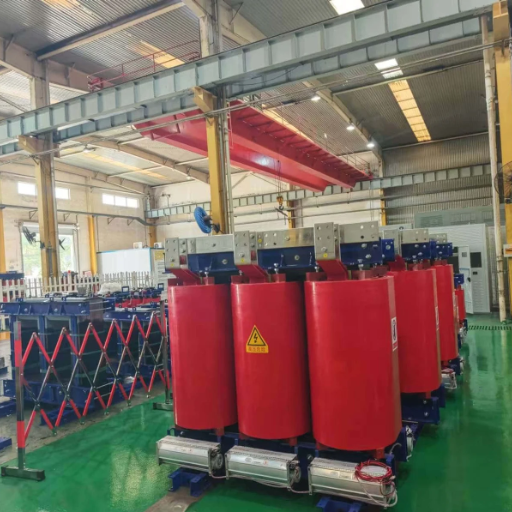
A genuine dry type transformer manufacturer controls the full production chain. This starts with core processing: cutting and stacking grain-oriented silicon steel laminations to minimize no-load losses. It continues with winding — copper or aluminum conductors formed into primary and secondary coils with precise turn ratios, insulation layers, and interlayer spacing.
The insulation system determines the sub-type. Cast resin manufacturers vacuum-impregnate windings with epoxy resin and cure them under heat and pressure in molds. VPI manufacturers place completed windings into a vacuum chamber, impregnate them with varnish under pressure, and cure them in ovens. Both processes require specialized equipment that assemblers and trading companies rarely own.
Testing is non-negotiable. Routine tests include winding resistance, turns ratio, no-load loss, load loss, and insulation resistance. Type tests — impulse voltage, heat run, and partial discharge measurement — require high-voltage laboratories that separate serious manufacturers from small workshops.
Engineering and Design Services
Beyond production, a capable manufacturer provides engineering support for custom requirements. This includes voltage ratio design, tap changer configuration, kVA rating selection, cooling system design (natural air AN or forced air AF), and enclosure specification for IP ratings and environmental protection. For buyers with non-standard requirements, this engineering capability is often more important than the production line itself.
Quality Assurance and Certification Management
Quality systems separate professional manufacturers from commodity suppliers. ISO 9001 certification is held by more than 80% of established Chinese transformer manufacturers, but the depth of implementation varies significantly. A thorough manufacturer maintains material traceability for steel and copper, process control documentation for each production stage, and pre-shipment inspection records for every unit.
Certification management extends to market-specific compliance. IEC 60076-11 is the dominant global standard for dry type transformers. ANSI C57.12.01 governs North American requirements. UL listing may be required for certain U.S. projects. KEMA or CESI type-test reports provide independent verification of performance claims.
Manufacturer vs. Assembler vs. Trading Company
| Type | Core Capability | What They Actually Do | Risk Level |
|---|---|---|---|
| Manufacturer | In-house core, winding, casting/VPI, testing | Designs and builds transformers from raw materials | Low |
| Assembler | Outsourced cores and windings; final assembly only | Purchases components and assembles them | Medium |
| Trading Company | No production capability | Sources from third parties; acts as middleman | High |
The problem for buyers is that all three types can look similar online. A trading company may display factory photos that belong to its supplier. An assembler may claim full manufacturing capability while outsourcing the critical winding and resin work. The evaluation checklist later in this guide shows you how to distinguish them.
Need a refresher on dry type transformer fundamentals? See our complete dry type transformer guide for technology basics before selecting a manufacturer.
Key Capabilities to Look for in a Dry Type Transformer Manufacturer
In-House Core Processing and Winding
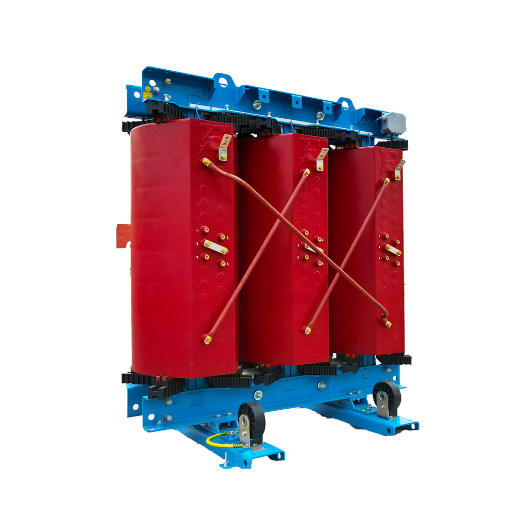
Ask directly: do you cut and stack cores in your own facility, or do you purchase core assemblies? Do you wind coils in-house, or are windings subcontracted? A manufacturer that controls both processes can adjust designs quickly, trace quality issues to their source, and maintain consistent electromagnetic performance. An assembler or trading company cannot.
Cast Resin or VPI Capability
Not every dry type transformer manufacturer offers both. Cast resin requires vacuum casting equipment, heated molds, and controlled curing ovens. VPI requires vacuum-pressure chambers and varnish impregnation lines. If your project specifies cast resin for fire safety and partial discharge performance, a VPI-only manufacturer cannot deliver reliably — and vice versa.
A data center project in Europe needed 2,500 kVA cast resin units with forced air cooling and IP42 enclosures for an indoor switchgear room. The first manufacturer contacted offered an attractive price and claimed full capability. During technical review, it became clear they had never built IP42 enclosures for cast resin units above 2,000 kVA. Their standard catalog stopped at 2,000 kVA with IP20. A second manufacturer with dedicated cast resin engineering provided a complete technical proposal within 48 hours, including thermal calculations for the AF cooling upgrade and enclosure ventilation design. Delivery took 14 weeks. The first manufacturer would have accepted the order and figured it out during production — if they figured it out at all.
Testing Laboratory
Verify what testing the manufacturer performs routinely and what requires third-party laboratories. At minimum, a manufacturer should perform routine tests on every unit: winding resistance, turns ratio, no-load and load loss measurement, and insulation resistance. Type tests — impulse, heat run, and partial discharge — are expensive and not performed on every unit, but the manufacturer should have type-test certificates from accredited laboratories for each design family they produce.
Custom Engineering Team
Sales engineers can configure standard catalog units. Custom engineering teams redesign core and winding geometries for non-standard voltages, kVA ratings, harmonic loads, or environmental conditions. For projects requiring custom tap ranges, K-factor harmonic ratings, or special cooling configurations, confirm that the manufacturer employs design engineers with electromagnetic modeling capability — not just sales staff who forward your specification to a subcontractor.
Certification Portfolio
Request the actual certificate numbers and verify them with the issuing bodies. Self-certified claims are common in online listings. Valid third-party certifications include:
- IEC 60076-11: International dry type transformer standard
- ISO 9001: Quality management system
- ISO 14001: Environmental management (where applicable)
- KEMA / CESI / UL type tests: Independent performance verification
- ANSI C57.12.01: North American dry type standard
Export Documentation and Logistics Support
International buyers need more than a product. They need commercial invoices, packing lists, bills of lading, certificates of origin, and sometimes pre-shipment inspection reports from third-party agencies like SGS or BV. A manufacturer with genuine export experience handles this documentation as part of standard process, not as an afterthought.
Dry Type Transformer Manufacturer Evaluation Checklist
Use this checklist during your evaluation. Score each item: yes (2 points), partial (1 point), or no (0 points). A score below 12 suggests elevated risk.
| # | Evaluation Item | Score |
|---|---|---|
| 1 | Core cutting and stacking performed in-house | |
| 2 | Coil winding performed in-house (not outsourced) | |
| 3 | Cast resin vacuum casting OR VPI impregnation performed in-house | |
| 4 | Routine testing performed on every unit (voltage ratio, losses, insulation) | |
| 5 | Type-test certificates available from accredited third-party lab (KEMA, CESI, UL) | |
| 6 | ISO 9001 certification verifiable with certificate number | |
| 7 | Custom engineering team with electromagnetic design capability | |
| 8 | Reference projects in your region or application type | |
| 9 | Export documentation and logistics support as standard service | |
| 10 | Warranty terms clearly defined (minimum 12 months, parts and labor) | |
| 11 | After-sales technical support availability (not just spare parts sales) | |
| 12 | Production capacity aligned with your volume and timeline requirements |
Quality System Audit Questions
Beyond the checklist, ask these questions during technical discussions:
- What percentage of your cores and windings are produced in-house versus purchased from subcontractors?
- Can you provide type-test reports for the specific kVA rating and voltage class we need?
- What is your typical lead time for standard catalog units versus custom-engineered units?
- How do you handle non-conforming units detected during final testing?
- What is your process for engineering review of custom specifications before production release?
Reference Project Verification
Request reference projects in your application type — hospitals, data centers, solar plants, or industrial facilities. Then ask specific questions: what kVA rating, what voltage configuration, what year, and what country? Vague references (“we supply many hospitals”) are less credible than specific project details with dates and locations.
For sizing guidance before contacting manufacturers, see our dry type transformer sizing guide.
Cast Resin vs VPI: What Different Manufacturers Specialize In
Cast Resin Specialists
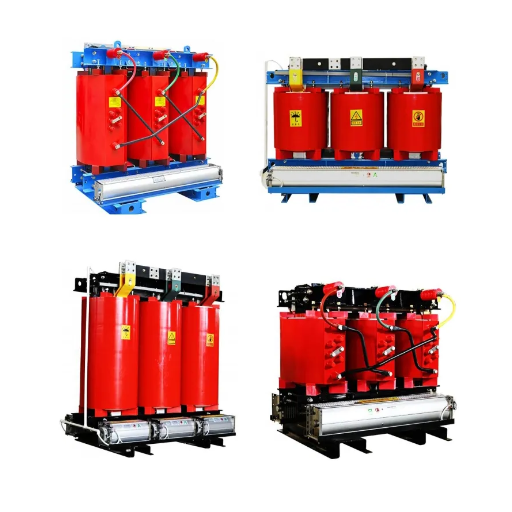
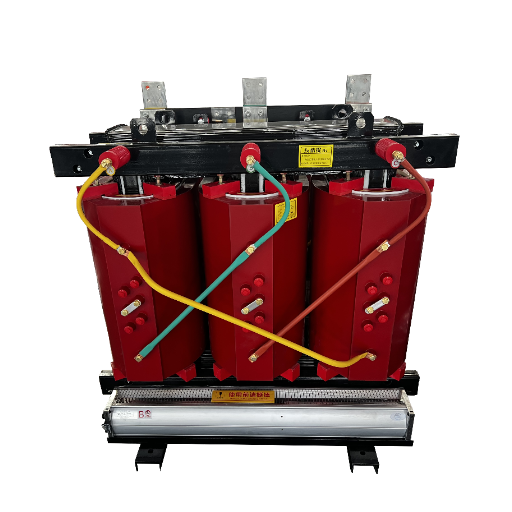
Cast resin transformers use vacuum-impregnated epoxy resin to encapsulate windings in a solid block. This provides exceptional fire safety (self-extinguishing, no toxic smoke), excellent partial discharge performance, and minimal maintenance. Cast resin specialists typically invest heavily in vacuum casting equipment, mold tooling, and curing ovens.
Cast resin accounts for approximately 55% of indoor dry type installations globally. Applications include hospitals, data centers, underground installations, and any environment where fire safety and reliability are paramount. Manufacturers specializing in cast resin often charge a 15-25% premium over VPI for equivalent ratings.
VPI Specialists
VPI transformers use vacuum-pressure impregnation of varnish into windings, followed by oven curing. The result is a robust, moisture-resistant insulation system at lower cost than cast resin. VPI specialists focus on commercial buildings, light industrial facilities, and budget-sensitive projects where the full fire safety advantage of cast resin is not required.
VPI accounts for approximately 35% of indoor dry type installations. The remaining 10% includes other insulation systems such as epoxy-encapsulated or open-air designs for specialized applications.
Full-Range Manufacturers
A manufacturer that offers both cast resin and VPI capability provides the most flexibility. They can recommend the right insulation system for the application rather than forcing every project into their sole available technology. For buyers who manage multiple project types — some critical, some standard — a full-range manufacturer simplifies supplier management and reduces procurement complexity.
Learn more about the technical differences in our cast resin transformer guide and VPI transformer guide.
The Procurement Process: From RFQ to Delivery
Step 1 — Preparing Your Technical Specification
A complete specification accelerates the quotation process and reduces errors. Include at minimum:
- Primary and secondary voltage (with tolerance)
- kVA rating and expected load profile
- Frequency (50 Hz or 60 Hz)
- Number of phases
- Vector group (e.g., Dyn11)
- Tap changer requirements (range and steps)
- Cooling method (AN or AF)
- Insulation class (F or H)
- IP rating for enclosure
- Ambient temperature and altitude
- Applicable standard (IEC, ANSI, or other)
- Special requirements (K-factor, seismic, noise limits)
Step 2 — RFQ Evaluation Beyond Price
Price per kVA is the obvious comparison point, but it is not the most important one. Evaluate quotations on:
- Technical compliance with your specification (not just closest catalog match)
- Material quality (copper vs. aluminum, core steel grade)
- Losses at specified load point (affects 20-year operating cost)
- Certification coverage for your target market
- Warranty terms and after-sales support
- Lead time realism (promises of 3 weeks for custom units should raise flags)
Step 3 — Factory Audit or Third-Party Inspection
For first-time suppliers or large orders, a factory audit provides direct verification of claimed capabilities. If travel is not practical, request a video factory tour focused on the specific equipment relevant to your order: core cutting, winding stations, casting or VPI chambers, and testing laboratories.
A hospital project in the Middle East required KEMA type-test certificates for 2,000 kVA cast resin units. The first manufacturer quoted claimed “KEMA certified” on its website. During verification, the project engineer discovered the certificates were self-declared — the manufacturer had performed its own impulse test and labeled it “KEMA standard” without actual KEMA laboratory involvement. A second manufacturer provided genuine KEMA test report numbers, which the project team verified directly with KEMA. The cost difference was 8%, but the compliance risk difference was total.
Step 4 — Production Monitoring and Testing Witness
For large or critical orders, request production monitoring or witness testing. A capable manufacturer welcomes buyer or third-party inspectors during winding, assembly, and final testing. This is standard practice for utility and EPC projects, and reputable manufacturers accommodate it routinely.
Step 5 — Shipping, Documentation, and Customs Clearance
Confirm what documentation the manufacturer provides: commercial invoice, packing list, bill of lading, certificate of origin, and any required inspection certificates. For countries with import regulations on electrical equipment, verify that the manufacturer has shipped to that destination before and understands the customs requirements.
Step 6 — Installation Support and Commissioning
Some manufacturers provide only the product. Others provide installation guidance, commissioning support, and startup assistance. For complex indoor installations or first-time buyers, installation support reduces the risk of improper connections, grounding errors, or cooling system misconfiguration.
For detailed installation requirements, see our dry type transformer installation guide.
Common Mistakes When Selecting a Manufacturer
Choosing on Price Alone
The lowest quotation often omits costs that appear later: higher losses increasing electricity bills, shorter service life requiring earlier replacement, or missing certifications causing inspection failures. Compare total cost of ownership over 20-30 years, not just purchase price.
Confusing a Trading Company with a Manufacturer
Trading companies present themselves as manufacturers on websites and marketplaces. Verify production capability directly. Ask for factory location, production equipment list, and in-process photos. If responses are vague or delayed, treat the supplier as a trading company and evaluate them accordingly — higher risk, less control, limited technical support.
Ignoring Certification Relevance for Your Market
IEC certification does not automatically satisfy ANSI requirements. UL listing is specific to the North American market. Verify that the manufacturer’s certifications match the regulatory requirements of the destination country, not just the country of manufacture.
Underestimating Lead Time Complexity
Standard catalog units ship in 4-8 weeks from established manufacturers. Custom-engineered units require 10-16 weeks. Add shipping time, customs clearance, and installation scheduling. A manufacturer promising 4-week delivery on a fully custom unit is either misleading you or cutting quality steps.
Overlooking After-Sales Support Availability
Transformers operate for 25-40 years. The manufacturer you choose today may need to provide spare parts, technical advice, or warranty service a decade from now. Evaluate the manufacturer’s stability, track record, and stated after-sales policy before placing the order.
Why Manufacturing Location Matters for Export Buyers
China Manufacturing Advantages
China’s transformer industry benefits from integrated supply chains for silicon steel, copper, insulation materials, and resin. This vertical integration reduces material costs and lead times. Production capacity is substantial — China produces approximately 40-45% of global transformer capacity — which means buyers can find manufacturers for virtually any specification.
Quality Perception vs. Reality
The quality range among Chinese manufacturers is wide. At one end are ISO-certified factories with automated core cutting, CNC winding machines, and accredited testing laboratories exporting to Europe, North America, and the Middle East. At the other end are small workshops with minimal quality control and limited technical capability. The challenge for buyers is distinguishing between them. Factory audits, third-party inspections, and certificate verification are the tools that bridge this gap.
Logistics and Shipping Considerations
Sea freight from major Chinese ports to global destinations typically takes 15-45 days depending on the route. For urgent projects, air freight is available at significantly higher cost. Packaging must protect cast resin and VPI units from moisture and mechanical damage during transit. Established exporters understand transformer-specific packaging requirements; inexperienced suppliers may use inadequate crating.
Import Compliance and Documentation
Import regulations vary by country. Some require pre-shipment inspection by designated agencies. Others mandate specific labeling, documentation in local languages, or registration with national electrical safety authorities. A manufacturer with export experience to your target country will know these requirements and build them into the delivery process.
Customization Capabilities: What Can Actually Be Modified?
Voltage Configurations and Tap Changers
Standard dry type transformers offer fixed voltage ratios with off-circuit tap changers, typically plus or minus 2.5% and 5%. Custom tap ranges, on-load tap changers for voltage regulation under load, and non-standard voltage combinations are all achievable with proper engineering review. Confirm that the manufacturer designs the tap changer arrangement in-house rather than simply installing a purchased component.
kVA Ratings and Overload Capacity
Catalog ratings follow standard increments (500 kVA, 1,000 kVA, 1,500 kVA, 2,000 kVA, 2,500 kVA). Non-standard ratings — 1,250 kVA, 1,750 kVA, 2,200 kVA — require custom core and winding design. Overload capacity for intermittent peak loads can also be engineered into the thermal design. A manufacturer with in-house electromagnetic modeling capability can optimize these parameters; an assembler cannot.
Enclosure Types, IP Ratings, and Finishes
Indoor installations typically use IP20 or IP21 enclosures for standard electrical rooms. Dusty or industrial environments require IP31, IP42, or higher. Outdoor installations demand IP54 or IP55 with weatherproof construction. Stainless steel enclosures, special paint finishes, and custom dimensions for space-constrained rooms are all within the scope of a capable custom manufacturer.
Cooling Upgrades
Natural air (AN) cooling is standard and sufficient for most indoor applications. Forced air (AF) cooling increases capacity by 25-40% without increasing unit size, making it valuable for retrofit projects or high-load-density installations. AF upgrades require fan systems, temperature controls, and sometimes ducting integration — all of which a full-capability manufacturer can design and supply.
Special Testing and Witness Requirements
Beyond routine tests, some projects require special testing: temperature rise tests at specific ambient conditions, noise level verification, seismic qualification, or short-circuit withstand testing. These require specialized equipment and expertise. Confirm that the manufacturer either performs these tests in-house or has established relationships with accredited third-party laboratories.
For maintenance planning after installation, see our dry type transformer maintenance guide.
Conclusion
Selecting the right dry type transformer manufacturer is not a price-comparison exercise. It is a capability-verification exercise. The manufacturer you choose determines whether your transformer arrives with the correct voltage ratio, valid certifications, and engineering support for the decades ahead.
Start with the evaluation checklist. Verify in-house production capability, certification authenticity, and export experience before comparing quotations. Consider total cost of ownership — including losses, maintenance, and risk — rather than unit price alone. And never assume that a professional-looking website guarantees a professional manufacturing operation.
The right dry type transformer manufacturer delivers value long after the invoice is paid. The wrong one delivers problems that cost far more than any price difference.