
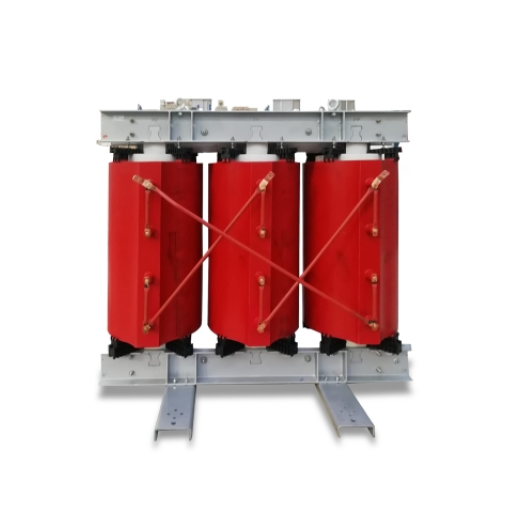
Dry Type Transformer: The Complete Technical Guide for Engineers (2026)

Dry-type transformers are a type of power transformer that uses air or gas as the insulating medium instead of liquid oil and employs ambient air or cooled forced air to cool the windings and core. This configuration minimizes the risk of fires and oil spillage into the environment. Thus, dry-type transformers are now a standard choice in indoor installations, buildings with strict fire codes, and applications where oil containment is prohibitively expensive.If you are planning an indoor project and need more detail on room layout, building coordination, and selection criteria, see Indoor Dry Transformer: Selection, Room Design & Building Integration Guide.
Global demand for dry type transformers is predicted to reach USD 8.7 billion by 2034, driven by 6.7% CAGR, the fundamental factors being expansions in data centers, renewable energy inclusion, and stricter codes for fire safety indoors in emerging markets such as mines, factories, and other conspicuous regions. Nevertheless, most procurement departments and consulting engineers still find it difficult to draw a clear distinction between cast resin designs, VPI, and open ventilated types or interpret exposure to harsh environments as part of the IEC 60076-11 (climate classes) specification.
This guide covers exactly how dry type transformers work, the three sub-types, how to select the right type for your application, and the standards that govern quality and safety. You will find a worked kVA sizing example, a 12-item procurement checklist, and clear guidance on climate class, fire behavior class, and IP rating selection.
Want a detailed comparison between dry type and oil immersed transformers? See our complete dry type transformer vs oil filled transformer guide with 20-year TCO analysis and application decision matrix.
Key Takeaways
- Dry type transformers use air or gas for cooling and insulation, eliminating oil-related fire and environmental risks.
- Three sub-categories exist: cast resin (vacuum cast epoxy), VPI (vacuum pressure impregnated), and open ventilated (air-cooled with no resin encapsulation).
- IEC 60076-11 governs dry type transformers with climate classes (E0, E1, E2), environmental classes (C1, C2), and fire behavior classes (F0, F1).
- Dry type transformers are the standard for data centers, hospitals, underground installations, and buildings with strict fire codes.
- A unified procurement checklist covers 12 items from sub-type selection to climate class, IP rating, and partial discharge limits.
What Is a Dry Type Transformer?
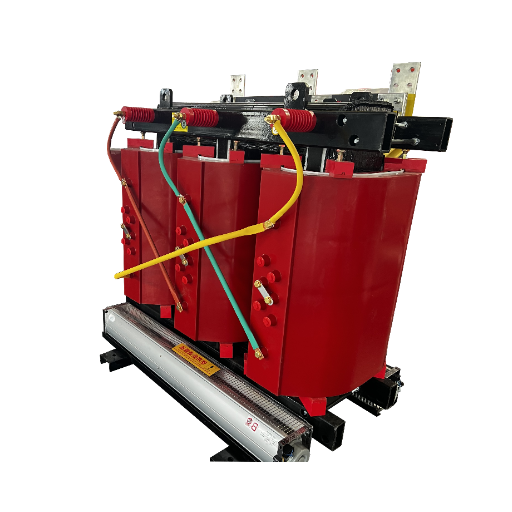
Definition and Core Principle
The dry type transformer passes on the electrical energy from the circuits through electromagnetic induction as with some other transformers. The liquid oil insulating media is missing here: instead, the cooling and dielectric strength are done by air, inert gas, or solid materials.
Which entirely changes the perspectives on where and how these transformers can be installed. In the absence of oil, there is no possibility of leakage, so there is no concern about a cleanup system; therefore, there is no fear of a burning hazard due to liquid oil. Such a unit can be indoors, next to inhabited areas, or in environmental hazard-conscious areas.
How Dry Type Transformers Work
Dry-type transformers function on the same basic principles of electromagnetism as oil-type transformers. As the primary winding is subjected to an alternating current, a magnetic fluor is induced and conveyed to the laminated steel core. The fluor endured not only induces voltage in the secondary winding but does so within the prospects of the desired transformation ratio.
Now how about cooling the transformers. The air-cooling or oil-cooling designs are not the same. Natural air cooling (AN) uses convection to provide cooling; forced air cooling (AF) disposes of fans for air circulation and sits within the same unit frame for higher ratings. In both classes of cooling the cooling medium is air and not circulating oil.
What needs to be considered are temperature rise limitations; thus IEC60076-11 designates an upper-temperature limit above ambient, which is kept at about 100 K for F class insulation and 125 K for H class insulation systems. The spot has to be below that if insulating classes are to develop prematurely.
Key Components
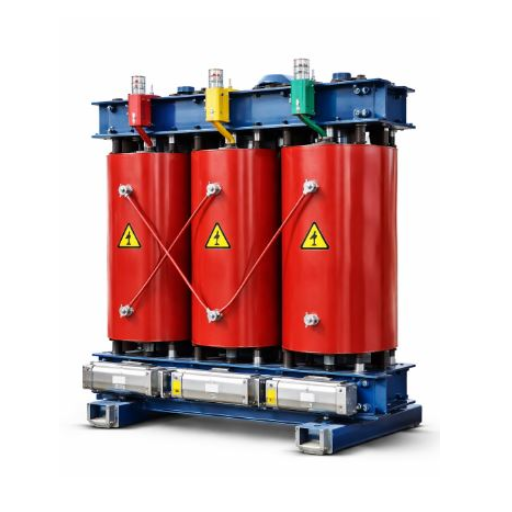
The core uses grain-oriented silicon steel laminations to minimize hysteresis and eddy current losses. Windings may be copper or aluminum, with copper offering lower losses and better short-circuit withstand. The enclosure provides mechanical protection, controls airflow, and determines the IP rating. Cooling systems range from simple ventilation grilles to forced-air fan packages with temperature-controlled switching.
For foundational context on transformer operation, see our distribution transformer fundamentals guide.
Types of Dry Type Transformers
Cast Resin Transformers: Premium Performance
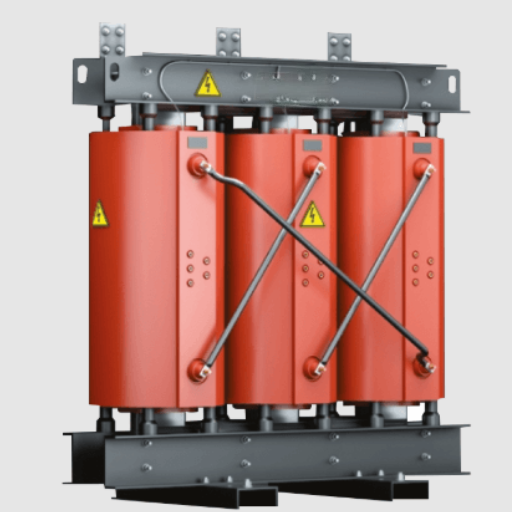
Cast resin transformers encase windings in epoxy resin by vacuum casting. Winding assembly is put into a mold, vacuum applied to remove moisture and air, controlled conditions to introduce epoxy resin produce a solid insulating system with no voids, and with the resin perfectly sealing the windings.
Its merits are the highest moisture resistance and the lowest levels of partial discharge, while it commonly comes with F1 fire behavior classification. Cast-resin units are suitable for an arduous outdoor situation often characterized by humidity, dust, and corrosive atmosphere with nonsignificant loss in performances. They are the default choice for data centers, hospitals, underground systems, and marine applications, where a failure is never an option.
For a deep dive into cast resin transformer technology, vacuum casting process, and cast resin-specific procurement, see our dedicated cast resin transformer guide.
VPI Transformers: Cost-Effective Indoor Solution
VPI stands for Vacuum Pressure Impregnation. The winding assembly is placed in a vacuum chamber, preheated resin is introduced, and pressure is applied to drive the resin into every gap and void. The unit is then cured in an oven.
VPI transformers offer solid insulation performance at a lower cost than cast resin. They are well-suited to standard indoor commercial and industrial applications where the environment is controlled and the absolute highest moisture resistance is not required. The windings are protected but not fully encapsulated, so VPI units are generally not rated for outdoor or heavily contaminated environments.
If you want a more detailed breakdown of resin impregnation methods, thermal performance, and where VPI designs fit compared to cast resin alternatives, see our dedicated article: VPI Transformer Guide: Vacuum Pressure Impregnation Explained (2026).
Open Ventilated Dry Transformers: Standard Air-Cooled Design
Open ventilated designs use no resin encapsulation at all. The windings are insulated with conventional varnish or dip-and-bake treatment, and cooling is achieved entirely through natural or forced airflow over exposed winding surfaces.
These units are the most economical dry type option. They work well in clean, dry, climate-controlled electrical rooms with adequate ventilation. However, they are vulnerable to dust, moisture, and chemical contamination. Any change in the operating environment, such as the introduction of airborne particulate from nearby processes, can compromise performance and accelerate insulation aging.
When to Choose Each Sub-Type
Choose cast resin when the application demands maximum reliability, moisture resistance, or F1 fire behavior. Choose VPI for standard indoor commercial and industrial projects where budget matters and the environment is controlled. Choose open ventilated only for clean, dry, protected indoor spaces with minimal environmental risk and tight capital constraints.
Dry Type Transformer Specifications and Standards
Standard Capacity and Voltage Ranges
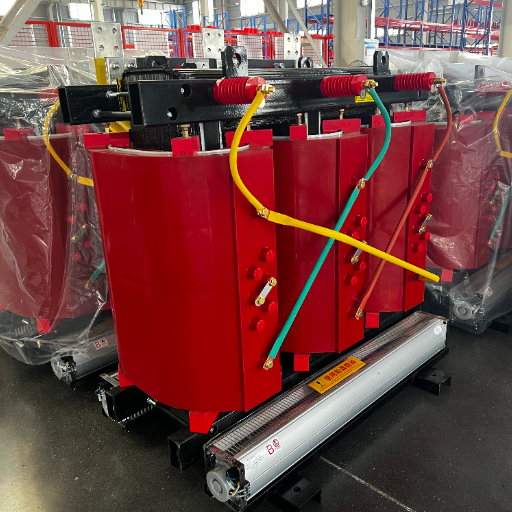
Dry type transformers are manufactured from 100 kVA to 25,000 kVA and beyond. Low voltage units handle 208 V to 600 V. Medium voltage designs reach 15 kV, 24 kV, and 36 kV class on the primary side. Voltage ratios, vector groups, and tapping ranges are specified to match the installation requirements.
Insulation Classes and Temperature Rise
Insulation class defines the maximum temperature the winding insulation can tolerate over its service life. F class is rated for 155 C maximum temperature. H class is rated for 180 C. Some manufacturers offer 220 C systems for extreme duty cycles or high ambient environments. Higher insulation class allows either higher overload capacity or longer life at normal load.
IEC 60076-11 Climate and Environmental Classes
IEC 60076-11 defines three climate classes for dry type transformers. E0 covers indoor environments with normal humidity and temperature control. E1 covers environments with occasional condensation or light pollution. E2 covers severe conditions with frequent condensation, heavy pollution, or high humidity. Specifying the wrong climate class is a common and expensive mistake.
Environmental classes C1 and C2 address chemically active environments. C1 applies to standard indoor conditions. C2 covers environments with chemically active contaminants that could degrade insulation.
Fire Behavior Classes
Fire behavior classification matters for building code compliance. F0 means the transformer has no defined fire behavior properties. F1 means the transformer is self-extinguishing and will not propagate flame when the ignition source is removed. Hospitals, data centers, underground stations, and high-rise buildings typically mandate F1 classification.
Partial Discharge: The Quality Metric
Partial discharge is localized electrical breakdown within the insulation that does not bridge the full gap between electrodes. It is measured in picocoulombs (pC). Quality cast resin transformers achieve less than 10 pC at 1.5 times rated voltage. Elevated partial discharge indicates voids, cracks, or poor resin penetration. These defects worsen over time and can lead to insulation failure.
A Tier III data center in Singapore was expanding its cooling capacity. The existing oil-filled transformer occupied a separate fire-rated room consuming 45 square meters of valuable floor space. By switching to three 2,500 kVA cast resin dry type transformers with IP31 enclosures, the facilities team eliminated the fire-rated room entirely, reclaimed the space for server racks, and reduced annual insurance premiums by 12%. The dry type units have operated for four years with zero maintenance beyond annual infrared thermography.
IP Ratings and Enclosure Types
IP ratings define the degree of protection against solids and liquids. IP00 offers no protection and is suitable only for installation inside switchgear enclosures. IP20 protects against finger contact and large objects. IP31 adds protection against dripping water. IP42 protects against small tools and angled water spray. IP54 provides dust protection and splash resistance. Outdoor or wash-down environments may require IP55 or higher.
Applications of Dry Type Transformers
Data Centers and IT Infrastructure
Data centers specify dry type transformers for two primary reasons. First, fire safety codes increasingly prohibit oil-filled units inside white space or adjacent to occupied technical areas. Second, dry type designs eliminate the risk of oil leakage onto sensitive equipment. Cast resin transformers with F1 fire behavior and low partial discharge are the industry standard for hyperscale and colocation facilities.
For detailed specifications, harmonic considerations, and redundancy design practices specific to modern IT facilities, refer to Dry Type Transformer for Data Center: Specs, Sizing & Selection Guide (2026).
Hospitals and Medical Facilities
Hospital electrical systems demand the highest reliability and the lowest fire risk. Dry type transformers, particularly cast resin units with F1 classification, are specified for main distribution, essential power, and medical IT systems. Isolation transformers in surgical suites and imaging departments use dry type construction to limit earth leakage current to 0.5 mA or less.
Healthcare facilities also face unique requirements for low noise levels, isolation zones, and redundancy. Our guide Dry Type Transformer for Hospital: Standards, Noise & Zone Selection Guide (2026) explains the standards and specification practices commonly used in hospital projects.
Underground and Metro Systems
Underground railway stations, metro tunnels, and mining operations specify dry type transformers because oil containment is impossible and fire safety is paramount. The self-extinguishing properties of F1-rated cast resin units are often mandated by underground infrastructure codes.
Marine and Offshore Platforms
Offshore platforms, ships, and coastal installations use cast resin transformers because salt air and high humidity rapidly degrade conventional insulation. The epoxy encapsulation forms an impermeable barrier against moisture and corrosive atmospheres.
Renewable Energy and Battery Storage
Indoor inverter stations, battery energy storage systems, and substation buildings within solar and wind farms increasingly use dry type transformers. The elimination of oil simplifies environmental permitting and reduces spill containment costs.
Commercial and Industrial Buildings
Shopping centers, high-rise offices, and manufacturing plants use dry type transformers for indoor substations, rooftop installations, and distribution boards. The choice between cast resin, VPI, and open ventilated depends on the specific environment and budget.
How to Size a Dry Type Transformer
Step 1: Calculate Total Connected Load
List every load the transformer will supply. Include motors, lighting, HVAC, IT equipment, and any planned future circuits. Convert all loads to kVA using the power factor for each load type. Resistive loads such as heating have a power factor near 1.0. Motor loads may have power factors from 0.75 to 0.9.
Step 2: Apply Demand and Diversity Factors
Not all loads operate simultaneously at full power. The demand factor is the ratio of maximum demand to total connected load. The diversity factor accounts for the fact that different load types peak at different times. A typical commercial building might use a demand factor of 0.6 to 0.8. Industrial facilities with continuous processes may approach 0.9.
Step 3: Add Future Growth Margin
Oversizing by 20% to 25% is standard practice. This margin accommodates load growth, additional equipment, and temporary overload conditions without requiring immediate replacement. Undersizing is far more expensive than the incremental cost of a slightly larger unit.
Step 4: Account for Harmonic Loads
Non-linear loads such as variable frequency drives, UPS systems, LED drivers, and MRI machines generate harmonic currents. These harmonics cause additional heating in transformer windings and cores. Standard transformers may overheat when supplying high harmonic loads. Specify a K-rated transformer, such as K-13 or K-20, when harmonic content exceeds 5% of the fundamental current.
A hospital expansion project in Bangkok specified a 1,600 kVA dry type transformer based on peak load calculations. During commissioning, the consulting engineer discovered that the imaging suite with MRI and CT scanners produced significant harmonic distortion that the standard transformer was not rated to handle. The original specification required replacement with a K-13 rated unit, adding six weeks to the project and $18,000 in unplanned costs. A proper sizing procedure that included harmonic analysis in the initial specification would have prevented both the delay and the expense.
Step 5: Apply Altitude Derating
Air density decreases with altitude, reducing the cooling effectiveness of natural and forced convection. Standard dry type transformers are rated for operation up to 1,000 meters above sea level. Above this altitude, derating is approximately 0.5% per 100 meters. A transformer installed at 2,000 meters must be derated by roughly 5%. Specify altitude during procurement so the manufacturer can adjust the design.
Step 6: Apply Ambient Temperature Derating
The basic ratings mentioned in the offerings assume a highest ambient temperature of 40 C with an average of 30 C over 24 hours. In tropical climates or within poorly ventilated rooms, ambient temperatures may go above these limits. Each degree above 40 C of the outside surrounding air lowers the useful capacity. Specify H class or 220 C insulation where the external temperatures are extreme to ensure good thermal margin.
Worked Example: Sizing a 2,000 kVA Data Center Transformer
Assess a data center with a 1,600 kW IT load and 0. 95 power factor, plus 200 kW for cooling and 100 kW for lighting and auxiliaries at 0.9 power factor. Therefore, connected load would be nearly 2,020 kVA. The design load of 1,717 kVA stems from a demand factor of 0.85. Including growth margin of 20% gives complete load of 2,060 kVA. Ideally, a cast resin transformer per K-13 should be specified in 2,000 or 2,500 kVA.
If you need a more detailed methodology covering demand factors, harmonic calculations, growth margins, and real-world sizing scenarios, read Dry Type Transformer Sizing: Complete Methodology & Examples (2026).
For voltage configuration guidance before finalizing your specification, review our step up transformer vs step down transformer guide.
Installation Requirements for Dry Type Transformers
Minimum Clearances
IEEE C57.12.01 and the National Electrical Code specify minimum clearances around dry type transformers for safety, ventilation, and maintenance access. Front clearance of 1,000 mm or more is typical for medium voltage units. Rear and side clearances of 600 mm to 800 mm allow adequate airflow and access for infrared inspection. Always verify local amendments to national codes.
Ventilation and Airflow
Dry type transformers depend on unrestricted airflow to maintain safe operating temperatures. The installation room must have intake and exhaust openings sized to handle the total heat rejection of the transformer at full load. A 2,000 kVA transformer may reject 30 kW to 50 kW of heat continuously. Inadequate ventilation causes chronic overheating and shortens insulation life.
Foundation and Mounting
Transformers are mounted on concrete pads, structural steel frames, or anti-vibration bases. The foundation must support the unit weight, which ranges from 2,000 kg for a 500 kVA unit to over 15,000 kg for a large medium voltage design. Leveling is critical to prevent core and winding stress.
Grounding and Bonding
The transformer enclosure, core, and neutral point must be bonded to the facility grounding system per IEEE 142 and local codes. Grounding impedance must be low enough to clear ground faults safely and limit touch voltage.
Cable Termination and Bus Duct
Primary and secondary connections must accommodate the thermal expansion and electromechanical forces during short-circuit events. Bus duct connections require flexible transitions to avoid transferring structural loads to transformer bushings.
Pre-Energization Testing
Prior to energization, cast resin transformers are insulation resistance tested, turns ratio verified, winding resistance measured, and partial discharge tested. These tests shall establish baseline data and confirm that the unit is undamaged from transportation and installation.
For commissioning procedures, ventilation calculations, mounting requirements, and code clearance references, see our complete installation resource: Dry Type Transformer Installation: Clearances, Mounting & Commissioning Guide.
Maintenance and Reliability
Maintenance Schedule
Dry type transformers may be required to do as compared to oil-filled varieties as far as maintenance is concerned since checking and filtering oil are unnecessary tasks. Any typical routine ought to include quarterly visual inspection, annual infrared thermography diagnosis, and a comprehensive test every three to five years.
Cooling fans should be checked in lower-voltage dry type transformers every month to ensure they are functioning properly. Make sure there are no noises or odors coming from the transformer. On a quarterly basis, some additional checks might include checking the tightness of accessible connectors by means of a torque wrench and removing dust present within the cooling path.
Infrared Thermography
Infrared scanning identifies hot spots in connections, bushings, and winding assemblies before they cause failure. Annual thermography is standard for critical installations. Temperature anomalies exceeding 10 C above similar components warrant immediate investigation.
Insulation Resistance Trending
Megohm meter readings of winding insulation should be captured initially upon commission and subsequently recorded during maximum maintenance work. An incessant downtrend points to moisture penetration, contaminant uptake, or aging of the insulation. An abrupt drop is a call for urgent attention.
Partial Discharge Monitoring
For cast resin transformers, periodic partial discharge measurement confirms that the epoxy encapsulation remains void-free and intact. A significant increase from baseline levels indicates internal defects that may require replacement or repair.
Cleaning Procedures
Dust built-up on the surfaces of windings, cores interfere with dissipation of heat. In such environments containing contaminants, it might be essential to clean quarterly with cold compressed air or vacuum. Do not be tempted to use wet cleaners on the energized transformer or inside the ventilated enclosures.
Expected Service Life
Dry type transformers deliver 20 to 30 years of service when properly specified, installed, and maintained. Cast resin units at the premium end of the range often exceed 30 years in favorable conditions. The key factors are correct climate class specification, adequate ventilation, and protection from airborne contaminants.If you want a deeper checklist for inspection intervals, test methods, and condition-based maintenance planning, read Dry Type Transformer Maintenance: Schedule, Testing & Inspection Guide.
For more on long-term performance and efficiency, see our guide to transformer efficiency and low-loss design.
Cast Resin vs VPI vs Open Ventilated
| Feature | Cast Resin | VPI | Open Ventilated |
|---|---|---|---|
| Manufacturing process | Vacuum cast in molds | Dip and pressure cure in chamber | Air-cooled, no resin encapsulation |
| Moisture resistance | Excellent | Good | Moderate |
| Fire behavior class | F1 self-extinguishing | F1 available | Varies, often F0 |
| Partial discharge level | Less than 10 pC typical | 20 to 50 pC typical | Not specified |
| Relative cost | Highest | Mid-range | Lowest |
| Best applications | Critical, humid, harsh environments | Standard indoor commercial and industrial | Clean, dry, controlled rooms |
| Maintenance interval | 10 to 15 years largely maintenance-free | Annual inspection recommended | Annual inspection required |
| Repairability | Very difficult, usually replaced | Easier, windings can be rewound | Easiest, simple rewind possible |
| Environmental tolerance | Chemical, salt, dust, humidity | Dust and humidity protected | Vulnerable to all contaminants |
A manufacturing plant in Monterrey, Mexico installed open ventilated dry type transformers in a clean, climate-controlled electrical room. After five years of reliable operation, the plant added a new welding line that produced metal dust and fine particulate. The dust accumulated on transformer windings, reducing heat dissipation and causing insulation temperatures to rise 15 C above design limits. The plant upgraded to IP54-enclosed cast resin transformers that sealed the windings from contamination. The new units restored temperature margins and eliminated the quarterly cleaning shutdown that had been consuming 12 hours of production time per quarter.
Dry Type Transformer Procurement Checklist
Use this unified checklist to specify any dry type transformer, regardless of sub-type.
- Sub-type selection: Confirm cast resin, VPI, or open ventilated based on environment, fire code, and budget.
- kVA rating and voltage configuration: Specify primary and secondary voltages, vector group, and tapping range.
- Insulation class: Select F (155 C), H (180 C), or 220 C based on ambient conditions and overload requirements.
- Climate class: Specify E0, E1, or E2 per IEC 60076-11 based on humidity and condensation risk.
- Environmental class: Specify C1 or C2 if chemically active contaminants are present.
- Fire behavior class: Specify F0 or F1 based on building code and insurance requirements.
- IP rating: Select IP00, IP20, IP31, IP42, IP54, or higher based on installation location and contamination risk.
- Noise level: Specify maximum sound pressure level at 1 meter, typically 55 dB to 75 dB depending on capacity.
- Altitude and ambient derating: State installation altitude and maximum ambient temperature if outside standard conditions.
- Conductor material: Specify copper or aluminum windings. Copper offers lower losses and better short-circuit performance.
- Short-circuit withstand: Verify dynamic and thermal withstand ratings match the prospective fault current at the installation point.
- Factory acceptance testing: Require test reports including routine tests, partial discharge measurement, and temperature rise test.
If your team is comparing suppliers or preparing to source a unit internationally, this companion resource can help you vet capabilities, testing, and support before purchase: Dry Type Transformer Manufacturer: How to Evaluate and Source with Confidence.
Frequently Asked Questions
How Long Do Dry Type Transformers Last?
Dry-type transformers last typically 20-30 years with regular maintenance. How long these devices last greatly depends on their surroundings. That often would be in the range of things like above 30 years in a clean and, therefore, constant process air-pushed room environment. The journey towards health is Tex welding insulation degradation from heat-the process fast forward when the kettle gets way too hot.
Can Dry Type Transformers Be Used Outdoors?
Standard dry type transformers are designed for indoor installation. Outdoor use requires a weatherproof enclosure with appropriate IP rating, typically IP54 or higher, and protection from direct solar heating. Some manufacturers offer purpose-built outdoor dry type transformers in IP55 or IP65 enclosures with sun shields. For outdoor applications without weatherproofing, oil immersed transformers are usually the more practical choice.
What Is the Difference Between Cast Resin and VPI?
Cast resin transformers undergo vacuum impregnation with solid epoxy to encapsulate the windings, giving the best resistance to moisture and partial discharge. VPI transformers normally go through a vacuum-pressure impregnation process and saturate the windings with resin, offering standard protection at a lower price. Many clients prefer cast resin for critical challenges while VPI technology setup is suitable for standard indoor commercial and industrial installations.
Are Dry Type Transformers More Expensive Than Oil Filled?
Dry type transformers cost more upfront than equivalent oil filled units. Cast resin designs cost 15% to 25% more than VPI and 40% to 60% more than oil immersed. However, dry type designs eliminate the cost of fire-rated rooms, oil containment pits, oil testing, and environmental compliance. Over a 20-year lifecycle, total cost of ownership often favors dry type for indoor applications.
What IP Rating Do I Need for My Installation?
The specification of rating IP20 equipment for electrical switchgear rooms having limited access is not the worst. A level of IP31 suffices indoors, protected from the elements, with low moisture issues. An IP42 rating is given to devices that are impervious to tools or water bearing impurities. But in dusty or industrial areas or washdown-required applications, a rating of IP54 is required. The local codes regarding electrical and building requirements differ of course and your applications hence must stick to compliance.
Do Dry Type Transformers Require Oil Testing?
No. Dry type transformers contain no oil and therefore require no oil sampling, dissolved gas analysis, or oil filtration. This eliminates a significant recurring maintenance cost and removes the environmental liability associated with oil leaks and spills.
Can Dry Type Transformers Handle Harmonic Loads?
Standard dry type transformers can handle moderate harmonic content. For loads with high harmonic distortion, such as data centers with UPS systems, variable frequency drives, or medical imaging equipment, specify a K-rated transformer. K-13 is common for general commercial applications with significant non-linear loads. K-20 may be required for severe harmonic environments.
Conclusion
Dry type transformers have become the default choice for indoor power distribution, and for good reason. The elimination of oil removes fire risk, environmental liability, and the ongoing cost of oil maintenance. The three sub-types, cast resin, VPI, and open ventilated, offer a range of performance and cost options that cover everything from critical hospital infrastructure to standard commercial buildings.
Selection comes down to matching the transformer construction to the real operating environment. Specify cast resin when moisture, dust, or fire codes demand maximum protection. Specify VPI for standard indoor applications where cost matters. Specify open ventilated only for clean, controlled spaces with minimal environmental risk. Always confirm climate class, fire behavior class, IP rating, and harmonic loading before finalizing your specification.
Shandong Electric Co., Ltd. manufactures dry type transformers from 100 kVA to 25,000 kVA with IEC 60076-11 and IEEE C57.12.01 certification. We produce cast resin, VPI, and open ventilated designs for data centers, hospitals, renewable energy projects, and industrial facilities worldwide. Send your voltage, kVA, load profile, and environment details, and our engineering team will recommend the most practical solution for reliability and long-term value.