
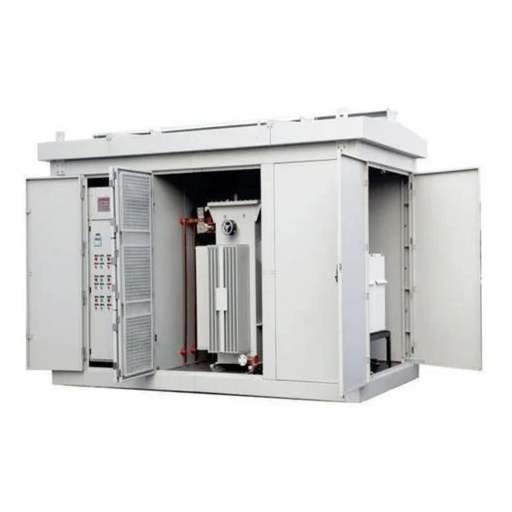
Container Substation: Specifications, Transport, and Procurement Guide

A container substation functions as an entire electrical substation which construction occurs inside a modified ISO shipping container that measures either 20 ft or 40 ft in length. It combines all elements which include the transformer and HV switchgear and LV switchgear and protection systems into one portable unit which can be moved by road or rail or sea freight. Container substations provide the standard solution which remote renewable energy projects and mobile mining operations and emergency power restoration and industrial sites require when they need quick setup.
Sarah Mitchell walked the access road to her 200 MW wind farm site in Western Australia which stands 600 kilometers from the nearest port. Her original plan called for a traditional substation, which required three separate desert convoys to transport the transformer and switchgear cabinets and prefabricated control building. The team needed to specify four 40 ft container substations which operated at 5 MVA and 33 kV after they did logistics modeling. The units shipped from China by sea freight, which transferred to road transport at Port Hedland and reached the site as standard road convoys. The total time needed for transport coordination decreased from 12 weeks to 4 weeks. The main reason container substations became the main solution for renewable energy and remote project deployments which operate in different countries emerged from this timeline change.
The guide explains container substations by showing their main types and their operational differences and their construction and transport rules and their methods for surprise-free procurement. The same fundamentals apply to ISO classification and climate adaptation and anchoring and certified sea-freight readiness when you are sourcing for a wind farm or a mining camp or a disaster recovery operation.
Key Takeaways
- Container substations use modified ISO 668 shipping containers (20 ft or 40 ft) as the enclosure, enabling road, rail, and sea transport without special permits in most jurisdictions.
- Standard 40 ft units accommodate up to 5 MVA transformer capacity at 33 kV; 20 ft units typically handle up to 2 MVA.
- Climate control is essential for desert, tropical, and arctic installations; HVAC, heating, and insulation packages must be specified upfront, not added later.
- Twist-lock anchoring per ISO 1161 corner castings secures container substations on standard foundations and allows relocation when projects move.
- A focused 12-item procurement checklist covers ISO classification, CSC plate certification, IEC 62271-202 compliance, and sea-freight readiness.
What Is a Container Substation?
Definition and Construction
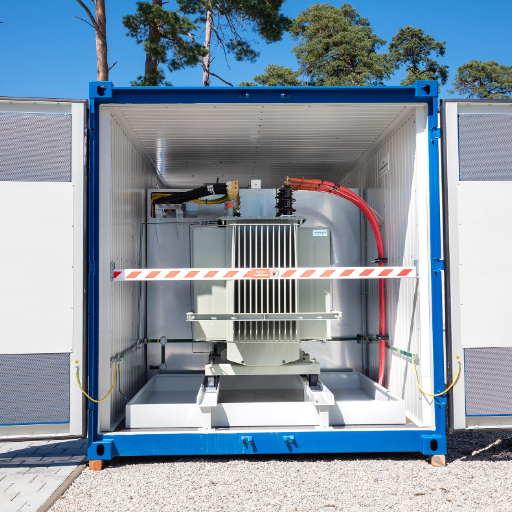
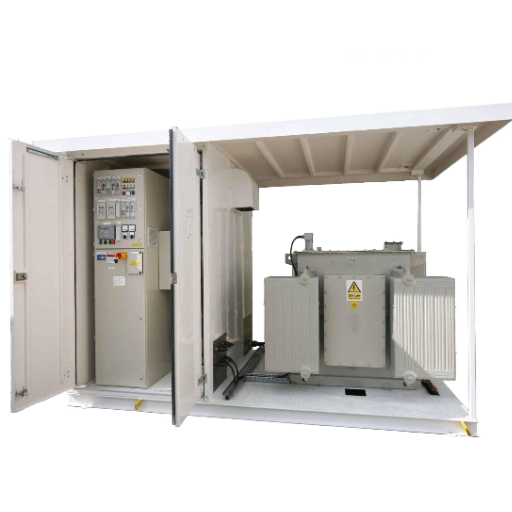
A container substation, sometimes called a containerized substation or ISO container substation, is a prefabricated MV/LV substation built into an ISO 668 freight container shell. The factory modification of the container includes installation of ventilation louvers and cable entries and access doors and internal partitions which create separate areas for HV and LV compartments while keeping the original container design’s lifting and twist-lock features.
The container contains all essential components which manufacturers install including an oil-immersed transformer or dry-type transformer and MV ring main unit or switchgear and LV distribution board and protection relays and auxiliary supply and earthing system. The complete assembly is factory-wired, factory-tested, and shipped as one unit. The container substation requires field commissioning through the process of placing it on its foundation and connecting it to all incoming HV cables and outgoing LV feeders and the earthing grid before it can be energized.
Container Substation vs Other Compact Substation Types
Container substations represent one type of the larger compact substation system. The market mainly uses four enclosure types which include concrete kiosks and steel enclosures and skid-mounted assemblies and containerized units. Every option presents its own advantages and disadvantages.
Concrete kiosks excel for fixed urban distribution where aesthetics and acoustics matter. Steel enclosures suit industrial yards where the substation will not move for decades. Skid-mounted units fit oil and gas wellheads and modular plants where the enclosure ships separately or as an open frame. The specification of containerized substations occurs in situations where their ability to be transported and moved and transported by sea freight makes them suitable for use in remote renewable energy systems and installations that require quick setup.
For a broader comparison of all four enclosure types, review our compact substation guide before committing to a containerized solution.
Why Containers Dominate Renewable and Remote Projects
Three forces have pushed containers ahead of other compact substation enclosures for utility-scale solar, wind, and remote industrial work.
First, ISO containers travel anywhere. Every commercial port, road carrier, and rail operator handles 20 ft and 40 ft units routinely. Customs paperwork, lifting equipment, and chassis trailers are commodity infrastructure.
Second, the steel container shell is structurally rated. ISO 1496 specifies racking, stacking, and dynamic load resistance that already exceeds what an outdoor substation enclosure needs. Manufacturers do not redesign a structure; they modify a proven one.
Third, container substations relocate. When a mining operation moves, a wind farm completes, or a disaster recovery mission ends, the same unit can lift onto a chassis and ship to the next site. No other compact substation enclosure offers comparable second-life value.
Types of Container Substations
20 ft Container Substations (ISO 1AAA)
A 20 ft container substation occupies a standard ISO 1AAA footprint of approximately 6.06 m × 2.44 m × 2.59 m. Internal volume restricts transformer capacity to roughly 1,000 to 2,000 kVA at 11–33 kV primary. Switchgear is typically a compact ring main unit with 2 to 4 ways. These units suit smaller mining camps, telecommunications sites, construction camps, and emergency restoration where compact footprint and lightweight transport matter.
A loaded 20 ft container substation usually weighs 12 to 18 tonnes, well within standard road-tractor capacity in most countries. Sea-freight rates for 20 ft units are notably lower per unit than 40 ft, making them the economical choice when a single small substation is needed at a remote port.
40 ft Container Substations (ISO 1CC)
A 40 ft container substation occupies an ISO 1CC footprint of approximately 12.19 m × 2.44 m × 2.59 m. The expanded volume accommodates 3,000 to 5,000 kVA at 11–35 kV, with full switchgear panels, a separate LV room, and space for protection relay panels and SCADA equipment. These are the standard step-up substations on commercial solar farms (10 MW to 50 MW blocks) and wind farms with strings of 3–6 turbines.
Loaded 40 ft units run 22 to 32 tonnes depending on transformer type and oil fill. Road transport requires either a standard 40 ft chassis (most jurisdictions) or specialized low-bed equipment when site access roads cannot accept tractor height.
High-Cube and Open-Top Variants
ISO 1AAA-HC (high-cube) containers add 30 cm of internal height (2.89 m total). For container substations housing taller switchgear panels (above 2.2 m clear), or when overhead clearance for cable trays and HVAC is constrained, high-cube units relieve the design pressure without changing footprint or transport handling.
Open-top containers are sometimes specified when a transformer is too tall to fit through standard end doors, or when on-site assembly with a crane is preferred. These are less common but available for project-specific designs.
Multi-Container Modular Configurations
Large solar and wind projects often deploy multiple container substations side by side, with one container holding the transformer and another holding switchgear and control. Multi-container configurations allow capacities above 10 MVA, full redundancy, and segregation of HV and LV systems with fire walls between containers. This modularity is impossible with a single concrete kiosk or steel enclosure, and it is one reason containers scale so well to gigawatt-class renewable plants.
Applications and Use Cases
Solar and Wind Farm Step-Up Substations
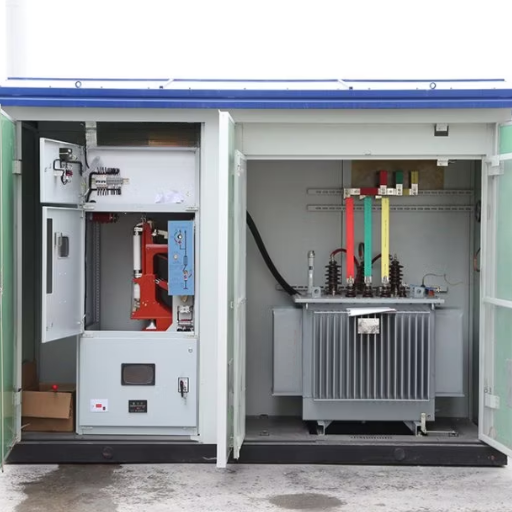
The dominant application. Roughly 70 to 80 percent of new solar farm step-up substations globally now specify containerized designs. The reasons stack: factory assembly avoids site labor in remote locations, standard transport eliminates permit hassles, and the same supplier can deliver 10, 50, or 200 units to a single project with consistent quality. Wind farms use container substations both at individual turbine clusters (medium-voltage collection points) and at the farm-level grid interconnection.
Linking the container substation to the transformer for solar plant selection process matters: the transformer specification (oil vs dry, vector group, cooling, no-load loss) drives the container interior design. Get the transformer specification right first, then design the container around it.
Mining and Remote Industrial Sites
Mining operations move. A new pit opens, a processing plant relocates, or a contract ends and the operator demobilizes. Container substations adapt to that lifecycle. They arrive in convoy, energize within days, and lift onto trucks again when the mine moves to the next phase. Open-pit mining, underground mine surface plant, oil sands operations, and remote mineral exploration all rely on containerized power.
Emergency Power and Disaster Recovery
When earthquakes, hurricanes, typhoons, or wildfires destroy distribution infrastructure, utilities and relief organizations need temporary substations within weeks, not months. Container substations stocked at strategic locations or air-freighted from manufacturers can restore power to hospitals, water treatment plants, and emergency shelters while permanent rebuild proceeds.
Military and Temporary Infrastructure
Military forward operating bases, large construction sites, film production locations, and major events (festivals, sporting events) all use container substations as temporary medium-voltage power sources. The combination of rugged construction, mobility, and standard transport infrastructure makes them the default choice for any project where the substation must move within months or years.
Container Substation Standards and Construction
ISO 668 and ISO 1496: Container Dimensions and Strength
ISO 668 is the foundational standard. It defines container classifications (1AAA, 1CC, 1AAA-HC, etc.), external dimensions, and gross weight ratings. A standard 1CC container has a maximum gross weight of 30,480 kg, of which roughly 26,000 kg is payload after subtracting the empty container weight. Container substation manufacturers must verify that the loaded transformer plus switchgear plus auxiliaries plus the container shell stays under this rating, or specify a heavy-duty modified shell.
ISO 1496-1 specifies structural integrity tests including stacking, racking, lifting, and floor loading. A container substation built on a certified ISO 1496-compliant shell inherits proven mechanical performance, which simplifies the design qualification compared with bespoke steel enclosures.
IEC 62271-202: Prefabricated Substation Compliance
IEC 62271-202 governs HV/LV prefabricated substations as complete assemblies. It specifies type tests for temperature rise (the entire enclosure must dissipate transformer heat without exceeding component temperature limits), internal arc classification (IAC), enclosure protection rating (IP), sound level, and electromagnetic compatibility.
A container substation must pass these type tests as an assembled unit, not as individual components. Buyers should request the full IEC 62271-202 type test report, not just transformer or switchgear test certificates. The same standard applies whether the enclosure is a concrete kiosk, a steel cabinet, or an ISO container.
CSC Plate and Sea-Freight Certification
The International Convention for Safe Containers (CSC) requires certified plates on every container intended for international sea freight. The CSC plate certifies that the container shell meets structural requirements and has been inspected within approved intervals.
Container substations destined for sea freight need either:
- CSC certification on the modified shell, with documentation that modifications (cable entries, doors, ventilation) do not invalidate the certification, or
- A factory CSC re-certification after modification.
Without a valid CSC plate, ports refuse to load the container onto vessels. This is a procurement detail that catches inexperienced buyers off-guard and delays projects by weeks. For oil-immersed transformer applications, also verify hazmat documentation requirements; the oil immersed transformer guide covers the relevant transformer-side considerations.
IP Rating, Insulation, and Climate Adaptations
Standard outdoor container substations specify IP54 minimum (dust-protected, splash-resistant). Coastal, marine, or heavy-rainfall environments may require IP55 or higher. Internal partitions between HV and LV compartments are typically IP3X for personnel safety.
Insulation and climate packages depend on installation environment. Desert installations need reflective coatings, oversized HVAC, and sealed cable entries. Tropical sites need anti-condensation heaters, dehumidifiers, and corrosion-resistant fittings. Arctic deployments need cold-weather lubricants, heated cubicles, and impact-resistant insulation. None of this is optional in extreme climates. Skipping it has direct, predictable consequences.
Transport, Anchoring, and Site Installation
Sea Freight Logistics and Container Handling
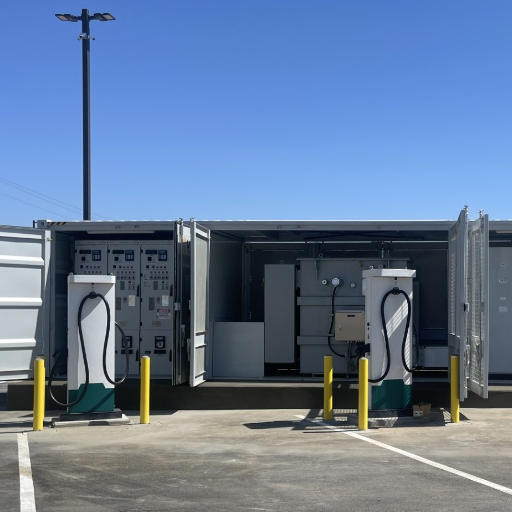
Sea freight from China to most global ports takes 25 to 45 days depending on destination and shipping route. Container substations load onto standard cellular container ships using top-corner spreader handling, requiring no special equipment beyond what every commercial port already operates.
Buyers should confirm three sea-freight details with the manufacturer: total gross weight (must stay within destination port handling capacity, typically 35 tonnes), CSC plate validity, and dunnage/internal bracing for the transformer and switchgear during the voyage. Heavy weather conditions on the vessel will cause equipment damage if it lacks proper bracing; a trustworthy manufacturer will provide photographic evidence of their bracing methods before the ship loading process begins.
Road and Rail Transport Considerations
Road transport uses standard 20 ft or 40 ft chassis trailers in most jurisdictions, requiring no oversize load permits. The exception: heights above 4.0 m total stack (chassis plus container) may exceed bridge clearances on rural roads. High-cube containers stacked on standard chassis can hit 4.15 m, which usually requires route survey.
Rail transport is similar, though rail height envelopes vary by country. In China and most of Europe, standard ISO containers fit double-stack flatcars without modification. In some North American corridors, tunnel clearances limit container height. Buyers shipping internationally by rail should confirm the route clearance with the freight forwarder before specifying high-cube units.
Twist-Lock Anchoring and Foundation Design (ISO 1161)
ISO 1161 specifies the corner castings (the steel reinforcements at each container corner) that accept twist-lock fittings. On a container substation foundation, four cast-in-place or anchor-bolted twist-lock receivers align with the container corners. Once the container is placed and twist-locks engaged, the unit is mechanically secured against wind, seismic, and accidental impact loads.
The bolted steel enclosures display two disadvantages which need to be resolved through this anchoring system. The installation process requires only a few minutes because a crane delivers the container and four twist-locks secure the unit. The project removal process maintains the same efficiency because users need only to release the twist-locks and lift the container for shipment.
Permanent installations and seismic zone locations require supplementary anchoring through additional bolts and perimeter strapping. The structural engineer specifies the anchoring detail based on local code; the container substation manufacturer provides the corner-casting locations and load ratings.
Climate Control: HVAC, Heating, and Insulation
The single most common container substation specification mistake: assuming the steel shell handles climate without active cooling.
A 150 MW solar project in the Saudi desert specified container substations without HVAC because the supplier said “container construction handles heat.” During the first summer, internal temperatures peaked at 68 degrees C. The transformer winding hot spot exceeded the rated 105 degrees C limit. Switchgear contactors degraded. The retrofit installed 20 kW HVAC units in each container at 24,000perunit.Specifyingclimatecontrolupfrontwouldhaveaddedroughly24,000perunit.Specifyingclimatecontrolupfrontwouldhaveaddedroughly18,000 per unit. The lesson is direct: never assume container construction alone is sufficient for extreme climates.
For ambient design temperatures above 40 degrees C, oversized HVAC is mandatory. For ambient below -25 degrees C, cubicle heaters are mandatory. Tropical installations with high humidity require anti-condensation heating regardless of temperature. The HVAC, heating, and insulation specification adds 15 to 25 percent to the container substation cost, a fraction of the retrofit cost when it is omitted.
Ready to validate your container substation transport plan and climate requirements? Send your project location, transport route, and ambient conditions to our engineering team for a detailed specification review. We have shipped container substations to 30+ countries across desert, tropical, and arctic environments and can confirm what your installation actually needs.
Container Substation Sizing and Configuration
Standard Capacity Ranges by Container Size
| Container Size | Typical Transformer kVA | HV Voltage | LV Voltage | Loaded Weight |
|---|---|---|---|---|
| 20 ft (1AAA) | 500–2,000 kVA | 11–24 kV | 0.4 kV | 12–18 tonnes |
| 40 ft (1CC) | 2,500–5,000 kVA | 11–35 kV | 0.4–6.6 kV | 22–32 tonnes |
| 40 ft High-Cube | 2,500–5,000 kVA | 11–35 kV | 0.4–6.6 kV | 22–32 tonnes |
| Multi-container | 6,000–20,000+ kVA | 11–35 kV | up to 11 kV | per container |
These are typical ranges. Custom designs push the boundaries when project requirements justify the engineering effort.
Switchgear and Protection Configuration
A typical 40 ft container substation includes:
- One 3-way or 4-way ring main unit (RMU) on the HV side
- Vacuum or SF6 circuit breaker for transformer protection
- LV main breaker plus 4–8 outgoing breakers
- Numerical protection relays with overcurrent, earth fault, and transformer differential
- Auxiliary 24 V DC battery system for protection and SCADA
- Optional SCADA gateway with IEC 61850 or DNP3 communication
For solar farms, the step up transformer configuration drives the HV switchgear specification: 33 kV interconnection points typically use SF6 RMUs, while 11 kV collection points may use vacuum switchgear with reduced footprint.
Worked Sizing Example: 10 MW Solar Farm
A 10 MW solar farm with 11/33 kV step-up requires roughly 11,000 kVA of transformer capacity (10 MW divided by 0.92 power factor at the inverter terminals, plus 5 percent margin). The first solution consists of two 40 ft container substations which each contain 6,000 kVA transformers that deliver N+1 redundancy for one transformer outage. The second solution provides three 40 ft container substations which each contain 4,000 kVA for better modularity and quicker unit replacement.
The choice depends on the project economics: redundancy preferences, spare unit strategy, and access road constraints. Both configurations ship in standard 40 ft sea-freight containers and install on identical foundations.
Modularity and Future Capacity
Multi-container configurations support phased capacity additions. A 50 MW solar farm built in two phases can install five container substations in phase one and add five more in phase two, with foundations and trenching pre-built during phase one civil works. This modularity is impossible with a fixed concrete substation, which is why developers planning multi-phase projects increasingly default to container architecture.
Container Substation Procurement Checklist
Use this 12-item checklist to validate any container substation specification before issuing a purchase order:
- ISO container classification: 1AAA (20 ft), 1CC (40 ft), 1AAA-HC (high cube), or custom modified
- Transformer kVA and voltage configuration: primary and secondary voltage, vector group, tap range, cooling
- Switchgear short-circuit rating and arc classification: kA rms for 1 second or 3 seconds, IAC category (e.g., IAC AB 16 kA)
- IP rating and environmental protection: IP54 minimum outdoor, IP55+ for coastal or marine
- Climate control specification: HVAC capacity, heater wattage, ventilation type, insulation R-value
- ISO 1161 corner casting integrity: verified for twist-lock anchoring on the chosen foundation type
- CSC plate certification: valid for sea freight, with re-certification after modification documented
- IEC 62271-202 compliance: full type test report for the assembled container substation, not component-only certificates
- Internal arc classification (IAC) category: confirms operator and personnel safety during fault events
- Transport weight and lifting points: gross weight, corner casting load ratings, internal pad eyes if used
- Factory acceptance test (FAT) and witness test options: documented FAT protocol with buyer witness rights
- Delivery terms (Incoterms) and port handling support: FOB, CIF, or DAP, plus supplier responsibility for port-side certifications
Each item maps to a specific failure mode if missed. Skipping CSC certification delays sea freight by weeks. Skipping climate control derates transformers in hot climates. Skipping IAC documentation creates personnel safety exposure. The checklist exists because experienced buyers have hit each of these failure modes at least once.
A relief organization learned this directly. After Typhoon Haiyan damaged the electrical infrastructure of Tacloban City in the Philippines, they needed temporary substations to restore power to hospitals and water treatment plants. Standard procurement timelines were unworkable. A supplier delivered three pre-configured 20 ft container substations within 18 days using air freight on a heavy-lift cargo aircraft. The container substations operated for 14 months while permanent infrastructure was rebuilt, then relocated to support a different rural electrification project. The same units served two missions, demonstrating the unique value of container substations in disaster response, and underscoring why every checklist item, especially CSC certification and lifting point documentation, has to be confirmed before the order ships.
Conclusion
Container substations have become the default solution for any project where transport, mobility, or rapid deployment drives the substation specification. The modified ISO 668 shells demonstrate their ability to maintain structural integrity. The ISO 1161 corner castings provide engineers with a solution for achieving quick twist-lock anchoring. The CSC certification enables worldwide access to sea-freight transportation. The IEC 62271-202 standard establishes regulations for building a complete prefabricated substation. The climate control packages enable the unit to function in desert, tropical, and arctic environments.
The next step for all stakeholders involved in renewable EPCs mining contractors disaster response procurement teams and export buyers requires them to establish project requirements, complete the 12-item procurement checklist, and select a manufacturer who has documented experience with their specific transport corridor and climate zone.
Shandong Electric Co., Ltd. builds container substations from 500 kVA to 5,000 kVA per unit (with multi-container configurations beyond 20 MVA), with full IEC 62271-202 testing, CSC plate certification, and global delivery experience across renewable, mining, and disaster recovery applications. Send your project specifications, transport route, and ambient conditions to our engineering team for a detailed proposal.