
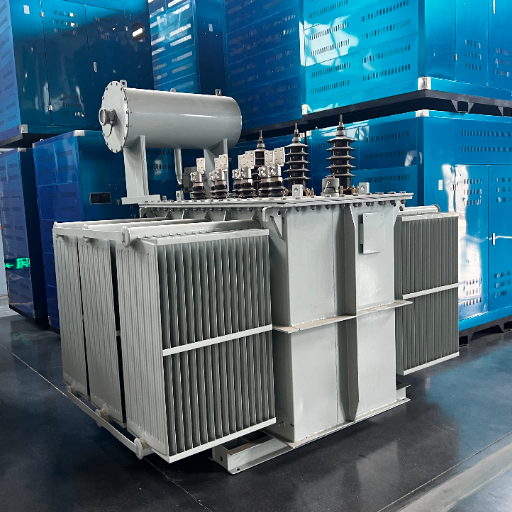
Step Up Transformer vs Step Down Transformer: An Industrial Guide to Voltage Transformation

In 2023, the installation of a new motor control system at Craigsle, Jiangsu, ended up in a VFD failure in the first month. The suspect was neither a faulty drive nor a poor motor. The culprit was a transformer. The facility stepped down the grid voltage far away into the territory of unstable and overloaded entry of power that would shoot voltage spikes directly towards systems of VFD. And the cost for repairs summed up to more than forty thousand dollars, while on the other hand, shutting down for two weeks left them with a massive lost production contract.
This kind of thing happens more than it ought to. On a superficial level, the difference between a step-up transformer from go-down transformer is as simple as can be. Still, a mistake in this aspect, made at any junction of your power network, translates into an after-effect that will totally destroy power equipment, guaranteed standby time, and a burning hole through your wallet courtesy of power wastage.
If we explore just how special these two transformer types have been in terms of performance and service in an industrial power system, we will realize the proper type of usage of either of the two contacted systems by means of an efficient selection among the two system types. By the end of the program, you would have attuned yourself to more practical decisions justifying every elaborate provision and ensuring that the power plant does not cease its spurt.
For a more in-depth understanding of power transformers, (please refer to our complete guide to power transformers.)
What Is a Step Up Transformer and How Does It Work?
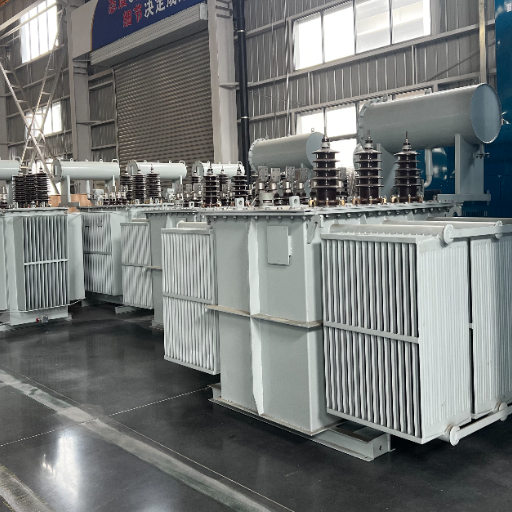
A step up transformer increases voltage from its primary winding to its secondary winding. It does this by using more turns of wire in the secondary coil than in the primary coil. This relationship is governed by the transformer turns ratio:
Vs / Vp = Ns / Np
Here, Vs denotes the secondary voltage, Vp the primary voltage, Ns the secondary turns, and Np the primary turns. In the case of a step up transformer, Ns is more than Np, thus the output voltage exceeds the input voltage. At the same time, the current is reduced in proportion to conserve power (minus small losses). This balance between voltage and current is the reason why high-voltage transmission is feasible.
Construction and Design
The step-up transformers are made differently from their step-down versions. The primary winding carries higher current at lower voltage; so it is made of thicker conductor wire with fewer turns. The secondary winding carries lower current at higher voltage; so it uses thinner wire with more turns. Because it has to tolerate extremely higher voltages, high insulation and higher BIL ratings are needed in step-up units.
Cooling mechanisms are really important. Large step-up transformers which are generally used in power plants and substations incorporate oil-immersed cooling (ONAN or ONAF) for heat dissipation. There are also dry-type configurations which can be used indoors, particularly where fire safety is a concern.
Primary Applications
Step up transformers sit at the front end of the power delivery chain. Their main roles include:
- Power generation plants, raising generator output (typically 11–33 kV) to transmission levels (220–765 kV)
- Renewable energy farms, stepping up solar or wind output for grid connection
- Heavy industrial facilities, where on-site generation must be boosted for distribution
- Mining and remote operations, sending power over long distances with minimal loss
What Is a Step Down Transformer and How Does It Work?
A step-down transformer works in inverse manner. It reduces the voltage from the primary winding to the secondary winding by using fewer turns on the secondary coil. At this point, Ns is lesser than Np, which causes the voltage to be reduced as the current is increased in its value.
The same fundamental equation applies:
Vs / Vp = Ns / Np
Since power is to be conserved,the increase in current on the secondary side is proportional to the decrease in the voltage. This is exactly what makes grid power safe and usable for industrial motors, commercial buildings, and household appliances.
Construction and Design
Stepdown transformers invert the setup logic of stepup units. It makes use of thin wire with more turns in the primary winding that receives the load of high voltage power lines. On the other hand, the winding that runs between low voltage loads and current-hungry final destination equipment is equipped with thick wire with fewer turns.
Heat managements are of prime significance, given that the secondary current is associated with larger resistive (I²R) power losses. Thus, transformer constructionists typically aim for ponderous amounts of copper as preservatives with cooling surface areas and low-loss core materials, such as amorphous steel.
Primary Applications
Step down transformers appear at the delivery end of the power system:
- Distribution substations, reducing transmission voltage to sub-transmission and primary distribution levels
- Industrial facilities, bringing medium voltage (11 kV or 33 kV) down to 380V, 415V, or 480V for motor loads
- Commercial buildings, stepping down to 230V or 208V for lighting, HVAC, and general power
- Equipment-level power supplies, such as control transformers that feed PLCs, sensors, and VFD control circuits
When Chen Wei, a facility manager at a packaging plant in Guangdong, upgraded his conveyor lines, he assumed that any supply at 415 V would work. However, his new motor control system required a lower level of voltage regulation than the aging step-down transformer could deliver. Voltage sags during motor startup repeatedly tripped VFDs. What worked was to replace the transformer with a properly sized, modern unit–thereby solving the problem and cutting unplanned downtime by 80%.
Step Up Transformer vs Step Down Transformer: Key Differences
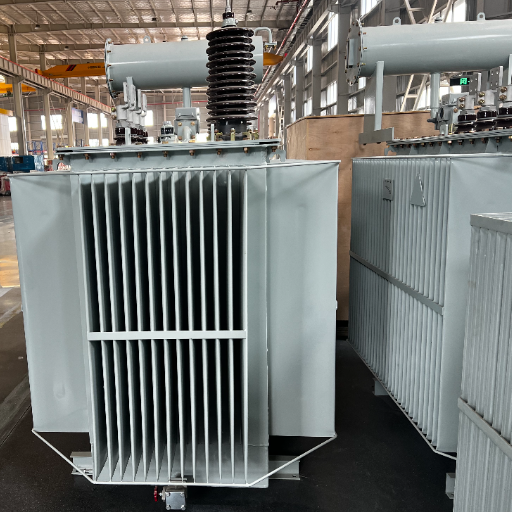
The fastest way to understand the difference between step up and step down transformer designs is to look at them side by side.
| Feature | Step Up Transformer | Step Down Transformer |
|---|---|---|
| Turns Ratio | Ns > Np | Ns < Np |
| Voltage Change | Low to high | High to low |
| Current Change | High to low | Low to high |
| Primary Winding | Fewer turns, thicker wire | More turns, thinner wire |
| Secondary Winding | More turns, thinner wire | Fewer turns, thicker wire |
| Typical Efficiency | 98–99.5% | 97–99% |
| Main Cost Driver | High-voltage insulation | Copper mass and cooling |
| Grid Role | Generation and transmission | Distribution and end use |
This table captures the structural and functional divide, but there are three differences that matter most for industrial buyers.
Efficiency and Energy Losses
Step-up transformers can achieve slightly higher efficiency in practice, typically in the 98–99.5% range compared with 97–99% for step-down units. This is due to the fact that step-up designs reduce copper losses in the form of I2R losses in the secondary winding. Step-down transformers cause an increase in current that produces more heat and demands a more aggressive thermal management.
That being said, modern distribution-transformer quality has reduced that difference dramatically. U. S. DOE efficiency standards raise the bar for larger liquid-filled transformers above 99%, as advanced core materials continue to cut down on no-load losses.
Cost and Construction Priorities
Step up transformers are generally more expensive per kVA because they must handle higher output voltages. Enhanced insulation, larger clearances, and more robust bushings all add cost. Step-down transformers, especially at the distribution level, prioritize copper volume and cooling efficiency over ultra-high-voltage insulation.
Position in the Power System
Perhaps the most important difference is where each transformer sits in the energy flow. Step-up units enable efficient long-distance transmission. Step-down units make that power safe and usable for factories, buildings, and equipment. One is useless without the other, and both must be sized correctly for the loads they serve.
Why Step Up Transformers Are Essential for Power Transmission
Electricity propagates better at high voltage and low current. This is because of resistive loss. Power lost as heat in the conductor is proportional to the current squared (P*_loss = I²R). You double the voltage, and you half the current for the same power delivery, thereby reducing the losses to one-quarter.
That is why power plants use step up transformers immediately after generation. A typical thermal plant may generate electricity at 21 kV. Before it enters the transmission grid, a step-up transformer raises that voltage to 220 kV, 400 kV, or even 765 kV. The current drops from thousands of amperes to barely a few hundred, and the energy can safely travel over hundreds of kilometers with almost no loss.
Let us look at power economics here. Thus, outside the plant, a 500 MW thermal power plant generates electrical energy at 21 kV, supplying almost 13,750 A. When stepped up to 400 kV, the current drops to about 722 A. As a result, reducing transmission network I²R losses to a related extent compared to sending the same power over 21 kV. Without stepping up, power transmission at this distance would be uneconomical.
This has the same application to renewable power-think solar. At any given moment a vast solar farm may collect DC power from literally thousands of panels, invert it to between 400 to 800 V, and, then through step-up transformation, push it towards 33 kV, to be taken up for collection by the grid. Similarly, wind farms operate in the same manner, stepping up the output from the windmills for more efficient transportation back to shore or the nearest substation.
Why Step Down Transformers Matter for Industrial Operations
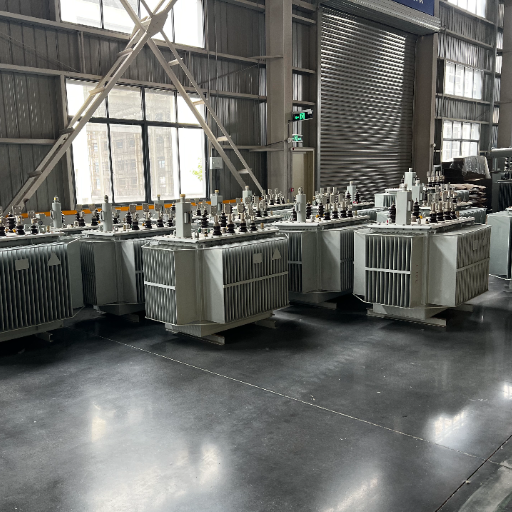
If step-up transformers make long-distance power possible, step-down transformers make it practical. Every factory, warehouse, or commercial building relies on a line of step-down units to transform high transmission voltages to the safe levels for motors, drives, and control systems.
Voltage Standards and Equipment Compatibility
Industrial facilities around the world operate at different standard voltages. Common industrial levels include:
- 380V / 50 Hz in China and much of Asia
- 415V / 50 Hz in India, Australia, and parts of Southeast Asia
- 480V / 60 Hz in the United States and Canada
- 400V / 50 Hz across much of Europe
Your step-down transformer must deliver the correct voltage and frequency for your equipment. A mismatch here does not just cause inefficiency. It can damage motors, trip VFDs, and void equipment warranties.
Integration with Motor Control and VFD Systems
This is where transformer selection becomes critical for automation engineers. A VFD is sensitive to input voltage stability. If the upstream step-down transformer is undersized, overloaded, or poorly regulated, voltage sags and harmonic distortion can propagate straight into the drive.
For best results, the transformer should be sized with enough capacity to handle motor inrush currents and VFD harmonic loads. The secondary voltage should match the VFD input rating within tight tolerances—typically ±5% or better. Some applications also benefit from using a dedicated transformer for VFD loads to isolate harmonics from other facility equipment.
Efficiency, Losses, and Global Standards
All real-world transformers experience energy losses. Understanding these losses helps buyers evaluate total cost of ownership and compare units on something more meaningful than upfront price alone.
Types of Losses
Transformer losses fall into two main categories:
- Copper losses (I²R losses): Resistive heating in the windings, proportional to the square of load current
- Core losses (no-load losses): Hysteresis and eddy currents in the magnetic core, present whenever the transformer is energized
At full load, copper losses usually dominate. At light load, core losses become the larger share. High-quality transformers minimize both through better conductor materials, optimized core geometry, and advanced lamination techniques.
Efficiency Benchmarks
Modern power transformers operate at remarkably high efficiency:
- Large power transformers: 99% or higher
- Distribution transformers: 97–99%
- Industrial dry-type transformers: 96–98.5%
Step-up designs often edge out step-down designs by a fraction of a percent because their lower secondary current reduces resistive losses. However, design quality, load factor, and maintenance matter far more than the direction of voltage change.
Standards and Regulations
Industrial transformers must meet strict global standards. The most important include:
- IEC 60076: The international standard for power transformers, covering design, testing, and performance
- IEEE C57: The North American standard for oil-immersed and dry-type distribution transformers
- DOE efficiency mandates: U.S. Department of Energy regulations that set minimum efficiency levels, with 2029 targets pushing large liquid-filled units above 99.6%
Buyers sourcing transformers for export or multi-national projects should verify that units carry the appropriate certifications for their destination markets.
How to Select the Right Transformer for Your Facility
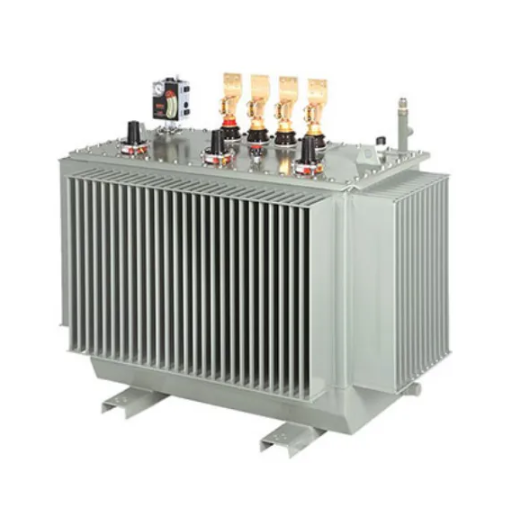
Choosing between a step up transformer and a step down transformer is only half the battle. You also need to size and specify the unit correctly for your application.
Key Selection Criteria
Start with these fundamentals:
- Load power (kVA): Size the transformer at least 25% above your expected continuous load to allow for inrush and future expansion
- Primary and secondary voltages: Match the input supply and the equipment requirements exactly
- Frequency: Confirm 50 Hz or 60 Hz compatibility
- Cooling method: Oil-immersed for large outdoor units, dry-type for indoor or fire-sensitive areas
- Vector group and impedance: Important for parallel operation and short-circuit protection coordination
Total Cost of Ownership
Do not evaluate transformers on purchase price alone. A more efficient unit with lower no-load losses can pay back its higher upfront cost within a few years, especially if it runs continuously. Factor in:
- Energy losses over the expected lifespan
- Maintenance and oil testing (for liquid-filled units)
- Downtime risk from poor voltage regulation
- Replacement cost if the unit is undersized
Matching Transformers to VFD and Motor Systems
If your facility uses VFDs, coordinate transformer selection with your drive specifications. Key points to verify:
- Input voltage range matches the VFD rating
- Transformer kVA is sufficient for VFD input current, including harmonics
- Voltage regulation under motor starting conditions stays within VFD tolerance
- Consider a drive isolation transformer for sensitive or high-harmonic applications
A well-matched transformer and VFD combination will deliver stable performance, extend equipment life, and reduce energy costs across the entire system.
To explore the differences between dry-type transformers and oil-immersed transformers, (please read three phase transformer vs single phase transformer)
Conclusion
The choice between choosing a step-up transformer or a step-down transformer is not just an academic concern in the field of electrical engineering. It is a practical one affecting the efficiency, the reliability, and the safety of the entire power system. This wonderful device boosts the voltage level so that a massive amount of energy patiently crosses continents with little loss. When brought down to the proper voltage level, that energy eases into the realm of all circuits designed to operate efficiently and safely-the motors, drives, and control systems.
For industrial buyers, the key takeaways are simple:
- Match the transformer type to its position in your power system
- Size the unit for real-world load conditions, including inrush and harmonics
- Prioritize efficiency and standards compliance over the lowest upfront price
- Coordinate transformer selection with downstream equipment, especially VFDs and motor controls
Get the transformer right, and the rest of your electrical infrastructure will perform better, last longer, and cost less to operate.
Frequently Asked Questions
Can a transformer work as both step up and step down?
Yes. Any transformer would behave in either direction according to the side on which voltage is applied. If you apply a low voltage to windings with fewer turns and take output from windings with more turns, the transformer will step up. By reversing the connections, a step-down will be achieved. Some special units, called step-up/down transformers include the switching mechanisms that allow a change of mode between step-up and step-down modes. These are used in the laboratory or for the travel adapters.
Which is more efficient: step up or step down?
Both have very high efficiency, usually in the order of 97–99.5%. Step-up transformers may be slightly more efficient since they reduce the secondary current, which in turn means reduced I²R copper losses. However, the actual efficiency of a given transformer layout and function is dependent more on good design, core material, load factor, and standards of manufacture than on whether it is a step-up or step-down transformer.
Why are step up transformers used in power plants?
Power plants generate electricity at relatively low voltages (11–33 kV). Stepping up to 220–765 kV for transmission dramatically reduces current, which in turn minimizes resistive heat losses in the power lines. This makes it economically feasible to send electricity over long distances from remote generation sites to populated load centers.
What voltage should a step down transformer deliver for industrial motors?
It depends on your region and equipment. Common industrial motor voltages include 380V (China/Asia), 415V (India/Australia), and 480V (North America). Always verify the motor nameplate rating and ensure the transformer secondary voltage matches within acceptable tolerance, typically ±5%.
How do I size a transformer for my facility?
Calculate the total demand in kVA with all motors, drives, auxiliary equipment etc. And add at least 25% of the margin as a safety factor to consider inrush currents, harmonics, future expansions. For VFD applications, you should respect the input current requirement as stated by the drive maker as harmonics may increase apparent transformer load beyond a simple addition of kVA from motors.
Read our full guide on how power and distribution transformers differ in rating scale and application.