
Phase Shifting Transformers: A Complete Guide to Technology, Applications & Market Trends 2025

In 2003, a singular piece of machinery altered the landscape of the Italian power grid overnight. Upon ABB’s commissioning of the 1,630 MVA phase-shifting transformer at a decisive interconnection point, the grid operators obtained the capability of instantaneously redirecting the 400 kV power flows, which effectively eliminated the bottleneck that had accompanied the network for years. The deferral of billions worth of transmission lines was made possible through the capacity/ installation that earned its cost within a period of 18 months.
It is, for all intents and purposes, repeating history – trying to prevent electricity from going where it is unwanted, overloading some lines while other parallel lines remain adequately utilized. Irrespective of whether you work on a power utility grid, develop industrial facilities, or provide equipment for integrating renewable systems, a phase shifting transformer is a concept that can completely change your disposition to power flow management.
This tutorial will cover in detail how phase shifting transformers operate, the circumstances under which various configurations are called for, and the state of the industry in 2025. The fast adoption of the technology will be examined, including how it applies in transmission grids and data centers, and a discussion will follow on the comparison of various multipulse rectifier systems. In the end, the technical specifications necessary for the procurement of the same shall be presented.
Want to explore custom transformer solutions for your specific power requirements? Contact our engineering team →
What Is a Phase Shifting Transformer?
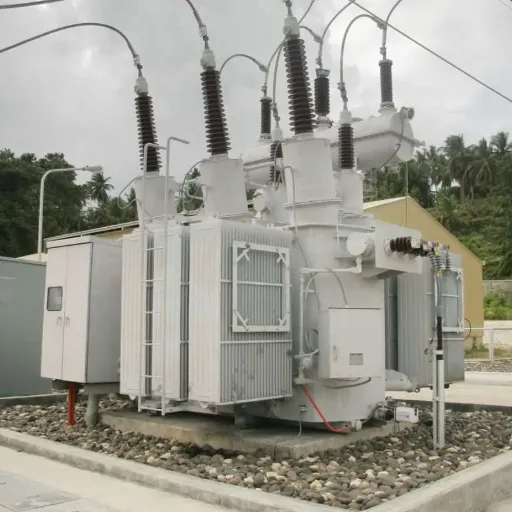
A Phase Shifting Transformer is an especially designed transformer for shifting the phase angle between the source and load voltages, controlling the active power flow in a power transmission system. Unlike conventional transformers that just step down or step up the voltage, a PST changes the power flows in parallel transmission paths by providing the manipulation of the phase relationship in the sending and receiving ends of the power.
The basic principle is simple: It is by introducing an out-of-phase voltage injection into the transmission line that PST changes the phase angle difference between the sending and receiving ends. Since active power flows depend highly on the phase angle difference, fine adjustments can redistribute the power significantly along the grid.
Core Components
Every phase shifter transformer has two main characters play well with each other:
Shunt Unit (Excitation Transformer)
This component is paralleled from the line and draws on the excitatory current base voltage, which will be introduced in phase-shifted injection back into the system.
Series Unit (Boosting Transformer)
This connects in series with the transmission line and will inject one’s phase-shifted voltages. The magnitude and direction of that injected voltage will describe how much to change the power flow.
On-Load Tap Changer (OLTC)
Instead of the mechanical change of transformation ratios under load, hence providing continuous freedom in varying the phase shift angles by the operator, modern units change the tap position within 3-5 seconds to optimize power flow through quick reactive power management.
Single-Core vs. Two-Core Design
| Design Type | Construction | Best For | Key Characteristic |
|---|---|---|---|
| Single-Core | One magnetic core, compact | Lower MVA ratings, smaller phase shifts | Simpler, more economical |
| Two-Core | Separate shunt and series units | High MVA, large phase shifts | Greater control range, higher impedance |
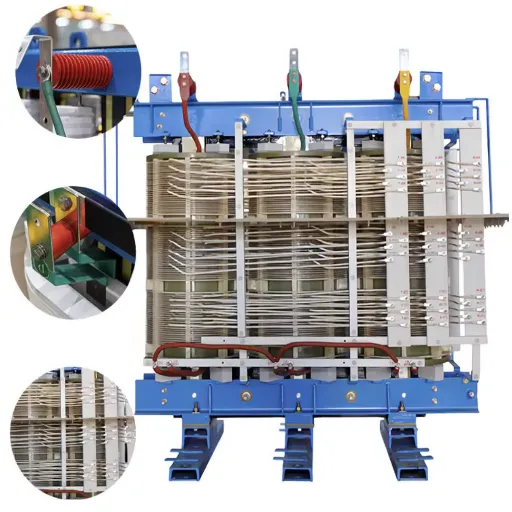
Single-core designs integrate both functions into one magnetic circuit. They work well for applications requiring phase shifts up to about 20 degrees and ratings below 500 MVA. However, at the nominal tap position, single-core PSTs present virtually zero impedance, which can be problematic if short-circuit current limitation is required.
Two-core designs physically separate the shunt and series transformers. This configuration allows phase shifts up to 70 degrees and handles ratings exceeding 1,600 MVA. The separate construction also provides inherent impedance that helps limit fault currents.
How Phase Shifting Transformers Work
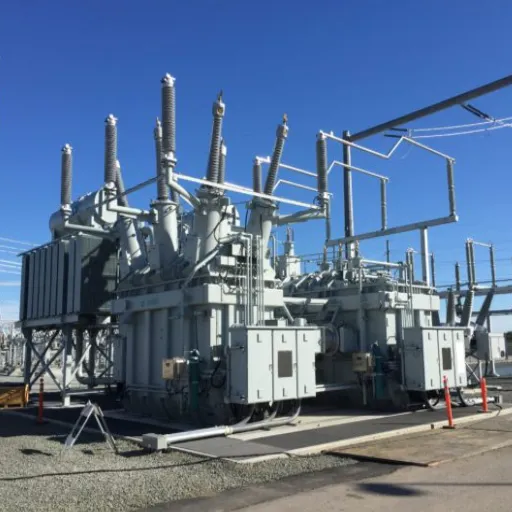
Understanding PST operation requires grasping the relationship between phase angle and power flow. In AC power systems, active power flows from the point with a leading phase angle to the point with a lagging phase angle. The amount of power depends on the sine of the angle difference between the two points.
The Physics of Phase Control
The power flow equation for a transmission line is:
P = (V₁ × V₂ / X) × sin(δ)
Where P is active power, V₁ and V₂ are voltages at each end, X is line reactance, and δ is the phase angle difference.
A phase shifting transformer changes δ by injecting a voltage perpendicular (quadrature) to the line voltage. This shifts the phase angle without significantly changing voltage magnitude. Even a 10-degree phase shift can redirect hundreds of megawatts across parallel paths.
When the PST introduces a positive phase shift, it effectively makes the sending end voltage lead the receiving end by a greater angle. This increases power flow through that path. Conversely, a negative phase shift reduces flow through the PST-equipped line, pushing power to parallel routes.
Control Mechanisms: Mechanical vs. Electronic
Mechanical On-Load Tap Changers
The traditional PSTs were using mechanical tap changers to alter the turn ratio between windings. This system has been reliable for decades, but it has its own disadvantages:
- Response time: 3-10 seconds per tap change
- Discrete steps: Limited number of tap positions (typically 17-35)
- Maintenance: Periodic inspection required because of mechanical wear
- Cost: Electronically very expensive for one, both capital and operational costs
Electronic Phase Control
The present solid-state design emerging uses power electronics to ensure continuous phase adjustment.
- Response time: Milliseconds
- Continuous control: Variable and smooth over the whole range.
- Complexity: Said to be much more difficult to maintain and handle the technical end
- Cost: Would put up a substantial amount as investment capital
Mechanical tap changers are generally preferred for most transmission applications, and this is because of their well-proven reliability and reduced whole-of-life costs. Only when a fast, sub-second response is required for grid stability does electronic control have the advantage.
Real-World Impact: The Cross-Border Solution
When Grid operators in Poland faced unscheduled power flows from Germany overwhelming their eastern interconnections in 2015, they deployed a 1,200 MVA Siemens PST with ±20 degree phase shift capability. Within weeks of commissioning, the system allowed Polish operators to control flows that had previously caused thermal overloads and threatened grid stability. The investment prevented an estimated €200 million in transmission upgrades while improving reliability for millions of customers.
Types of Phase Shifting Transformers
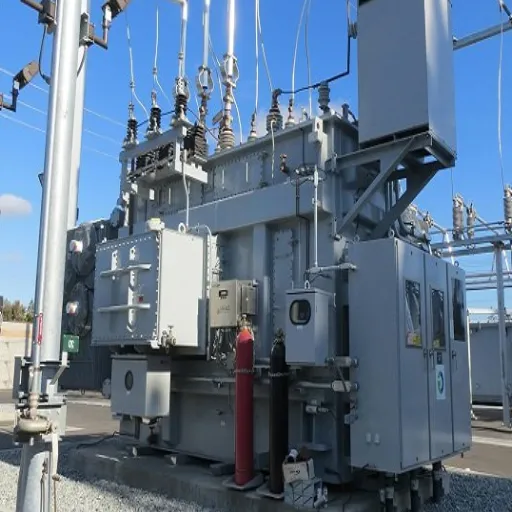
Selecting the right PST configuration depends on your specific application requirements. Beyond the single-core versus two-core decision, several other classifications determine performance characteristics.
Symmetrical vs. Asymmetrical Design
Symmetrical PST
This unit provides a voltage by injecting at 90 degrees to the line voltage, causing a pure phase shift without changing voltage magnitude, and can only be used for the active power flow control, which is simpler in comparison with the design and operation needed in most applications, as the voltage magnitude remains unchanged throughout the device.
Asymmetrical PST
The injecting voltage at other than 90 degrees is doing so at an angle; this is a typical characteristic of any difference in the phase angle and voltage magnitude change. It usually involves the control of both types of power, that is, active and reactive, thus increasing flexibility but at the cost of a more complex installation. Just a few examples of such applications, as in industrial locations or other special cases, are responsible for reactive power management.
Multi-Pulse Configurations for Harmonic Mitigation
Originally, phase shifting transformers were mainly used to improve rectifier circuits because of harmonic elimination. Phase shifting transformers could reduce the peculiar harmonic frequencies from the load current by forming multiple, phase-shifted voltage groups through parallel diode bridges.
12-Pulse Systems
Two 6-pulse bridges supplied with 30° phase shifted voltage – feed 5th and 7th harmonic cancellation. Orders of 11th, 13th, 23rd, and 25th are the typical harmonics coming out of it. Usually, it artificially adds 6-8% of total harmonic distortion beyond the limits of IEEE 519.
18-Pulse Systems
At three live six-pulse, voltage-fed bridges are introduced with a 20° phase shift, which could ultimately make it through and include the 13th harmonic order. After that, all are already smaller harmonics and a few standard high-value harmonics: 17th, 19th, 35th, and 37th. Field measurements are nominal, with the 4-10% total harmonic distortion measured in numerous installations presently meeting IEEE 519 rules and regulations.
24-Pulse Systems
A combination of quadruple six-pulse bridges has been implemented here at 15° phase shifts, thus effectively nullifying each chromatic term within the 23rd order. This reduces the total harmonic distortion to lower than 2%, which is quite adequate in adherence to the highest standards in power quality.
Performance Comparison: Multi-Pulse Systems
| Configuration | Phase Shift | Bridges | Harmonics Eliminated | Typical THD | IEEE 519 Compliance |
|---|---|---|---|---|---|
| 6-pulse | None | 1 | None | 25-30% | No |
| 12-pulse | 30° | 2 | 5th, 7th | 6-8% | Marginal |
| 18-pulse | 20° | 3 | 5th, 7th, 11th, 13th | 3-5% | Yes |
| 24-pulse | 15° | 4 | Through 23rd | <2% | Yes (margin) |
The 18-pulse configuration offers the best balance of harmonic performance and system complexity for most industrial applications. However, data centers, hospitals, and facilities with sensitive electronic equipment increasingly specify 24-pulse systems to ensure power quality margins.
Fixed vs. Variable Phase Shift
Fixed PST
These units provide a constant phase shift angle set during manufacturing. They work well in applications where power flow direction remains predictable, such as managing steady-state loop flows between interconnected systems. Fixed PSTs cost less and require less maintenance than variable units.
Variable PST
These units use tap changers to adjust phase shift across a defined range (typically ±15 to ±50 degrees). They provide operational flexibility to handle changing grid conditions, seasonal load variations, and evolving generation patterns. Most utility-scale installations specify variable PSTs for this adaptability.
Applications of Phase Shifting Transformers
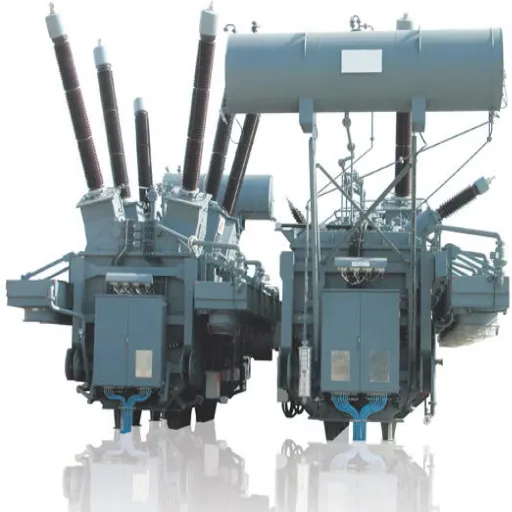
Phase shifting transformers address fundamental challenges across power system applications. Understanding where and why utilities and industries deploy PSTs helps clarify their value proposition.
Power Transmission and Grid Control
Parallel Line Load Balancing
Parallel lines are typically line-loaded; the flow will not follow the transmission line rating but may be primarily dependent on line impedances. For a situation without intervention, one line may overload while its parallel path can only carry half of the possible flow. PSTs can solve this by adding a virtual phase shift that redistributes the flow based on operational needs rather than physical properties.
Loop Flow Prevention
In interconnected power systems, electricity does not respect administrative boundaries. One region may inject power that will make its way into the neighboring systems before reaching the intended destination, creating illegal or unscheduled flows, which threaten the stability of the whole system. Therefore, the PSTs installed at interconnection points allow the operator to control those loop flows so that the system security and market parties are well secured.
Cross-Border Power Management
PST, or phase shifting transformers, is part of Europe’s power transmission network. TSOs in Europe use these devices to ensure that electricity passes easily from one country to another. Among European countries, PST mechanisms are quite commonplace because of their high utilization for cross-border transactions and changing phase angles.
Harmonic Mitigation in Industrial Systems
Variable Frequency Drives (VFDs)
Industrial motor drives that utilize six-pulse rectifiers are the cause of significant harmonic current injection into the power system. These harmonics are capable of overheating transformers, blowing out capacitors, and causing voltage distortions in sensitive equipment. By connecting phase-shifting transformers to 12, 18, or 24-pulse rectifiers, it is possible to reduce current distortion by 60-90%, solve power quality problems, and avoid the complexities of active filter installations.
Data Center Power Supplies
Present-day data centers need extremely clean power to operate servers. Uninterruptible power supplies (UPSs) and power distribution units using phase-shift rectifier inputs are the options available, providing around 3% THD, which guarantees double security: the IT equipment at the facility and the utility grid against harmonic pollution. The global data center PST market was valued at USD 1.5 billion in 2025, looking at half of the USD 2.5 billion projection figure in 2033.
Electric Arc Furnaces
The electric arc furnace used by steelmaking and metal recycling facilities is known to be a source of power quality problems. Power quality issues are created because of the non-linear load of the electric arc furnace. Phase shifting transformers feeding the furnace rectifiers can restrict such deficiencies by reducing the harmonics and flicker, and thus improve the compatibility of the power system with furnace operation.
Renewable Energy Integration
Wind Farm Grid Connection
To increase and fine-tune power deliveries from renewable generators, grid operators are increasingly depending on PSTs-notably wind power plants-located at longer distances and linked via lines with limited capacities. PSTs operate as optimal power flow regulators in a network, maximizing the delivery of clean energy while avoiding overloading transmission. Through the use of energy storage, the coordination of PSTs allows multilayered strategies in optimizing variability in renewable generation opposite the grid’s limitations.
Solar PV Power Conditioning
Such multi-pulse rectifier converter configurations are used in large solar installations so as to supply inverters. The reduction in the storage of harmonics eliminates the need for additional filters, resulting in the overall decrease of cost and complexity in the system.
Battery Energy Storage Coordination
Emerging applications associate PSTs with battery storage to enable power flow control and time shifting of energy. Such an approach of hybridization will increase transmission asset utilization while supporting its goals in integrating renewable energy.
Specialized Applications
HVDC Link Support
PSTs are used in high-voltage direct current transmission systems to control the power flows in both the AC side and manage the fault currents. These devices are of utmost importance in order to offer full flexibility as far as operation is concerned, and at the same time also act as part of a protection scheme between the two critical links.
Traction Power Systems
Phase-shifting transformers are used in rail traction power systems to balance load between the three-phase supply networks and in power quality control of the signaling electronics through which they achieve their objectives in railway electrification systems.
Marine and Offshore
Phase-shifting rectifiers are used in offshore platforms and electric propulsion systems for ships to control harmonic emission as well as comply with classification society rules.
Phase Shifting Transformers vs. FACTS Devices
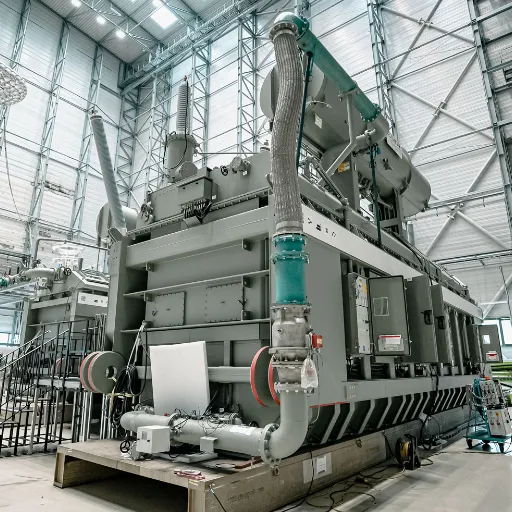
Power system engineers often face a choice between phase shifting transformers and Flexible AC Transmission System (FACTS) devices for flow control applications. Understanding the trade-offs helps select the optimal solution for each situation.
Response Speed Comparison
| Characteristic | PST | FACTS (UPFC) |
|---|---|---|
| Response Time | 3-10 seconds | 10-100 milliseconds |
| Control Resolution | Discrete steps (17-35 taps) | Continuous |
| Steady-State Losses | 0.3-0.5% of rating | 1-2% of rating |
| Capital Cost | Lower | Higher |
| Maintenance Complexity | Moderate (mechanical tap changer) | Higher (power electronics) |
| Reliability | Very high (proven technology) | Good (improving) |
When to Choose PST:
- Applications requiring steady-state flow optimization rather than dynamic stability control
- Budget constraints favor lower capital and operating costs
- Preference for proven, mature technology with predictable maintenance
- Situations where discrete control steps provide adequate resolution
When to Choose FACTS:
- Sub-second response required for transient stability enhancement
- Voltage support and reactive power control are needed simultaneously
- Continuous adjustment capability essential for variable renewable integration
- Rapid power flow changes are anticipated from intermittent generation
The Hybrid Approach: Best of Both Worlds
Recent innovations combine PSTs with modular power flow controllers to achieve capabilities neither technology provides alone. In Vermont, utility VELCO deployed SmartValve modular FACTS devices alongside existing PSTs to control power flows on constrained transmission paths.
The result: 50% more power flow control capability, 99.8% reduction in PST tap changer operations, and extended asset life for the mechanical equipment. This hybrid approach represents the future of transmission flow control, combining the efficiency and reliability of PSTs with the speed and precision of power electronics.
Technical Specifications and Selection Criteria
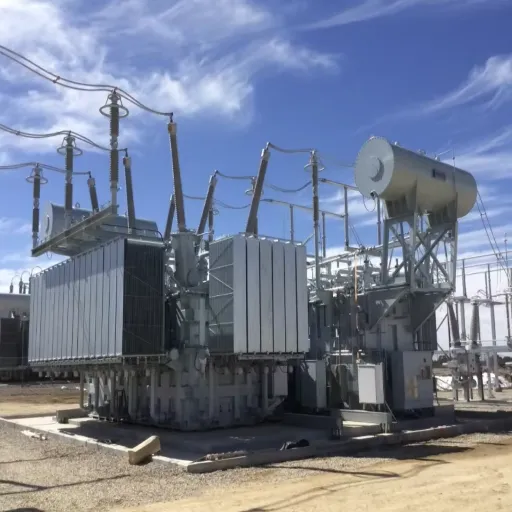
Specifying a phase shifting transformer requires understanding key parameters and how they interact with system requirements.
Key Performance Parameters
MVA Rating
PSTs range from small 50 MVA units for distribution applications to massive 1,600+ MVA devices for transmission interconnections. The rating must accommodate maximum anticipated power flow plus appropriate margins for contingencies.
Voltage Class
Manufacturers offer PSTs for system voltages from 69 kV through 765 kV. Higher voltage classes require more complex insulation systems and larger physical footprints.
Phase Shift Angle Range
Typical variable PSTs provide ±15 to ±50 degrees of phase shift, with some specialized units reaching ±70 degrees. The required range depends on the impedance characteristics of the parallel paths and the degree of control needed.
Impedance Characteristics
PST impedance varies with tap position. At neutral tap, two-core designs provide natural impedance that helps limit fault currents. Single-core designs present minimal impedance at neutral, requiring external reactors if fault current limitation is needed.
Selection Guide by Application
| Application | Typical Rating | Voltage Class | Phase Shift | Design Type |
|---|---|---|---|---|
| Utility grid control | 400-1,600 MVA | 230-765 kV | ±15° to ±50° | Two-core, variable |
| Industrial rectifier | 1-50 MVA | 480 V – 13.8 kV | Fixed (12/18/24-pulse) | Single-core |
| Data center | 1-10 MVA | 480 V – 13.8 kV | Fixed (24-pulse) | Single-core |
| Renewable integration | 100-800 MVA | 138-345 kV | ±20° to ±40° | Two-core, variable |
| HVDC support | 200-1,200 MVA | 230-500 kV | ±10° to ±30° | Two-core, variable |
Standards and Certifications
IEC 60076
Transformer must follow relevant sections, covering the performance requirements of the design, trial, and quality of performance itself about on-load tap changers; short-circuit power taking ability requirements; and constraints to thermal limits.
IEEE C57.135
This North American standard does have specific provisions intended for phase-shifting transformers to visit, so that the design, trial, and application of these devices would be according to accepted standards.
Additional Requirements
For example, in China it would be GB or, in Germany, DIN, and ANSI in the United States. This may also be linked with environmental legislation, such as biodegradable fluid insulating materials or noise-limitation protocols.
Market Analysis and Industry Trends 2025
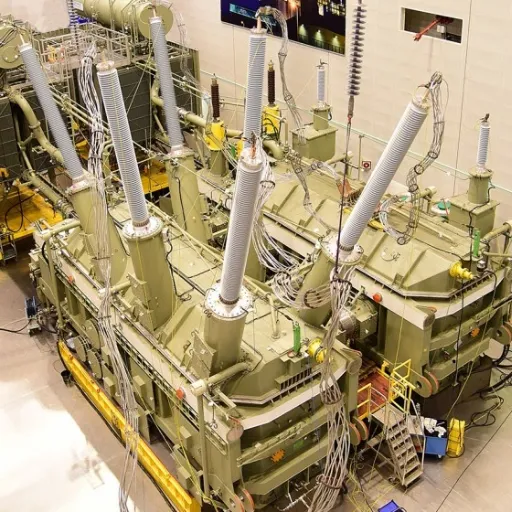
Govern the market for phase-controlling transformer and great changes take afoot on account of the grid modernization, renewable energy growth, and perhaps ever-evolving power quality necessities.
Market Size and Growth Projections
The complete PST market is limited in size but very important strategically. Roughly USD 105 to 109 million globally encompassed the power transmission PST exchange market in 2025, and forecasts predict this figure to even increase somewhat more by 2031, to USD 132 to 169 million at a compound annual growth rate (CAGR) of 3.9 to 6.6%.
There is a downside, though; these figures do not account for the true potential related to phase shifting transformers-that is, in industrial and data center settings, phase shifting transformers are used for mitigation of harmonics. This potential case leads to more than just simple augmentation in addressable market size:
| Market Segment | 2025 Size | 2033 Projection | CAGR |
|---|---|---|---|
| Power Transmission PST | $105-109M | $132-169M | 3.9-6.6% |
| Renewable Energy PST | $2.5B | $6.3B | 12.5% |
| Data Center PST | $1.5B | $2.5B | 6.5% |
The renewable energy segment represents the fastest-growing opportunity, driven by massive investments in wind and solar infrastructure globally. Phase shifting transformers enable these variable resources to integrate cleanly and controllably into existing grids.
Regional Demand Patterns
Europe
The largest worldwide PVST consumers are the European transmission operators, who account for around 95% of all global requirements. The conversion to electricity of Germany, the United Kingdom, and the Netherlands for the new reform will certainly be followed by the above. Very high decarbonization targets, a lot of cross-border interconnections, and grid congestion management needs seem to be the primary drivers behind this demand.
Asia Pacific
Naturally, this is being spearheaded by the massive renewable energy investments that the country is making, including grid modernization in India. As the economies upgrade their electrical infrastructures, there seem to be additional opportunities arising from smart grid initiatives envisaged across Southeast Asia.
North America
Grid modernization improvements, which average about $350 million annually, have played a significant role in the installation of PSTs in managing congestion and integrating renewable resources. PSTs are being studied for coupling with energy storage to enhance the PST’s actual grid-friendliness and smooth integration with significant flexibility in the grid, a trend that has spread to the PJM, ERCOT, and California ISO markets.
Key Market Players
The PST market is highly concentrated, with the top three manufacturers holding approximately 93% combined market share:
Siemens Energy
Offers PSTs up to 1,200 MVA and 765 kV, with extensive experience in European grid applications. Known for compact designs and advanced on-load tap changer technology.
ABB / Hitachi Energy
Market leader with the largest installed base, with the record-setting 1630 MVA installation in Italy. Symmetrical and asymmetrical designs are offered with their patented Interphase Power Controller technology.
Tamini Transformers
Italian Specialist with a strong presence in the Markets of Europe, offering customized solutions in the US for demanding applications.
Chinese manufacturers
Baoding Tianwei Baobian Electric and other domestic Chinese manufacturers have started to expand abroad, marketing cost-effective alternatives with equivalent technological performance. This enhances domestic production ability, mainly as a result of the comprehensive procurement programs of the State Grid Corporation of China.
Emerging Trends
Digital PST Integration
Present-day PSTs with digital technology are well prepared in terms of monitoring devices, assessing the condition in real-time, and providing alerts for planned maintenance with remote operations. Besides, these intelligent features quite easily assimilate into a digital substation architecture and the control center from the end-user’s point of view.
Modular and Standardized Designs
Manufacturers seem to be mitigating such issues through modularizing PSTs, i.e., coming up with a range of standardized platform schemes and focusing on core components, all of them to be dynamically configured for specific applications. This is a sector that would greatly benefit emerging markets, where bespoke engineering resources could be in short supply.
Hybrid FACTS-PST Solutions
Through the VELCO Vermont project, classic phase-shifting transformers are combined with modular power flow controllers. Their parameters are designed to give maximum capacity and life to the mechanical assets. We may see wide acceptance of the dual approach in the future, especially for critical transmission corridors.
Environmental Considerations
Mineral oils are considered very useful as insulating fluids in PSTs, but at present, synthetic or natural ester insulating fluids are being used more intensively since there is reduced risk of fire and environmental impact. Today, most installations on or near water sources and populated areas must comply with EU regulations requiring the use of biodegradable industrial oil as an alternative.
Advantages and Limitations
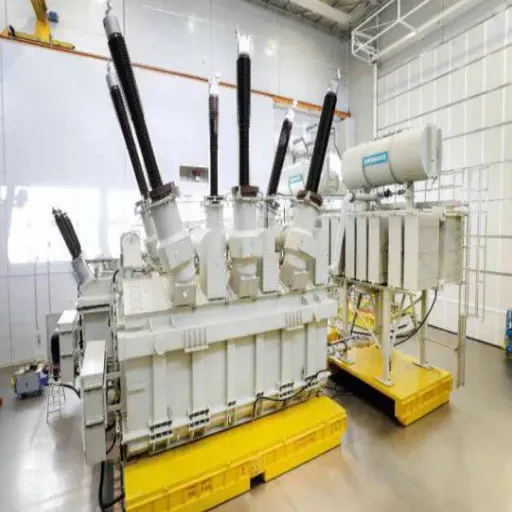
Understanding both the benefits and constraints of phase shifting transformer technology enables informed decision-making for specific applications.
Key Advantages
Active Power Flow Control
PSTs are able to control the active power flows with no restrictions regarding generation and load. Basically, it’s for power grid operators to allow a station or a line to operate at maximum transport capacity, to be constrained from overloads, and manage loop flows that could otherwise threaten system stability.
Proven, Mature Technology
PSTs, being in operation for decades with thousands of installations around the world, have low-risk technology with assured operating performances and maintenance requirements. Utilities will estimate life cycle costs and much reliability.
Congestion Management Without New Lines
By relieving overloaded with underutilized transmission corridors, PSTs provide leverage on the costly need for new line development. This is particularly important where physical access, environmental, or right-of-way constraints negate the opportunity for expansion.
Harmonic Mitigation
A multi-pulse configuration of rectifiers has been built to use phase shift inputs in one way to minimize around 60-90% of the current harmonics, thus effectively solving power quality problems.
Relatively Low Losses
Modern PSP devices attain only 0.3-0.5% of rated power consumption, making them an efficient tool for grid optimization, resulting in fewer losses compared to FACTS alternatives.
Important Limitations
Slow Dynamic Response
Mechanical tap changers require 3-10 seconds to adjust phase shift. This response time is adequate for steady-state flow control but insufficient for managing rapid transients or providing dynamic stability support.
Discrete Control Steps
Unlike continuously adjustable power electronic solutions, PSTs provide control in discrete steps (typically 17-35 positions). While adequate for most applications, this limits precision in scenarios requiring fine-grained adjustment.
High Capital Investment
Large transmission PSTs represent significant capital expenditures, often costing $10-50 million depending on rating and complexity. However, these costs typically compare favorably against transmission line alternatives when congestion deferral value is considered.
Maintenance Requirements
Mechanical tap changers require periodic inspection, contact maintenance, and eventual replacement after approximately 500,000 to 1,000,000 operations. Electronic alternatives eliminate this mechanical wear but introduce different maintenance challenges.
Complex Protection Requirements
PSTs require specialized protection schemes that account for variable impedance, phase angle changes, and internal fault scenarios. Designing and commissioning these protection systems demands experienced engineering resources.
Future Outlook
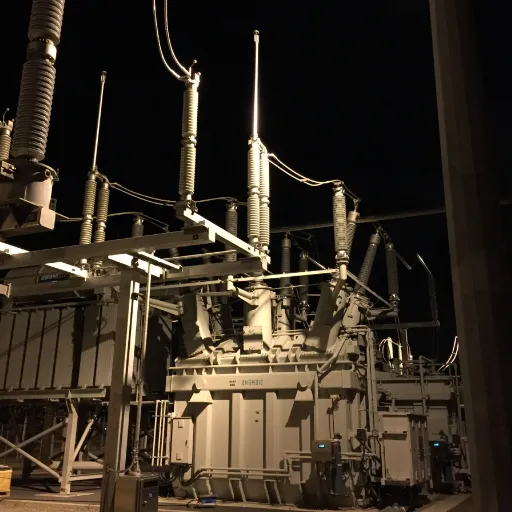
Magnetic components are being redefined as intelligent magnetic components as the technology around them changes.
Technology Roadmap
2025-2027: Digital Integration
Continued adoption of digital monitoring and control systems will fully integrate the PST within the smart grid as an essential element. Optimization in real time will be based on market signals and grid conditions, automatically adjusting phase-shift settings of PSTs.
2028-2030: Hybrid Deployments
Expect a massive deployment of hybrid FACTS-PST setups, which merge the effective transaction of conventional PSTs with power electronics-represented speed. These will typically offer dynamic capabilities that will carry renewables into high Penetration grids with proven base technologies.
Beyond 2030: Solid-State Evolution
The next growth area for solid-state phase shifters will be for mature wide-bandgap semiconductors as costs go down, because then they may start replacing mechanical phase shifters in new installations. These devices could give active steered beams nearly continuous and instantaneous pointing with no wear.
Market Evolution
The PST market will likely bifurcate into two segments:
Commodity Industrial Products
The rising commoditization of standardized multi-pulse rectifier transformers for circulating current harmonic mitigation, with price being driven by the competition among Chinese manufacturers, is poised to topple this segment in the global market.
Custom Transmission Solutions
The same will probably not apply to large utility-scale PSTs, as they remain engineered-to-order solutions, requiring deep manufacturer/grid operator collaboration to meet special requirements. High-value installations will more and more integrate energy storage and smart grid systems.
Skills and Expertise Development
The industry is suffering the effects of the retirement of experienced engineers who are conversant with design, protection, and application, and are increasingly specializing in this new technology. It means that there is not so much being done concerning this with the academic sector, since many of the universities provide less power transformer-tailored curricula training programs in order to equip a future generation of engineers.
Conclusion
Phase Shifting Transformers are one of the most effective measures available for optimum use of power in any power system. They allow direct control of the currents flowing in the system, enhancing the system’s utilization of the transmission assets and preventing congestion while using old installations to create a connection to the renewable energy resources.
Key takeaways from this guide:
- Technology Fundamentals: PST, with a quadrature voltage injection for phase shifting of angles, transfers the power flow over parallel transmission paths.
- Configuration Options: Single-core designs are appropriate only for small applications, while their twin-core counterparts are necessary for those whose MVA ratings are high and, in addition, have extensive phase shift potentials. Multi-pulse rectifier applications use 12, 18, and 24 pulse configurations for harmonics mitigation.
- Application Diversity: From transmission grid control to industrial harmonic mitigation and to data-center power quality, PST’s application is diverse enough to address significant challenges across the entire power sector.
- Market Dynamics: Power transmission PST market dynamics are modest at a level around 105 million; However, the addressable market is considered greater than 105 million and encompasses renewable integration industrial application, which is expected to exceed 4 billion in growth rate.
- Technology Evolution: But Future Fact-PST by increasing the blend capabilities of FACTS and PST in the form of hybrid solutions will retain the known reliability of conventional designs and incorporate them into digital ways.
Whether one is looking for options in various transmission-related constraints or something like harmonic mitigation at an industrial plant or further into grid design for renewable integration, the essential understanding for making any beneficial engineering decision is through phase shifting transformer technology.
Ready to explore how phase shifting transformers can optimize your power system? Shandong Electric Co., Ltd. provides custom transformer solutions engineered to your exact specifications, from industrial harmonic mitigation systems to utility-scale power flow control equipment. Contact our engineering team to discuss your requirements and receive a tailored proposal.