
Wind Turbine Transformers: Design & Performance Requirements

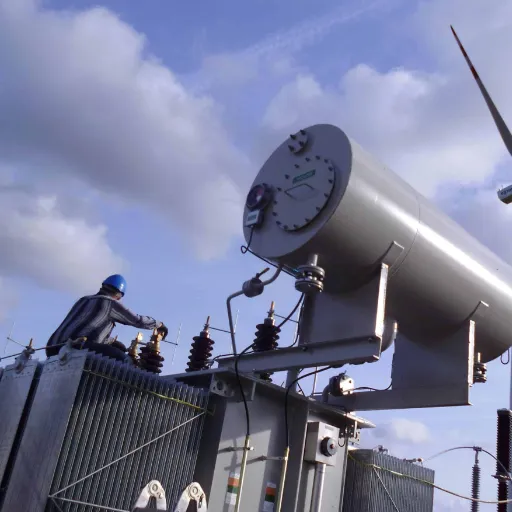
Wind turbine transformers function as essential elements which enable wind energy to be generated with both operational efficiency and reliable performance because they connect wind turbines to electrical power systems. The transformers are specifically built to manage wind power’s unpredictable characteristics while they maintain proper voltage levels and minimize energy waste and establish smooth connections with power distribution systems. The article presents essential design factors and operational standards which wind turbine transformers must meet while demonstrating how modern technology solves problems that arise from extreme environmental conditions and shifting load patterns and dynamic power consumption needs. The complete guide will give you essential information about the vital function these transformers perform in developing contemporary wind energy systems whether you work as an engineer or energy expert or have a general interest in renewable energy.
Introduction to Wind Turbine Transformers
What is a Wind Turbine Transformer?
The wind turbine transformer functions as a dedicated electrical component which transforms wind turbine produced voltage into grid compatible transmission voltage. Wind turbine electricity production results in low or medium voltage output which cannot be used for extended distance transmission. The transformer increases voltage levels to meet high-voltage grid specifications which enables efficient energy transportation with minimal losses.
These transformers must be specifically engineered to handle the unique demands of wind turbine operations. Wind energy production leads to varying power output because of changing wind conditions and different load requirements. Wind turbine transformers need to manage these power fluctuations while ensuring their system functions properly and protects against electrical system faults and power overload situations. The compact design of these devices enables their installation inside turbine nacelles or bases while their construction provides protection against severe environmental elements which include high-temperature conditions and moisture and mechanical vibration.
Wind turbine transformers establish efficient connections between wind turbines and the electrical grid which makes them essential components of contemporary renewable energy systems. The electrical grid would face severe integration challenges without these devices which would lead to substantial energy waste and decreased system dependability. The ongoing development of these technologies enables the global growth of wind energy as a renewable power source.
The Role of Transformers in Wind Farms
The transformers located in wind farms function as essential elements which control and enhance the power flow from wind turbines to the electrical grid system. Their functions involve converting voltage levels and providing electrical isolation while they work to decrease energy losses during transmission.
- Step-Up Transformers:These transformers perform the essential function of raising wind turbine output which typically produces 400V to 690V to the higher transmission voltage range which extends from 33 kV to 400 kV according to grid specifications. These devices enable efficient electricity transmission across lengthy distances by increasing voltage levels while they decrease power losses.
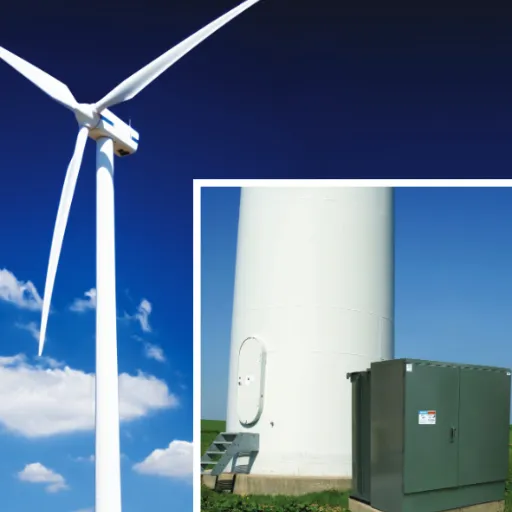
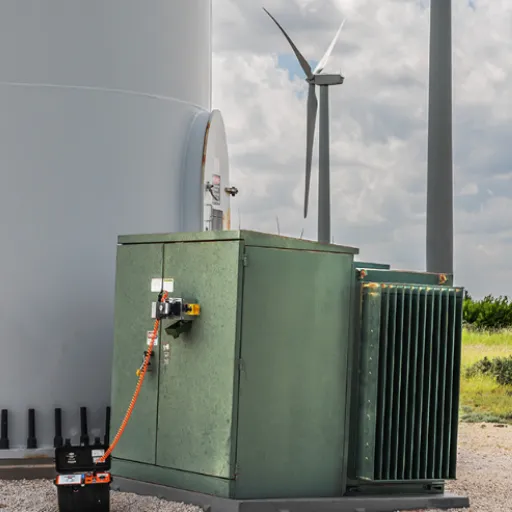
- Pad-Mounted Transformers:Pad-mounted transformers function at wind turbine tower bases to transform turbine output from low voltage into medium voltage which commonly reaches 34.5 kV. These transformers are designed for outdoor use and are highly durable to withstand environmental conditions such as temperature variations and moisture.
- Collector Transformers: Collector transformers serve their main purpose of gathering power from several wind turbines while they increase voltage levels for substation transmission. They serve an important function in substations which gather and distribute power throughout a wind farm by maintaining stable voltage levels and facilitating energy flow.
- Substation Transformers: These high-capacity transformers create the connection between the wind farm and the primary electricity distribution network. The transformers are built to manage very high voltage levels while they convert wind farm electricity into grid-compatible electricity which maintains dependable and steady power distribution.
- Autotransformers: The wind farms employ autotransformers as their voltage transformation solution because the technology delivers both compact design and affordable cost efficiency for handling minor voltage changes between medium and high voltage levels. The design produces material savings but achieves efficient performance results.
The wind farms achieve power delivery optimization through these specialized transformers which also help to minimize energy losses while maintaining compliance with grid technical requirements. The system specifications and design configurations undergo continuous development to satisfy the operational needs of extensive renewable energy systems.
Importance of Transformers in Renewable Energy
Transformers function as essential components that power renewable energy systems while improving their operational performance. The transformers function to either raise or lower voltage levels which enables power generation sources to connect with the electrical grid. The transformers at wind and solar farms increase voltage levels to create transmission-ready power which travels long distances with reduced energy waste. This method decreases resistive energy losses which helps maintain power efficiency for distribution activities.
Transformers serve an essential function in renewable energy systems by providing both power reliability and grid stability. The power output from wind and solar renewable energy sources experiences constant changes because of their natural variable characteristics. The system uses transformers together with advanced control systems to maintain operational voltage standards despite unexpected power fluctuations. The grid compliance system maintains operational stability while enabling renewable energy sources to work with present day electrical systems.
Transformers provide essential support which enables renewable energy projects to grow their capacity. The contemporary systems now support system growth through their modular system design which uses flexible system components to meet future energy requirements and upcoming technological developments. The global movement toward clean energy demands better methods to manage renewable energy through its production and transmission and distribution processes in order to achieve sustainable development goals.
Types of Wind Turbine Transformers
Power Transformers for Wind Applications
Power transformers function as fundamental components in wind energy systems because they achieve effective transmission of electricity which wind turbines generate throughout extended distances. The transformers function by increasing turbine voltage output until it reaches transmission network high-voltage standards which reduce energy losses during electrical transportation. Power transformers require design specifications which ensure their operational effectiveness under extreme environmental conditions found at offshore wind farms because these sites experience severe weather conditions. The systems also operate with multiple wind energy output requirements which result from wind speed changes and other environmental conditions.
Modern power transformer developments for wind applications include high-performance insulation systems and improved thermal capabilities which maintain operational efficiency throughout extended time periods. Modern transformers utilize advanced ester-based fluids as their new standard replacement for traditional mineral oils. The fluids provide environmental benefits because they degrade naturally while offering superior fire protection through their improved ignition resistance. Digital monitoring systems which include real-time condition monitoring and predictive diagnostics enable operators to identify faults during their initial development stage while they optimize maintenance processes which result in lower operational interruptions and stable power generation.
Wind farms require modular transformer designs because these designs enable systems to scale up their operations through new turbine installations. Power stations use these modular designs to maintain operational efficiency while their turbine capacity increases which allows them to meet rising energy requirements. The upcoming decade will see worldwide wind energy capacity exceed 1,000 gigawatts according to recent industry reports which create a demand for transformers with high efficiency that wind power systems require.
Conventional Transformers vs. Wind Turbine Transformers
Conventional transformers are designed for stable loads, while wind turbine transformers handle variable loads, harmonics, and harsh environments.
|
Key Point |
Conventional |
Wind Turbine |
|---|---|---|
|
Load Type |
Stable |
Variable |
|
Environment |
Controlled |
Harsh |
|
Harmonics |
Low |
High |
|
Design |
Standard |
Specialized |
|
Cooling |
Standard |
Enhanced |
|
Efficiency |
High |
Moderate |
|
Durability |
Moderate |
High |
|
Cost |
Lower |
Higher |
Transformer Design for Onshore and Offshore Wind Farms
Onshore and offshore wind farm transformers differ in their design requirements due to differences in environmental and operating conditions that both of them encounter. Onshore wind generation takes place in more accessible areas while offshore wind farms require installation in saline atmospheres that cause corrosion and at the same time in high humid conditions as well as extreme mechanical forces such as wind waves. Such diverse working environments call for engineered transformer units to ensure that they continue to perform for years.
- With Onshore Wind Farms Transformers: The mortgage transformers for onshore wind power plants have been developed with cost optimazation and maintenance reduction in mind. Those transformers can be used in normal operation mode as they are equipped with standard cooling (oil-air, oil-water), which is more than enough for their needs. The transformers perform their function in confined cabins climate protected, where all their equipment is secured from adverse weather conditions. This made it possible for the system to work at different power levels because energy intestly varies with the wind and power of the wind turbines. As far as onshore installations are concerned, due to certain degrees of harmonic distortion present, filters or special coiling windings are employed to help processes involving relevant harmonics.
- Transformers Used For Offshore Wind Farms: Offshore wind farms usually have transformers which are made from materials that are heavily built and have great anti-corrosion features. These filling tanks are of stainless steel that has a protective coating that prevents water from getting into the tank. The compact size of offshore platforms and nacelles, which are used for cooling the transformers, has forced the development of forced oil and direct water cooling systems. The system is made of innovative material as well as without-interior maintaining insulation, thanks to which maintenance does not need to be performed on the system for extended periods of time. The system will be subjected to over voltages with large amplitudes and harmonics requiring more effective insulation and suppression of harmonics within the system.
- Modern Tools and Approaches: The attainment of efficiency in transformer technology has improved considerably with the adoption of the latest developments, including innovations such as intelligent sensors and real-time monitoring systems. These advancements go a long way in maintaining the systems, thus, reducing the likelihood of failure and saving money at the same time. Also, incorporating digital twins aids in the formation of detailed and more realistic conditions and ultimately facilitates the improvement of the transformer design in the respective sites.
This takes account of the wind farms and lays emphasis on the need for wind turbines to be constructed with transformers that can be able to sustain the conditions of the specific area. These transformers help in this regard, as they have been made to overcome the difficulties that come with each environment, as such, ensuring that renewable energy systems achieve effective power conversion and stability of the grid.
Performance Requirements and Reliability
Assessing Transformer Performance in Wind Power Systems
For a wind power application, there are several factors based on which the performance of transformers has to be judged such as effectiveness, thermal performance, the durability of insulation material, and harmonics reduction. The low loss high efficiency principle remains central to optimize energy transportation in fact in view of the inherently variable and intermittent nature of wind it is imperative that its potential is utilized fully through the transformer practice. It’s important that transformers are able to dissipate heat effectively because of the risk posed by variable demands and environmental factors resulting in possible issues associated with overheating because of this phenomenon.
The other important aspect is the insulation longevity, in that, the transformers used in the wind farm remain exposed to the high moisture, the offshore salt spraying, and the frequency of overvoltages which cause the insulation systems to fail. Moreover, suppression of harmonic disturbances that are produced due to power converters, present in a wind turbine transformer plays a substantial role in making the units compatible with the grid and ensuring the integrity of quality.
In order to Avoid Errors while Using the Wind Power Systems at Hand, It Is Necessary to Utilize Superior Performance Materials, Excellent Engineering Skills and Systematic Testing Procedures. Wind turbine transformers Have a Limited Service Life, Therefore They Must Be to Functionalize Perfectly in Unison with the Function of the Site.
Factors Affecting Transformer Reliability
Numerous variables, factors, and circumstances determine the efficiency and durability of the transformers in wind turbine transformer and other renewable power systems. The constructional features, locational and climatic conditions as well as operational factors are all important. The internal make-up of the system particularly the material content in areas like core materials of the transformer, insulations, oils and papers used for winding and cooling are vital. It has an impact on the number of losses experienced, the thermal behavior of the system, the dielectric properties of the system and the ability to carry an electrical and thermal load. In addition, the use of more sophisticated monitoring techniques such as DGA (Dissolved Gas Analysis) and PD (Partial Discharge) assists the users to monitor the situation in advance thereby minimizing the likelihood of the occurrence of failure without notice.
Reliable power transformers need to withstand the environmental conditions they are subject to. High or low temperatures, moisture, and pollution, which the equipment is exposed to, very quickly affects insulation and causes metallic elements to corrode. Take, for example, a wind turbine transformer for use at sea. Salty sea air can cause excessive amounts of steel to corrode, and thus specialty materials and coatings are essential T Each transformer design must consider the regions of placement or operations in regard to the adverse effects of earthquakes, flooding and other factors. Therefore, employing the appropriate domes and casings can help limit, to the lowest possible extent, any impacts of the factors stated above.
There are some other factors that are operational and need to be considered while controlling transformers such as loading cycles, harmonic distortion levels and switching transient currents. The variable loads in transformers used in wind or solar power generation systems such as in wind farms result from the fluctuating nature of the renewable energy generation. Hence it may be unsafe to operate such transformers and this results in excessive heat rise and premature ageing of equipment. With this challenge, various techniques are used to ensure good thermal performance including enhanced cooling system, load control, and monitoring in real time. Compilation of models combining condition based monitoring with predictive analysis allows the existing models of the operation of components in renewable systems, including losses in the assets like transformers, enhances performance, and reduces running costs over their lifetime.
Innovations in Wind Turbine Transformer Technology
Recent Developments in Transformer Design
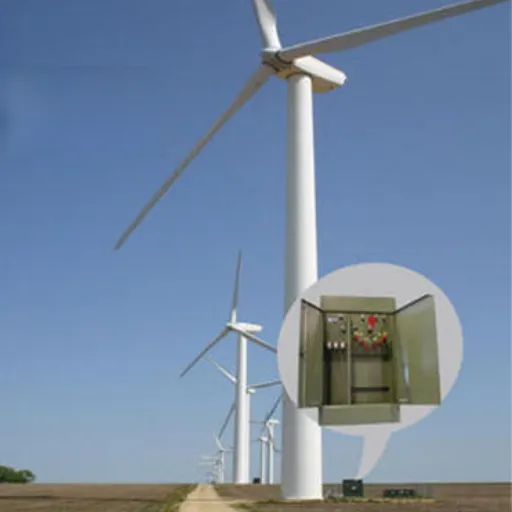
Over the years, transforming devices needed for wind applications have steadily improved with a specific focus on increasing efficiency, reliability, and scaling to various levels of load. One major breakthrough is in the design of superconducting transformers that have the ability to work at high temperatures. These transformers use superconducting materials as substitutes for copper windings, thereby minimizing energy dissipation, associated with such conventional assemblies. These are applied so that the current versus temperature characteristic is higher than in conventional systems and thus allows for progression to higher current densities and better thermal insulation. Such conditions are ideal for wind energy systems that are used today.
Moreover, modular transformer structures have remained relevant as electric motors and generators in renewable energy projects. Such a construction has eased deployment, maintenance and substitution activities, which has been key for the offshore wind turbines whose sites pose accessibility matters. Such transformations using insulating material and efficient controlling of high temperature environment using fluids that are in compliance with the green and safe wind turbine transformer standards can be witnessed nowadays.
One interesting pattern observed that enhancing digital performance trend is the inclusion of modern technologies in transformer configurations. Transformers enhanced with IoT devices and active measuring systems offer users the possibility of quality metrics that help to detect issues before they break down, thus improving efficiency standing time. This new feature contributes to the need for effective power availability grids and the improvement concerning all system units. These changes seek to prove that development in transformers along with enclosure designs are vital in satisfying the needs of the new age renewable energy sector.
Energy Storage Solutions and Their Impact
Modern power systems are extremely reliant on energy storage technology for reliable operation. Such technologies help incorporate large-scale renewable energy sources. This is achieved through the management of energy imbalances that occur in cases of solar and wind power generation, which helps in providing a steady supply of energy. Besides energy management, the lithium-ion technology remains the most discussed technology because of its high capacity both in terms of weight and volume, its long life and its pitchability. However, there are other technologies available other than lithium-ion battery technology. These include flow batteries, compressed air energy storage, and heat storage which are growing in popularity for certain specific applications including use on the electricity grid, and storing energy for a long time,
Such technologies improve both the reliability of the grid and managing peak loads, frequency control and emergency power backup options. For example, efficient energy storage systems allow levelized charging and discharging of the load by charging it during the off periods and discharging it during the high loading period thus increasing operational efficiencies. Studies Have Shown That energy storage capacity around the world will increase immensely as the cost of storage is reducing with the encouragement of renewable energy policies.
Critical evolvement in energy storage also includes the smart systems where artificial intelligence and machine learning algorithms control the charging cycles and predict maintenance requirements. These developments indicate the extent to which energy storage is a necessary component in pursuing a clean energy transition. The new technologies being developed together with policy instruments that promote their adoption mean that energy storage is an integral part of the upgraded energy system’s infrastructure – for the industrial users and for consumers alike.
Sustainability Practices in Transformer Production
Producing transformers with a focus on sustainability is all about reducing harmful effects on the environment and achieving maximum efficiency throughout the life cycle of the product. One of the major strategies is the replacement of traditional insulating oils based on mineral oil chemistry with biodegradable oils for transformer insulation purposes. Such oils are made from renewable resources and are more benign to the environment in case of extended out-of-operational spills and disposals. Furthermore, there is an increasing demand for developing transformers that have less total ownership cost as manufacturers will concentrate on efficiency through the incorporation of amorphous steel cores that on the other side, considerably cuts losses on production when a transformer is left at idle position.
Aside from the materials used, transformer production methods have also evolved to be more ecologically friendly. AM or 3D printing is fast becoming one of the essential production tools that lowers material consumption and creates impossible-to-make designs in the past. Also, utilization of automatics and robots is another way of improving utilisation of available resources as they allow for exact focus without chances of material wastage. Besides, such a measure as development of improved thermal control techniques makes it possible to design smaller transformers that require less materials and utilizes improved heat evacuation techniques that prevents wear and tear on the equipment reducing or prolonging the need for replacement.
One of the pivotal elements of sustainable development is the introduction of circular economy concepts into the wind turbine transformer business. Prominent electrical equipment manufacturers are embracing extended producer responsibility by offering take back and recycling service for obsolete equipment. In this regard, these service plans salvage and utilize expensive materials like copper and steel for manufacture operations once again, aiding in reducing environmental footprint from unnecessary use of more new resources. Also, the predictive maintenance tools have developed to a level that it is possible for operators to watch transformers in use and alert them of any issue preventing downtimes. With this strategies, the savings will also be realized in that the transformers will need to be replaced after longer period compared to before while the objectives of sustainable development are achieved without undue wastage or power utilization.
Future Trends in Wind Turbine Transformers
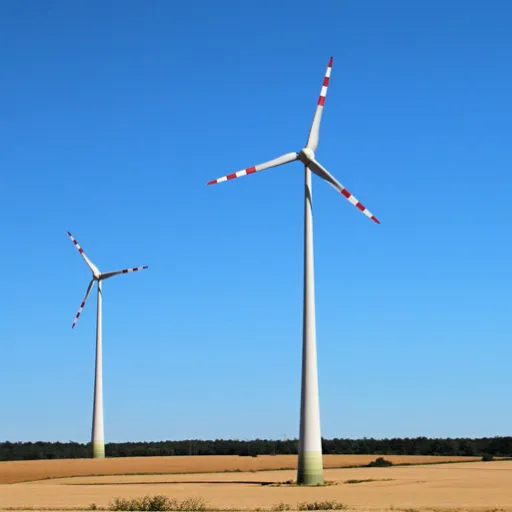
Emerging Technologies in Wind Power
The advancement of fledgling technologies, in particular the wind power sub-industry, is changing how energy produced locally is now consumed. Perhaps one of the greatest innovations is the use of superconducting generators. These generators convert displacement power (mechanical power) to electrical power using highly heat-activated superconductors; thus the losses cost is adequately minimized, efficiency is maximized and every detail is carefully reengineered to reduce the big and heavy components of the turbines. It means that the value of such a design is more in those who use it for water lifting and air bourne lifting systems where there are logistical issues as well given the added weight of the system.
Up scaling the use of AI and Machine learning in making it possible to optimize turbines is another promising trend. Mind-blowing algorithms skim through a mind-boggling amounts of data collected during operation. In this way it is possible to anticipate any disruption of operation in advance and altering power output when necessary. Aside from increasing the productivity of turbines, this technology also has a remarkable impact on the longevity of the turbines as they can be adjusted according to the weather.
Apart from that, there have been major improvements in the structure of turbine blades. As an illustration, some of the newer blades are made of hybrid composites and carbon fibers, allowing for the ease of construction of blades stretching over 100 meters without any structural flaw. For that reason, installation of the wind turbine transformer even in low wind varies can be called efficient as the blades are able to harness more energy in low winds.
In conclusion, the challenge of the dependency on wind power generation over the non-biased climate conditions is gradually being curbed by wind turbines in conjunction with storage solutions. Current technologies, such as batteries as well as liquid-air storage for grid levels are enabling the storage of energy produced in excess when the generation of energy is at its peak and minimal winds allows its dispatching when commanded. These advancements are examples of the technological convergence that is made possible within the field of wind turbine transformer making it more efficient and affordable a global need.
The Role of Transformers in Expanding Wind Farms
The transformers play a vital spatial and temporal role in minimizing power losses that are incurred in the delivery and conveyance of wind-generated electricity. Wind turbines generate electric power which after a commensurate step-up attributable to transformers can be supplied to the main transmission line. Given this long-distance transmission, it is important to exist transformers to step up the power to the required voltage and to interconnect the system. There are five examples of how such transformers are used at wind farms:
- Step-Up in Voltage Levels: Most of the time, all wind turbines operate at low voltages. The collector transformers which are the ones adjacent to the turbines convert the low voltage to higher voltages in order to save on transmission costs. An example is a wind turbine transformer that has an initial voltage of 690 V which is later stepped up to that of the grid of 33 kV or any other allowable voltage.
- Grids: Centralized Transformers combine energy outputs from several turbines and reconvert them at high transmission voltage, usually more than 100kV or higher to fit local or regional grid specifications of a given locality or region. As a result, there is an integration of power systems without conflict in energy distribution.
- Optimization Performance and Durability: Wind farm specific transformers including offshore transformers are made to withstand severe conditions including different speed of winds, sprays of salt air and temperature changes. Advanced materials in addition to cooling systems enhance operational life of such transformers minimizing maintenance costs.
- Wind turbine transformer harmonic modelling: Today wind farms are fitted with transformers having read write capabilities for managing reactive power injection to and from buses in order to maintain acceptable voltage in the system. Some of them have inbuilt features that the user may connect to his or her smart meter’s cordless communication system and optimize the electric energy when there is a need to increase or decrease the value of the supply.
- Component of Energy Storage Systems: To relay energy between wind turbines and storage facilities, transformers form an important link. They use transformers to match the levels of winds turbines and ensure that during shortfalls in supply, the generation of that which had the wind turbine running with help of a transformer is completed.
The inexorable march of technology and particularly the utilization of amorphous core materials in transformers as well as digital monitoring, will continue to be a key factor in the growth of the scalability, efficiency and robustness of wind power plants. These technological innovations mitigate the challenges presented by the increase of the modern day wind turbine transformer as well as the geographical spread of the wind power plants, which is in tandem with the thrust towards greener energy.
Challenges Ahead for Transformer Efficiency in Wind Energy
There are numerous transformations within wind energy applications aimed at achieving maximum efficiency for transformers whose conventional technology emerged many years ago. This is evident with the recent weather conditions of wind energy where such diagrams are used because load demands are not usually constant and there are many repetitions of transients. Designing these transformers in which such conditions will be supported without making too many losses or stresses is of particular importance as losses involve an unnecessary collection of energy while stresses lead to faster decay. Such as the interval luck less good dose the recourses left for the man maendeleo kicka. When prepare electric appliances transformers which losses are calculated side advance, it means it would decrease that of active losses. The trick is to avoid too much heat stress that causes numerous losses in electrical energy and where prolong lifespan losses are diminished such that it goes beyond the designed age. These strategies is pegged to activities that are carried out within a high efficiency wind turbine transformer systems.
Increasing the abilities of wind turbine transformer to grow with the trend for bigger offshore wind farms and bigger generating capacity is another significant problem. Bigger, multiple-megawatt capacity turbines call for transformers that can support higher power ratings with all the harsh atmospheric conditions like extreme moisture, salinity or high thermal rise. Ignoring these aspect, however, may result in inefficiencies, energy loses and cases of breakdown.
The interfacing process of the digital equipment, although an ambitious one, is a complicated one too. With the development of advanced sensors, IoT monitors, analytic applications, and so on, the design of the transformer has to accommodate all of these without losing a single kilowatt of output. There are some challenges that always exist, like bringing different systems to work together, introducing anti-hack and anti-spoof measures, and avoiding data delays. In addition, the efficiency of a transformer is also dependent on the type of materials used where there is a great emphasis in the research towards utilizing the high part of the core material such as the amorphous alloys. However, these innovations are not commonly used in wind turbine transformer designs as they are costly and not readily available.
Finally, the regulatory framework and grid harmonization are changing very quickly. Transformers are expected to comply with high efficiency requirements including certificates issued by IEC, IEEE, bearing, however, a specific local grid operation and the available energy storage systems. It will be the type of support that the delicate balance of these various demands while focusing more on cost efficiency will bring to the improvement in respect of the efficiency of the wind turbine transformer that will determine the growth of the wind turbine.
References
-
Full-Converter Wind Turbine Technology
A detailed academic document from Iowa State University discussing transformer compatibility in wind turbine systems. -
The Single Wind Turbine: From the Blades to the Grid
A Princeton University publication explaining the role of transformers in wind turbine energy systems. -
Dynamic Models for Wind Turbines and Wind Power Plants
A comprehensive study on wind turbine dynamics, including transformer integration. - Click here to read more.
Frequently Asked Questions (FAQ)
Q: What exactly is a wind turbine transformer and what function does it perform?
A: By nature, a wind turbine is self-sufficient and it generates electric power as long as the wind blows and moves the blades. However, energy transformation doesn’t stop there because every type of energy that is generated will have to be sustained in specific conditions. When relating to wind turbines used for power production, out of necessity the wind turbine transformer steps up or steps down the energy given off by the turbine generator for transmission or in house usage.
Q: What kind of wind turbine transformers can be found on the market?
A: Pad-mounted step-up transformers, nacelle-mounted transformers, collection substation transformers are the kinds most often found. It is most desirable to mount a transformer in the nacelle of the turbine which will take care of the voltage conversion, however, a pad mounted and substation transformers are responsible for the grid interfacing and distribution of the combined power from different turbines.
Q: How do you determine the appropriate transformer size for a wind turbine attached to a particular turbine or a wind farm?
A: There are processes in which a Collection Unit MVA and wind turbine maximum generation are considered while calculating the size of a wind turbine transformer. Other factors that come into Essence are Switchgear and wind turbine generation system cost reduction with issues of burn-in harmonics, temperature rise, or even an allowance for future expansion of the plant. In order to provide stable working conditions of the system with actually changing loads of wind turbines and grid disturbance, the engineering calculations for an appropriate size of the transformer include the parameters of constant output power, overload limit, acceptable deviation of voltage and electrical characteristics of the system.
Q: What can its causes be and how can failures be avoided?
A: The majority of these failures are due to problems such as diminished quality of insulation, presence of moisture, high temperatures, shaking, thunder and faulty repairs. Ways to prevent them include appropriate design so as to enable the transformer engine remain cool or air cooled, systematic tests on the oils and insulations, protection against surges, control of vibrations and regular check-ups that seek out to uncover any possible dilapidation or contamination of parts in good time.
Q: How about maintenance of the wind turbine’s transformer?
A: Among the main activities of the maintenance is the oil testing (BDV, Furan, moisture content), insulation resistance measurements, thermal scanning, tap-changer overview, bushing and gasket replacements where required and temperature and load monitoring. These practices both preventive maintenance schedules and condition based monitoring systems increase the transformer life and minimize time loss.
Q: In what ways does a wind turbine transformer impact the grid and power quality?
A: The transformer has an impact on voltage control and the flow of reactive power as well as fault current levels and harmonics. In order to stabilize the voltage and reduce flicker, harmonics and the problem of unbalanced load, in addition to the compliance with grid codes and power quality of wind turbines, adequately sized tap changers, impedance, and grounding should be ensured.
Q: Dry-type wind turbine transformers or oil-filled wind turbine transformers: what factors need to be taken into account when making the choice?
A: In terms of fire safety, or in environments where space is limited, dry transformers are more attractive choice as they do not have oil to leak out and ignite. Whereas oil terminated transformers have advantages such as better dissipation of heat, lower cost and higher power. But each of these affects the selection of equipment to be installed based on the site availability, heat performance required, possibility of maintenance and governmental aspects of wind farm projects.
Q: What is the overview of wind turbine transformer lifecycle and replacement?
A: The service lifetime of wind turbine transformer may vary based on the use of load cycles, operation condition, proper maintenance, and availability of funds for the purchase. The expected duration of operation spans about 20-40 years if well-maintained. When determining replacement, the contingency plan should incorporate allowance for custom units lead time, removal and disposal process, available existing switchgear and upgrades, and upgrading efficiency or meeting the new grid codes.