

Data Center Transformer: Selection, Sizing, and Standards Guide

Data centers almost exclusively use dry type transformers which industry standards permit because indoor fire safety codes ban oil immersed units. The process of selecting a data center transformer requires matching kVA capacity to IT load plus cooling needs and selecting the appropriate K-factor for UPS harmonic content and confirming N+1 or 2N redundancy for the facility tier and testing noise levels against lease or occupancy agreements.
Most data center operators and colocation managers rely on electrical contractor recommendations without fully understanding harmonic loads, redundancy requirements, or noise constraints. The result is predictable because undersized neutral conductors cause overheating and acoustic retrofits become costly and insufficient redundancy transforms a single transformer failure into a multi-million dollar outage.
This guide covers exactly how to specify, size, and procure transformers for data center applications. You will learn the differences between cast resin and VPI dry type construction, how to calculate kVA with redundancy built in, why K-rated transformers are mandatory for modern UPS systems, and what standards apply from Tier I through Tier IV facilities.
Key Takeaways
- Dry type transformers dominate data center installations because oil immersed units violate indoor fire codes under NFPA 70.
- Modern double-conversion UPS systems generate 15-30% total harmonic distortion, making K-13 the minimum safe K-factor for most data center transformers.
- Tier III facilities require N+1 redundancy minimum; Tier IV requires 2N architecture with fully independent power paths.
- NEMA ST-20 noise limits range from 48 dB to 67 dB depending on kVA, but premium low-noise designs can reduce sound by 10-15 dB for occupied buildings.
- A practical procurement checklist covers 12 items from kVA and K-factor to thermal monitoring and factory testing.
Why Data Centers Require Specialized Transformers
The Unique Electrical Environment of a Data Center
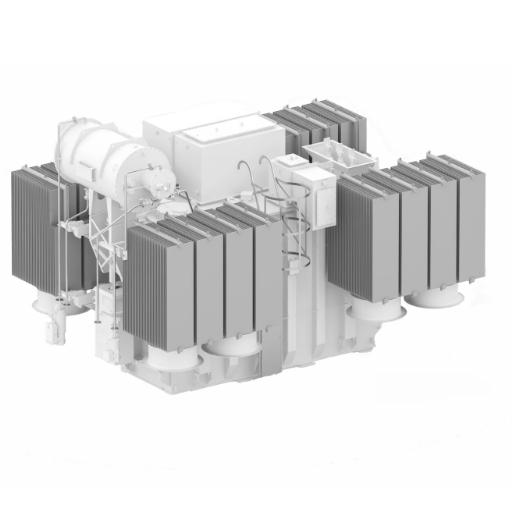
A data center is not a standard commercial building. The electrical load profile is dominated by IT equipment with switch-mode power supplies, double-conversion UPS rectifiers, and variable frequency drives on cooling equipment. These loads generate significant harmonic currents, particularly 3rd order harmonics that add in the neutral conductor and can cause overheating in transformers not rated for non-linear duty.
Cooling represents 30-40% of total facility power. Chillers, computer room air handlers (CRAH), and pumps create additional load that must be included in transformer sizing. Unlike office buildings with pronounced daily peaks and valleys, data centers operate at near-constant load around the clock. This steady-state duty makes transformer efficiency at partial load more important than full-load performance, because typical facilities run at only 40-60% of design electrical capacity.
Fire Safety and Indoor Installation Constraints
Modern data centers do not use oil immersed transformers for their indoor installations. The National Electrical Code (NFPA 70, Article 450) and local building codes require fire-rated vaults, oil containment, and separation distances that make indoor oil units impractical and expensive. Data centers located in mixed-use buildings or urban colocation facilities face a total ban on oil-filled equipment in their lease and insurance agreements.
Dry type transformers eliminate the fire and spill risk entirely. Cast resin transformers use vacuum-cast epoxy resin that is self-extinguishing and waterproof. VPI dry type transformers use polyester resin impregnation that provides excellent moisture resistance and thermal performance. Both types satisfy the fire safety priorities that make dry type transformers the standard for indoor electrical rooms.
Noise Sensitivity in Data Center Environments
Procurement activities tend to undervalue transformer noise, which remains an important aspect of their assessment. The NEMA ST-20 standard establishes sound level requirements for dry type transformers, which range from 48 dB at 150 kVA to 67 dB at 2500 kVA. The sound levels from a data center that shares space with office areas and a network operations center and a mixed-use building can lead to violations of lease agreements and workplace comfort guidelines and local noise ordinances.
Low-noise design options include reduced flux density, step-lap core construction, and amorphous metal core materials. These upgrades add cost but prevent far more expensive retrofits. When David Chen, facilities director at a colocation provider in Singapore, accepted a contractor’s standard 2000 kVA dry type units without reviewing sound levels, the transformers generated 65 dB in an electrical room with shared walls to tenant office space. The building lease specified maximum 55 dB in adjacent areas. The operator spent $45,000 on emergency acoustic enclosures and vibration isolation pads. The lesson is simple: specify noise level in dB before procurement, not after installation.
Want to understand how transformer noise translates to real project constraints? Review our dry type transformer guide for a detailed breakdown of construction methods that reduce sound output.
Data Center Transformer Types and Applications
Cast Resin Dry Type Transformers
Cast resin transformers use vacuum-cast epoxy resin to encapsulate the windings completely. The result is a waterproof, dustproof, and self-extinguishing unit that requires no maintenance. Cast resin construction handles high-humidity environments exceptionally well, making it suitable for data centers in tropical climates or facilities where outdoor pad-mounted substations feed indoor distribution transformers.
The fire safety profile is the best available in dry type construction. Cast resin units resist flame spread and emit no toxic smoke, which matters in facilities with occupied spaces above or below the electrical room. The primary tradeoff is cost: cast resin units typically cost 15-25% more than equivalent VPI designs.
VPI Dry Type Transformers
Vacuum pressure impregnated (VPI) dry type transformers use polyester resin impregnation after winding. The process fills voids and bonds the insulation system without fully encapsulating the coils. VPI units are the workhorse of commercial data center installations because they offer proven reliability at lower cost than cast resin.
Field repair is easier on VPI transformers. If a winding issue develops, a VPI unit can often be rewound or repaired on site. Cast resin units typically require factory replacement or full rewind. For standard indoor electrical rooms with controlled humidity and temperature, VPI construction delivers the reliability data centers need at a more economical price point.
K-Rated Transformers for UPS and Non-Linear Loads
Standard transformers are designed for linear loads with sinusoidal current waveforms. Data center loads are anything but linear. Modern double-conversion UPS systems draw current in pulses, generating total harmonic current distortion (THDi) of 15-30% at the input. The 3rd harmonic and its odd multiples do not cancel in a three-phase system; they add arithmetically in the neutral conductor.
A standard K-0 transformer specified for a data center will overheat. The harmonic currents create additional eddy current losses in the windings and core, raising operating temperature beyond design limits. K-rated transformers are engineered with oversized neutral conductors, lower flux density, and reinforced winding designs to handle harmonic heating without insulation damage.
The selection logic is straightforward:
- K-4: Suitable for data centers with minimal UPS load or passive standby UPS topology
- K-13: The minimum safe choice for modern facilities with double-conversion UPS and >50% of load on battery backup
- K-20: Recommended for facilities with high-density computing, all-UPS architecture, or known high harmonic content
When a hyperscale operator in Virginia initially specified standard K-0 units for a facility running 100% double-conversion UPS, the neutral conductors and winding hotspots overheated within 12 months. Retrofitting to K-13 transformers cost $180,000 in equipment plus scheduled downtime that could have been avoided with correct initial specification.
Low-Noise and Amorphous Core Options
Premium transformer designs address noise through lower flux density and advanced core materials. Reducing the operating flux density by 10% typically reduces sound level by 3-5 dB. Step-lap core construction minimizes magnetostriction, the physical vibration that generates transformer hum. Amorphous metal core transformers achieve ultra-low no-load losses and reduced noise simultaneously, though at a higher initial cost.
For data centers in occupied buildings, near NOC areas, or in jurisdictions with strict noise ordinances, the premium for low-noise design is usually recovered by avoiding acoustic enclosures, sound-rated walls, or tenant complaints.
How to Size a Data Center Transformer
Calculating Total Connected Load
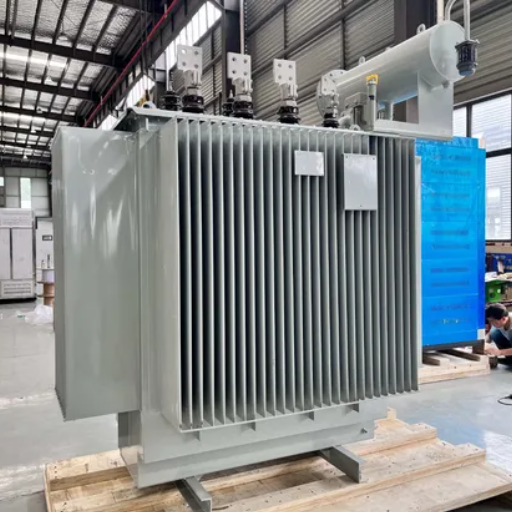
Transformer sizing starts with an honest inventory of all loads. IT equipment includes servers, storage arrays, networking gear, and rack-level power distribution units (PDU). Cooling load includes chillers, CRAH units, pumps, cooling towers, and fans. Auxiliary load covers lighting, fire suppression, security systems, building management systems (BMS), and emergency equipment.
A common mistake is sizing the transformer for nameplate IT load only. In practice, the cooling load can equal or exceed the IT load in high-density facilities. Always include the full facility electrical demand, not just the server racks.
Applying Diversity and Redundancy Factors
Data center loads do not all peak simultaneously, but mission-critical facilities cannot rely on diversity to reduce safety margins. The standard approach is:
- N configuration: Each transformer sized for 100% of the design load. No redundancy. Acceptable for Tier I facilities only.
- N+1 configuration: The total number of transformers equals the required capacity plus one spare unit. Each transformer must be capable of carrying the full design load if one unit fails. Required for Tier III concurrent maintainability.
- 2N configuration: Two fully independent power paths, each capable of 100% of design load. Required for Tier IV fault tolerance.
A diversity factor of 0.8 to 0.9 is sometimes applied to mixed IT and cooling loads, but conservative data center design often uses 1.0 diversity for transformer sizing to maintain margin.
Worked Sizing Example
Consider a 2 MW data center with N+1 redundancy.
Step 1: Calculate total design load
- IT equipment: 1,200 kW
- Cooling: 800 kW
- Auxiliary: 200 kW
- Total design load: 2,200 kW
Step 2: Convert to kVA at 0.95 power factor
- 2,200 kW / 0.95 = 2,316 kVA
Step 3: Apply 25% future growth margin
- 2,316 kVA x 1.25 = 2,895 kVA
Step 4: Configure N+1 with two transformers
- Each transformer must carry 100% of 2,895 kVA if the other fails
- Specify two 3000 kVA units for N+1 redundancy
This sizing ensures the facility can grow into the design capacity and survive a single transformer failure without load shedding.
Future Growth Margin
Data center operators routinely underestimate growth. A standard 20-30% growth margin should be built into the initial transformer specification. Retrofitting or paralleling additional transformers in a live facility is expensive, disruptive, and sometimes impossible due to electrical room space constraints. Undersizing is one of the most expensive mistakes in mission-critical power design.
| Facility Tier | Redundancy | Transformer Count (2 MW Example) | Sizing per Unit |
|---|---|---|---|
| Tier I | N | 1 x 3000 kVA | 100% load |
| Tier II | N+1 | 2 x 3000 kVA | Each carries 100% |
| Tier III | N+1 | 2 x 3000 kVA | Each carries 100% |
| Tier IV | 2N | 2 x 3000 kVA | Fully independent paths |
Ready to validate your facility’s transformer sizing? Send your IT load, cooling profile, and tier target to our engineering team for a detailed specification review.
Redundancy Architecture for Data Center Transformers
N, N+1, and 2N Transformer Architectures
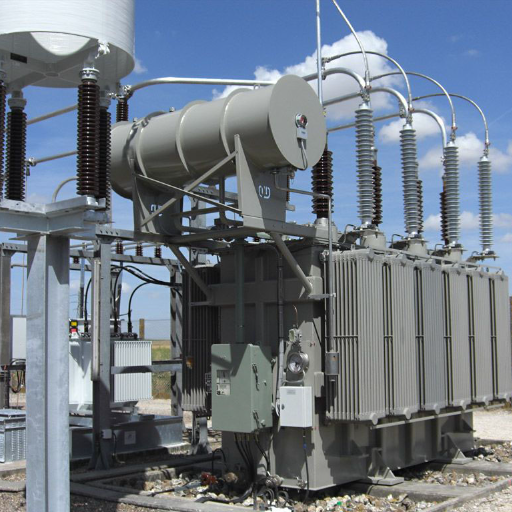
Redundancy architecture determines how many transformers are installed, how they are switched, and what happens when one unit fails. The choice is driven by the Uptime Institute tier target and the facility’s tolerance for downtime.
In an N configuration, a single transformer carries the load. Failure means outage. This is only acceptable for small server rooms or non-critical applications.
In N+1, multiple transformers share the load with one spare unit. If one active unit fails, the spare assumes its share. For a two-transformer N+1 system, each unit must be sized for 100% of total load because either unit may carry everything alone. N+1 satisfies Tier III concurrent maintainability requirements.
In 2N, two completely independent power paths run in parallel. Each path has its own transformers, switchgear, UPS, and distribution. A failure in Path A transfers load to Path B automatically. 2N is the standard for Tier IV fault-tolerant facilities where any single component failure must not interrupt operation.
UPS-Transformer Integration
Transformer placement relative to the UPS matters for both harmonic management and fault coordination. An input isolation transformer upstream of the UPS protects the upstream distribution from UPS rectifier harmonics and provides voltage transformation from medium voltage to UPS input voltage. A step down transformer is commonly used for this function.
Output transformers downstream of the UPS provide voltage matching to PDU input requirements and additional isolation. In either position, the transformer must be K-rated if the UPS generates significant harmonic content.
When a Tier III facility in Frankfurt was built, the electrical contractor sized the transformers at N without redundancy to reduce upfront cost. During a peak summer heatwave, one transformer developed a winding fault. The remaining unit could not carry the full IT plus cooling load. UPS batteries sustained critical systems for four hours, but once batteries depleted, the facility went dark. Total downtime reached six hours. SLA penalties to colocation customers exceeded $2.3 million. The contractor’s savings on the second transformer cost the operator more than a hundred times the original equipment price.
Standards and Compliance Requirements
IEEE 3002.8 — Recommended Practice for Data Center Power
IEEE 3002.8-2018 provides the foundational engineering guidance for data center electrical infrastructure. It covers voltage levels, grounding, harmonic management, and equipment selection. Transformer specifications in data centers should reference IEEE 3002.8 for voltage regulation, impedance, and K-factor requirements.
TIA-942 and Uptime Institute Tier Standards
The TIA-942-B telecommunications infrastructure standard and the Uptime Institute Tier Standard define the reliability levels that drive transformer redundancy:
- Tier I/II: Single power path. N transformer configuration is acceptable.
- Tier III: Concurrently maintainable. N+1 transformer redundancy is required. Any component can be taken offline for maintenance without impacting IT operations.
- Tier IV: Fault tolerant. 2N architecture is required. The system must continue operating through any single fault without manual intervention.
Transformer procurement must match the tier target from the initial design phase. Retrofitting redundancy into a live Tier I facility is far more expensive than designing it correctly from the start.
NFPA 70 and Local Electrical Codes
The National Electrical Code governs transformer installation clearances, fire-rated room construction, and overcurrent protection. Dry type transformers above certain kVA thresholds may require installation in fire-rated electrical rooms with specific ventilation and access clearances. Local amendments can impose additional requirements for seismic bracing, spill containment (for any auxiliary oil-filled equipment), or egress pathways.
Energy Efficiency and Environmental Standards
In the United States, DOE 2016 efficiency regulations mandate minimum efficiency levels for dry type transformers. The EU Ecodesign Directive imposes similar requirements in Europe. For data centers pursuing green certifications, transformer efficiency at partial load becomes a scoring input. A transformer efficiency evaluation should include both full-load and 50% load performance, because data centers spend most operating hours at partial load.
Installation and Environmental Considerations
Electrical Room Design for Dry Type Transformers
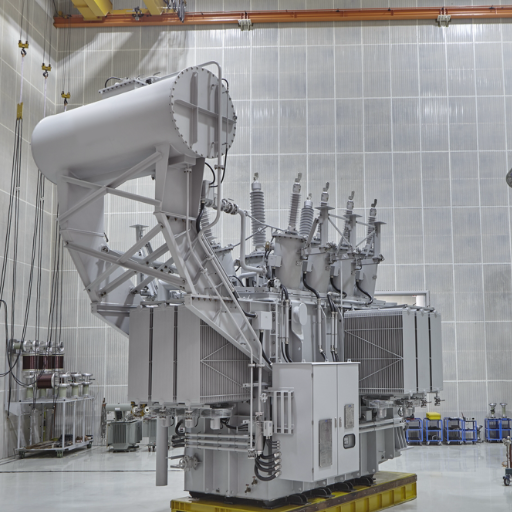
Dry type transformers need proper airflow systems which allow them to release their operational heat. Electrical rooms must deliver enough air circulation to maintain the room temperature between the transformer’s operational temperature limits. Every degree Celsius of temperature increase above the rated ambient temperature results in a transformer life expectancy reduction of about 0.5%. The electrical room maintains its long-term reliability when operators keep the temperature below 40 degrees Celsius.
Clearance requirements from NFPA 70 must be maintained for safe operation and maintenance access. Front access for terminations, side clearance for cooling airflow, and rear access for inspection should all be planned into the room layout before equipment arrives.
Vibration Isolation and Structural Mounting
Transformer cores vibrate at twice the system frequency (100 Hz or 120 Hz depending on grid frequency). This vibration transmits through the mounting structure into the building. In sensitive environments, vibration isolation pads or spring isolators should be specified between the transformer base and the housekeeping pad or structural steel.
Thermal Monitoring and Protection
Modern data center transformers should include resistance temperature detectors (RTD) or thermistors in the winding hot spot and top oil or core locations. These sensors integrate with the building management system (BMS) or data center infrastructure management (DCIM) platform to provide real-time temperature trending and alarm thresholds.
Thermal protection is not optional in high-density facilities. A transformer running 15 degrees C above nameplate temperature due to harmonic overload or blocked ventilation can lose half its insulation life. Real-time monitoring catches problems before they become failures.
When the Virginia hyperscale facility mentioned earlier retrofitted to K-13 transformers, the engineering team also installed RTD monitoring tied to the DCIM platform. The operations manager reported that within the first quarter, the monitoring identified a chiller failure trend by showing rising transformer load as cooling redundancy dropped. The early warning allowed preventive action before any IT load was at risk. Thermal monitoring turned the transformer from a silent asset into an active diagnostic tool.
Procurement Checklist for Data Center Transformers
Use this checklist when requesting quotations or evaluating supplier proposals:
- kVA Rating: Confirm total load plus 20-30% growth margin, with redundancy factored in
- Voltage Configuration: Primary and secondary voltages, including tap changer range
- K-Factor Rating: K-13 minimum for double-conversion UPS; K-20 for high-harmonic environments
- Noise Level: Maximum dB at 1 meter, referenced to NEMA ST-20 or better
- Insulation Class: Cast resin or VPI; temperature class F or H
- Redundancy Configuration: N, N+1, or 2N; specify parallel operation requirements if applicable
- Efficiency: Full-load and 50% load efficiency per DOE 2016 or EU Ecodesign
- Cooling Method: AN (air natural) or AF (air forced); confirm airflow direction and room ventilation
- Temperature Monitoring: RTD or thermistor provision; BMS/DCIM integration protocol
- Standards Compliance: IEEE 3002.8, TIA-942, NFPA 70, IEC 60076 as applicable
- Factory Testing: Routine tests per IEC 60076-1 or IEEE C57.12.01; witness testing if required
- Warranty and Delivery: Standard and extended warranty terms; delivery schedule aligned with construction timeline
A thorough checklist forces suppliers to confirm each requirement in writing and reduces the risk of specification gaps that cause problems after installation.
Conclusion
A data center transformer is not a commodity purchase. It is a mission-critical asset where specification errors have outsized consequences. The wrong K-factor leads to overheating and premature failure. The wrong redundancy architecture turns a component fault into a facility-wide outage. The wrong noise specification triggers expensive retrofits or lease violations.
The correct approach combines rigorous load analysis, honest redundancy planning, and standards-aligned specification. Start with the total facility load including IT, cooling, and auxiliary demand. Apply the appropriate growth margin. Select K-13 or K-20 ratings for any facility with double-conversion UPS. Match redundancy to the Uptime Institute tier target. Specify noise levels before procurement. And verify that every supplier proposal addresses each item on the procurement checklist.
If you are planning a new data center, expanding an existing facility, or retrofitting transformers for higher UPS density, send your facility specifications to our engineering team. We will evaluate your load profile and tier requirements and environmental constraints to provide the best data center transformer configuration which will deliver long-term operational reliability and cost benefits.