

Cast Resin Dry Type Transformers: Complete Technical Guide for Industrial Applications

The right insulation technology selection needs to happen first because it will prevent any transformer failure from shutting down your facility. The Jiangsu Province manufacturing plant experienced an oil-filled transformer fire, which destroyed on March. The incident resulted in 2.3 million dollars worth of damage, which halted production for 18 days and, most importantly, put 340 workers at risk during the night shift. The investigation found that the oil-filled unit had been improperly installed inside the building because the engineers lacked knowledge about current safety standards and building requirements.
Engineers across the world face this problem because they do not understand the distinct characteristics that different transformer technologies possess. The knowledge gap about transformer technology has found its solution through the development of cast resin dry-type transformers, which provide better fire protection and product upkeep than oil-filled transformers.
The guide explains all operational aspects of cast resin dry-type transformers while showing their best return on investment locations and describing the correct application specifications. The technical resource provides engineers with the necessary knowledge to make confident code-compliant decisions, whether they are designing new installations or assessing the need for upgrades.
What Is a Cast Resin Dry-Type Transformer?

A cast resin dry-type transformer serves as an electrical distribution system that uses epoxy resin to completely seal its transformer windings through a vacuum process that produces a solid insulation material, which does not require any liquid cooling systems or insulating liquids.
The cast resin system does not use mineral oil for insulation and cooling purposes because it depends on:
- Epoxy resin encapsulation to provide dielectric strength and moisture protection
- Air natural (AN) or air forced (AF) cooling methods
- Solid insulation that is inherently fire-resistant and self-extinguishing
The manufacturing process uses vacuum casting to create windings, which involve placing them in molds before injecting epoxy resin, while the vacuum environment eliminates all air bubbles to form a complete insulation barrier. The process developed during the 1960s has undergone multiple refinements to produce transformers that comply with IEC 60076-11 environmental and climatic and fire behavior classification standards.
SCB nomenclature explained: The designation “SCB” for cast resin transformers shows their connection to System Circuit Breaker / Cast Resin, which describes a three-phase system that uses epoxy cast insulation. The common variants of SCB10, SCB13, and SCB14 use higher numbers to demonstrate newer efficiency standards.
Cast Resin vs Oil-Filled Transformers: Critical Differences
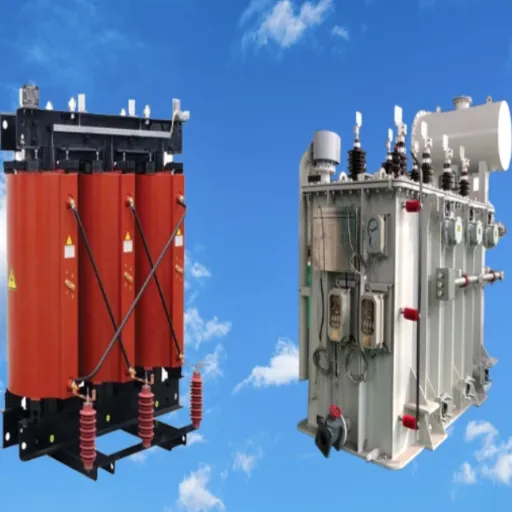
When specifying transformers for industrial or commercial installations, the basic distinctions between cast resin and oil-filled technologies must be understood because they impact both safety requirements and total ownership costs.
Fire Safety Comparison
The most significant difference between these technologies is fire safety performance. According to Allianz AG laboratory testing data, the fire load comparison for a 1000 kVA transformer is stark:
| Transformer Type | Fire Load (kWh) | Fire Class | Risk Profile |
|---|---|---|---|
| Cast Resin | 1,230 | F1 (self-extinguishing) | No pool fire risk |
| Mineral Oil | 9,030 | O (flammable liquid) | High pool fire risk |
| Silicone Oil | 6,800 | K (less flammable) | Moderate pool fire risk |
According to IEC 60076-11 testing, cast resin transformers achieve F1 fire classification because they self-extinguish fires without spreading flames. The epoxy resin insulation has a UL94 V-0 rating—when exposed to 950°C flame testing, the material extinguishes within 10 seconds after removal of the ignition source, with no flaming drips.
The fire performance of this system allows building installation without needing expensive fire containment systems, which oil-filled units require to function safely:
- The facility needs no oil containment pits or drainage systems.
- The facility needs no firewalls or blast-resistant barriers.
- The facility needs no automatic fire suppression systems dedicated to transformer protection.
- The facility experiences lower insurance costs in multiple jurisdictions.
Environmental Impact
The environmental dangers that oil-filled transformers present to the environment do not exist with cast resin transformers. The operation of mineral oil transformers introduces numerous environmental hazards, which include:
- Groundwater contamination occurs when leaks or spills occur
- Soil pollution, which requires expensive cleaning processes
- Dioxin production that happens during combustion
- End-of-life disposal processes that create difficulties
The design of cast resin units prevents any possibility of liquid leakage. The solid epoxy insulation maintains its chemical stability while both copper windings and steel cores become completely recyclable at their end-of-life. The distinction between cast resin and other materials becomes crucial for facilities situated in water source zones or environmentally sensitive regions.
Total Cost of Ownership
The total ownership expenses show cast resin transformers as the better choice when compared to their oil-filled counterparts, which need 20 to 30 years of service time.
Installation Cost Savings: The removal of oil containment systems from installation requirements results in cost reductions that range from 15,000 to 50,000 for medium-voltage installations.
Maintenance Cost Reduction: Cast resin transformers require minimal maintenance because they need no oil testing and filtering or replacement. Facility managers report 20-30% lower maintenance costs compared to oil-filled equivalents.
Space Efficiency: The installation of cast resin units allows for placement near load centers, which decreases cable lengths and their related energy losses. The urban environment enables substantial savings in real estate expenses.
Technical Specifications and Standards
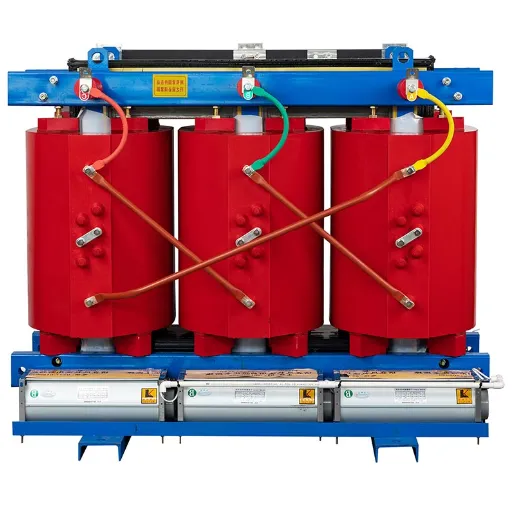
Understanding the technical specifications of cast resin transformers is essential for proper application engineering and specification writing.
Voltage and Power Ratings
Cast resin transformers come in multiple ratings to meet various operational needs.
- Power Range: The standard power range covers 50 kVA to 4,000 kVA, while special applications use units that reach 20 MVA.
- High Voltage Side: The standard operating voltage reaches 36 kV, but special designs extend to 52 kV.
- Low Voltage Side: The system provides four voltage options, which include 400V, 415V, 480V, and 690V, and users can configure these voltages according to their specific application needs.
- Frequency: 50 Hz or 60 Hz
Insulation Classes and Temperature Ratings
Cast resin transformers typically use Class F (155°C) or Class H (180°C) insulation systems:
| Insulation Class | Temperature Rating | Hot Spot Allowance | Maximum Ambient |
|---|---|---|---|
| Class F | 155°C | 100K rise | 40°C |
| Class H | 180°C | 125K rise | 40°C |
The temperature rise is measured by resistance at rated load, with the hot spot allowance accounting for the hottest point within the winding (typically 10-15°C above average winding temperature).
Environmental Classifications (C2 E2 F1)
The environmental classes defined in IEC 60076-11 determine the operational conditions for which transformers can be used.
Climatic Classification (C):
- C1: Indoor installation, minimum ambient temperature -5°C
- C2:Indoor/outdoor installation, minimum ambient temperature -25°C (tested)
Environmental Classification (E):
- E0: Clean, dry indoor environments
- E1:Occasional condensation, light pollution
- E2:Heavy condensation, severe pollution (tested with humidity cycles)
Fire Behavior Classification (F):
- F0: No fire hazard requirements
- F1:Fire-resistant, self-extinguishing, no toxic gases (950°C flame test)
The gold standard for industrial applications requires C2 E2 F1 classification because it delivers dependable performance during extreme environmental conditions while maintaining optimal fire protection.
IP Protection Ratings
Cast resin transformers come in different enclosure protection levels, which protect their internal components from external elements.
- IP20 provides standard indoor protection, which prevents finger access but does not protect against dust or water.
- IP23 provides outdoor protection because it can shield against solid objects that exceed 12mm, and it offers protection against water spraying.
- IP31 and IP33 provide extra protection that meets the requirements of challenging work environments.
- IP54 and IP55 provide complete protection against dust and water jets, which can withstand extreme environmental conditions.
Key Applications and Use Cases
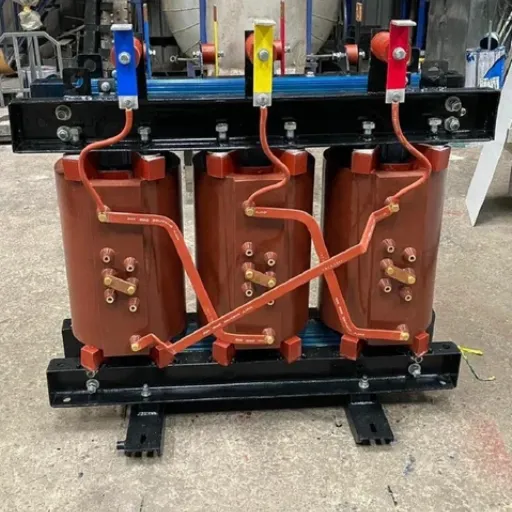
Cast resin transformers excel in applications where fire safety, minimal maintenance, and indoor installation are priorities.
Critical Infrastructure Applications
Hospitals and Healthcare Facilities
Fire safety regulations need to be followed because patients in healthcare facilities face mobility challenges and require life support equipment. The installation of cast resin transformers in electrical rooms permits direct access to patient areas because fire barriers are not necessary. The self-extinguishing properties eliminate the risk of toxic smoke from burning oil, which protects vulnerable populations.
Riverside Medical Center in Shanghai completed its electrical system upgrade project for 2024 by replacing four oil-filled units with cast resin transformers. The project eliminated their requirement for an outdoor substation, which also created 400 square meters of urban space while decreasing their insurance costs by 12%.
Data Centers and Server Rooms
Modern data centers require power distribution systems that deliver dependable services through compact equipment while maintaining low fire danger. The installation of cast resin transformers together with UPS systems enables the implementation of power distribution systems within server technical areas. The design of dry-type equipment prevents any possibility of oil leaks that could damage delicate electronic devices.
Data centers now operate with power densities of 10 to 20 kW per rack, which makes distribution transformer reliability essential for operations. The predictable failure modes of cast resin units enable risk management through thermal degradation forecasting, which leads to equipment failure.
Airports and Transportation Infrastructure
International aviation regulations now demand that terminal buildings and control towers use fire-resistant electrical equipment. Cast resin transformers meet these requirements while providing the reliability needed for 24/7 operations where downtime can affect thousands of travelers.
Industrial Applications
Manufacturing Plants
Automotive, textile, and food processing plants use cast resin transformers because these transformers can handle the production environment conditions, which include vibration, dust, and periodic washdown. The sealed resin encapsulation prevents contamination ingress that would degrade conventional open-wound dry-type units.
Chemical and Petrochemical Facilities
Cast resin transformers provide safe operation in locations that have corrosive atmospheric conditions or potential explosion hazards. The systems function properly in Zone 2 hazardous areas because they do not contain any flammable liquids, which oil-filled units require to use protective equipment.
Mining and Underground Operations
Oil-filled transformer failures become more dangerous because underground spaces restrict access to equipment. The mining industry uses cast resin units in substations and tunnel boring machines, and underground railway systems, because these areas require fire safety and have restricted air flow.
Marine and Offshore Applications
Offshore platforms and ships need equipment that can withstand salt spray, humidity, and vibration while providing fire protection. The marine environment standard uses cast resin transformers, which have C2 E2 F1 classification because these units can operate without issues for more than 25 years in extreme marine conditions.
Renewable Energy Integration
Wind Farm Substations
Wind energy applications now utilize cast resin transformers at both turbine nacelles and collection substations. The technology withstands the variable loading conditions, temperature cycling, and remote location challenges that are present in wind power operation.
The 200 MW project in Inner Mongolia required 36 cast resin transformers for their wind farm development, which started in 2024. The units were selected for their ability to handle harmonic-rich power from modern doubly-fed induction generators without overheating.
Solar PV and Energy Storage
Solar inverter stations and battery energy storage systems (BESS) require compact transformer designs that provide fire safety through cast resin transformers. The utility-scale solar projects that operate on 1500V DC architectures demonstrate dependable performance with outdoor cast resin transformers that function under extreme temperature variations.
Green Hydrogen Production
Electrolysis plants for hydrogen production require large rectifier transformers, which typically start at 8000 kVA and go up. The indoor installation of explosive hydrogen atmosphere control systems requires cast resin rectifier transformers as the preferred solution.
Maintenance Requirements and Testing
While cast resin transformers are often marketed as “maintenance-free,” proper engineering practice requires understanding their actual maintenance needs and diagnostic capabilities.
Routine Inspection Schedule
Annual Visual Inspection:
- Check for dust accumulation on winding surfaces
- Inspect for physical damage to enclosures or bushings
- Verify that all cooling airways maintain their full operational capacity
- Test all temperature monitoring systems to verify their accurate functionality
- Check torque on bus connections (typically 20-40 Nm for winding clamps)
Cleaning Procedures:
Use clean, dry compressed air (maximum 3 bar) to remove dust from windings. The following cleaning materials must be avoided:
- Wet cloths or cleaning solvents that could compromise insulation
- Abrasive materials that could damage resin surfaces
- High-pressure water jets (unless an IP55 enclosure rating is present)
Environmental Considerations:
In high-pollution or dusty environments, cleaning must occur every six months. The transformer requires 12 hours of no power before operators can apply full load after storage lasting more than three months or after transportation.
Partial Discharge Testing
The primary testing method used to diagnose cast resin transformers depends on partial discharge PD testing. The dissolved gas analysis DGA method, which works for oil-filled units, needs different methods to diagnose faults in cast resin transformers.
Why PD Testing Matters:
The most common failure mode in cast resin transformers is electrical breakdown of the cast resin insulation between turns or winding parts. PD activity proceeds through its active state until it reaches full insulation breakdown, resulting in advanced detection of material loss.
Testing Standards and Acceptance Criteria:
- IEC 60076-11: Specifies PD measurement procedures
- Acceptance Level: ≤10 pC (picocoulombs) for equipment with highest voltage (Um) > 3.6 kV
- Test Voltage: The test voltage requires the application of 1.3 times the rated voltage for a duration of 60 seconds.
Key PD Parameters:
- PD Inception Voltage (PDIV): The point at which partial discharge begins occurs when the voltage hits this designated level.
- PD Extinction Voltage (PDEV): The point at which PD stops when the voltage decreases.
Power systems need PDEV values that operate safely at 20% above the voltage limit. The transformer requires immediate replacement when PDEV drops below the operating voltage threshold, which equals 0.6 times Un.
Testing Challenges:
Industrial facilities need advanced equipment that enables them to execute PD testing while using noise suppression techniques to separate PD signals from electromagnetic interference. Modern PD analyzers use 3PARD/3CFRD representations to separate PD from background noise.
Electrical Testing Schedule
| Test | Frequency | Minimum Acceptable Values |
|---|---|---|
| Insulation Resistance | Annually or after maintenance | LV-Earth: 5 MΩ; HV-Earth: 20 MΩ; HV-LV: 20 MΩ |
| Transformation Ratio | Every 5 years | Within 0.5% of the nameplate |
| DC Winding Resistance | Every 5 years | Balance within 2% between phases |
| Power Frequency Withstand | Every 5 years or after exceptional events | Per IEC 60076-3 |
Warning Signs and Troubleshooting
Temperature Monitoring:
Modern cast resin transformers include PT100 or PTC temperature sensors embedded in windings. Monitor for:
- Gradual temperature increases indicate insulation aging
- Sudden spikes suggesting overloading or cooling blockage
- Alarm/trip verification quarterly
Replacement Criteria:
- PD levels exceed 100 pC
- PD extinction voltage falls below the operating voltage
- Insulation resistance values fall below minimums consistently
- Physical damage to windings or bushings
- After short-circuit events exceeding the withstand ratings
Selection Guidelines for Engineers
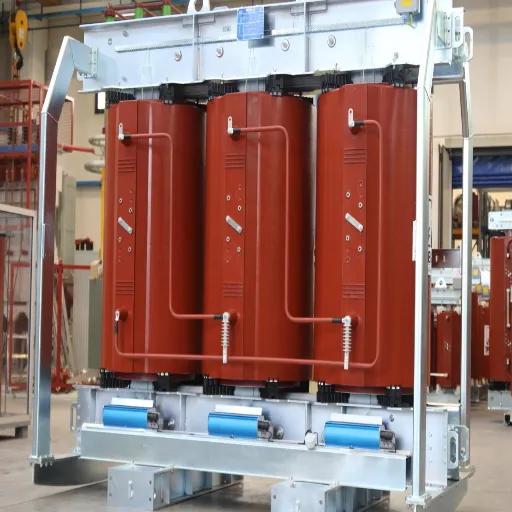
Specifying the correct cast resin transformer requires systematic evaluation of electrical, thermal, and environmental factors.
Load Profile Analysis
Continuous and Intermittent Loads:
Cast resin transformers can endure high overloads that last short durations because their units with forced air cooling (AF) can handle 150% overload for 2 hours and 200% overload for 30 minutes. The insulation material will experience a faster aging process because the system operates continuously at levels that exceed its designated power capacity.
Harmonic Content Assessment:
The combination of non-linear loads, which include VFDs and UPS systems, and LED lighting creates harmonic currents that lead to extra transformer winding temperatures. The following specifications must be provided for loads that have Total Harmonic Distortion (THD) values greater than 5%:
- K-rated transformers with oversized neutral conductors
- Derating factors (typically 10-20% for THD 5-15%)
- Harmonic filters upstream of the transformer
Future Expansion Planning:
Transformers should be specified with 20-30% spare capacity to support upcoming load demands. The absence of oil in cast resin transformers prevents oil degradation but the insulation system will experience damage from thermal cycling, which results from changing load conditions.
Installation Requirements
Ventilation and Cooling:
- Natural Air (AN) cooling: The system needs open air routes, which need 100mm space between the unit and any surrounding objects.
- Forced Air (AF) cooling: The system needs to provide fan maintenance access points, which should include backup cooling systems that protect critical operations.
- Cooling air temperature: The system maintains a maximum cooling air temperature of 40°C, which derates at 0.5% for every degree of temperature increase above 40°C.
Clearance Requirements:
The system needs to keep all required spaces according to both manufacturer requirements and the electrical standards set by local authorities.
- Front: The system requires a 1-meter space that needs to be unblocked for both operational activities and maintenance work.
- Sides/Rear: The system needs to follow the IP rating standards for all side and rear spaces.
- Top: The system needs at least 300mm of space above its structure to enable effective heat dissipation.
Vibration Isolation:
Vibration-isolating mounting pads should be used in industrial locations that experience high levels of vibration that occur near crushers and mills, and forging equipment. Normal industrial vibration can be handled by cast resin transformers with standard mounting. The system needs special mounting for extreme vibration conditions.
Integration Considerations
Vector Group Selection:
The most common vector group for cast resin distribution transformers is Dyn11:
- Primary (HV) connected in Delta
- Secondary (LV) connected in wye with neutral brought out
- 30° phase shift between HV and LV
This configuration provides:
- Third harmonic suppression
- Neutral availability for single-phase loading
- Ground fault current path
Parallel Operation:
When operating transformers in parallel, ensure:
- Identical vector groups
- Voltage ratios within 0.5%
- Impedance values within 10%
- Proper circulating current management
Market Trends and Future Outlook
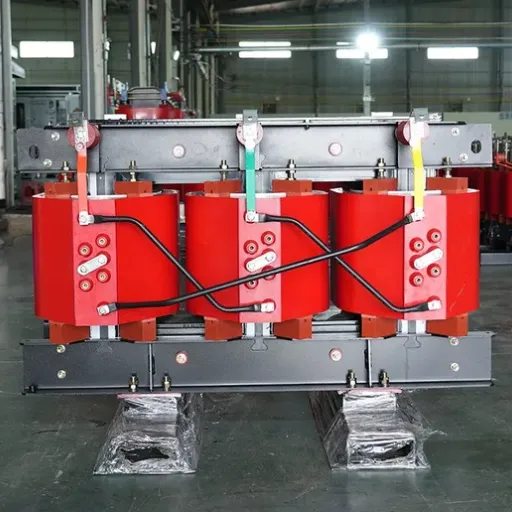
The cast resin transformer market is experiencing robust growth driven by urbanization, renewable energy expansion, and increasingly stringent safety regulations.
Market Size and Growth
Allied Market Research reports that the worldwide cast resin dry type transformer market had a valuation of 4.6 billion in 2024, which will expand to 8.7 billion by 2034 through a 6.7 percent compound annual growth rate.
Market Distribution by Region:
- Asia Pacific: 46-47.8% market share (China and India leading growth)
- Europe: 1.1billion(2025)→1.1billion(2025)→2.6 billion (2034) at 9.8% CAGR
- North America: The data center industry growth provides consistent market expansion.
Key Growth Drivers
Urbanization and Infrastructure Development:
The construction of high-rise buildings, together with metro systems and smart city projects, needs indoor installation of compact fire-safe transformers that serve electrical loads. Cast resin technology is increasingly specified for these applications.
Renewable Energy Integration:
Wind and solar power implementation needs distribution transformers that can handle changing loads and harmonics while providing dependable service in distant areas. Cast resin units are preferred for their maintenance-free operation in hard-to-access installations.
Safety and Environmental Regulations:
Stringent fire codes in many jurisdictions now effectively mandate cast resin transformers for indoor installations. Environmental regulations that limit mineral oil usage lead to an accelerated transition from oil-filled transformers toward cast resin designs.
Grid Modernization:
Worldwide electrical infrastructure replacement programs, which deal with aging systems, now choose modern cast resin transformers because these systems provide extended service life and require less maintenance.
Emerging Technologies
Smart Transformer Monitoring:
The system uses IoT sensors to monitor three parameters, which include temperature and partial discharge, and load measurements, to support predictive maintenance and efficient asset management.
Higher Efficiency Standards:
The implementation of new efficiency regulations, which resemble the DOE 2016 standards in the United States, has led to transformer manufacturers using amorphous core technology together with optimized winding designs, which achieve a 30 to 50 percent reduction in no-load losses when compared to traditional transformer designs.
Bio-Based Resins:
Researchers study epoxy resins that come from renewable sources to create eco-friendly solutions for cast resin transformers, which maintain fire protection and electrical performance found in traditional petroleum-based products.
Conclusion
Cast resin dry type transformers represent a mature and proven technology that meets the essential safety and operational needs of contemporary electrical power systems. The system provides optimal indoor operation because it requires no maintenance and protects against fire hazards and environmental impacts.
Key takeaways:
- Cast resin transformers achieve F1 fire classification, which eliminates the pool fire risks associated with oil-filled units.
- C2 E2 F1 environmental classification ensures reliable operation in harsh industrial conditions
- Other technologies lack the predictive diagnostic capability that partial discharge testing provides.
- Total cost of ownership often favors cast resin despite higher upfront costs.
- Market growth exceeding 6% annually demonstrates an increasing need for safer and regulatory-compliant systems.
Are you prepared to choose cast resin transformers for your upcoming project? The Shandong Electric Co., Ltd. provides comprehensive support from initial specification through commissioning, ensuring your installation meets all technical requirements and safety standards. Contact us to discuss your specific application requirements and receive a detailed technical proposal.
The facilities that still operate oil-filled transformers in indoor spaces now face the decision of when to transition to cast resin technology. The case for cast resin dry type transformers stands stronger than ever concerning safety and environmental protection, and economic advantages.