
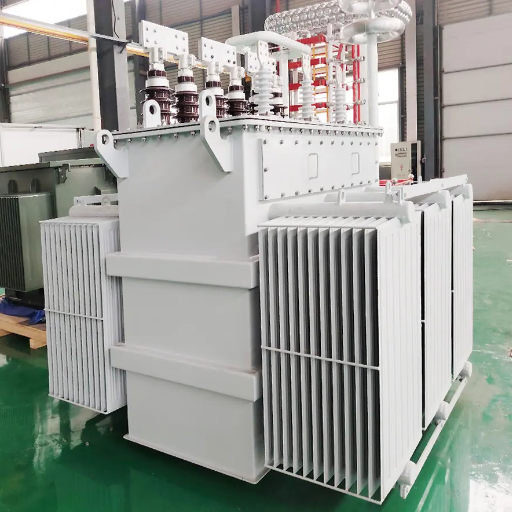
BESS Transformer RFQ Checklist: PCS and MV Responsibilities

A BESS transformer RFQ needs one controlled document package. Define its AC terminal boundaries, operating duty, supplier responsibilities, test evidence, and exclusions.
Name who supplies each input and who reviews it. Who closes the open items? Assign that role before award.
Two offers can name the same transformer while pricing different work. Illustrative scenario: one bidder quotes a transformer; another quotes an assembled medium-voltage package. Their headings look alike, but their cable, control, and site-work lines differ. You can’t compare those headlines alone.
This checklist turns that problem into fields you can review. For the wider equipment decision, use our BESS transformer selection guide.
Key Takeaways
- Mark the physical terminals and the point where performance will be measured.
- Request PCS data for the proposed configuration and operating cases.
- Separate design, supply, installation, testing, and acceptance duties.
- Record open assumptions and exclusions before comparing bids.
Preparing a BESS transformer RFQ? Send your single-line drawing and PCS data with the scope you want quoted.
Define the BESS transformer RFQ boundary
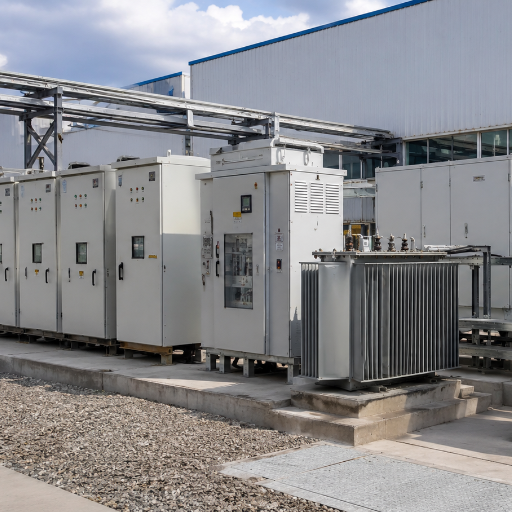
Mark physical and performance boundaries
Begin with a single-line diagram showing the battery energy storage system (BESS), power conversion system (PCS), transformer, and grid connection. Mark low-voltage (LV) and medium-voltage (MV) terminals. Give each interface an ID. Use that ID in the cable schedule, drawing, and quotation.
Use this conceptual chain to check the BESS transformer RFQ boundary:
Battery DC terminals → PCS AC terminals → LV connection → transformer → MV connection → collector system → grid point of interconnection.
This is a procurement map, not an installation drawing. Actual arrangements may differ. Add the project voltage and terminal IDs to the approved single-line. The chain is not a standard layout.
Your BESS transformer RFQ also needs a clear performance boundary. Is a power or loss figure stated at PCS terminals, transformer terminals, or the grid point? Which auxiliary loads sit inside that boundary?
Put the answer in the BESS transformer RFQ. Ask bidders to state the measurement point. Put it beside each offered value.
Separate a block package from the grid substation
Package names don’t define included equipment. SMA’s November 26, 2025 MVPS announcement describes a specific arrangement with two inverters, two transformers, and one MV switchgear. Those counts describe that product, not a default BESS bill of materials.
SMA’s May 21, 2026 Metelen announcement separately identifies MV power stations and a 110 kV substation. Draw a line between the block equipment and the wider grid system. That is the useful distinction. An MV package label does not establish who supplies the grid substation.
In the opening illustrative scenario, require both bidders to mark their included terminals on the same drawing revision. Shade excluded work separately. Ask whether factory wiring stops at a gland plate, terminal block, or equipment bushing. Then identify who completes the next connection.
Attach that marked drawing to the BESS transformer RFQ response. A sales sketch can explain an offer. It should not replace the agreed scope drawing without review.
Resolve conflicting boundary notes in a written clarification returned to every bidder. Ask each bidder to list its attached drawings in the response. A drawing title without its issue number leaves the review basis unclear.
Collect the BESS transformer RFQ data package
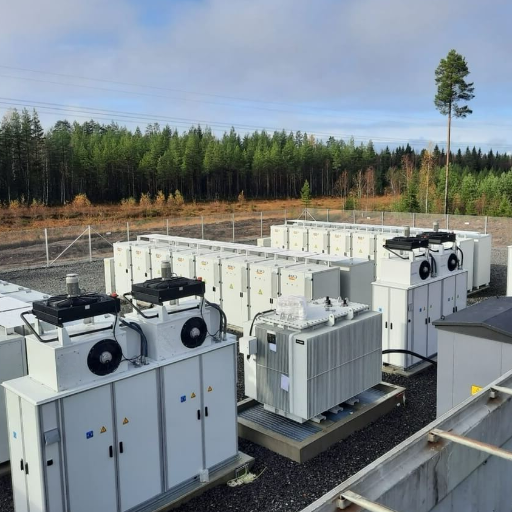
PCS and operating-case inputs
A battery MWh figure describes stored energy; it does not specify the complete transformer duty. Ask for the proposed PCS model and configuration.
Request its AC ratings and operating cases too. Include charging, discharging, standby, and the required active and reactive power combinations. Label active power P and reactive power Q in the schedule.
Use the BESS transformer sizing worksheet to organize those cases. Keep detailed sizing calculations with the project designer.
Which cases did each bidder use? Show them in the BESS transformer RFQ. Include limits on P and Q supplied at the same time.
Request current waveform or harmonic-spectrum data. State the operating point and test conditions for each set. A headline distortion figure does not describe every operating case. Our PCS harmonic data requirements explain what to exchange for transformer review.
The VINLEC/DNV scope document, section 6.4.2, provides a project-specific example: it requests inverter test data for the proposed BESS configuration and modeling information. Request evidence that fits your project. Don’t copy another owner’s settings.
Transformer, grid, and site inputs
Build a BESS transformer RFQ data schedule. Give the provider and reviewer separate columns:
| Input group | Information to request | Provider and review to name |
|---|---|---|
| PCS duty | Model, AC voltage, frequency, P/Q envelope, duty profile, waveform conditions | PCS supplier; transformer designer and system engineer. |
| Transformer | Winding arrangement, grounding constraints, impedance basis, taps, cooling, declared losses | Project designer and bidder; system engineer. |
| Grid interface | Connection requirements, fault-study inputs, protection constraints, measurement boundary | Grid engineer or utility interface lead; authorized project reviewer. |
| Site conditions | Ambient range, altitude, environment, enclosure, access, noise requirements | Owner or site designer; equipment suppliers. |
| Auxiliaries | Feed source, voltage, operating demand, standby supply, boundary | Package suppliers; electrical and controls designers. |
Don’t fill unknown fields with generic values. Ask for the source of each proposed value.
Add the drawing or datasheet revision. Make the source easy to trace. For losses, request the stated reference conditions and the equipment included in the figure.
Log unknowns with an owner
Keep an open-input register beside the BESS transformer RFQ. For example: input, final PCS waveform data; reason, thermal review pending; provider, PCS supplier; reviewer, transformer designer; required by, agreed design-release milestone. Record the assumption used in the quote. Ask how it could affect rating, price, or schedule.
Close the row with a document revision and reviewer decision. If the input stays open, keep the offer conditional. Ask what must be rechecked. A blank field with an owner is easier to resolve than a guess hidden in a quote.
Assign PCS, transformer and MV package responsibilities
Separate the work verbs
A supplied cable is not necessarily an installed, terminated, and tested cable. Use distinct responsibility fields for design, supply, installation, configuration, testing, and acceptance. Name one integration lead to resolve issues between suppliers. Confirm the role in the agreed contract scope.
Do not assume the engineering, procurement, and construction (EPC) contractor owns every interface. Nor should a BESS transformer RFQ assume that a package supplier performs every site task. Use the matrix below to review the scope. Each party must fill in and accept its roles.
Return a responsibility matrix with the bid
For each BESS transformer RFQ row, record these seven fields: interface or deliverable; input/design provider; supply scope; install/configure scope; reviewer/acceptance owner; document revision or criterion; exclusions/open status. The grouped schedule below shows what those rows should cover.
| Interface or deliverable | Input/design to identify | Supply and site duties to separate | Review or closure evidence |
|---|---|---|---|
| Single-line and terminals | System designer; supplier terminal details | Drawing issue; boundary marking | Approved revision and interface IDs. |
| PCS capability and duty | PCS supplier; owner operating cases | PCS scope; control configuration | Cross-reviewed data package. |
| Transformer specification | Project engineer; transformer designer | Transformer and accessories; site assembly | Reviewed datasheet and drawings. |
| MV gear and protection | System protection designer; gear supplier | Switchgear; relay configuration | Approved study and settings records. |
| LV cables or bus | Cable designer; terminal data from both suppliers | Supply; routing; both-end termination; tests | Cable schedule and test records. |
| MV collector connection | Collector designer; package terminal data | Cable; joints; termination; testing | Boundary drawing and records. |
| Grounding and bonding | Site grounding designer; equipment details | Grid; bonds; connections; verification | Approved design and site evidence. |
| Current/voltage transformers and metering | Protection and metering designers | Instruments; wiring; configuration | Schematics and verification records. |
| Auxiliary feeds and UPS | Load data from each supplier | Feeds; uninterruptible power supply; wiring | Load schedule and functional evidence. |
| Communications and time sync | Controls lead; equipment signal lists | Network devices; cables; configuration | Signal map and integration checks. |
| Foundations and access | Civil designer; equipment loads | Foundations; lifting; containment; access | Drawings and site acceptance. |
| Models and studies | PCS and transformer data owners | Model delivery; study execution | Versions and reviewer decision. |
| Factory tests and witnessing | Equipment suppliers; project test lead | Procedures; tests; witness support | Agreed reports and hold points. |
| Site tests and energization | Site test lead; authorized operating parties | Site checks; coordination; authorization | Approved procedures and signoffs. |
| Handover | Each supplier; integration lead | Spares; training; manuals; as-builts | Accepted deliverable register. |
Split grouped cells into rows when different contractors own the work. Who sets the protection rules?
Who calculates and loads settings? Name who approves the result. This checklist does not prescribe settings or authorize energization.
For control interfaces, spell out the energy management system (EMS), battery management system (BMS), and supervisory control and data acquisition (SCADA) boundaries. Name who supplies each signal list and maps commands. Assign who checks time sync and signs the system check. Show how auxiliary feeds work at startup and in standby.
Close exclusions and dependencies
Illustrative scenario: the PCS bidder excludes external LV termination, while the transformer bidder includes only its terminal hardware. Add a BESS transformer RFQ clarification row naming both connection ends, the required design input, installation party, test record, and acceptance owner. Request revised inclusions before closing the row.
Entergy’s BESS BOT Scope Book, revision 25-2, sections 3.5.1 and 3.5.2, illustrates explicit seller/buyer communications duties. Those are that owner’s allocations, not universal rules. For enclosure, lifting, and transport questions, consult our container substation procurement guide.
Ask each bidder to return the completed BESS transformer RFQ matrix with exceptions. A blank cell needs an answer. Don’t assume another party has included the work.
Agree the test evidence and handover milestones
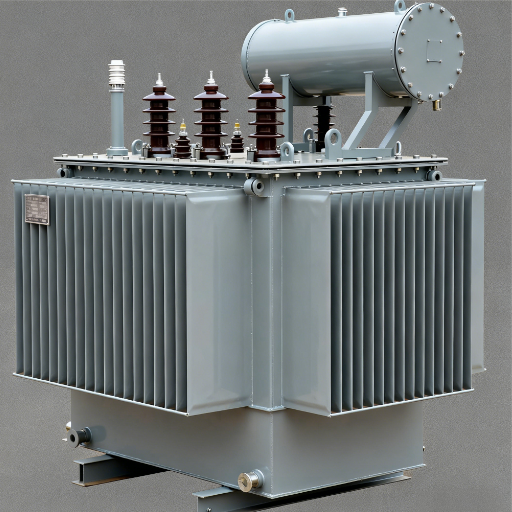
Factory documents and interface review
A factory report and a plant operating test answer different questions. Define factory acceptance testing (FAT) and site acceptance testing (SAT) by their actual scope. Neither label is a blanket approval.
The BESS transformer RFQ should request a document schedule before test dates become commitments. List the procedures and rules that apply. Add equipment IDs, witness plans, and review hold points.
Which reports cover the delivered unit? Which describe a tested model or configuration? Ask the supplier to mark the difference.
For example, Entergy’s scope book separates commissioning, performance verification, and other compliance tests in sections 7.2 through 7.4. That structure supports separating evidence categories; its detailed clauses remain project-specific. A transformer test report alone should not be presented as proof of complete plant acceptance.
Match site evidence to the agreed boundary
Use this BESS transformer RFQ evidence map to frame the project test plan:
| Acceptance question | Evidence to request | Boundary and owner to identify |
|---|---|---|
| Does the delivered equipment match the order? | Approved datasheets, drawings, identifiers, applicable factory reports | Equipment supplier; buyer reviewer. |
| Are adjoining interfaces consistent? | Cross-reviewed terminals, cable data, protection and control drawings | Integration lead; affected designers. |
| Do protection and SCADA functions match the approved scheme? | Project-approved functional procedures and results | Site test lead; authorized acceptance parties. |
| Is agreed plant performance demonstrated? | Boundary-specific procedure, conditions, measurement records | Performance-test lead; owner signoff. |
| Is handover complete? | As-builts, settings records, manuals, training and punch register | Integration lead; owner representative. |
Do not infer whole-system transfer behavior from a PCS feature alone. Does the project need backup or island operation? Ask the system engineer to define the sequence and evidence. Cover controls, protection, switching, and auxiliaries together.
Have the project team approve the BESS transformer RFQ witness plan before award. Record who arranges access and who attends.
State what pauses shipment or energization. Name who can release each hold point. These are commercial and technical responsibilities to agree, not evidence that any supplier offers site commissioning.
Close handover items explicitly
Keep unresolved items visible in the punch register. State the item and the party that owns it.
Add the acceptance rule, due milestone, and closure evidence. Have an authorized project reviewer assess any limits. An open item is not permission to proceed.
Link the final BESS transformer RFQ deliverable register to the approved equipment and software revisions. Has a configuration changed? Ask which drawings, models, studies, or tests need review. A signature on an old revision does not explain a later change.
Normalize bids before comparing price
Put equipment and site services on separate lines
Check that each offer meets the technical needs. Then compare offers on a common scope.
Use separate lines in the BESS transformer RFQ comparison sheet. Cover the transformer, PCS, MV gear, auxiliaries, wiring, civil work, studies, factory evidence, and site services. Ask for inclusions and exclusions in each row before ranking headline prices.
Illustrative scenario: Bid A covers a transformer; Bid B covers an assembled package. The following entries are invented scope examples, not actual supplier offers or evidence of costs.
| Comparison line | Bid A: transformer offer | Bid B: package offer | Clarification needed |
|---|---|---|---|
| Transformer | Included | Included | Match technical basis. |
| PCS and MV gear | Excluded | Included | Separate equipment scope. |
| Package auxiliaries | Open | Included | Identify feed boundaries. |
| Internal wiring | Transformer accessories only | Package wiring included | Mark both terminal limits. |
| External cables and site works | Excluded | Open | Allocate and obtain prices. |
| Studies and acceptance support | Open | Open | Name deliverables and parties. |
Neither headline establishes the better bid. Send every bidder the same clarification schedule. Request revised offers and keep unpriced work visible. Don’t invent a monetary allowance to make unmatched totals look comparable.
Check the basis behind each offered value
The BESS transformer RFQ should request a loss schedule with matched reference conditions and scope. Use our guide to compare BESS transformer losses across the operating profile.
Does the loss figure cover only the transformer? Does the package figure include auxiliary demand? Keep those scopes clear.
Track what each delivery milestone depends on. Include input release, drawing approval, manufacturing, tests, shipping, and site readiness. Ask bidders to identify what starts each milestone. Do not turn a conditional schedule into an unconditional delivery promise in the comparison sheet.
Keep the deviation register tied to the BESS transformer RFQ revision. Record the offered alternative and its technical effect. Add the commercial effect, reviewer, and accepted closure document.
Do the datasheet, quotation, and clarification agree? Resolve conflicts in writing. Don’t choose the most favorable wording and leave the conflict open.
Before recommending award, check the scope revision. Use the same one for technical acceptance and commercial comparison. Record unresolved differences beside the BESS transformer RFQ decision.
A clear exception is more useful than an apparently complete total with undefined work beneath it. When an owner supplies an excluded item, record that decision and its source. Keep supplier data and site dates in the schedule. Show how and when the excluded work will be closed.
BESS transformer RFQ questions and submission checklist
Can I send only the battery MWh rating?
No. Include the PCS AC ratings, charging and discharging cases, reactive-power requirements, voltage, frequency, and site conditions. Battery energy alone does not define the transformer duty. If those inputs are incomplete, identify the missing provider and keep any preliminary quotation conditional on technical review of the final data.
Does an MV skid include the grid substation?
Only if the agreed scope includes it. An MV skid or power station name does not define the full grid connection. Ask for a marked single-line, equipment list, terminal limits, and exclusions. In the BESS transformer RFQ, identify who supplies the collector network, separate grid substation, protection, metering, and associated site work.
Who approves PCS-to-transformer compatibility?
Name the reviewer in the responsibility matrix rather than assuming a universal party. The PCS supplier provides configuration and operating data; the transformer designer reviews the transformer against those inputs. The named system engineer or integration lead brings supplier and grid needs together. The project defines that role’s authority.
Does FAT replace integrated site acceptance?
No blanket substitution should be assumed. FAT covers the equipment and configuration identified in its procedure.
Integrated site acceptance addresses the installed system and the agreed project functions. Specify both scopes, acceptance rules, witness needs, and signoff parties. A factory report is not complete plant evidence.
What if PCS data is still missing?
List the missing data, its provider, reviewer, and required-by milestone in the open-input register. Ask the bidder to state its interim assumption and what changes could affect rating, price, or schedule. Keep the BESS transformer RFQ offer conditional until the responsible reviewer accepts the final input and any resulting revisions.
Package the inquiry for review
Before sending your BESS transformer RFQ, assemble:
- The single-line revision, terminal boundaries, and equipment list.
- PCS datasheets, operating cases, waveform evidence, and site conditions.
- The responsibility matrix, including site work and controls.
- The document schedule, test boundaries, and witness arrangements.
- Open assumptions, exclusions, deviation forms, and commercial milestones.
Return to the illustrative bid comparison: the inquiry is ready when each bidder can show what it priced and what remains open. Keep the accepted clarification with the purchase scope. Don’t rely on a meeting recollection to define an interface.
To discuss your BESS transformer RFQ, send the project specification through our contact page. Include the drawing revision, PCS information, site conditions, and proposed responsibility split so the requested supply scope is clear.
SMA’s January 2021 manufacturer tour is a dated package overview for architectural context. Use it for package context only. It does not specify your BESS project or show an Eilite-supplied package.