
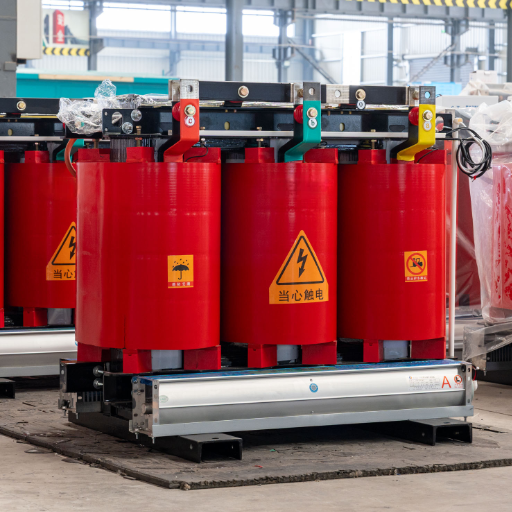
Maintenance Free Dry Transformer: What’s Real, What’s Marketing

Yes, a dry-type transformer is effectively maintenance-free compared to an oil-immersed unit. It eliminates every oil-related task: no sampling, no dissolved gas analysis, no filtering, no leak repairs. But “maintenance free” does not mean zero attention. A few simple checks still protect your investment.
That distinction matters more than most buyers realize. When a facilities manager named Daniel took over a 12-story commercial building in 2024, he inherited two 1000 kVA cast resin transformers. The previous team had installed them and then ignored them for six years. “The datasheet said maintenance-free,” he told us.
An infrared scan during commissioning of a new chiller revealed a loose connection running 40°C hotter than its neighbors. A $200 torque check during a scheduled shutdown fixed it. Left alone, that connection would have eventually failed and taken the building’s main distribution board down with it.
The promise of a maintenance free dry transformer is real. The marketing shortcut is not. In this guide, you will learn exactly which maintenance tasks dry type designs eliminate, which minimal care still applies, how your installation environment changes the answer, and what to specify so your unit actually delivers on the low-maintenance promise.
Key Takeaways
- Dry type transformers eliminate 100% of oil-related maintenance: sampling, dissolved gas analysis, filtering, and leak repair.
- “Maintenance free” means minimal care, not zero care. Visual inspections, cleaning, and annual connection checks still apply per IEEE C57.94.
- Environment decides everything. A clean indoor electrical room approaches true zero-touch operation; a dusty or coastal site does not.
- Well-maintained dry units last 25-35 years. Neglected ones can fail in 10-15.
- Correct specification (IP rating, insulation class, partial discharge level) is what makes low maintenance possible in the first place.
What Is a Maintenance Free Dry Transformer?
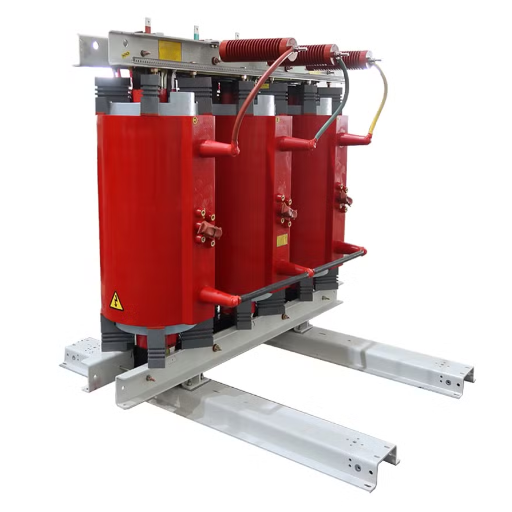
A maintenance-free dry transformer is a dry type transformer, usually cast resin, designed to operate without the routine fluid maintenance that oil immersed transformers require. Its windings are vacuum-cast in epoxy resin, sealing them against moisture and contaminants, so there is no insulating liquid to test, filter, or replace.
The term describes a category of design, not a promise of zero upkeep. Two construction types dominate the market:
Cast resin transformers encapsulate each winding in epoxy resin under vacuum. The result is a solid, void-free insulation system with very low partial discharge levels. Moisture, dust, and most chemicals cannot reach the conductor. This is the design most people mean when they say maintenance-free dry transformer.
VPI (vacuum pressure impregnated) transformers impregnate windings with varnish or resin but leave them more exposed to the surrounding air. They cost less and suit clean, climate-controlled rooms, but they need more frequent cleaning in harsh environments.
For a deeper look at construction, ratings, and selection, see our three-phase dry type transformer guide.
Why Dry Type Transformers Eliminate Oil Maintenance
To understand what “maintenance free” removes, look at what an oil immersed transformer demands over its life. Oil is both coolant and insulation, and it degrades. A responsible owner must manage:
- Annual oil sampling to check moisture, acidity, and dielectric strength
- Dissolved gas analysis (DGA) to detect developing faults inside the tank
- Oil filtering or replacement when test results decline
- Leak inspection and repair across gaskets, valves, radiators, and welds
- Breather and conservator service to keep moisture out of the oil
- Environmental containment and eventual oil disposal under local regulations
A dry type transformer eliminates every item on that list. There is no fluid to sample, no tank to leak, no breather to service, and no contaminated oil to dispose of. The maintenance budget for the insulating system drops to nearly zero.
Two secondary benefits come along for free. Fire risk falls dramatically because cast resin is self-extinguishing and there is no flammable liquid, which is why dry units are the default choice for occupied buildings under standards like IEC 60076-11. And environmental risk disappears: no spill can contaminate soil or groundwater.
Comparing options for a real project? Send us your voltage, kVA, and installation environment, and our engineering team will tell you honestly whether dry type or oil immersed fits better.
Are Dry Type Transformers Really Maintenance Free?
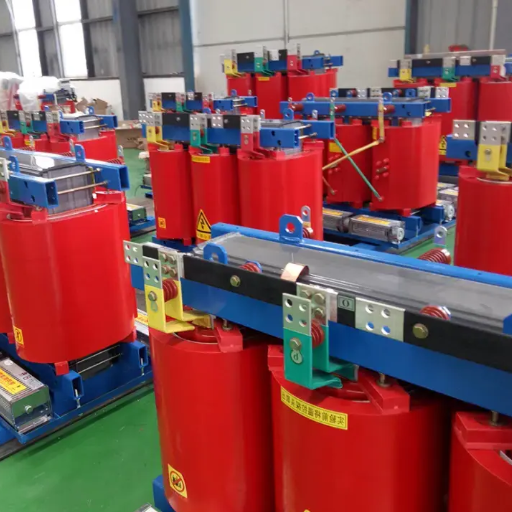
Here is the honest answer: dry type transformers are maintenance-free from oil, not from physics. They need far less attention than oil units, but a small amount of scheduled care is what turns a 15-year transformer into a 30-year transformer.
The governing reference is IEEE C57.94, the recommended practice for installation, operation, and maintenance of dry type transformers. ABB’s dry type transformer design and maintenance documentation points to the same standard. Based on these sources, the realistic minimal-care list looks like this:
- Visual inspection (monthly to quarterly). Check for unusual noise, odor, discoloration, or dust buildup. Confirm cooling fans run and ventilation openings stay clear.
- Cleaning (annually, or more often in dusty sites). Vacuum windings and cooling ducts, or use dry air below 25 PSI. Dust acts as a thermal blanket and traps moisture.
- Infrared thermography (annually). A thermal scan catches loose connections long before they fail. Industry experience shows IR scans detect the large majority of connection problems early.
- Insulation resistance testing (annually or after long outages). Moisture is the number one enemy of dry insulation. A simple megohmmeter test confirms winding health.
- Connection torque check (every few years). Terminals loosen under thermal cycling. A scheduled torque check during a shutdown prevents hot spots like the one Daniel’s team found.
That is the complete list. No fluid handling, no chemistry, no containment systems. For the full schedule with test intervals and cost guidance, read our article on dry type transformer maintenance schedules and costs.
How Environment Changes the Answer
“Maintenance-free” is conditional on where the transformer lives. Consider two real-world contrasts:
A data center operator in Northern Europe installed cast resin units in a filtered, climate-controlled electrical room in 2019. Seven years later, the maintenance log shows little beyond annual IR scans and one cleaning cycle. That installation is about as close to truly maintenance-free as electrical equipment gets.
A cement plant in Southeast Asia installed similar units near a grinding line in 2021. Within 18 months, conductive dust coated the windings and cooling ducts. Surface tracking appeared, and the plant faced an unplanned outage for deep cleaning.
The transformer was not defective. The environment simply demanded quarterly cleaning that nobody scheduled. After the site adopted a quarterly vacuum routine and upgraded the enclosure, the units returned to trouble-free service.
The lesson: in clean indoor rooms, dry type transformers approach zero-touch operation. In dusty, humid, coastal, or corrosive environments, they are still far lower maintenance than oil units, but “free” becomes “occasional.”
Maintenance Free Dry Transformer vs Oil Immersed: Lifetime Comparison
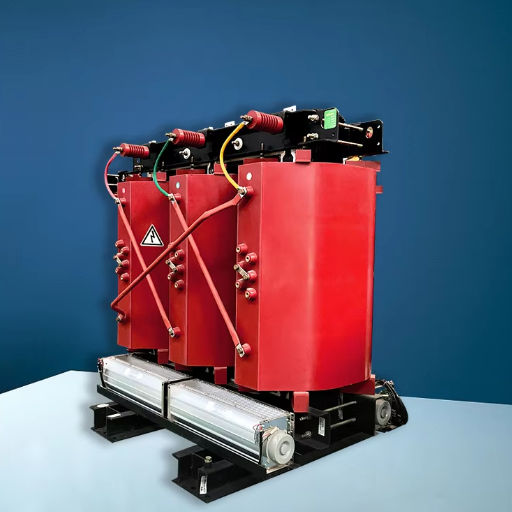
Buyers rarely ask about maintenance in isolation. The real question is total cost and risk over 20-30 years. Here is how the two designs compare:
| Factor | Maintenance-Free Dry Transformer | Oil Immersed Transformer |
|---|---|---|
| Oil sampling, DGA, filtering | Not required | Annual or more |
| Leak and gasket service | Not applicable | Routine |
| Fire risk | Very low (self-extinguishing resin) | Higher (flammable oil) |
| Typical location | Indoor, occupied buildings | Outdoor, substations |
| Routine care remaining | Inspection, cleaning, IR scan, torque checks | All dry-type tasks plus full oil program |
| Initial cost | Higher | Lower per kVA at large ratings |
| Lifecycle cost | Lower in most indoor applications | Lower for large outdoor capacity |
| Service life with basic care | 25-35 years | 25-40 years (with disciplined oil care) |
The pattern is consistent: dry type wins where safety, simplicity, and limited maintenance access matter. Oil immersed wins where capacity is large and the installation is outdoors with room for containment.
Losses also belong in the math. A low-loss core design reduces heat and electricity waste every hour the transformer runs, which compounds across decades. Our overview of transformer efficiency and lifecycle cost explains how to compare two quotes fairly.
For a visual walkthrough of how cast resin dry type transformers are built and why the sealed winding matters, this short factory video is worth three minutes:
Best Applications for Maintenance Free Dry Transformers
The low-maintenance advantage pays off most where access is difficult, downtime is expensive, or fire codes are strict:
- Hospitals. Power cannot go down, and flammable oil near patients is unacceptable. Quiet, sealed dry units fit basement electrical rooms.
- Data centers. Uptime contracts make every maintenance window costly. Dry units need only brief annual checks.
- High-rise and commercial buildings. Fire codes and insurance rules strongly favor self-extinguishing insulation indoors.
- Tunnels, metros, and marine installations. Confined spaces with difficult access reward equipment that rarely needs a technician.
- Renewable energy installations. Remote solar and wind sites benefit from equipment that does not demand routine fluid service visits.
How to Specify a Truly Low-Maintenance Dry Transformer
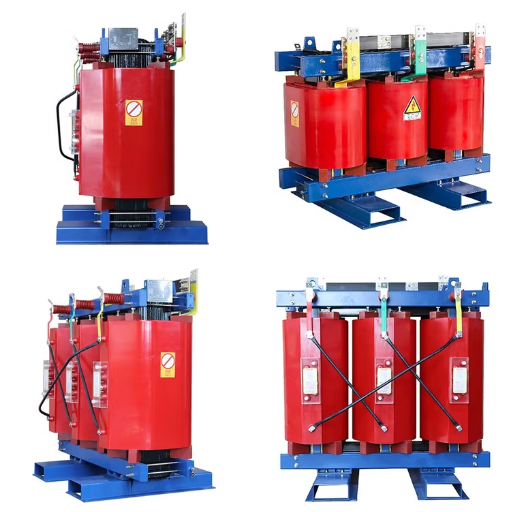
Whether a dry transformer lives up to “maintenance-free” depends heavily on what you buy. A poorly specified unit in the wrong enclosure will generate service calls no matter what the brochure says. When requesting quotations, confirm these points with every supplier:
- Insulation system. Specify cast resin for humid, dusty, or coastal sites. Reserve VPI for clean, conditioned rooms.
- Enclosure IP rating. Match the enclosure to the environment. IP20 suits clean indoor rooms; dusty or washdown areas need higher protection.
- Partial discharge level. Ask for the tested value. Low partial discharge is the best predictor of long insulation life in cast resin windings.
- Insulation class and temperature rise. Class F or H insulation with a conservative temperature rise buys thermal headroom and longer life.
- Cooling method. AN (natural air) is simplest. AF (forced air with fans) adds capacity but adds fans to your inspection list.
- Factory routine tests. Require documented tests for ratio, resistance, losses, and partial discharge before shipment.
Want an engineer to check your specification? Send your voltage, kVA, and site conditions, and we will recommend the most practical configuration, including the right enclosure for your environment.
Frequently Asked Questions
Do dry type transformers need any maintenance at all?
Yes, but very little. They need no oil-related work of any kind. The remaining care is visual inspection, periodic cleaning, annual infrared scanning, and occasional insulation resistance and torque checks. Most sites fold these into existing electrical maintenance rounds.
How long does a maintenance free dry transformer last?
With basic care, 25-35 years is typical. Neglected units in harsh environments can fail in 10-15 years, usually from moisture ingress or overheated connections that simple annual checks would have caught.
Is a dry type transformer better than an oil filled transformer?
Neither is universally better. Dry type is the right choice for indoor, occupied, or fire-sensitive installations and anywhere maintenance access is limited. Oil immersed is more economical for large outdoor capacities. The correct answer depends on your site, not on the brochure.
Why are cast resin transformers called maintenance free?
Because the windings are fully sealed in epoxy resin, there is no oil to test or replace, and the insulation resists moisture and contaminants without ongoing treatment. Compared to oil units, the maintenance program shrinks to a handful of simple checks, so the industry shorthand became “maintenance free.”
Conclusion: Maintenance Free Is Real, With One Condition
The maintenance-free dry transformer earns its name. It permanently eliminates oil sampling, dissolved gas analysis, filtering, leak repair, and disposal, along with the fire and environmental risks that come with liquid insulation. For indoor and access-limited installations, no other transformer type comes close on simplicity.
The one condition is honesty about what remains. A short list of checks, mostly looking, scanning, and occasional cleaning, is what separates a 30-year asset from a 12-year failure. Environment sets the schedule: clean rooms need almost nothing, harsh sites need a quarterly routine.
Specify correctly and the promise holds. Choose cast resin for demanding environments, match the IP rating to the site, demand documented partial discharge tests, and your transformer will ask very little of you for decades.
Ready to specify your transformer? Send us your voltage, kVA, and installation environment. Our engineers will recommend the most practical solution for reliability and long-term value, and tell you plainly if oil-immersed fits better.