
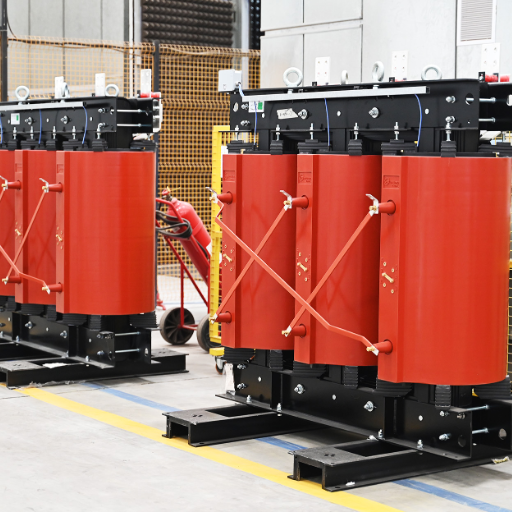
Dry Type Transformer for Hospital: Standards, Noise & Zone Selection Guide (2026)

Transformer noise above 45 dB in patient care areas correlates with measurable increases in patient stress, longer recovery times, and lower satisfaction scores. Yet many hospital projects specify generic dry type transformers without analyzing zone-specific requirements, only discovering the problem during post-occupancy commissioning. A dry type transformer for a hospital is not simply a standard commercial unit installed in a healthcare building. It must meet fire safety codes designed for patient-occupied structures, comply with noise limits tied to clinical outcomes, and survive the harmonic loads generated by modern medical imaging equipment.
This guide covers the complete process of specifying dry type transformers for hospital and healthcare facilities. You will learn which transformer sub-type belongs in each hospital zone, what noise limits apply near patient areas, how to size units for imaging department loads, and which standards govern every installation decision.
Key Takeaways
- Operating rooms and ICUs require cast resin dry type transformers for maximum reliability and lowest noise near patient-critical equipment.
- Imaging departments need K-rated cast resin transformers to handle CT and MRI harmonic loads without overheating.
- Patient ward transformers must stay below 45 dB at 1 meter to avoid disturbing recovery and sleep.
- NFPA 99, NFPA 70 Article 517, and HTM 06-01 all restrict oil-filled equipment inside hospital buildings, making dry type the required choice.
- Medical isolation transformers serve patient vicinity circuits, while dry type distribution transformers handle general hospital power.
- A 12-item hospital-specific procurement checklist covers noise, K-rating, fire class, and standards compliance.
For the broader picture of all dry type technologies, see our complete dry type transformer guide.
Why Hospitals Use Dry Type Transformers
Fire Safety and Indoor Code Compliance
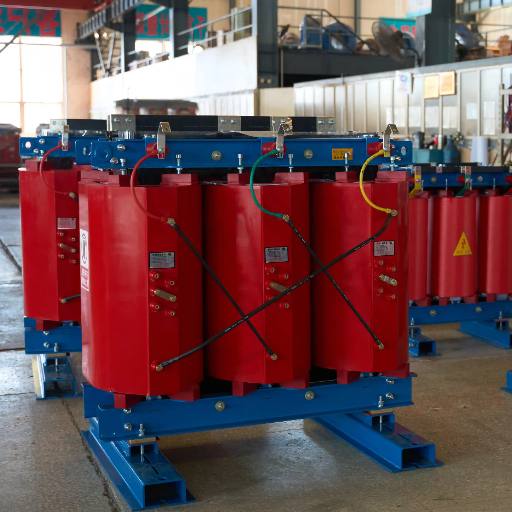
Hospitals are classified as institutional occupancies with stringent fire safety requirements. NFPA 99 (Health Care Facilities Code) and NFPA 70 (National Electrical Code) Article 517 both favor non-liquid insulated electrical equipment inside the building envelope. Dry type transformers eliminate the combustible liquid hazard that oil immersed units present. Cast resin and VPI transformers achieve fire behavior class F1 under IEC 60076-11, meaning they are self-extinguishing in the event of external fire. This property is not optional in buildings where patients may be sedated, ventilated, or unable to evacuate independently.
No Oil Spill Risk Near Patient Areas
Oil immersed transformers carry the risk of tank rupture or seal failure, which can release insulating oil into corridors, electrical rooms, or adjacent patient spaces. Even a contained leak creates environmental liability and requires hazardous materials remediation. For hospitals with basement electrical rooms situated directly below patient wards or operating suites, this risk is unacceptable. Dry type transformers eliminate liquid insulation entirely.
Low Maintenance for 24/7 Healthcare Operations
Hospitals operate continuously. There are no off-hours for scheduled maintenance that would justify oil sampling, dissolved gas analysis, or filtration cycles. Dry type transformers require only visual inspection, connection torque verification, and periodic insulation resistance testing. For facilities with lean engineering teams managing multiple buildings, this reduced maintenance burden directly translates to operational reliability.
Patient Safety and Indoor Air Quality
Dry type transformers contain no oil, produce no volatile organic compounds, and require no oil disposal at end of life. In patient-occupied buildings where indoor air quality is already managed through HVAC filtration and pressure differentials, the absence of oil-based contamination risk is a meaningful advantage.
Hospital Zone-Based Dry Type Transformer Selection
Not every part of a hospital requires the same transformer specification. Selecting the right sub-type for each zone balances protection level, noise performance, and capital cost.
Operating Rooms and ICUs: Cast Resin
Operating rooms and intensive care units are the most electrically critical zones in any hospital. Power interruption during surgery or mechanical ventilation support is life-threatening. Cast resin transformers offer the lowest partial discharge (below 10 pC), highest moisture resistance, and greatest mechanical rigidity. Their fully encapsulated windings withstand continuous duty and provide maximum reliability. Noise must stay below 45 dB at 1 meter to avoid interfering with surgical communication and patient monitoring alarms. See our deep dive on cast resin transformer specifications for technical details.
Imaging Departments: K-Rated Cast Resin
CT scanners, MRI units, and X-ray equipment draw nonlinear currents that create significant harmonic distortion. A single CT scanner can draw 100-150 kVA with total harmonic distortion reaching 40-60%. Standard transformers subjected to this harmonic content experience additional winding and core heating beyond their sinusoidal design limits. K-rated cast resin transformers are essential in imaging department electrical rooms. K-13 rating handles up to 60% THD without thermal derating.
Patient Wards and Corridors: Cast Resin or Low-Noise VPI
Patient wards require quiet environments for recovery and sleep. Transformer noise that exceeds 45 dB at the room boundary can disturb rest and elevate stress hormones. Cast resin transformers are preferred for ward-adjacent electrical rooms because their solid epoxy mass provides natural acoustic damping. Where budget constraints apply, low-noise VPI transformers with additional acoustic enclosures can be specified, provided noise testing confirms compliance.
Administrative and Non-Clinical Areas: VPI
Administrative offices, cafeterias, gift shops, and loading docks do not require the same protection level as clinical zones. VPI transformers deliver adequate moisture and dust protection at 25-40% lower cost than cast resin. For standard commercial spaces within the hospital campus, VPI is the practical choice.
Plant Rooms and Chiller Areas: VPI or Open Ventilated
Central utility plants, chiller mechanical rooms, and boiler electrical rooms are non-patient areas with dedicated ventilation. VPI transformers handle the standard industrial environment of these spaces. Open ventilated designs may be considered only where the room is clean, temperature-controlled, and separated from all clinical functions.
Zone Selection Decision Matrix
| Hospital Zone | Recommended Type | Noise Target | Rationale |
|---|---|---|---|
| Operating room / ICU | Cast resin | Below 45 dB | Maximum reliability, lowest PD |
| Imaging department | K-rated cast resin | Below 50 dB | Harmonic tolerance, reliability |
| Patient wards | Cast resin or low-noise VPI | Below 45 dB | Quiet recovery environment |
| Emergency department | Cast resin | Below 50 dB | Critical care adjacency |
| Administration | VPI | Below 55 dB | Cost-effective, adequate protection |
| Plant / chiller room | VPI | Below 60 dB | Non-clinical, industrial duty |
| Loading dock / exterior | Oil immersed | N/A | Weather exposure required |
A children’s hospital in Sydney was expanding with a new wing containing 120 patient beds, 6 operating theaters, and a radiology suite. The initial specification called for cast resin transformers throughout the entire building. After applying the zone-based approach, the project team specified cast resin only for ORs, ICUs, imaging, and ward-adjacent electrical rooms. Administrative and plant room transformers were switched to VPI units. The change saved $38,000 upfront without compromising any clinical requirement. Post-occupancy noise testing confirmed all patient areas met the 45 dB target.
Noise Requirements for Hospital Patient Areas
Understanding NC Curves for Healthcare
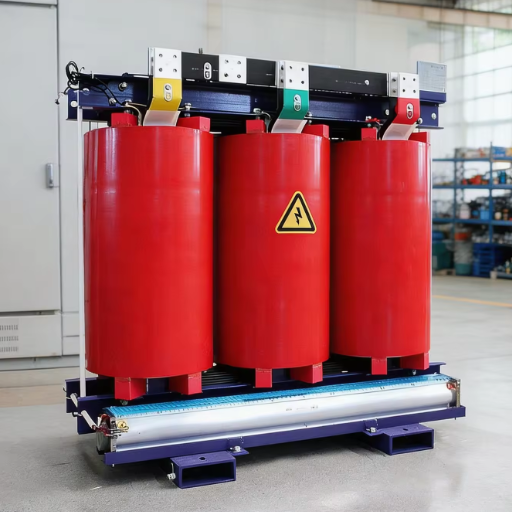
Noise Criteria (NC) curves are standard reference spectra used to specify acceptable background noise in occupied spaces. Healthcare facilities use NC ratings to ensure environmental conditions support patient recovery and clinical communication. Lower NC numbers mean quieter environments.
| NC Rating | Typical Environment |
|---|---|
| NC-25 | Recording studios, concert halls |
| NC-30 | Private offices, libraries |
| NC-35 | Conference rooms, standard offices |
| NC-40 | Open offices, retail spaces |
| NC-45 | Hospital patient wards, recovery rooms |
| NC-50 | Hospital corridors, treatment rooms |
| NC-55 | Hospital electrical rooms, utility spaces |
| NC-60 | Industrial plants, workshops |
Noise Limits by Hospital Zone
HTM 06-01 (UK) and ASHRAE guidelines (US) both recommend the following sound pressure levels for hospital electrical rooms relative to adjacent patient spaces:
| Adjacent Space | Maximum Transformer Sound Pressure at 1m |
|---|---|
| Operating theater | 45 dB(A) |
| ICU / NICU | 45 dB(A) |
| Patient ward | 45 dB(A) |
| Recovery room | 50 dB(A) |
| Emergency department | 50 dB(A) |
| Imaging suite | 50 dB(A) |
| Corridor / reception | 55 dB(A) |
| Plant room (no patient adjacency) | 60 dB(A) |
Transformer Sound vs Patient Recovery
Research in healthcare acoustics has established that hospital noise above 50 dB(A) correlates with elevated blood pressure, increased pain medication requirements, and longer post-operative stays. Transformer hum, a low-frequency tonal noise, is particularly disruptive because it penetrates standard wall construction and is perceived even during sleep. Specifying transformers with low-loss core steel and verifying sound power levels during factory acceptance testing protects both clinical outcomes and patient satisfaction scores.
Noise Mitigation Strategies for Electrical Rooms Near Wards
When electrical rooms must be located adjacent to patient wards, specify transformers with Hi-B or domain-refined core steel to reduce magnetostriction noise. Add anti-vibration pads between transformer base and floor structure. Install acoustic absorption panels on electrical room walls and ceiling. Where these measures are insufficient, specify acoustic enclosures rated for 10-15 dB(A) attenuation. Verify final sound pressure at the ward boundary through commissioning measurement.
Hospital Transformer Sizing Methodology
Critical Load vs Essential Load vs Normal Load
Hospital electrical loads are categorized by life safety importance. Critical loads include operating room equipment, life support systems, and emergency lighting. Essential loads include HVAC for patient areas, fire pumps, and elevator power. Normal loads include general lighting, office equipment, and non-clinical HVAC.
Transformers feeding critical and essential loads must be sized conservatively with minimal diversity factor. Normal loads can accept standard commercial diversity factors. This distinction affects both kVA sizing and redundancy planning.
Sizing for Imaging Equipment
Medical imaging equipment presents unique sizing challenges because nameplate ratings often exceed actual operating demand, but harmonic content creates additional thermal stress.
| Equipment | Typical kVA | Harmonic Content | K-Rating Needed |
|---|---|---|---|
| CT scanner | 100-150 | 40-60% THD | K-13 |
| MRI unit | 50-100 | 30-50% THD | K-13 |
| X-ray / fluoroscopy | 30-80 | 20-40% THD | K-4 to K-13 |
| Ultrasound | 5-15 | Less than 15% THD | Standard |
Size the transformer for the sum of all imaging equipment on the same feeder, apply a diversity factor of 0.8-0.9, and specify K-rating based on the highest THD source.
Sizing for HVAC and Life Safety Systems
Hospital HVAC systems are larger than commercial equivalents due to air change requirements, filtration loads, and temperature precision needs. A 500-bed hospital may require 2,000-3,000 kW of HVAC alone. Life safety loads add another 200-500 kW. Apply a diversity factor of 0.8-0.85 for HVAC and 1.0 for life safety.
Sizing for General Hospital Power
General power includes lighting, receptacles, office equipment, and non-clinical loads. Apply standard commercial diversity factors of 0.6-0.8 depending on load type.
Worked Example: 2,000 kVA Hospital Transformer
| Load Category | Nameplate (kW) | Power Factor | kVA | Diversity | Diversified kVA |
|---|---|---|---|---|---|
| HVAC (critical) | 800 | 0.85 | 941 | 0.85 | 800 |
| HVAC (general) | 400 | 0.85 | 471 | 0.75 | 353 |
| Imaging (CT + MRI) | 250 | 0.90 | 278 | 0.90 | 250 |
| Life safety | 200 | 0.90 | 222 | 1.00 | 222 |
| Lighting | 150 | 0.95 | 158 | 0.85 | 134 |
| General receptacles | 100 | 0.90 | 111 | 0.60 | 67 |
| Total | 1,900 | 2,181 | 1,826 |
Growth margin at 25%: 1,826 x 1.25 = 2,283 kVA.
Standard rating: 2,500 kVA.
For detailed sizing methodology, see our dry type transformer sizing guide.
Fire Safety Codes and Compliance
NFPA 99 (Healthcare Facilities Code)
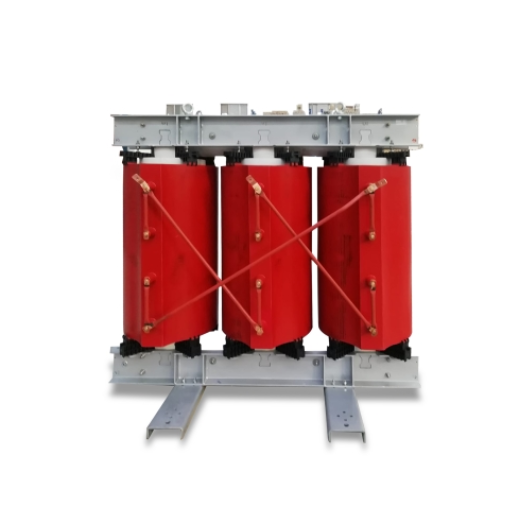
NFPA 99 defines the essential electrical system (EES) for healthcare facilities. It categorizes patient care spaces and specifies the electrical infrastructure required to support life safety. While NFPA 99 does not explicitly mandate dry type transformers, its emphasis on fire safety and indoor air quality effectively eliminates oil-filled equipment from patient care buildings.
NFPA 70 (National Electrical Code) Article 517
Article 517 of the NEC addresses healthcare facilities. It defines patient care areas, specifies grounding requirements, and establishes wiring methods suitable for clinical environments. The article reinforces the use of non-liquid insulated equipment in patient care vicinities.
HTM 06-01 (UK Healthcare Electrical Standards)
Health Technical Memorandum 06-01 provides UK-specific guidance for electrical services in healthcare premises. It specifies noise limits for electrical equipment near patient areas, recommends transformer types by application, and establishes maintenance requirements. For UK and Commonwealth hospital projects, HTM 06-01 is the primary reference standard.
IEC 60364-7-710 (Medical Locations)
This international standard addresses electrical installations in medical locations. It defines safety requirements for circuits supplying medical electrical equipment and establishes the need for isolated power systems in Group 2 medical locations (operating rooms, intensive care). The standard works in conjunction with transformer selection to ensure patient safety.
Fire Behavior Class F1 Requirements
All indoor hospital transformers must achieve fire behavior class F1 under IEC 60076-11. This classification confirms that the transformer insulation system is self-extinguishing and will not propagate flame in the event of external fire. Always request fire test certification from the manufacturer.
Medical Isolation Transformers vs Dry Type Distribution
Where Isolation Transformers Are Required
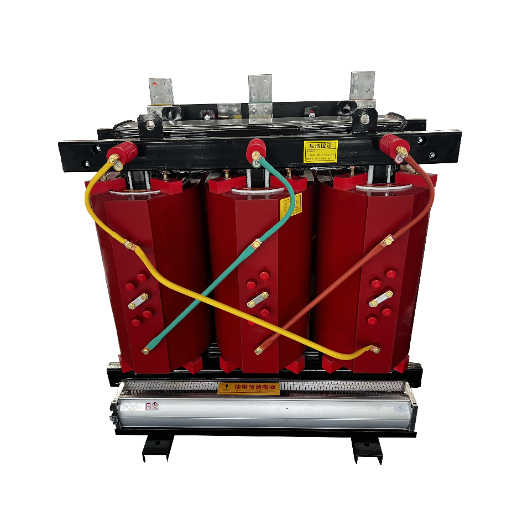
Medical isolation transformers are required in patient vicinity circuits per IEC 61558-2-15. They provide galvanic isolation between the power supply and medical equipment, limiting leakage current to below 0.5 mA. Isolation transformers are mandatory in:
- Operating rooms
- Cardiac catheterization labs
- Intensive care units
- Neonatal intensive care units
- Dialysis treatment areas
These transformers are typically 1-10 kVA units mounted within or adjacent to the medical equipment they serve, not the large distribution transformers that feed entire departments.
Where Dry Type Distribution Transformers Suffice
Dry type distribution transformers handle general hospital power at the department or building level. They are not medical-grade isolation units but rather standard dry type transformers (cast resin or VPI) selected for hospital-appropriate noise, fire safety, and harmonic tolerance. Distribution transformers feed switchgear, panelboards, and departmental distribution, not individual patient circuits.
IT System vs TN-S System in Hospitals
Group 2 medical locations (ORs, ICUs) typically use IT grounding systems (isolated neutral) supplied by medical isolation transformers. This system limits first-fault current to milliamps, preventing macroshock while maintaining power. General hospital areas use TN-S systems (solidly grounded neutral) supplied by standard dry type distribution transformers. The two systems must be clearly separated and correctly labeled.
Coordination Between Isolation and Distribution Transformers
Hospital electrical architecture uses both transformer types in layers. Isolation transformers protect individual patients at the point of care. Distribution transformers supply building-level power with appropriate capacity, noise control, and harmonic tolerance. Both must be specified correctly for the hospital to function safely.
A hospital in London installed a standard VPI transformer in an electrical room directly above a pediatric ICU. The unit was rated at 68 dB(A) sound power, typical for commercial applications. During post-occupancy commissioning, noise measurements at the ceiling below reached 52 dB(A), well above the 45 dB target for patient sleep areas. Families complained about the constant low-frequency hum. The hospital was forced to install a $45,000 acoustic isolation ceiling and vibration-damping platform after construction was complete. A cast resin transformer with low-loss core steel, specified at 55 dB(A) initially, would have avoided the problem entirely.
Harmonics from Medical Imaging Equipment
CT Scanner Load Characteristics
CT scanners use high-voltage X-ray tubes powered by switching power supplies. The rectifier circuits draw current in pulses, creating harmonic components at the 3rd, 5th, 7th, and 11th orders. A single CT scanner can produce 40-60% THD at its input terminals. Without K-rated transformers, this harmonic content causes additional heating in both windings and core.
MRI Power Requirements and Harmonics
MRI units require stable power for both the main magnet (which operates continuously) and the gradient coils (which pulse during imaging sequences). The gradient amplifier switching creates harmonic content that flows back into the supply transformer. While MRI THD is typically lower than CT scanners (30-50%), the continuous duty means sustained thermal stress.
X-Ray and Fluoroscopy Impact
X-ray and fluoroscopy units create harmonic bursts during exposure. The intermittent nature means standard transformers may survive, but repeated thermal cycling accelerates insulation aging. For busy departments with high exposure volumes, K-rated transformers provide thermal margin.
K-Rating Selection for Imaging Departments
| Imaging Department Size | Typical THD | Recommended K-Rating |
|---|---|---|
| Small (1-2 CT, 1 MRI) | 35-45% | K-13 |
| Medium (3-4 CT, 2 MRI) | 45-55% | K-13 |
| Large (5+ CT, 3+ MRI) | 55-70% | K-20 |
Always request a harmonic load study from the imaging equipment manufacturer to confirm actual THD before selecting K-rating.
Emergency Power and Generator Integration
Essential Electrical System (EES) Requirements
NFPA 99 requires hospitals to maintain power for life safety and critical care equipment during utility outages. The essential electrical system includes automatic transfer switches, emergency generators, and the distribution infrastructure that connects them. Transformers feeding critical and essential loads must be compatible with generator output characteristics, including voltage regulation and harmonic content.
Automatic Transfer Switch Coordination
When utility power fails, automatic transfer switches shift critical loads to emergency generators within 10 seconds. The transformer must withstand the voltage dip and frequency transient during transfer without excessive inrush current. Transformers with standard 4-6% impedance are usually adequate, but verify coordination with the generator manufacturer.
Generator Sizing Impact on Transformer Selection
Emergency generators are sized for the essential electrical system load, not the total facility load. The generator capacity typically ranges from 30-50% of the main transformer rating. Ensure the transformer feeding the essential system can handle both normal utility operation and generator-backed operation without overheating.
Maintaining Power During Generator Testing
Hospitals test emergency generators monthly under load. During these tests, the automatic transfer switch shifts essential loads to generator power for 30 minutes. The transformer must operate satisfactorily during both the transfer and re-transfer sequences without nuisance tripping or excessive heating.
A medical center in Bangkok installed a standard 1,500 kVA transformer to serve a new imaging department containing two CT scanners and one MRI. The transformer was sized using nameplate ratings with standard diversity factors. Within four months, thermal monitoring showed abnormal temperature patterns during peak scanning hours. Investigation revealed the combined harmonic content of both CT scanners operating simultaneously exceeded 55% THD. The standard transformer was never rated for harmonic loads. Replacement with a K-13 unit eliminated the overheating. The engineering manager now mandates K-rating verification on every imaging department specification, noting that the $12,000 premium for K-13 was minor compared to the emergency replacement cost and imaging schedule disruption.
Hospital Transformer Procurement Checklist
Use this checklist when specifying dry type transformers for hospital projects:
- Dry type sub-type by zone — Cast resin for OR/ICU/imaging; VPI for admin/plant.
- K-rating for imaging loads — K-13 standard; K-20 for large departments.
- Noise level verification — Confirm sound power rating against adjacent zone target.
- Fire behavior class — F1 required for all indoor installations.
- Insulation class — F (155 C) standard; H (180 C) for high-ambient or overload margin.
- Partial discharge limit — Below 10 pC for cast resin; below 50 pC for VPI.
- IP rating — IP20-23 for standard indoor; IP31+ for dusty or exposed areas.
- Efficiency standard — DOE 2016 or DOE 2027; EU Eco Design for European projects.
- Short-circuit withstand — Verify dynamic and thermal withstand per IEC 60076-11.
- Vector group — Dyn11 standard; Yyn0 for heavy neutral loading.
- Factory acceptance testing — Witnessed FAT including ratio, resistance, insulation, PD, and noise.
- Coordination with isolation transformers — Verify distribution transformers do not serve patient vicinity circuits requiring isolation.
Installation and Maintenance Best Practices
Electrical Room Location Relative to Patient Areas
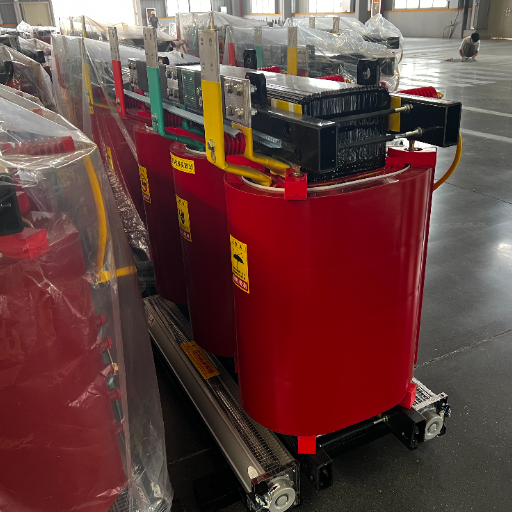
Locate electrical rooms serving transformers away from patient wards, operating theaters, and recovery rooms where possible. Where separation is limited by building geometry, prioritize cast resin transformers and add acoustic treatment to the electrical room envelope. Never locate oil-filled transformers above, below, or adjacent to patient care spaces.
Vibration Isolation for Noise Control
Mount transformers on anti-vibration pads to prevent structure-borne noise transmission through floors and walls. For electrical rooms below patient wards, specify spring isolators with 90% efficiency or greater. Verify isolation effectiveness during commissioning with vibration measurements at the ward floor above.
Thermal Monitoring and Alarm Integration
Integrate transformer temperature monitoring with the hospital building management system. Set alarms at 90% of rated temperature rise to provide advance warning of overload or ventilation failure. In critical locations, consider dual RTD sensors for redundancy.
Testing and Commissioning Requirements
Commissioning tests for hospital transformers should include turns ratio, winding resistance, insulation resistance, applied voltage, partial discharge, and noise level measurement. Compare results to factory test reports and establish baseline values for future maintenance comparison.
Maintenance Schedule for Healthcare Facilities
| Frequency | Task |
|---|---|
| Monthly | Visual inspection, temperature check |
| Quarterly | Connection torque verification, cleaning |
| Annually | Insulation resistance measurement, noise check |
| Every 5 years | Partial discharge test, thermographic survey |
Frequently Asked Questions
Why Do Hospitals Use Dry Type Transformers?
Hospitals use dry type transformers because fire codes (NFPA 99, NFPA 70) restrict liquid-filled equipment inside patient-occupied buildings. Dry type units eliminate oil spill risk, require minimal maintenance, and meet indoor fire safety requirements.
What Noise Level Is Acceptable for Hospital Transformers?
Transformer sound pressure should stay below 45 dB(A) at 1 meter for patient care areas (wards, ICUs, operating rooms), below 50 dB(A) for corridors and treatment rooms, and below 55 dB(A) for utility spaces.
Do I Need K-Rated Transformers for a Hospital?
K-rated transformers are required for imaging departments where CT scanners and MRI units create harmonic distortion above 35% THD. Standard transformers are adequate for general hospital power without significant nonlinear loads.
What Is the Difference Between Isolation and Dry Type Transformers in Hospitals?
Medical isolation transformers (1-10 kVA) provide galvanic isolation for patient vicinity circuits in operating rooms and ICUs. Dry type distribution transformers (100-5,000 kVA) supply general building power at the department level. They serve different purposes and are not interchangeable.
Can Oil Filled Transformers Be Used in Hospitals?
Oil filled transformers are generally prohibited inside hospital buildings due to fire code restrictions. They may be used for outdoor utility interface or pad-mounted installations at the site boundary. Inside the building envelope, dry type transformers are required.
What Standards Apply to Hospital Transformers?
NFPA 99 (healthcare facilities), NFPA 70 Article 517 (NEC healthcare), HTM 06-01 (UK healthcare electrical), and IEC 60364-7-710 (medical locations) all govern hospital electrical installations including transformer selection.
How Do You Size a Transformer for a Hospital Imaging Department?
Sum the nameplate kVA of all imaging equipment, apply a diversity factor of 0.8-0.9, add 20-25% growth margin, and select the next standard K-rated transformer size. Always confirm harmonic content with equipment manufacturer data.
What Fire Rating Is Required for Hospital Transformers?
All indoor hospital transformers must achieve fire behavior class F1 under IEC 60076-11, confirming self-extinguishing properties. Request fire test certification from the manufacturer.
Conclusion
Specifying a dry type transformer for a hospital requires understanding that healthcare electrical systems are not simply commercial buildings with medical equipment. The selection must account for zone-based reliability requirements, patient-area noise limits, imaging department harmonics, and fire code compliance that prohibits oil-filled alternatives.
The three decisions that matter most are sub-type selection aligned with clinical zone criticality, noise verification against patient care targets, and K-rating matched to imaging harmonic content. Get any of these wrong, and the result is either unnecessary capital expense or compromised clinical environment.
Use the procurement checklist in this guide to verify standards compliance, noise limits, K-rating, fire class, and isolation coordination before issuing purchase orders. Send your hospital floor plan, imaging equipment list, and zone requirements to Shandong Electric Co., Ltd. for engineering review and a tailored transformer recommendation. Our team manufactures cast resin and VPI dry type transformers from 100 kVA to 5,000 kVA, built to IEC 60076-11 and customized for healthcare applications worldwide.