

Cast Resin Dry Type Transformers: Complete Technical Guide for Industrial Applications

The 2023 Singapore data center oil leak disaster, which originated from its transformer room, generated a fire suppression system discharge that disabled 14 servers for three days. The facility manager later calculated the total cost at $2.3 million in downtime, equipment replacement, and environmental remediation. The facility now operates with cast resin dry type transformers, which provide better sleep for the engineering director.
The current situation exists in every business sector throughout the globe. Facility managers and power system engineers must decide between two options because electrical infrastructure requires ongoing maintenance, and safety regulations become more demanding, which affects their decision to use traditional oil-filled transformers or adopt new maintenance-free transformer technologies.
This guide provides comprehensive information about how cast resin dry type transformers function, which applications they excel in, and how users can assess them against other transformer technologies. The guide contains technical content that helps you decide between new installation and retrofit options.
Ready to explore how these transformers could protect your facility? Contact our engineering team for a customized assessment.
What Is a Cast Resin Dry Type Transformer?
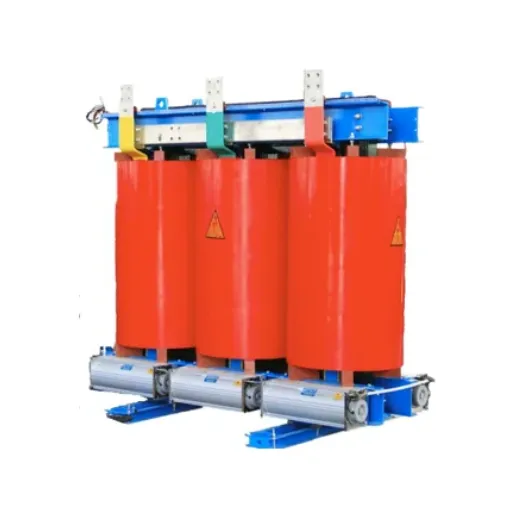
The cast resin dry type transformer operates as a power distribution system that uses vacuum pressure casting to fully encase its high-voltage and low-voltage windings in epoxy resin. The cast resin transformers operate with solid insulation, while traditional oil-immersed transformers depend on liquid dielectric fluid to provide both insulation and cooling functions.
The manufacturing process is executed with extreme accuracy. Technicians establish the production process by placing pre-wound copper or aluminum coils into molds before they proceed to inject epoxy resin under vacuum conditions. This process creates a complete seal which protects the insulation from potential air bubble defects that would lead to insulation breakdown in the future. The final product creates a unified winding assembly that protects against moisture and dust, and chemical contaminants through its complete hermetic sealing.
Key Construction Components
Core Assembly
The transformer core comprises high-quality silicon steel laminations, which have been processed through grain-oriented manufacturing techniques. The thin steel sheets make it possible to reduce eddy current losses while they establish an effective magnetic route. Modern designs achieve core losses as low as 0.8 W/kg, which makes the transformer operate at an efficiency level above 98%.
Winding Systems
Transformers that use cast resin insulation systems usually employ either foil or cast coil winding methods. Foil windings use thin aluminum or copper sheets separated by insulating layers. The vacuum casting process enables cast coil windings to embed conductors inside epoxy resin. Both approaches create systems that do not require any liquid insulation.
Enclosure and Cooling
The various applications require enclosure protection, which ranges from basic IP20 safeguard for indoor electrical rooms to IP54-rated weatherproof enclosures designed for outdoor use. The system achieves cooling through two methods, which include natural air convection (AN designation) and forced air circulation (AF designation), enabling capacity increases between 40 and 50 percent.
Cast Resin vs Other Transformer Technologies
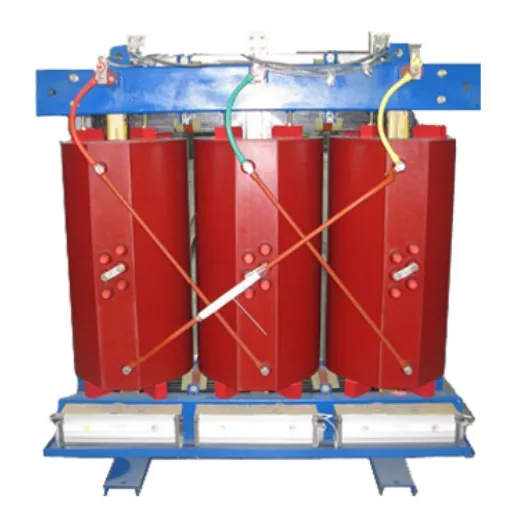
Understanding the differences between transformer types ensures you select the right equipment for your specific application. Each technology offers distinct advantages and limitations.
Cast Resin vs Oil-Immersed Transformers
| Feature | Cast Resin Dry Type | Oil-Immersed |
|---|---|---|
| Fire Safety | Self-extinguishing, F1 class | Requires fire suppression systems |
| Environmental Risk | Zero oil leakage | Containment basins required |
| Maintenance | Visual inspection only | Oil testing, filtering, and replacement |
| Installation Location | Indoor, populated areas | Outdoor or dedicated substations |
| Initial Cost | 20-50% higher | Lower upfront investment |
| Lifecycle Cost | Lower (no oil maintenance) | Higher (ongoing oil management) |
| Overload Capacity | ~120% for 2 hours | Up to 150% for 2 hours |
| Typical Lifespan | 20-30 years | 25-40 years |
The safety advantages of cast resin transformers cannot be overstated. In environments where fire risk must be minimized, such as hospitals, schools, data centers, and high-rise buildings, cast resin units eliminate the possibility of oil fires. The epoxy resin insulation achieves F1 fire classification, which enables it to extinguish itself while producing no hazardous substances during flame contact.
Environmental regulations increasingly favor oil-free equipment. The International Electrotechnical Commission (IEC) 60076-11 standard classifies cast resin transformers as environmentally friendly, which eliminates the need for special storage facilities and oil spill protection systems. This process enables easier permit acquisition while delivering substantial reductions in installation expenses. According to IEC standards, these requirements ensure global compliance for export markets.
Cast Resin vs VPI Transformers
The manufacturing process differences between vacuum-pressure impregnated transformers and dry-type transformers lead to different operational results.
VPI transformers use a process that involves dipping pre-wound coils into varnish and then applying vacuum pressure to cure the coils. This process establishes a protective layer that protects windings but leaves them unprotected from air gaps. Cast resin transformers, by contrast, completely embed windings in solid epoxy, providing superior moisture and contaminant protection.
Cast resin materials demonstrate better performance than VPI materials in environments that include coastal salt spray and industrial chemical exposure. The E2 environmental class rating certifies cast resin transformers for operation in 100% humidity with immediate restart capability after shutdown.
Seven Key Benefits of Cast Resin Dry Type Transformers
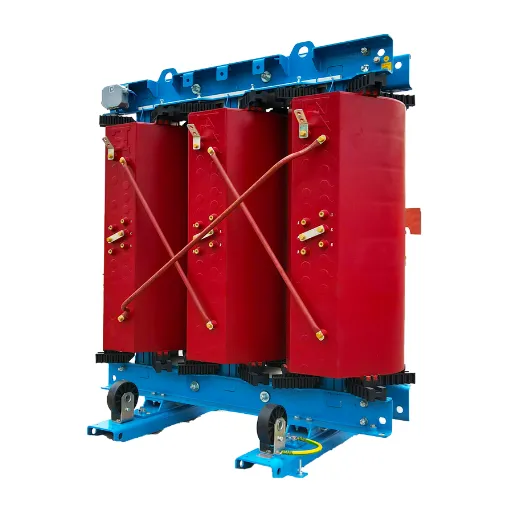
1. Fire Safety and Self-Extinguishing Properties
It is the cast resin transformers that possess the most favorable possible fire safety characteristics. IEC 60076-11 F1 rating certifies the insulation as non-flammable and self-extinguishing once ignition is over. This characteristic does away with the need for a fire monitoring system, fire control equipment, or fire construction of the transformer compartments.
For facility managers, this feature permits a structure or building design with lower insurance premiums. Most of all, it saves the public and infrastructure from adverse activities that might take place where the population is high or the situation is delicate.
2. Environmental Protection and Regulatory Compliance
Because cast resin transformers do not leak oil or contaminate the soil, meeting environmental compliance is very easy. They are free of fluids such as PCB and mineral oil, which require special attention and disposal methods.
It is a trend in more and more countries (regions) requiring an oil-free installation for indoor uses or installation close to water sources. Rather than waiting for regulations to further squeeze and create financial load on the owners of oil transformers, who will have to invest loads of money in retrofitting the available transformers, one can just install cast resin transformers.
3. Moisture and Humidity Resistance
In this case, the process of vacuum casting ensures that it is perfectly sealed against any infiltration of moisture. Also, cast resin transformers are of E2 environmental class, implying that they will not fail even if condensation or high humidity, or even short-term flooding, which can cause loss of the transformer’s performance.
Such a feature is particularly helpful where the climate is more tropical, in underground settings, or in setups where the HVAC systems may not be operating under the conditions as designed. There is no need to add such systems with cast resin transformers, as in oil-filled ones requiring dehumidification systems, because they can be deployed in such environments without any problem.
4. Minimal Maintenance Requirements
Upkeep involves mainly inspecting the equipment on a scheduled basis and clearing vents of any obstructions. There is no oil to sample or replace; no filtration is required. Gauges are in place to alert the user to a problem before the situation escalates.
This strategy of a non-maintenance regime keeps the running cost for the case of a machine that is manned by very few personnel or situated far away from any maintenance center. Approximately, the service request is more than twelve months or even longer, depending on the extent of service.
5. Compact Footprint and Installation Flexibility
Plastic of this oil transformer is without oil basins, no fire walls, and the least clearance. Cast resin transformers are more compact compared to similar oil-filled ones. It can be located nearer the load centers, thus reducing the cable lengths and the voltage drop.
Most contemporary engineers follow this plug & play concept of sticking a shielded connector, which is already mounted onto the plug, the installation process is minimized and commissioning too.
6. Reduced Noise Levels
The advanced designs of cores, as well as the anti-vibration structure of mounts, most often result in noise levels remaining under 55 dB measured at 1 meter. Such a quiet application is intended for, for example, hospitals, residential areas, offices, and other places where noise can be an unfavourable factor.
7. High Short-Circuit Withstand Capability
Hard epoxy prevents damage during short-circuit extreme conditions by keeping the mechanical properties in an inherently rigid structure. Cast resin transformers are commonly subjected to up to 25 times the rated voltage currents for 2 seconds in short circuit tests, in which they do not show any damage.
Industrial applications are genuine reasons for this ruggedness. There are motor starting currents or fault conditions that result in transient conditions. In this condition, the power circuit remains intact after it is released, which avoids the production loss. The transformer keeps working even after the situation, and no time is spent changing the transformer.
Primary Applications by Industry
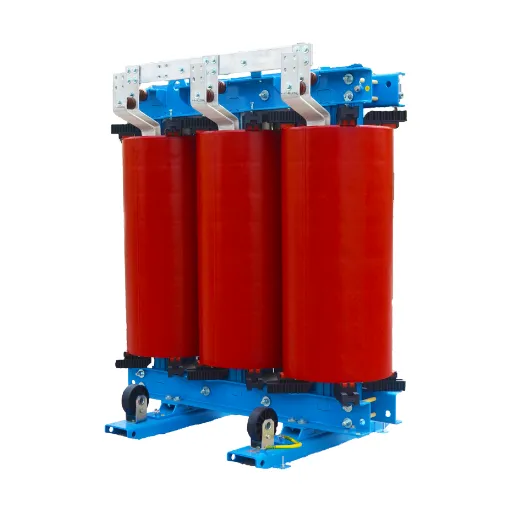
Critical Infrastructure: Hospitals, Data Centers, and Airports
With the subsequent ten-year upgrade of Metro General Hospital’s power system, the engineering department was presented with a problem that was basically well known to them. The oil-immersed transformers kept in an inappropriate basement room, without any windows or louvered doors, and with very limited ventilation, were used in earlier installations. In order to install similar equipment, either costly rebuilding would be necessary or the substation would have to be built at a different end of the building wing.
Cast resin transformers were installed in the same place. Without fire suppression system requirements, $340,000 was saved from construction, and the hospital continued to function with no interruptions while the job was being done.
Similar benefits are conferred on data centers from cast resin. The necessity for fire safety while ensuring as much space as possible is saved, and efficiency is optimized perfectly, making most facilities’ visits unnecessary. Most operators of these data centers specify Cast Resin Dry Type Transformers in all new builds right now.
Renewable Energy Integration
Renewable energy sectors such as PV solar power and wind energy now often use cast resin transformers in step-up stations. The oil-free operation gets rid of environmental licensing issues, and the construction of transformers is made to serve outside installations without any additional mechanisms needed for insulation.
The latest designs of cast resin transformers are able to cope with the variable nature of renewable energy sources. Fast-changing power generation caused by moving clouds or different winds leads to high levels of heat cycling and sometimes damages the insulation of the transformer. Epoxy resin in such conditions is more thermally stable than an oil-filled transformer.
Industrial Manufacturing
Chemical plants, mining operations, and heavy manufacturing facilities specify cast resin transformers for areas where oil leakage cannot be tolerated. In facilities handling flammable materials, the F1 fire classification eliminates explosion risks associated with transformer faults.
Food processing plants particularly value cast resin units for their clean operation. No oil means no risk of product contamination, satisfying strict food safety requirements without additional protective measures.
Commercial Buildings and Urban Infrastructure
The construction of high-rise buildings, malls, and underground power houses is supported by the application of cast resin transformers as a means of power distribution. The limited size allows them to be cramped within a small mechanical room, while the fire features do not compromise the building code, where people are supposed to stay.
The use of cast resin technology is on the rise in transportation facilities, including metro systems and airport concourses. Such factors make for maintenance-free fire-safe transformers, not least as a result of the population, which is quite high there, with no fresh air and transport operating 24 hours.
Technical Specifications and Selection Guide
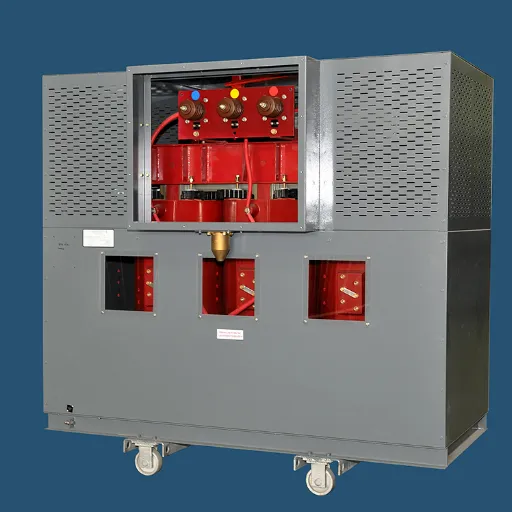
Understanding the technical parameters ensures proper transformer selection for your application.
Standard Power Ratings
Cast Resin Dry Type Transformers are generally available within the range of 50 kVA-5000 kVA for distribution purposes. Units larger than that are used for special industrial uses and have a maximum capacity of 25,000 kVA. The standard voltages go up to 36 kV; however, higher voltages can be designed in bespoke units.
Capacity selection should be based on the current load as well as future growth. Cast resin transformers do allow for some overloading and can sustain for a limited duration; however, overload performances sustained above their rated average tend towards limited practical spans.
Insulation Temperature Classes
It has geothermal temperatures for classifying temperatures in IEC norms up to the maximum winding temperature as follows:
- Class F: 155°C maximum temperature (most common for cast resin)
- Class H: 180°C maximum temperature (high-temperature applications)
The temperature above room temperature for reasons of heat dissipation rises to between 80 K and 100 K, depending on the design and the method of cooling. Small differences with temperature rise imply long life of services and reserve overload capacity to boot.
Cooling Designations
| Designation | Description | Capacity Impact |
|---|---|---|
| AN | Air Natural (convection cooling) | Base rating |
| AF | Air Forced (fan cooling) | +40-50% capacity |
| AN/AF | Dual-rated (natural/forced) | Flexible operation |
Fan cooling significantly increases capacity but requires electrical power and periodic maintenance. Many installations specify AN/AF designs, operating naturally under normal conditions with fans activated during peak demand periods.
Protection Ratings
IP codes indicate enclosure protection levels:
- IP20: Basic touch protection, indoor use only
- IP23: Protected against solid objects and spraying water
- IP31: Protected against solid objects and dripping water
- IP54: Dust and splash protection, outdoor capable with housing
Select ratings based on installation environment and local environmental conditions.
Installation Best Practices
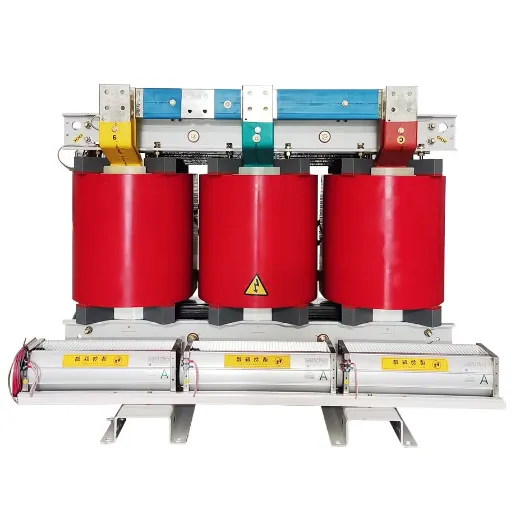
Proper installation ensures optimal performance and service life. Follow these guidelines for successful deployment.
Site Preparation Requirements
The installation floor should be able to support the weight of the transformer with a load of 2-5 tons, depending on the capacity. The slabs made of concrete filled with reinforcing bars are best suited to this as the foundation. To allow ventilation and maintenance inspections, maintain an allowance of 600-1000 mm of clearance around the unit on all sides.
Conclusively, there is a need to ensure the proper adequacy of ventilation indoors. Manufacturer’s specifications will direct the size of the inlet and outlet openings for natural convection. Establish effective supply conditions of electric energy for fans on forced-air cooled power.
Connection and Commissioning
Make sure that all electrical connections are consistent with the design specifications, and before they energize the system. This should check phase rotation, verify voltage levels at the primary terminals, and see that they are in the desired range for the transformer connections and commissioning. Conduct a Megger test to determine if the insulation resistance value is over the manufacturer’s minimums; they should be 100 million Ohms or more than 20°C.
One needs calibration for temperature monitoring systems even before their operationalization. Check if alarms/trips position themselves in the right way so that they can work along with the protection scheme requirements. Save the first acquired temperature readings at a no-load at a reference point.
Maintenance and Testing Procedures
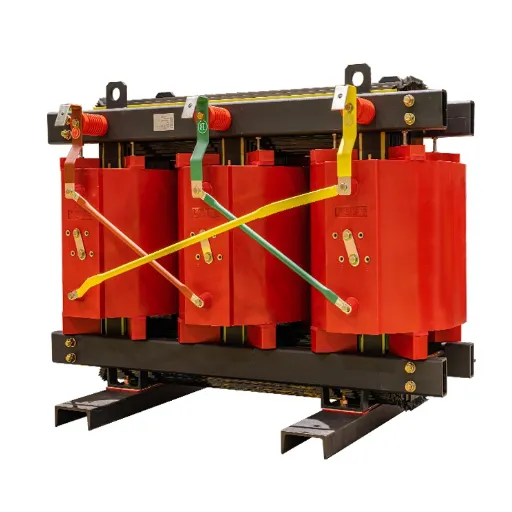
While cast resin transformers require minimal maintenance, routine procedures ensure continued reliable operation.
Routine Inspection Checklist
Monthly Visual Inspection
- Check for physical damage to the enclosure or bushings
- Verify cooling fans operate correctly (AF units)
- Confirm temperature readings within the normal range
- Inspect for dust accumulation on cooling surfaces
Annual Detailed Inspection
- Clean cooling ducts and ventilation openings
- Tighten all electrical connections to the specified torque
- Test temperature monitoring system calibration
- Inspect cable terminations for signs of heating or corrosion
Diagnostic Testing
Insulation Resistance Testing
Use a megohmmeter of either 1,000V or 2,500V each year to carry out megger testing. Reducing windings to earth and between primary and secondary windings will indicate a stable value. This is maintained year on year and as a decreasing trend, could indicate issues worth being probed.
Partial Discharge Testing
Testing for partial discharge allows us to discover insulation defects before failures occur. Maximum values for partial discharge test as per IEC 60076-11 is 10 pC for cast resin transformers. This must be tested at intervals of 3-5 years or even after any event of an overload as a guarantee of isolated integrity.
Turns Ratio Testing
To ensure the correspondence with the transformer nameplate data, verify the transformer ratio. Variations in this might indicate damage to the winding or problems related to changes in output voltage, necessitating the need to modify it.
Standards and Certifications
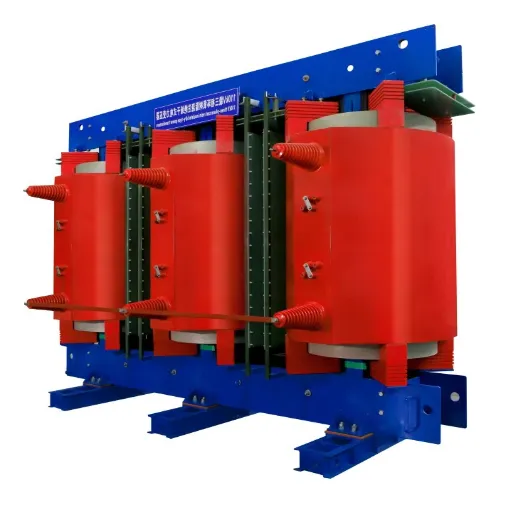
Compliance with international standards ensures transformer quality and safety.
IEC 60076 Series
According to IEC 60076-11, the specific requirements are:
- Limits and test methods on temperature rise
- Levels of environmental class consist of (E0, E1, E2)
- Fire protection classes: F0, F1
- Climate categories (C1, C2)
Resin cast premium transformers are E2 (high humidity), F1 (fire resistant), and C2 (climate resistant), which makes them suitable to be used in harsh applications.
IEEE C57.12 Standards
This is because the performance of the core part is well determined in the standard test of IEEE for transformers. IEEE C57.12. 01 refers to this, while C57.12. 91 involves a test code. It is why these guidelines lay performance standards for dry-type equipment and specify the requirement for testing.
UL and CSA Certifications
Certification of compliance of the supply with the safety standards set out above is carried out by the product undergoing testing according to the requirements of UL 1562, the certification of UL, and compliance with the CSA C9 standards for products aimed at the Canadian market. These certifications help in achieving compliance and acceptance by insurance companies.
Environmental and Safety Classifications
E2 Environmental Class: The ability to withstand the full performance of anything above the 100% humidity level, as well as its own condensation. Transformers should still work efficiently in this environment without degradation. If they are put off, they will start as quickly as they were before.
F1 Fire Classification: This is a non-flame-propagating and self-extinguishing insulation. No toxic emissions are produced, and there is minimal smoke during the action of the fire.
C2 Climate Class: The equipment is fit to operate even at -25°C without a specific application or enclosure.
Conclusion
Cast resin dry type transformers denote a time-tested, established solution that helps resolve the key problems of present-day electric infrastructure. Their non-flammable, environmentally friendly nature and minimal upkeep requirements encourage their application for indoor spaces and in secondary or specialist areas.
The structural changes that are taking place within energy systems that move towards more electric and renewable means prop up the need for power distribution appliances that are worthy of use. Such is the case with the global cast resin transformer market, which is expected to expand to $8.7 billion by 2034.
Key takeaways from this guide:
- Cast Resin Dry Type Transformers prove to be fire and environmentally safe, unlike oil-filled ones
- Very demanding applications are usually characterized by E2, F1, and C2 certification
- They require very little maintenance, and the lifespan costs are therefore reduced significantly
- Facility design is made easy by reducing the size and allowing for more ways of installing them
- Despite their high purchasing costs, the total cost of owning them gives a good reason for the preference for cast resin transformers
Ready to evaluate cast resin transformers for your next project? Contact our engineering team for a customized quote. Our specialists can help you select the optimal transformer configuration for your specific voltage, capacity, and environmental requirements.
The transition from oil-filled to cast resin technology represents more than equipment substitution. It reflects a commitment to safety, sustainability, and long-term operational excellence that defines modern power system design.