

Containerized Substation: Complete Modular Power Guide

The facility manager of a remote mining operation in Western Australia was to make a significant decision: to wait for 14 months for a conventional, brick-and-mortar-built substation or take the initiative and install a containerized new-age substation operational in just a matter of weeks. The containerized substation, when it arrived, was delivered in a container with standard truck measurements and dropped off on a compacted gravel pad. They confirmed the 33 kV power could be delivered in less than 18 days.
This is the story playing out in all the industries in the agglomerating modern grid to demand power products in the shortest possible time to match the speed of growing agility in business solutions. This need for reduced installation time could find a zero-hour installation solution in former containers, which are modular in nature or prefabricated.
This is a deep dive into everything power system engineers, procurement managers, and project developers need to know about containerized substations. Technical specifications, compliance with norms, cost analyses, and application scenarios will be major features in determining when and why you should bring them into your next project.
What You Will Learn:
- How containerized substations differ from traditional and mobile alternatives
- Technical specifications and voltage ratings for industrial applications
- Cost and timeline advantages driving adoption
- Standards compliance requirements (IEC, IEEE)
- Key applications across renewable energy, mining, and urban infrastructure
Want to explore how containerized substations can accelerate your project timeline? Contact our engineering team for a technical consultation.
What Is a Containerized Substation?
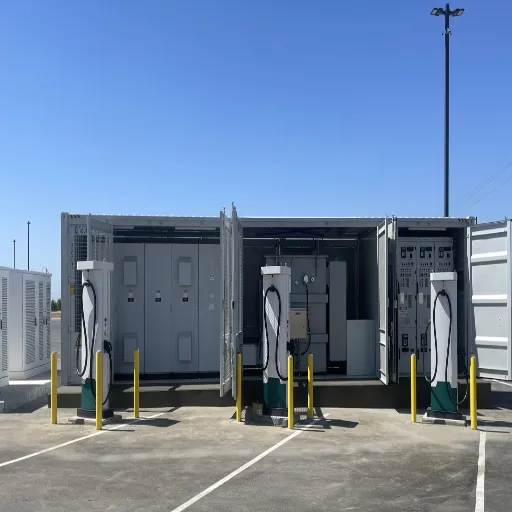
A containerized substation is a complete unit housing all essentials of electric power distribution, mounted within an ISO shipping container or a purpose-built enclosure. These are modular systems that encompass medium voltage (MV) switchgear, power transformers, low voltage (LV) distribution equipment, protection systems, and auxiliary controls within a factory-assembled solution that is, however, plug-and-play.
Unlike conventional substations that require elaborate civil works taking months on end to get them on-site, containerized substations are ready to go; they just need to undergo pretests. Vigilant use has its merits with standardizing container measurements (usually 20-foot or 40-foot ISO containers) so they can be handled monetarily with trucks, trains, or ships, even as it offers ideal protection to sensitive electrical equipment by maintaining a rigid environmental threshold.
Key Components Inside the Container
Three functional sections are incorporated into each of the mobile substations:
Medium-Voltage Coverage (About 6.6 kV up to 40.5 kV)
- Gas Insulated Switchgear (GIS) or Air Insulated Switchgear (AIS)
- Circuit breakers or switches (load break) and ring main units
- Protection relays and metering devices
Power Transformer (100 kVA to 50+ MVA)
- Oil-filled or dry type receptacles (cast resins)
- With a booster or lower rider voltage change
- Change in-station for voltage regulation (optional)
Low Voltage Distribution
- Screwdrivers for MCCH and Low Voltage (LV) Switchgear
- Distributing sheets and power factor correction
- Control and viewing systems
Containerized vs. Mobile vs. Traditional Substations
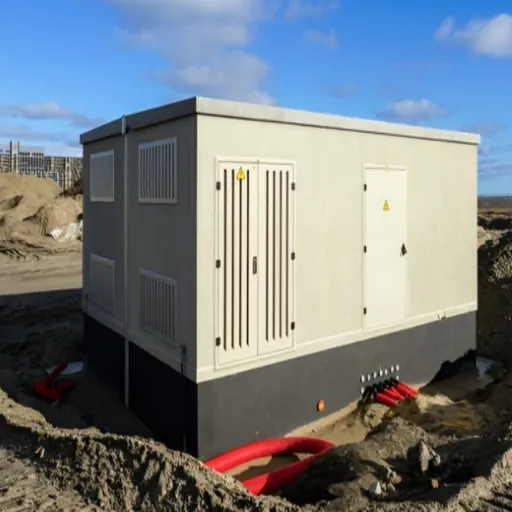
Understanding the distinctions between containerized, mobile, and traditional substations ensures you specify the right solution for your application. Each approach offers distinct advantages depending on deployment timeline, mobility requirements, and permanence needs.
Comparison Overview
| Feature | Containerized Substation | Mobile Substation (Trailer) | Traditional Substation |
|---|---|---|---|
| Deployment Time | 3-8 weeks | 4-24 hours | 12-24 months |
| Mobility | Moderate (container transport) | High (road-towable) | Fixed permanent installation |
| Protection Level | IP54+ (weatherproof, sealed) | Weather-resistant | Building-dependent |
| Typical Capacity | 100 kVA to 50 MVA | 5 MVA to 100 MVA | Unlimited |
| Voltage Range | Up to 245 kV | Up to 245 kV | Any voltage level |
| Use Case | Semi-permanent (months to years) | Emergency/temporary (hours to weeks) | Permanent infrastructure |
| Cost vs. Traditional | 30-40% lower | 20-30% higher | Baseline |
When to Choose Each Solution
Containerized Substations excel when you need:
- Quick setup without putting aside safety and lifetime
- Temporary installations that can be relocated once the project is finished.
- Operations in the severe environment (desert, maritime, arctic conditions)
- The space restrictions of urban or industrial areas
- Can expand the moduloptic spaces.
Mobile Substations (Trailer-Mounted) suit scenarios requiring:
- Respond with urgency to a disaster.
- Frequent relocating (such as on a weekly or monthly basis)
- One of the most common reasons so many businesses employ this type of seasonal bypass
- Peak load management into seasons
Traditional Substations remain optimal for:
- New assets designed for a 30-year life
- A need for very high capacity (>100 MVA)
- Advanced and complex switching matrices are increasing the yard layouts
- Sites that are given with land banks and construction resources
Real-World Decision Example
Regarding a solar farm developer’s initiative to put up 50 MW in a rural area, eight months were given for the completion of the grid interconnection infrastructure. Method A included putting up a conventional substation, such as obtaining building permits, construction activities, and a minimum of 14 months. Method B involved the installation of a containerized 33/11 kV substation with GIS switchgear. By implementing the containerized type of system, results were attained in a mere six weeks, resulting in grid connection two months earlier and the chosen investment in accelerated adoption to exploit favorable feed-in tariff regimes. With savings of around $180,000, the developer established revenue eight weeks sooner than expected.
Technical Specifications and Standards
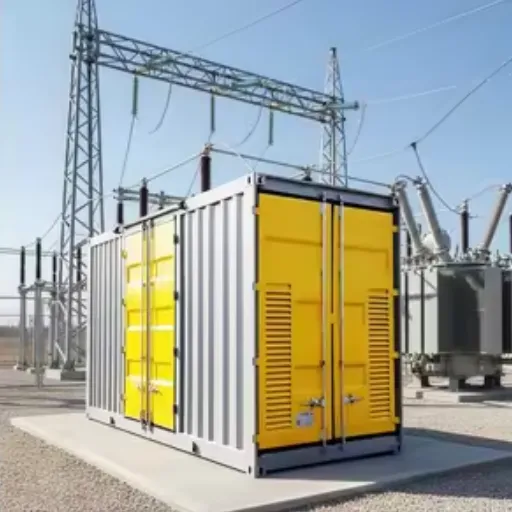
Containerized substations must comply with rigorous international standards to ensure safety, reliability, and interoperability across global markets. Understanding these specifications helps engineers specify appropriate equipment and procurement teams evaluate supplier capabilities.
Voltage Classifications and Ratings
| Classification | Voltage Range | Common Applications |
|---|---|---|
| Low Voltage (LV) | < 1 kV (400V, 690V typical) | Commercial buildings, small industrial |
| Medium Voltage (MV) | 1 kV to 35 kV (6.6, 11, 22, 33 kV common) | Distribution networks, renewable integration |
| High Voltage (HV) | 35 kV to 220 kV (66, 110, 132 kV) | Transmission substations, large renewables |
Medium Voltage Segment Dominates: Approximately 55% of containerized substations operate in the 1-35 kV range, serving utility distribution networks, industrial facilities, and renewable energy projects.
Key Technical Specifications
Switchgear Ratings:
- Rated Voltage: 12 kV / 17.5 kV / 24 kV / 36 kV / 40.5 kV
- Power Frequency Voltage: 28 kV-70 kV for one minute
- Impulse Withstand Voltage: 75 kV-170 kV
- Rated current: 400 A-1250 A (up to 6300 A)
- Short-time withstand current: 12.5 kA-31.5 kA/1 s
Transformer Capabilities:
- Ratings: 100kVA to 30,000kVA
- Voltage Ratios: 12/0.4 kV, 24/0.4 kV, 36/0.4 kV, 66/11kV, 110/11 kV
- Cooling Types: ONAN/ONAF (oil), AN/AF (dry type)
Container Specifications:
- Standard Sizes: 20 ft (6.06 m), 40 ft (12.19 m), 40 ft high cube 2.89 m (height)
- Protection rate: IP54 standard, optional IP65
- Temperature Range: Operational: -40°C to +60°C, Arctic: -60°C
- Altitude Rating: 2500 m above sea level
International Standards Compliance
IEC Standards (International Electrotechnical Commission):
- IEC 62271-202: High-voltage/low-voltage prefabricated substation
- IEC 60076: Power transformers
- IEC 61439: Low-voltage switchgear and control gear systems
- IEC 60529: Various references to protection degrees (IP codes)
- IEC 61850: Communication networks for automation in electric power systems
IEEE Standards (Institute of Electrical and Electronics Engineers):
- IEEE C37.20. 2: Metal-clad switchgear
- IEEE C57: Transformer standards
- IEEE 525: The Electric Power Distribution System
Container and Safety Standards:
- ISO 668: Series 1 freight containers. Generally, allied with description classes, dimensions, and ratings
- ISO 9001: The quality management systems
- NFPA 855: Standard for the installation of stationary energy storage systems
- UL 9540: Standard for safety of energy storage systems
Applications and Industry Use Cases
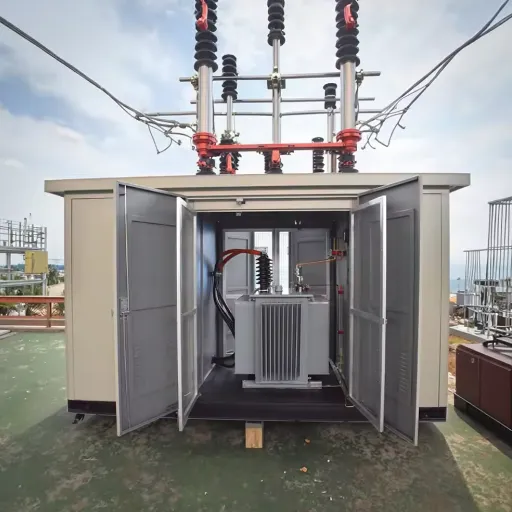
Containerized substations are used in numerous applications in different industries that need quick and space-saving deployment or operation in harsh environmental conditions. The renewable energy sector posted, indeed, the largest market uptake rate of 46.2% market demand, followed by utilities (51.9%) and industrial applications.
Renewable Energy Integration
Solar Farm Applications:
Containerized substations are used for large-scale solar installations for stepping up the inverter output (commonly 400 – 800 V AC) into medium voltage (11-33 kV) to inject into the grid. It is done through super-rapid speed installation that perfectly matches time and scheduling in the course of solar project construction. And another advantage in this type is its capability to allow system expansion with growing solar farm capacity.
- Typical Configuration: One to five MVA per unit
- Voltage: 0.4/11 kV or 0.69/33 kV
- Integration: Direct connection to string or central inverters
Wind Farm Grid Connection:
Onshore and offshore wind projects could be tied to collector stations, which use containerized substations wherein electricity from multiple turbines within the farm is brought together and stepped up to the level of the transmission. Marine-rated containers are approved for marine applications, which are designed to mitigate the damaging effects of salty air on metals.
- Offshore Specification: Marine classes of DNV/ABS
- Capacity: 10-50 MVA for a large turbine village
- Features: The SCADA is remotely integrated.
Industrial and Mining Operations
Remote Mining Sites:
Remote mine sites depend a lot on their container substations to have secured and cost-effective power distribution without permanent infrastructure investment. Rugged trunking systems are specifically built to withstand dust, shocks, and extreme temperatures prevalent in mining sites.
- Common ratings: 6.6 and 11 kilovolt current distributions
- Special features: Arc-flash containment and fire suppression systems
- Deployment: Skid-mounted or containerized for helicopter transport into remote destinations
Oil and Gas Facilities:
Upstream digging ventures till the midstream processing facilities resort to containerized substations to provide temporary power during the building phase and permanently distribute it for operational purposes. Hazardous areas have zone 1 and 2 classifications, thus require through designed components.
Urban and Space-Constrained Installations
Data center power infrastructure:
Hyperscale data centers use containerized substations for quicker capacity extension of power, negating the necessity of construction of full-fledged substation buildings. The space-saving design preserves valuable data hall space while providing redundant power feeds.
- High-density configuration: over 10 MVA in a single 40-ft container
- Redundancy: (n+1 or 2n) configuration of a highly-criticalized application
- Integration: Compatibility with UPS (uninterruptible power supply) system
Electric Vehicle Charging Hubs:
Large EV charging installation sites for fleet depots and highway corridors require medium voltage step-down for multiple fast chargers. A containerized substation provides 1-6 MW capacity to support fast deployment to rapidly expand the charging network.
- Typical capacity: 1-3 MW for bus depot; 3-6 MW for highways
- Voltage: 11/0.4 kV or 33/0.416 kV
- Feature: Dynamic load management integration
Emergency and Disaster Recovery
Grid Resilience Applications:
For disaster relief, utilities keep containerized substations as strategic spares. Hurricanes, earthquakes, or fires disrupt the traditional infrastructures, and these fill in capability gaps until the permanent repairs have been completed.
Temporary Construction Power:
Major infrastructure projects- tunnels, bridges, railways- are simply enormous projects. The construction process uses a lot of power, and this is usually of short duration. These types of projects often have container substations deployed that are easily relocated to the successive stages of construction, which eliminates repeated civil work.
Cost Analysis and Return on Investment
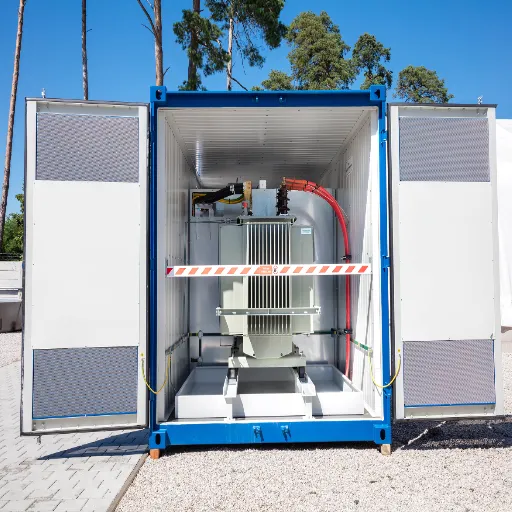
Understanding the total cost of ownership for containerized substations versus conventional alternatives helps build compelling business cases for procurement decisions. While upfront equipment costs may appear similar, significant savings emerge from reduced installation time, lower civil works requirements, and accelerated project completion.
Capital Cost Comparison
| Cost Component | Containerized Substation | Traditional Substation | Savings |
|---|---|---|---|
| Equipment | 150,000−150,000−800,000 | 120,000−120,000−700,000 | -10% to +15% |
| Civil Works | 10,000−10,000−50,000 | 100,000−100,000−500,000 | 70-90% |
| Installation Labor | 15,000−15,000−40,000 | 80,000−80,000−200,000 | 60-75% |
| Project Management | 5,000−5,000−15,000 | 30,000−30,000−80,000 | 60-80% |
| Total Project Cost | 180,000−180,000−905,000 | 330,000−330,000−1,480,000 | 25-40% |
Note: Cost ranges based on 1-5 MVA MV/LV substations in typical industrial applications. Actual costs vary by specifications, location, and local labor rates.
Timeline and Schedule Advantages
Characteristic rapid deployment is the main advantage containerized substations have over others. Here is a typical contrast of a project example, comparing this:
Traditional Substation Timeline:
- Design and Engineering: 8-12 weeks
- Civil work and foundation: 12-20 weeks
- Procurement of equipment: 16-24 weeks
- Installation on-site and Commissioning: 8-12 weeks
- Total: 44-68 weeks (11-17 months)
Containerized Substation Timeline:
- Design and engineering: 4-6 weeks
- Factory-manufacture and test: 8-12 weeks
- Site preparation (minimal civil works): 2-4 weeks
- Delivery, Placement, and Commissioning: 1-2 weeks
- Total: 15-24 weeks (4-6 months)
Time saving: how much quicker, 60-70% faster implementation, and so on.
Revenue and Opportunity Impact
For time-sensitive projects, accelerated deployment translates directly to financial returns:
Renewable Energy Example:
A solar farm qualifying for time-dependent feed-in tariffs connects to the grid two months earlier with a containerized substation. At 0.08/kWh for a 20MW facility, with 250.08/kWh for a 20MW facility with 25576,000 in additional revenue before the traditional substation would even complete construction.
Industrial Production Example:
A manufacturing facility avoiding two months of diesel generator rental (typical cost: 50,000/month for 5MW)saves50,000/monthfor5MW)saves100,000 while grid connection proceeds. Combined with avoided generator fuel costs, savings often exceed $200,000.
Total Cost of Ownership Factors
Containerized substations provide lifecycle benefits beyond the immediate costs of the project. These are the following:
Maintenance Accessibility:
With the advantage of factory-designed substation layout plans that provide more ease in access for maintenance, the containerized technologies beat out the field-built installations, often handled cagily due to austere space constraints. What emerges is approximately 15-20% reduced costs for labor inputs as maintenance is being carried out throughout the lifecycle of equipment.
Relocation Value:
Basic project applications include industries such as mining or construction, and the modular substations provide value after project completion, as they are movable to fresh sites. This often saves at least 60-80% of the asset in comparison with abandoning fixed infrastructure.
Reduced Risk:
One good thing about taking the components together at an assembly plant is that the whole installation ought generally to supervise the harmful commission of faults of assembly (or connection) and of delay. Whether a few pre-tested pieces of equipment get there complete with manufacturer-issued FAT (factory acceptance testing) documentation, site acceptance processes are very much streamlined.
Global Market Trends and Growth Outlook
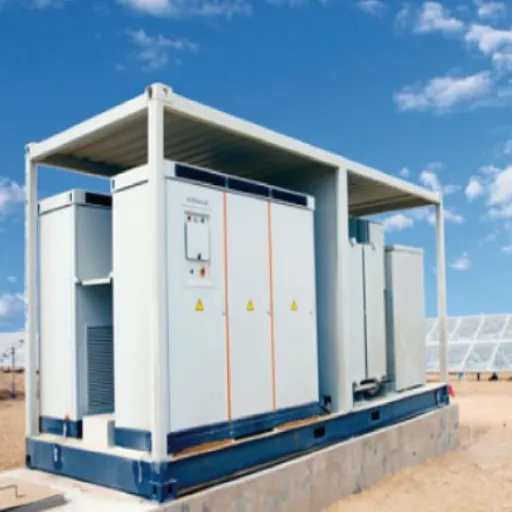
The containerized substation market demonstrates robust growth driven by renewable energy expansion, grid modernization initiatives, and the need for rapid infrastructure deployment in developing economies. Understanding these trends helps stakeholders anticipate technology developments and capacity planning requirements.
Market Size and Projections
| Year | Market Value | Growth Driver |
|---|---|---|
| 2025 | $3.2 billion | Baseline renewable integration |
| 2030 | $4.25-6.66 billion | Accelerating solar/wind deployment |
| 2035 | $7.2 billion | Grid modernization, microgrids |
| CAGR (2025-2035) | 8.4-9.03% | Sustained infrastructure investment |
Regional Growth Dynamics
Asia-Pacific (40% market share):
China records the highest global growth rate, which amounts to 11.5% CAGR and comes from massive development and establishment of renewable energy, as well as high-speed rail electrification, until the country’s industrial expansion stakes its claim for growth. Next is India with an almost equally impressive 10.7% CAGR, focusing on rural electrification and metro system development. Here, we look, for example, at local producers like TBEA and TGOOD, who stand their ground against the very big competition located in ABB, Siemens, and Hitachi Energy.
Europe (25% market share):
The understanding is that because the entire European continent is a smaller one, it is therefore easier to implement innovative solutions for grid emplacement through applying model sites, thereby identifying a much better practice system. Countries with the CAGRs and per sector share above 7%. These are against Germany (9.8% CAGR) and France (8.9% CAGR). If you look at wind power in particular, wind farms are now getting firmly seeded. These trees are needed because there is no way to generate wind power. In addition, EV charging infrastructure is booming.
North America (22% market share):
Six American states and provinces building over 20 will give these regions a total of 42 states and provinces not far into the future. America leads in that almost increasing incomparable concern because of its vast territorial landscape, while Canada will surpass the United States in that the two states’ westerns are easily the two most industrially developed in the 19th and late 20th century global history.
Emerging Markets (13% and growing):
But there is still a faster pace of electrification, albeit not as fast as what is happening in Asia, as Africa and the Middle East had not yet reached 1% electrification rates by 2005. However, customers still want easy-to-operate and add modular containers, with the sole criterion being cost.
Technology Trends Shaping the Market
Digitalization and Smart Grid Integration:
More than 50% of new containerized substation systems comprise an SCADA system and digital protection relays as well as remote communication. Technology creates opportunities for interfaces to advanced automation systems, such as the use of the IEC 61850 protocol, thereby enabling tools for diagnostic and prognostic maintenance.
Energy Storage Integration:
More frequently, containerized battery energy storage systems (BESS) have started to combine with substation structures in their operations, forming integrated power conversion and distribution.
Sustainability Focus:
Bio-degradable bio-based variant products, such as switchgear with vacuum interrupter SF6-free dry air insulation, bio-based transformer oils, and recyclable ingredients as far as possible circular, for conveying liquidation material requirements.
Selecting a Containerized Substation Manufacturer
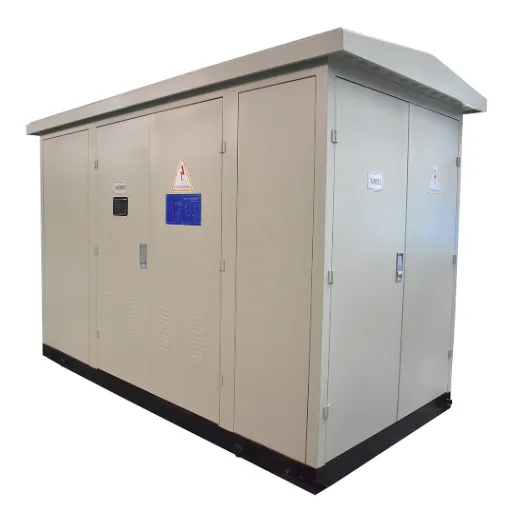
Choosing the right manufacturing partner ensures your containerized substation meets technical specifications, complies with applicable standards, and delivers reliable performance throughout its operational life. Evaluate potential suppliers across these critical dimensions.
Technical Capabilities Assessment
Factory Testing Infrastructure:
The responsible manufacturer shall maintain the timing of the test facilities to run all various standard routine, type, and special tests in accordance with IEC 60076 and IEC 62271. Please provide evidence of:
- High voltage and lightning impulse testing (verification in terms of BIL)
- Temperature rise testing
- Verification for short-circuit withstand
- Partial discharge measurements (GIS)
Design and Engineering Expertise:
Have your evaluation answers related to the capabilities of the manufacturer’s designing team and the relevance to the projects they have done before in Custom containerized substation types. High voltage engineering, transformer designing, cooling, and controllable structural container designing are all in one place.
Flexibility in Design:
Many clients find that their standards work well in some use cases, and similarly, complex cases require customization. Verify a company has a culture that fits into:
- Non-standard voltage ratios
- Specialized environmental protection (marine, desert, arctic)
- Integration with existing protection and control systems
- Unique dimensional constraints
Quality and Compliance Verification
Certifications and Standards:
Compliance with the relevant international standards must be confirmed:
- Quality management systems – ISO 9001:2000
- Environmental management – ISO 14001:2004
- IEC Product Certifications
- Regional Certifications (CE Marking, UL listing, CCC for China)
Quality Control Processes:
Ascertain the following from the manufacturer about their quality assurance processes:
- Incoming Material Inspection
- In-circuit check points
- Factory acceptance testing (FAT) procedures
- Documentation and traceability systems
Commercial and Support Considerations
Project References:
It is necessary to ask for case studies and references on past projects to be done for the same facility. All these things help to understand the response time, maintenance, quality, consistency, and after-sales performance of the manufacturer.
After-Sales Service Network:
Containerized substations require maintenance, spare parts, and potential technical support over 20-30-year lifecycles. Assessment includes:
- Spare parts availability (inventory strategy and lead times)
- Technical support capability (for example, remote diagnostics, field services)
- Warranty terms and conditions
- Local service presence in your area.
Why Consider Chinese Manufacturers
Among other manufacturers, one such prominent example is that of Shandong Electrical in China, which offers:
Cost Competitiveness:
This matures a rather narrow area of the network, which represents the capability and sophistication of the electrical equipment that China has at present. Value is important to establish not only by price but also through performance. Typically, this would result in 20-30 percent savings, which can be translated into optimization of the posts that are slightly like this: Either funding allows expansion or funding for additional capability.
Customization Agility:
While making provision for these deviations, Chinese manufacturers make provisions for more room for the victories or the tails and thus design things around those project-specific conditions, instead of trying to force an existing fit.
Rapid Production Cycles:
With quite a small time in design and general equipment for manufacturing purposes, there is a horizon between design time and production time. Therefore, this module typically has an 8-12 week lead time in the end, when you move all of that into custom designs, whereas in the West, it would typically be 16-24 weeks from Western suppliers.
Export Experience:
Chinese manufacturers have established a wide range of connections exporting to Asia, Africa, the Middle East, Latin America, and emerging markets, with broad experience in various regional standards and logistics requirements.
Looking for a reliable containerized substation manufacturer with global export experience? Contact Shandong Electric to discuss your project.
Conclusion
Instead of using traditional bricks and mortar, containerized substations revolutionize how power infrastructure develops. Very significant advantages stem from its savings of 60 to 70% of the time for construction or 25 to 40% of costs per unit, and a much higher flexibility. It provides massive advantages for the technical sector as well as on a financial level, for renewable energy projects, industrial facilities, and utilities with space limitations or a limited schedule.
A major premise emerging is the forecast growth of the global market from $3.2 billion today to a projected $7.2 billion by 2035, that containerized substations are going to characterize the behavior of power infrastructure due to the challenges of modernizing grids, integrating renewables, and quick electrification in developing economies.
Key Takeaways
- Faster Deployment: Deploying container substations in four to six months considerably reduces deployment periods compared to 12 to 17 months for conventional substations, thus accelerating project completion by about 33%, benefiting revenue generation, as well. They have been found to generate increased revenue streams.
- Cost Efficiency: The sum of all the other savings for a project is between 25%-40% due to less civil works installation labor and a far more efficient project management.
- Technical Versatility: Such containerized substations of current vintage capable of coming up for anything between 400V systems of step-down distribution and up to 200 kV systems of power transmission cover options with capacity across 100 kVA and 50+ MVA.
- Standards Compliance: Standards of safety, reliability, and global interoperability are guaranteed according to IEC 62271-202, IEC 60076, and IEEE.
- Breadth of Application: The primary areas for business growth have all been integrated renewable energy, mining operations, data centers, and the rather specific subject of emergency recovery.
Next Steps
Power system engineers who need a review of containerized substation specifications might have to procure components. Extraordinary financial managers and developers who hope to step up the utilities’ rapid deployment will connect with highly experienced manufacturers able to tell about their specific usage requirements.
Please feel free to contact Shandong Electric for your containerized substation project technical consultation. Our team of engineers will be available with all the specific specifications, cost estimations, and deployment timing to offer in accordance with your operating environmental scope required to fulfill your voltage and capacity needs.
Frequently Asked Questions
What is the typical lifespan of a containerized substation?
The substation is both containerized and follows IEC specifications; thus, it is expected to comply with a 25-30-year life cycle. The structural steel framework of the container is anti-corrosive, along with the necessary coating to prevent interior equipment from being affected by any environmental degradation. Time-to-time maintenance using transformer oil analysis, switchgear inspection, and testing protection systems ensures that an operator’s maintenance requirements match those of traditional indoor applications.
Can one expand containerized substations post-installation?
That’s possible in a modular expansion, which is typically done by adding extra containers. In cases of an addition in the capacity of a transformer, some designs allow dual transformer configurations fitted inside enlarged enclosures. Such concepts also result in containers adjacent to the previous container. Expansion of MV and LV switchgear follows the addition of dedicated containers of switchgear connected via the busbar system.
Which maintenance is required for a containerized substation?
The annual transformer oil analysis (for units that are oil-filled), thermographic check on connections, testing the protection relay, and exercises on the switchgear mechanisms are all required to occur within the same time framework. It is important to check the HVAC filters, the seals around the doors of the container, and finally, the corrosion protection system. The possibility of minimizing the exercise on time-based schedules and the escalation of condition-based maintenance through remote monitoring systems ends.
Have containerized substations been designed to operate in harsh climatic conditions?
They design these for extreme environments. For example, an arctic version that has heaters and insulation for up to -60°C, a desert version that features enhanced cooling with some sand-filtration equipment, and also a marine version that comes coated with electrostatic spray and salt-mist inhibitors on the metal. When looking for quotations, therefore, one must specify exactly the kind of environment in which the substation would be installed.
How is fire safety handled in containerized substations?
Today, containerized substations come with wide-ranging fire protection specifications, such as the detection of arcs and rapid clearing of the fault, an automatic fire suppression system (clean agents such as FM-200 or water mist for some applications), separate types of thermal and smoke detection, and fire-rated compartmentalization between high-risk areas (e.g., transformers) and control equipment. These may often be more than is achievable when erecting components in the field.