
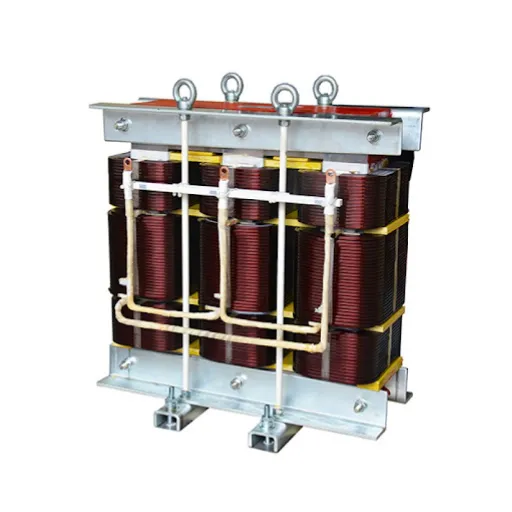
Understanding Transformer Impedance and Why It Matters

Transformers are crucial for today’s electric systems as they make the transfer of electric power among different voltage levels smooth and efficient. One of the most important factors of transformer design and operation is impedance, which has a great impact on performance, efficiency, and reliability. This comprehensive guide will clarify the notion of transformer impedance, discuss its significance, and explore its impact in real-world applications.
Introduction to Transformer Impedance
Definition of Transformer Impedance
The impedance of a transformer is the resistance a transformer shows to the alternating current (AC) in the circuit. It is the sum of resistance and reactance which together influence the transfer of electric power from the primary to the secondary winding. Impedance is stated as a percentage which corresponds to the voltage drop at full load when the transformer is in operation. It is usually a part of a transformer’s specifications that serves to facilitate planning and designing of systems.
Key Insight
The importance of transformer impedance is seen in the way it affects the transformer’s performance under different load conditions. Higher impedance means more voltage regulation—the voltage on the secondary winding may experience a significant drop when there are heavy loads. In contrast, transformers having lower impedance will display better voltage regulation but will cause higher fault current to pass through, which may lead to stability and protection equipment problems in the system.
It is necessary for system engineers to comprehend and compute the transformer impedance to distribute power efficiently and reliably. It plays a role in forecasting the faulty levels, relay designing, and transformer compatibility in parallel working. In the course of planning and practically implementing, if the transformer impedance is factored in, engineers are sure to have energy losses minimized, operational inefficiencies reduced, and overall system resilience enhanced.
Importance of Impedance in Electrical Systems
The impedance of the transformer is, no doubt, one of the most important aspects concerning the operation and the reliability of electrical systems. It is the primary factor of controlling the voltage across the transformer and, thus, keeps the output voltage stable even when the load is changed. Lower impedance results in voltage regulation of higher quality, but at the same time, it can cause fault currents to increase, which hence might require engineers to come up with very carefully designed protection mechanisms for the whole system.
Impedance also affects power distribution directly in terms of efficiency. Engineers, by optimizing transformer impedance, are able to reduce the energy losses during operation, hence making energy transmission more cost-effective. Moreover, it also helps ensure that transformers working in parallel are nicely matched, thus maintaining balance in load sharing and avoiding potential damage to equipment.
Lastly, transformer impedance allows fault current control and limitation to be incorporated in the system. The impedance of the transformer, when a fault occurs, acts like a natural barrier, thereby helping to cut off excessive currents and hence ensuring safe system operation. If impedance is properly taken into account in system design, long-term performance will be enhanced, disruptions will be minimized, and the safety of both the equipment and the personnel operating it will be improved.
Overview of Transformer Operations
Transformers are based on the principle of electromagnetic induction, which allows changing of voltage levels without changing frequency. They are made of two main windings—one primary and the other secondary—which are placed on a common core. The primary winding, made of alternating current, produces a magnetic field in the core, which in turn produces a voltage in the secondary winding. The process of stepping up or stepping down voltage depending on the need is done through transformers, thus making power transmission and distribution more efficient.
One of the main features that make transformers work is their capability to minimize energy losses. High melting point core materials and energy-efficient winding configurations are used in transformers to achieve low losses due to heat and electromagnetic interference. Thus, the majority of electrical energy is transferred from the power source to the destination with very little waste.
Transformers are very important in electrical systems as they equivalently change voltage levels to suit operating conditions. The use of high voltage for transmission leads to a reduction of energy loss during the transportation of electricity over long distances, whereas lower voltage assures safety and compatibility for end-users. The adaptability and reliability of transformers have made them a necessity in power systems of all types—be it industrial, residential, or commercial—all over the world.
Fundamental Concepts of Impedance
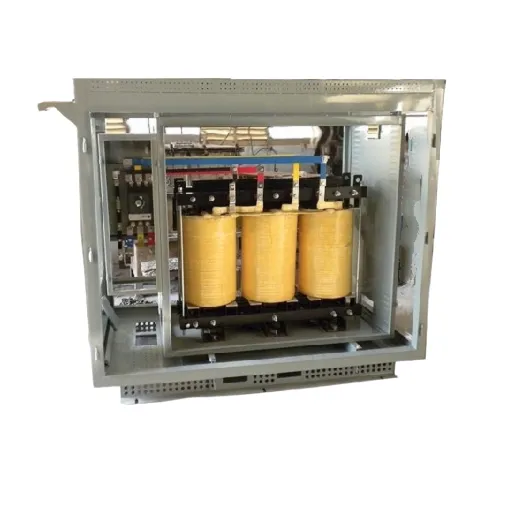
Understanding Electrical Impedance
Electrical impedance is an indicator that shows how much an electrical circuit opposes the flow of alternating current (AC). It consists of two basic parts—resistance (R), which limits the current in the case of direct current (DC) circuits, and reactance (X), which is the result of the presence of capacitors and inductors in AC circuits. Impedance is a complex quantity having units of ohms (Ω) and is established as Z = R + jX, with “j” being the imaginary unit.
📊 Technical Note
The resistance component is not affected by the signal frequency, but reactance is determined by the frequency of the AC signal. Capacitive reactance (Xc) reduces with the rise of frequency, while inductive reactance (Xl) increases with the same rate as frequency. The combination of these components determines the total impedance.
The concept of impedance is essential for the optimization of circuit performance, particularly in the case of power grids, audio engineering, and wireless communication. The impedance matching technique is one of the many tools that engineers use to either increase power transfer or decrease the amount of reflections in the case of transmission lines. With the help of impedance data analysis, small but precise changes can be made to various technological and industrial systems to guarantee high efficiency and low energy loss.
Components of Transformer Impedance
The impedance of a transformer is a pivotal factor that influences the operation and effectiveness of power systems to a large extent. The impedance of a transformer is made up of a number of elements, each of which has a specific function in determining the total impedance of the transformer. The leading components consist of:
Resistance (R)
Current-induced losses in the transformer’s windings measured in ohms. Largely influenced by the conductor’s material and dimensions. High resistance may cause heating and energy loss.
Leakage Reactance (X)
Created by leakage flux that separates primary and secondary windings, causing voltage drop under load. Governs voltage regulation and fault conditions.
Magnetizing Reactance (Xm)
Associated with power needed to magnetize the transformer core. Influenced by core material properties and physical configuration.
Core Losses (Rc)
Energy converted to heat in the core, mainly due to hysteresis loss from repetitive magnetization cycles and eddy current loss.
Engineers have the capability to improve the transformer’s performance and make it less energy-consuming by looking at and optimizing these components in a specific manner. Today’s diagnostic instruments and simulation methods make it possible to get very accurate measurements of transformer impedance, thereby guaranteeing better performance in industrial and power distribution systems.
Applications of Transformer Impedance

Impedance Matching in Electrical Engineering
Impedance matching has become a key principle in the domain of electrical engineering, where it facilitates the transfer of power at its maximum between connected components and helps eliminate signal reflections in circuits. This practice primarily caters to the requirements of high-frequency applications such as telecom, audio, and RF (radio frequency) circuits. By tuning the impedance of the source to that of the load, engineers are able to enhance the use of energy and keep signal quality intact.
Impedance-matching techniques have evolved with cutting-edge tools and methods such as the Smith chart, vector network analyzer, and simulation software to achieve the required level of design accuracy. In RF systems, where the slightest reflections can lead to maximum signal loss, stub matching and quarter-wave transformer techniques are very carefully used to adjust impedance accordingly. In addition, makers of impedance-matching networks consisting of inductors, capacitors, and resistors aim for compatibility with different frequencies and loads.
Moreover, impedance matching has its say in transformer design, justifying the utilization of secondary winding impedance that is commensurate with the load to obtain a more efficient device with less energy waste. Through the introduction of new diagnostic methods and simulation technology, this process has been made easier and performance in various engineering applications has been further increased.
Real-World Use Cases of Transformer Impedance
Transformer impedance is of utmost importance in different fields, from electrical systems to power transformers. One of the most important areas is electricity distribution where matching of impedances leads to almost zero losses in energy during long-distance transmission of electricity. This method enables utility companies to deliver electricity to customers faster and consequently at lower costs with less environmental impact.
💡 Industry Applications
- Industrial Machines: High-power devices like motors or welders require amperage and voltage regulation that transformer impedance provides, protecting sensitive components from damage.
- Renewable Energy Integration: Wind or solar energy integration into the grid is highly dependent on transformer impedance to ensure the main power grid is not disturbed by energy generation changes.
- Medical Devices: In equipment such as MRI scanners, accurate impedance matching during transformer design significantly improves reliability and accuracy of diagnostics.
These cases show that power transformer technology has increased in sophistication, and among the reasons why it continues to be a progressive player in frontier engineering challenges is its support of overall system efficiency and reliability.
Role in Power Distribution Systems
In power distribution networks, transformers are indispensable since they facilitate the transfer of electrical energy over large distances, preventing the loss of energy while being safe. They increase voltage for transmission and decrease it for distribution to end users, thus making power accessible for all kinds of consumers like domestic, industrial, and commercial.
These functions clearly indicate the transformers’ essential role in today’s power distribution networks, through which the three main features of efficiency, safety, and functionality are guaranteed.
Advanced Topics in Transformer Impedance
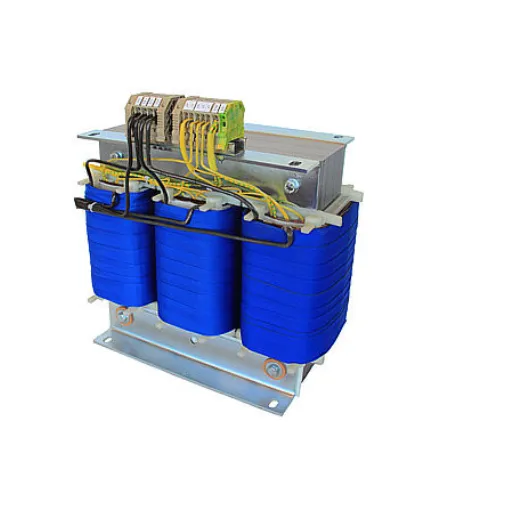
Impedance in Different Transformer Configurations
The role of transformer impedance is significant when it comes to deciding how the transformer would perform and behave in different loading conditions. The impedance value has an impact on voltage regulation, fault currents, and load sharing in the case of parallel transformer connections. Different transformer connections such as delta-delta, delta-wye, wye-delta, and wye-wye have different impedance traits that determine their applications and efficiency in operation.
For example, a delta-delta connection generally gives low zero-sequence impedance, which is a drawback when the transformer is used for unbalanced loads; however, it is a very good choice for industrial applications with such loads being at a minimum. Alternately, a delta-wye connection has been the choice of distribution systems for its capability of handling phase shifts and balancing asymmetrical loads very effectively. Wye-wye connections are seen less but they provide the advantage of easy grounding, while there might be a need for extra impedance grounding to control transient faults.
The impedance value is obtained through the combination of the winding’s material, design, core construction, and the voltage ratings of the transformer. Impedance percentages play a crucial role in determining fault levels, whereby higher impedance leads to a reduction in fault current but negative influence on voltage stability. These factors are constantly evaluated by engineers when choosing transformers to develop safety, performance, and compatibility with system requirements.
Impact of Temperature on Impedance
Among the factors affecting the transformer, temperature is the most influential one that can alter the transformer’s operational area. Temperature change is responsible for electrical resistance change of winding material and thus impedance. Below are five important pointers revealing the connection between temperature and impedance:
- Rise in Resistance: Increase in temperature is accompanied by rise of transformer windings resistance, reflected as rise in impedance. This reduces transformer efficiency.
- Magnetic Loss Alterations: High temperatures may bring about variations in magnetic behavior of the transformer core, affecting core losses and impedance.
- Material Expansion: Transformer winding materials expand when heated, affecting winding structure and potentially changing impedance characteristics.
- Insulation Breakdown: Higher temperatures accelerate the insulation materials’ aging process, indirectly affecting impedance by changing the transformer’s dielectric properties.
- Cooling Performance: Temperature greatly impacts transformers’ cooling systems; inefficient cooling causes excessive heat and further rise in impedance.
It is very important to monitor and manage transformer temperature carefully to maintain optimal performance and prevent negative effects on impedance.
Innovations in Transformer Design and Impedance Management
Modern designs of transformers have been paving the way to upgrade the power systems of the future by making them more efficient and reducing problems associated with high impedance. The most excellent part of this innovation is the use of cutting-edge materials for the core, such as amorphous metal alloys, which minimize core losses and increase overall transformer performance. These new materials are characterized by lower eddy current losses, higher insulation quality, and hence direct effect on impedance and operational efficiency.
🔬 Technological Innovations
- AI Systems: Built on real-time data analysis to predict performance bottlenecks including impedance fluctuations, recommending better management to reduce downtime.
- IoT Integration: Sensors with advanced analytics continuously track temperature, load conditions, and dielectric properties to ensure optimal performance and longevity.
- Environmentally Friendly Designs: Transformers made with biodegradable insulating fluids and smart design techniques reduce environmental impact while increasing thermal stability.
- Advanced Cooling Systems: Radiative and liquid cooling technologies help maintain desired impedance levels by controlling excessive heat generation during operation.
All of these changes not only make transformers work better but also help in building green and trustworthy electrical grids that can handle the demands of current high-performance infrastructures.
Practical Considerations

Measuring Transformer Impedance
Transformer impedance is the most important characteristic showing the amount of natural opposition that a transformer presents to alternating current passing through its windings. The procedure for measuring transformer impedance consists of multiple stages and the use of specialized instruments to gain precise results. Usually, the whole thing is done with the help of an impedance tester or similar measuring device.
In the course of testing, a low voltage is applied to the transformer windings, and the current along with the voltage is noted to compute the impedance value. This value is a complex number made of resistive (real) and reactive (imaginary) parts, which are used for evaluation of transformer behavior under normal and fault conditions.
⚙️ Why Accurate Measurement Matters
Accurate measurement of impedance is the key factor for a transformer to be operated efficiently and reliably. It directly influences performance in load-sharing, short-circuit, and voltage regulation situations. By knowing impedance properties, engineers can predict how the transformer will react to various loading conditions and ensure power-efficient supply to downstream systems.
Additionally, impedance measurements are frequently employed as a diagnostic means of identifying internal winding defects, core fluctuations, or insulation deterioration. Regular testing enables utility companies to troubleshoot and minimize the risk of failure.
Impedance measurement has benefitted from technological innovations in terms of precision and user-friendliness. Modern digital impedance analyzers can deliver very sensitive readings, and there are fully automated testing systems conducting measurements at high speed without sacrificing accuracy. Furthermore, dedicated software tools for analysis and modeling of impedance data give a broader understanding of transformer operation. All these developments contribute to the enhancement of capability to optimize design and maintenance strategies for power systems, thus aiding in meeting the requirements of modern infrastructures that are constantly changing.
Future Trends in Transformer Impedance Engineering
Innovative technological solutions and the ever-increasing demand from modern power systems will be the main drivers of the transformer impedance engineering field, which is already on its way to major breakthroughs. One of the major developments is the use of artificial intelligence (AI) along with machine learning, which could lead to precision and predictive modeling of transformers. The analysis of very large amounts of data will help these tools pinpoint possible problems in impedance behavior, thereby enhancing reliability and reducing the period of the transformer being out of service.
🤖 AI & Machine Learning
Precision and predictive modeling of transformers through analysis of large data sets to pinpoint impedance behavior problems and enhance reliability.
🔬 Advanced Materials
High-temperature superconductors and nanomaterials offering increased efficiency and diminished energy losses, enabling smaller yet more powerful transformers.
🖥️ Digital Twins
Virtual replicas of real transformers enabling simulations and continuous monitoring of impedance properties for real-time adjustments.
🌱 Sustainability Focus
Environmentally friendly cooling systems and insulation technologies with low environmental impact while supporting optimal impedance performance.
The use of advanced materials, for example, high-temperature superconductors or nanomaterials, is another trend that is starting to emerge, and their main advantages will be increased efficiency and diminished energy losses due to impedance. These materials can perhaps lead to the development of transformers that are not only smaller but more powerful, thus able to satisfy the requirements of renewable energy plants and modern grid systems.
The concept of digital twins is also gaining more importance in transformer impedance engineering. By having a digital copy of a real transformer, engineers can run simulations and have continuous monitoring of impedance properties, which leads to the possibility of real-time adjustments and better lifecycle management.
To add to this, sustainability orientation is the concerning factor of the whole industry, pushing the development of environmentally friendly cooling systems and insulation technologies that have a low environmental impact yet support the best impedance performance. The above-mentioned future trends reveal that the integration of digitalization, advanced materials science, and sustainability focus will completely transform the landscape of transformer impedance engineering for the next few years.
🔗 References
-
- Per Unit Calculations – Colorado State University
This resource covers transformer impedance calculations in per-unit systems, essential for power system analysis. - Application of Transformer Impedance Correction Tables – Texas A&M University
This paper explores impedance correction tables and their application in modeling phase-shifting transformers. - Click here to read more.
- Per Unit Calculations – Colorado State University
Frequently Asked Questions (FAQ)
❓ What is transformer impedance and why does it matter?
Transformer impedance is the total opposition a transformer puts to AC in the form of leakage reactance and winding resistance. It influences short circuit currents, voltage regulation, and how much voltage and current a step-down transformer will take under load. The transformation ratio between input and output and the fault currents can be calculated with the help of transformer impedance.
❓ How does transformer impedance affect short circuit current?
Transformer impedance is the primary factor that limits short circuit current. It does so through the generation of a voltage drop that is directly proportional to that of the fault current. Impedance that is higher results in lesser short circuit current, while low resistance permits greater currents during a short circuit. If the transformer is fed from a voltage source, then the percentage impedance gives a quick approximate of the maximum short circuit current in relation to the rated current.
❓ What is the relationship between transformer impedance and voltage regulation?
The regulation of voltage is a function of the impedance that is presented by the transformer since the voltage drop across the equivalent impedance while under load alters the output voltage from no-load to full-load. Besides the ratio of turns that windings have and their coupling, the impedance also influences the extent to which the output deviates for a specified load.
❓ How does coupling between windings influence transformer impedance?
Coupling is one of the factors that affect the leakage reactance component of transformer impedance. The leakage is reduced when there is stronger magnetic coupling, which results in a decrease in equivalent impedance and hence better voltage transfer. On the other hand, weaker coupling increases leakage reactance, which raises the impedance of the transformer and thus affects short circuit behavior and transformation efficiency.
❓ How is transformer impedance represented in equivalent circuit models?
Transformer impedance is generally represented in equivalent circuits as composed of primary and secondary winding resistances and leakage reactances in series plus a magnetizing branch. The total equivalent impedance that is seen by the voltage source is made up of these elements, which then allow for the calculation of voltage drops, input current, and the effects of system behavior on transformation.
❓ How does transformer impedance differ for step-down transformer designs?
Step-down transformers involve choosing a specific impedance according to the control of inrush and short-circuit currents as well as getting the desired voltage transformation. The impedance chosen signifies a compromise between providing low voltage drop during loading and limiting short circuit currents; the number of turns, winding geometry, and coupling determine the ultimate equivalent impedance and transformation constant.
📚 Key Takeaways
- Transformer impedance is the combined opposition of resistance and reactance to AC current flow, expressed as a percentage of voltage drop at full load.
- Higher impedance provides better fault current limitation but may result in poorer voltage regulation under heavy loads.
- The four main components of transformer impedance are resistance, leakage reactance, magnetizing reactance, and core losses.
- Impedance matching is crucial for maximizing power transfer efficiency and minimizing signal reflections in electrical systems.
- Temperature significantly affects transformer impedance by altering winding resistance and core magnetic properties.
- Modern innovations including AI systems, digital twins, and advanced materials are revolutionizing transformer impedance management.
- Accurate impedance measurement is essential for predicting fault levels, designing protection systems, and ensuring efficient parallel operation.
Ready to Optimize Your Power Systems?
Understanding transformer impedance is crucial for designing efficient, safe, and reliable electrical systems. Whether you’re an electrical engineer, technician, or power systems professional, mastering these concepts will help you minimize energy losses, prevent equipment damage, and enhance overall system performance.