
What is a Pad Mount Transformer? Complete Overview & Applications

Pad mount transformers are an integral link in contemporary power networks, serving to supply energy to residential districts, shopping centers, and manufacturing facilities. Unlike traditional overhead transformers mounted on poles, these units are housed in sturdy steel boxes and remain on the ground for easy access and compact design. This comprehensive guide explores the definition, functionality, and benefits of pad mount transformers and explains why they are so widely deployed across modern electrical infrastructure.
Understanding the Pad-Mounted Transformer
Definition of a Pad-Mounted Transformer
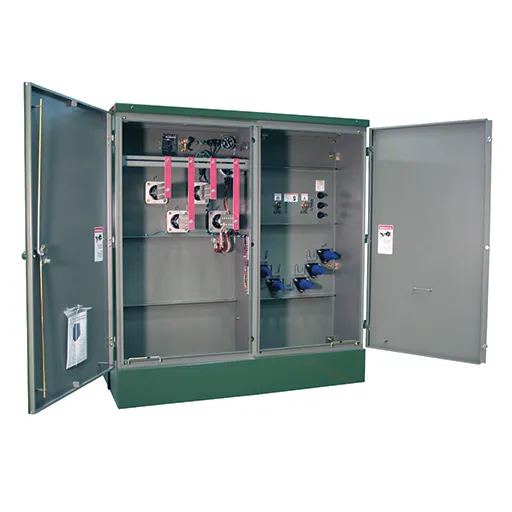
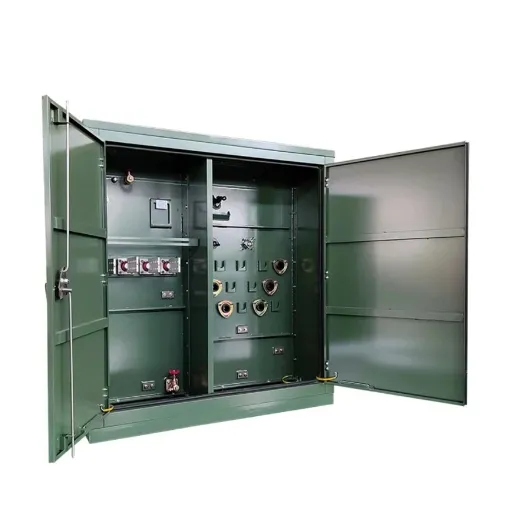
A pad mount transformer is a type of electrical transformer placed inside a metal case that cannot be opened by unauthorized individuals and is ground-mounted. These transformers are commonly found in residential, commercial, and industrial locations where electrical lines are typically laid below the surface. This design eliminates unsightly overhead power lines while maintaining a neat environment with reliable and safe power distribution.
The primary purpose of these transformers is to reduce high distribution line voltages to service voltages suitable for homes and businesses. The steel enclosures provide protection from precipitation, dirt, and unauthorized access, making them ideal for outdoor installations. Additionally, locking access covers prevent trespassing and help avoid potential injuries.
Key Insight: Available in various capacities and dimensions, pad mount transformers adapt to diverse energy requirements in residential and commercial areas, making them essential for regions prioritizing safety, aesthetics, and uninterrupted power supply.
How Pad-Mounted Transformers Work
These systems supply power to homes and facilities without causing disturbances through a sophisticated electromagnetic process. High voltage electricity from the distribution network enters the primary winding of the transformer. The transformer then converts this energy to the secondary winding through electromagnetic induction, reducing the voltage as it exits to usable levels for consumers.
Beyond their energy conversion function, these units are constructed as integrated systems with all components housed in tamper-resistant enclosures. This design ensures the transformer operates safely and reliably outdoors, even under harsh conditions. The robust enclosure protects internal components from atmospheric conditions, fallen debris, and unauthorized entry, minimizing the risk of overheating or electrical damage.
Protection Features
Modern pad-mounted transformers include protective accessories such as fuses and protective relays that serve as preventive measures during electrical faults or overloads. These safety mechanisms maintain continuous power supply to residential areas, industrial buildings, and commercial facilities while ensuring system stability and longevity.
Difference Between Pad-Mounted and Pole-Mounted Transformers
The fundamental differences between pad-mounted and pole-mounted transformers extend beyond installation location to include accessibility, cost considerations, and environmental suitability.
Internal Components of a Pad-Mounted Transformer
Core and Windings
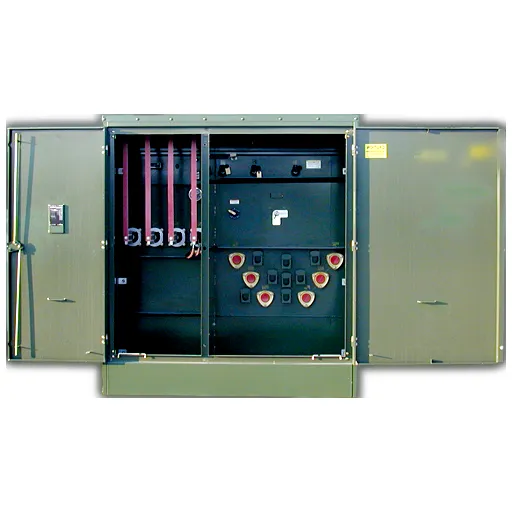
Within the internal mechanisms of a pad mounted transformer, the core and windings represent the fundamental components responsible for voltage transformation. The core is typically manufactured from laminated silicon steel elements designed to minimize losses during magnetic flux transfer. This high-efficiency construction reduces hysteresis and eddy current losses, which significantly impact the transformer’s overall performance. The core is carefully wound and insulated to maximize efficiency and minimize heat generation during operation.
The windings consist of copper or aluminum wire coils rigidly bonded to the steel core to facilitate electromagnetic field effects. The primary winding receives high voltage input from the distribution network, while the secondary winding delivers reduced voltage output to the load. Protective insulation, which often represents the largest component by volume, withstands high temperatures and moisture to prevent short-circuits between windings. The dimensional relationships and winding configurations influence heat generation and dissipation patterns, which are critical for continuous operation.
Efficiency
Advanced core materials and winding designs maximize energy transfer while minimizing losses.
Insulation
High-grade insulation materials protect against temperature extremes and moisture intrusion.
Cooling
Strategic design facilitates effective heat dissipation through convection and conduction.
Cooling Systems
Cooling systems play a vital role in preserving the lifespan and performance of electrical transformers. Since heat is an inevitable byproduct of transformer operation, effective cooling mechanisms are essential. Transformer cooling systems typically employ either air cooling or oil cooling methods. Air cooling, the most common approach, may utilize natural ventilation or forced-air fans depending on transformer size and ambient temperatures. Oil-immersed systems use transformer oil as a heat transfer medium, absorbing heat from internal components and dissipating it through external radiator surfaces. Both methods prevent damage from temperature extremes during prolonged operation or heavy workloads.
Modern cooling system development emphasizes both environmental sustainability and equipment performance. Advanced technologies such as forced-air cooling systems feature high-capacity fans with dynamic control systems that adjust fan speed based on real-time temperature monitoring. Similarly, sophisticated oil-immersed transformers incorporate automatic oil pumps that circulate cooling fluid and external cooling towers designed to remove excess heat. Recent innovations include biodegradable ester-based oils that provide superior fire resistance compared to traditional petroleum-based alternatives. These advancements improve system performance while enhancing safety and environmental protection.
Smart Monitoring Integration
Installing intelligent monitoring systems enhances cooling device effectiveness significantly. IoT-enabled sensors provide real-time temperature data, operational efficiency metrics, and transformer health indicators. Machine learning-powered predictive analytics identify overheating risks before they occur, enabling proactive maintenance approaches. These reliable cooling technologies combined with smart monitoring ensure that manufacturers can deliver sustainable, durable solutions meeting escalating energy demands across residential, commercial, and industrial applications.
Protection Features
Transformers serve critical functions in energy transfer processes, and their protective systems are fundamental to ensuring reliability and safety. Modern transformers incorporate numerous protective devices that work together to guard against electrical fires, overloads, and environmental hazards. Key protection mechanisms include Buchholz relays for detecting internal faults, pressure relief devices for managing overpressure conditions, and differential protection systems that identify current discrepancies between input and output. These technologies enable rapid response to abnormal conditions, preventing disasters before they escalate.
Temperature monitoring stands among the most critical protection features, preventing overheating commonly caused by prolonged overloading or insulation breakdown. Temperature sensors and smart thermal management systems continuously adjust cooling methods, activating fans or circulating oils to maintain safe operating ranges. Contemporary systems utilize predictive algorithms to estimate thermal stress and schedule maintenance before performance degradation occurs. These predictive capabilities extend equipment lifespan and maintain operational efficiency.
External protection against lightning-induced surges and power fluctuations represents another crucial safeguarding aspect. Surge arrestors and grounding mechanisms protect transformers from high electrical voltages. Additionally, protective coatings, sealed designs, and moisture detectors prevent environmental infiltration. As monitoring and data analysis capabilities advance, manufacturers continue adding physically robust and intelligent protective features, improving transformer protection to meet the demands of today’s complex energy systems.
Applications of Pad-Mounted Transformers
Residential Uses
Key Residential Applications
- Power Distribution in Neighborhoods
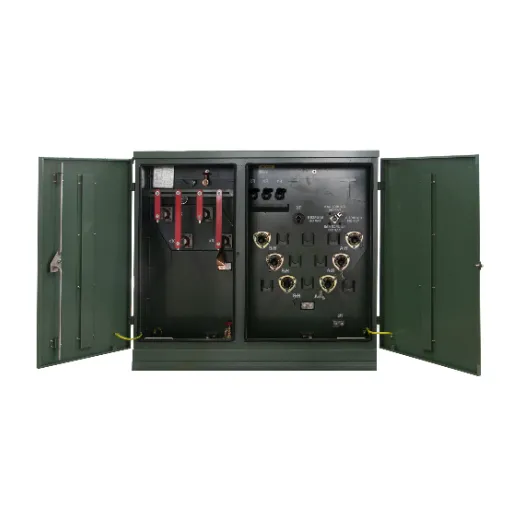
Pad-mounted transformers efficiently reduce electricity from distribution lines to voltage levels suitable for home use. Their ground-level positioning enables seamless and secure energy distribution throughout housing complexes and neighborhoods.
- Support for Underground Power Systems
These transformers are essential components of underground power supply systems, which are increasingly prevalent in residential areas due to their minimal visual impact and enhanced safety compared to overhead lines.
- Reliable Power Supply for Suburban Areas
Pad-mounted transformers ensure voltage stability and provide consistent power supply to medium and large suburban communities experiencing growing residential energy demands.
- Connection for Renewable Energy Sources
As residential solar panels and other renewable energy systems become more common, pad-mounted transformers facilitate bi-directional power flow, enabling excess power injection back into the grid from solar panels and wind turbines.
Commercial and Industrial Applications
Energy Supply for Industrial Sector
Industrial enterprises depend on reliable electricity to operate heavy machinery and production processes smoothly. Pad-mounted transformers address high consumption demands by balancing loads and increasing operational capacity.
Data Center Power Provisioning
Data centers require uninterrupted, stable power for core operations. Pad-mounted transformers deliver high energy efficiency and continuous power supply, with single units capable of supplying over 1 MW to technology-driven communications centers.
Commercial Unit Energy Distribution
Shopping centers, business offices, and commercial establishments benefit from pad-mounted transformers enabling efficient power distribution to multiple units while supporting peak energy demands and minimizing losses.
Industrial Park Power Supply
Industrial parks contain numerous manufacturing facilities requiring robust energy systems. Strategically placed pad-mounted transformers deliver high-voltage electricity after voltage reduction, ensuring safe distribution throughout facilities.
Industrial Renewable Energy Integration
Pad-mounted transformers facilitate energy storage and delivery from renewable sources like wind and solar in industrial settings, managing power variability and enabling grid integration without violating energy regulations.
Utility Integration
Understanding pad-mounted transformers’ role in the power industry requires recognizing that electricity generation and transmission have become highly sophisticated processes. These transformers enhance electricity distribution across multiple contexts:
- 1
Urban and Suburban Power DistributionDense urban and suburban environments require efficient, safe power distribution solutions. Pad-mounted transformers meet these needs with compact designs suitable for high-density locations without consuming excessive space.
- 2
Smart Grid TechnologiesThese transformers integrate with smart grid technology, enabling real-time monitoring of electricity flow and providing intelligent control of utility systems, which increases performance while minimizing network waste.
- 3
Enhanced Energy ReliabilityAdvanced cooling and protective mechanisms minimize power supply disruptions and enhance system reliability, even under harsh environmental conditions.
- 4
Rural Electrification AccessPad-mounted transformers enable power supply to rural and isolated locations where overhead line installation may be economically or environmentally impractical.
- 5
Safety and Aesthetic ConsiderationsThe enclosed design with restricted internal access enhances public safety by limiting electrocution risks. These units integrate seamlessly without disrupting the visual appearance of surrounding areas.
Benefits of Choosing a Pad-Mounted Transformer
Space Efficiency
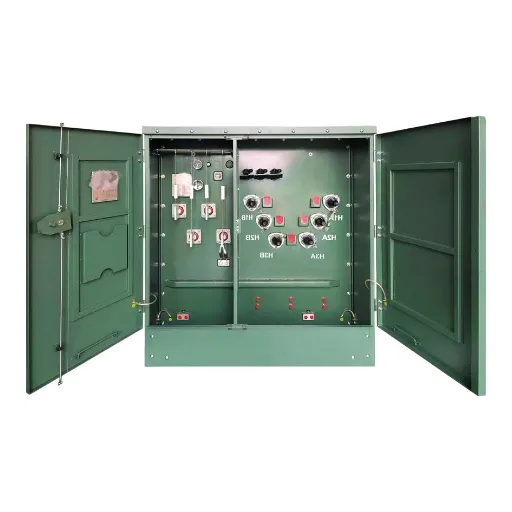
Pad-mounted transformers offer significant space-saving advantages, particularly valuable in urban and suburban areas where real estate is limited. The following benefits demonstrate their exceptional space efficiency:
Compact Design
Low-profile structure with closed construction fits into tight spaces without affecting performance, accommodating locations like alleys, walkways, or small utility zones.
Land Conservation
Eliminates the need for pole structures and overhead infrastructure, freeing land for landscaping, construction, or other developments in surrounding areas.
Flexible Positioning
Can be installed near buildings, parking lots, or other structures, eliminating the need for extensive cable runs or additional land acquisition.
Urban Development Ready
Approved by urban planners and equipment manufacturers for efficient space utilization in densely populated areas with limited real estate availability.
Maintenance Accessibility
Front-loaded panels and ergonomic design require minimal space clearance for all maintenance operations, optimizing the service footprint.
Safety Features
Comprehensive Safety Protection Systems
🔒 Tamper-Resistant Enclosures
Pad-mounted transformers feature enclosures resistant to tampering, ensuring only authorized personnel can access internal components. These cases comply with ANSI specifications, effectively preventing vandalism and unauthorized entry.
⚡ Internal Fault Protection
Equipped with fuses and circuit breakers that isolate faults to prevent system damage and protect nearby individuals. This significantly reduces fire risks and equipment failure.
🛡️ Dead-Front Construction
Dead-front design eliminates exposed live parts, minimizing electric shock risk during operation or maintenance. This design is essential in urban and public areas where safety is paramount.
💨 Pressure-Relief Devices
Integrated pressure-relief mechanisms prevent explosive failures by safely venting internal pressure buildup, protecting both equipment and surrounding infrastructure.
🌿 Oil Spill Containment
Many transformers incorporate oil spill containment systems designed to prevent environmental contamination from leaks. These systems limit damage by ensuring compliance with safety regulations and protecting human health.
Reduced Aesthetic Impact
Pad-mounted transformers are designed to minimize visual disruption in both residential and commercial environments. Their aesthetic advantages include:
- Minimized Dimensions
Low-profile design with ground-level positioning maximizes available space while reducing the transformer’s visual footprint.
- Customizable Exterior
Outer structures can be painted or finished to blend seamlessly with existing environments and architectural styles.
- Ground-Level Installation
Units installed close to ground level avoid blocking views and help maintain environmental aesthetics in surrounding areas.
- Screening Capability
Fencing, landscaping features, and shrubbery effectively screen transformers while maintaining accessibility for maintenance personnel.
- Acoustic Performance
Superior construction minimizes operational noise, limiting both visual and auditory presence in residential and commercial settings.
Maintenance of Pad-Mounted Transformers
Routine Maintenance Practices
Proper maintenance of pad-mounted transformers is essential to prevent unexpected failures and prolong equipment lifespan through optimal operation. The following key maintenance tasks should be performed regularly:
✓ Visual Inspection
Regularly conduct visual checks to identify damage, corrosion, or oil leakage. Examine bushings, insulators, and enclosures for cracks or structural damage that could compromise safety or performance.
✓ Oil Level and Quality Analysis
Insulating oil serves critical insulation and cooling functions. Regularly monitor oil levels and perform periodic testing to detect contaminants or degradation affecting transformer performance.
✓ Electrical Testing
Conduct diagnostic tests including insulation resistance and winding resistance measurements to identify potential electrical faults or inefficiencies in transformer components.
✓ Cleaning and Debris Removal
Remove contamination from transformer surroundings to facilitate heat dissipation and prevent fire hazards. Keep transformer enclosures clean to ensure efficient electrical system operation.
✓ Load Monitoring
Regularly assess transformer load to ensure operation within rated capacity. Overloaded transformers suffer cumulative damage and increased overheating risks over time.
✓ Seal and Gasket Inspection
Inspect gaskets and seals carefully, as small leaks or worn components may allow water or dirt infiltration. Replace these components promptly to maintain original equipment manufacturer specifications.
Important Note: Tracking these maintenance procedures enables early detection of potential issues and extends pad-mounted transformer service life. These habits not only prevent accidents but also optimize operational efficiency.
When to Consult a Professional
Several situations require immediate professional intervention to ensure transformer safety and operational integrity:
⚠️ Unusual Noises
If the transformer produces buzzing, humming, or other abnormal sounds, immediately contact a professional. These noises typically indicate internal component malfunction requiring trained expertise and specialized equipment to diagnose and repair.
💧 Oil Leaks or Physical Damage
Oil leaks or visible physical damage require immediate professional attention. These issues compromise insulation and cooling functions, potentially escalating problems and invalidating warranty coverage if addressed improperly.
🔧 Complex Electrical Issues
When routine inspections reveal complicated problems such as unexplained electrical readings or instruments performing outside normal parameters, specialist consultation is essential. Professionals possess the training and equipment necessary for comprehensive testing and repairs.
⛔ Safety Warning
Attempting repairs without proper training and equipment can worsen problems and endanger people and property. Professional expertise ensures comprehensive assessment and safe, effective solutions while protecting equipment warranty coverage.
References
-
Eversource Transformer Pad: A Detailed Guide
This guide explains the purpose and design of transformer pads, including their role in protecting transformers from environmental and unauthorized access. -
Preliminary Detailed Design – FAMU-FSU College of Engineering
This document discusses pad-mounted transformers, their applications in residential areas, and design considerations. - Click here to read more.
Frequently Asked Questions (FAQ)
❓ Why are pad-mounted transformers used with underground power lines?
Pad-mounted transformers integrate seamlessly with underground power distribution systems, eliminating unsightly overhead lines while providing safe, reliable power delivery. Their ground-level design with lockable enclosures protects equipment from environmental factors and unauthorized access, making them ideal for areas prioritizing aesthetics and safety.
❓ Where should a pad-mounted transformer be located, and what are the site selection factors?
Optimal placement requires consideration of several factors: proximity to underground power lines for efficiency, accessibility for regular maintenance, compliance with local codes and regulations, adequate clearance from buildings and structures, and safe distance from public and vehicular traffic. Proper site selection ensures reliable operation, safety, and efficient power delivery throughout the transformer’s lifespan.
❓ What maintenance do pad-mounted transformers require, and who is responsible?
Essential maintenance includes annual inspections to identify condition changes, oil level and quality testing, electrical diagnostics, cleaning, and seal inspections. Utilities or their authorized contractors typically perform this maintenance to ensure constant operation and guarantee uninterrupted power supply throughout the equipment’s service life.
❓ Can pad-mounted transformers serve both residential and commercial buildings?
Yes, pad-mounted transformers effectively serve both residential neighborhoods and commercial facilities. Their connection to underground distribution systems provides reliable power while maintaining aesthetic appeal compared to overhead lines. Their versatility and scalability make them ideal for developers installing electrical infrastructure in various building types.
❓ How does a pad-mounted transformer affect electricity transmission?
Pad-mounted transformers are positioned close to consumers and connected to underground distribution systems, reducing line losses and improving voltage regulation. Equipped with various safety and efficiency features, they ensure safe, efficient power delivery while maintaining stable, consistent power for utility customers under normal operating conditions.
Summary
Pad-mounted transformers represent critical infrastructure components in modern electrical distribution networks. Their ground-level installation, robust safety features, space efficiency, and aesthetic integration make them ideal for urban, suburban, and rural applications. By understanding their functionality, components, applications, and maintenance requirements, stakeholders can make informed decisions about implementing these reliable power distribution solutions. Whether serving residential neighborhoods, commercial facilities, or industrial complexes, pad-mounted transformers deliver consistent, safe, and efficient electrical service while minimizing environmental and visual impact.