
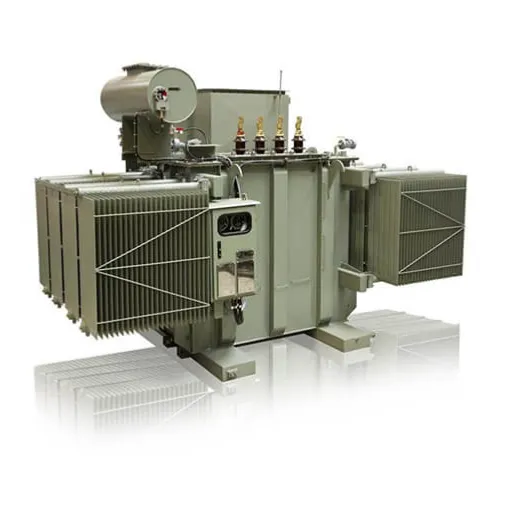
What is a Transformer? Definition, Function & Working Principle

Every electrical or electronic system is incomplete without transformers. But do not be fooled. Very few people actually understand them and their function. In such a scenario, electromagnetic devices become essential for transferring power from one electric circuit to another as efficiently as possible – an objective that most people will associate with the use of transformers, some way or other in their daily activities. Whether it is efficient home consumption or even distribution of power on the grid, or interconnecting solar PV modules, transformers have a central role in all of them. In this article, we’ll helpfully address these questions, including what is a transformer, how it works, and what allows its special functioning.
Introduction to Transformers
Definition of a Transformer
Understanding what is a transformer is important as it is a device used to transport electric current between circuits through electromagnetic induction. Its main purpose is to step up or step down the electricity voltage so that the power can be transferred more safely and more efficiently. Transformers are used to change the voltage of a circuit so that energy losses are minimized during long distance power transmission and also to meet the needs of power supply in various situations.
This happens by the electromagnetic interaction of the two windings called the primary coil and the secondary coil around the common magnetic structure. Upon flow of an alternating current (AC) in the primary winding of transformer, the resulting magnetic field causes an electric current to flow in the secondary winding. This process enables the conversion of voltage without changing the pattern of its oscillations.
Among the other appliances, these devices are an important part of any contemporary electrical system, whether it is a power generating station or any other facility. For example, transformers, installed at substations, are used to step up voltage levels to a certain value for transmitting electricity over long distances, whereas the ones located near houses and office buildings reduce the voltage to a low value, which is acceptable for utilizing it in electrical devices. Such versatility makes it possible for electricity to be supplied to different fields in a very cost efficient and effective manner.
How Transformers Work
Transformers operate on the electromagnetic induction principle. They include two wires rendering as primary and secondary windings which are wounding around a magnetizing core. Passing an alternating current (AC) through the primary coil creates a changing magnetic field. The magnetic field then generates a current flow in the secondary winding, by this, the electrical power is transferred between the two circuits.
By the means of the number of turns in the coils, the difference in voltages between the primary and secondary windings is regulated. In case the number of turns in the secondary coil is greater than the number of turns in the primary coil, the voltage increases, and hence the transformer is a “step-up” transformer. Conversely, if the turns on the secondary side are less, the voltage decreases, hence the transformer is a “step-down” transformer. In this way, transformers can transform voltage levels to whatever needed for being effectively transmitted and safely used.
Transformers are machines which need alternating current for their operation in the most beneficial way. The fact that the AC changes its flow direction all the time is what eventually causes the moving magnetic field that acts as the reason for the current induction in the secondary winding. This dependence on AC it is what makes transformers indispensable for the operation of the electricity power networks of the present times, where the production of the electric power can be very far from the place of its consumption.
Importance of Transformers in Electrical Systems
The utilization of transformers is the key factor for the successful and safe operation of electricity systems. Their basic operation consists of increasing the voltage for the long-distance transmission and the simultaneous reduction for the safe use of houses and industrial plants. The voltage control is the main reason for the decrease in energy loss during the transmission process, and this process also provides that the electricity is consumed in a reliable and proper manner.
Important Note: Power grids now in operation would have many problems without transferring the power via transformers. The use of high-voltage transmission is necessary when it comes to decreasing the energy loss due to the long distance covered, since lower voltage levels would result in the generation of excessive heat and wasting of the power.
Moreover, transformers ensure the safe operation of power networks by facilitating the interconnection among equipment and infrastructure. They keep the voltage levels appropriate to the individual equipment so as to avoid both overloading and underpowering. The operability is very important in households, buildings, and factories where the lack of power consistency may result in equipment breaking or performing poorly.
Working Principles of Transformers

Electromagnetic Induction Explained
Electromagnetic induction is a key principle that sets the transformers in motion. It is the process by which a changing magnetic field causes an electromotive force (EMF) to appear in a conductor. This was first described by Michael Faraday, who presented that the induced EMF’s magnitude is proportional to the speed with which magnetic flux changes through the circuit. A transformer uses this principle through the employment of two windings called the primary and secondary coils, and a common core of magnetic material that can achieve the most economical way of electrical energy exchange—from one level of voltage to another.
The primary coil of a transformer is attached to the power source. The power source generates an alternating current (AC). The alternating current causes a steadily changing magnetic field to appear around the primary coil. The magnetic core then passes this field on to the secondary coil, where the changing magnetic flux gives rise to an EMF and thus to an output voltage. The produced voltage can be higher or lower than the original, depending on the design of the transformer, and is used to match the load requirements or for the distribution system needs.
The continuous modifications made in the transformer technology have increased the efficiency of the electromagnetic induction process. The high-grade core materials used in today’s transformers, such as silicon steel, have made it possible to reduce the energy losses that are due to hysteresis and eddy currents to the minimum. New designs have also appeared, including amorphous core transformers, which not only cut down on power losses but also enhance the performance level. All that is being done to create a sustainable transfer of energy for the purpose of power grid support, while at the same time trying to keep up with the constantly increasing demand for electrical energy.
Transformer Action: Voltage and Current Transformation
The underlying principal of operation that transformers utilize is electromagnetic induction, which allows the transformation of voltage and current between circuits. The whole purpose of this thing is to either increase or decrease the voltage to keep up with the electricity-distribution system’s varying demands. A transformer is made up of two windings: the primary winding and the secondary winding that are wound around a common magnetic core. The magnetic field generated when the alternating current flows through the primary winding leads to the induction of a voltage in the secondary winding. The size of the transformation is what the winding turns’ number-ratio is telling us, and it is the factor that determines the output voltage and the output current. The voltage supply is increased while the current supply is reduced by a step-up transformer. On the other hand, a step-down transformer reduces the voltage supply and increases the current supply.
Nowadays, transformers are built in such a way that they have unmatched efficiency and energy loss is minimized. In the construction of the transformer cores, materials such as amorphous metals have acquired popularity over traditional silicon steel cores which lead to the fact that the core losses are significantly lowered. One of the other developments is incorporating the digital monitoring systems into the transformers to make them able to run diagnostics in real time to optimize for extreme operational efficiency and to foresee the maintenance necessities. When the above-mentioned technologies are combined together, the transformers undoubtedly serve as the pivotal elements in a reliable and robust energy infrastructure.
The transformers are equally significant in the wind and solar power integration processes to the grid. The power generated by these sources can be unsteady and often produced at low voltage levels which is why it then needs to be transformed for high-voltage transmission synchronization. The transformer’s efficiency, precision, and scalability allow it to be the drivers of the various power sources management while grid reliability still remains. The rise of the world’s sustainable energy call the creativity and utilization of the transformer technologies to be the key players in keeping the electrical systems flexible and efficient, thus helping to create a greener, more vibrant future.
Core Components of a Transformer: Coils and Magnetic Core
There are two indispensable constituents that a transformer must have, and these are the coils and the magnetic core. Working in accordance, the duo is responsible for the smooth and effective flow of electrical energy between circuits. As a rule, the coils are made from extremely conductive materials like copper or aluminum to provide minimum resistance and reduced energy loss. The transformers are normally equipped with two groups of coils—those of the primary and the secondary windings. The primary winding is the one to go for if you wish to feed electrical energy to it and the secondary winding will carry the transformed energy to the output circuit. The transformation ratio is affected by the number of turns in these windings and this is what decides the difference in voltage levels.
The magnetic core is positioned in between these two variables in a very strategic way—it substantially aids the smooth conduction of magnetic force from the primary to the secondary windings. It is the core that is mostly built of laminated silicon steel sheets, which is the main material that decreases the energy loss that is attributed to hysteresis and eddy current. The shape of the core, whether it is a ring-like toroid, an E-shaped E-core, or something else, affects the transformer’s efficiency and size the most. As a contemporary example, the alteration of the material that the core is constructed from—such as to amorphous steel or nanocrystalline materials—is being applied to make the core work better, to cut the losses, and to make the transformer designs lighter and smaller at the same time.
Recent advances in materials and design are also seen to improve the performance of these primary elements further. A good example would be the usage of high-temperature superconductors for the transformer coils that might result in energy savings of 40-50% with insignificant change in the size of the equipment. Another way is to cut the noise and the loss by increasing the precision of the thin lamination core manufacturing. The two different technological paths of higher-performing coils and higher-performing core need to be allies in the creation of future power grids that need to be more integrable, renewable-energy-friendly, and adaptive.
Types of Transformers

Step-Up and Step-Down Transformers
Transformers, step-up and step-down, are vital elements in electrical power transmission and distribution. The step-up transformer performs the function of enhancing the electromotive force from the primary coil to the secondary coil in readiness for transmission over long distances – an aspect necessitated by the need to lower the energy loss resulting from the resistance of the wire. Conversely, a step-down transformer lowers the high power supply to levels that can be safely handled by appliances in households or rather in commercial settings.
| Transformer Type | Function | Common Application |
|---|---|---|
| Step-Up Transformer | Increases voltage from primary to secondary coil | Power stations for long-distance transmission |
| Step-Down Transformer | Decreases voltage for safe consumer use | Residential and commercial distribution |
Step-up transformers are very common components in the power stations, which are devices boosting electric energy produced at low voltages to allow for long distance transmission. Increasing the voltage in the process decreases the flowing current in the transmission lines, to minimize heat production and loss of energy as a result. On the other hand, step-down transformers are available in most areas because the high voltages for transmission of electricity are converted into low voltage levels suited for use by household equipment or by industry. This for example concerns high-voltage power lines conducting electricity at tens or hundreds of kilovolts down to the usually 110-240 volts voltages used in homes and offices.
Improvements in transformer technology have also improved the performance of step-up and step-down devices. Modern transformers are constructed using emerging materials such as amorphous metal cores, reducing the core losses to a large extent. Emissions reducing mechanisms like high-performance cooling devices and enhanced insulator systems are also used to improve power transformer lifespans and capabilities in harsh environments. All these changes enable transformers, whether step-up or step-down, to face the modern challenges of energy including the penetration of renewables like wind and solar which most of the time are characterized by variable voltages.
Isolation Transformers
One of the main roles of isolation transformers in the electrical system is to provide the circuit to circuit galvanic isolation. The safety, in this case, is enhanced by means of prevention of direct current paths from the input circuit to the output circuit, and this way, it could well be taken to say that even the internal equipment is protected and one is less likely to get electric shock. Various applications, where noise reduction and signal integrity are critical, utilize them such as medical devices, industrial machines, and power distribution systems.
Modern isolation transformers are made of the latest materials and are designed by using the latest techniques, and besides, they prefer efficiency as the first objective and reduction in energy losses as the second. These transformers feature the use of very good insulation material and, along with that, the magnetic cores with permeability in the optimized range; with this insulation and core strategy, the amount of heat generated is very little which in consequence means the favor of the best performance. Apart from that, it is the role of the transformers in reducing and eliminating electromagnetic interference, and hence, the provision of clean power, thus data centers and research facilities as the typical requirements for the use of the products.
Among the advances in the field of isolation transformer technology, the use of solid-state transformers (SSTs) and eco-friendly designs that drive down the carbon footprint of electrical installations are integral parts. The said developments are in line with the ever-rising need for an energy supply that is both dependable and eco-friendly. With smart grid systems having isolation transformers as part of the design, the ones responsible for the energy infrastructure can be sure of safe and highly efficient modern power networks.
Autotransformers and Center-Tapped Transformers
Autotransformers are a particular type of electrical transformer that comes across as having a single winding functioning as both the primary and secondary winding. These autotransformers are different from the usual isolation transformers as, in the case of the former, there is a direct connection between the input and the output circuits of the transformer, which, in turn, leads to better efficiency and a transformer having a smaller design. However, because of the direct connection, the autotransformers do not provide galvanic isolation that is why they are not good for the applications, where the safety isolation is the main issue. Autotransformers are used on a large scale for voltage regulation for the starting of motors and for the adjustment of the voltage levels in the industrial equipment to meet the requirement of operation.
Center-tapped transformers are designed with a secondary winding that has its central connection point, known as the center tap. Due to this specific design, the transformer can give two equal voltages which are 180 degrees out of phase, which is perfect for applications such as full wave rectifiers in power supplies and balanced audio systems. The center tap is a source from which you get better stability and flexibility in the design of the circuit. Due to this, center-tapped transformers are very often used in low voltage DC applications and cases when split phase power is required.
Transformer technology is moving towards new materials and smart features for both autotransformers and center-tapped transformers at an ever-increasing rate. As an example, the latest designs are mostly aimed at cutting down on the energy losses and increasing the thermal efficiency to the point of reducing energy consumption. Moreover, the smart autotransformers are now being integrated with monitoring systems for the purpose of real-time data collection and remote management. This kind of creativity is in line with the current push for the use of renewable energy systems and also the enduring role of transformers in various electrical engineering fields.
Applications of Transformers
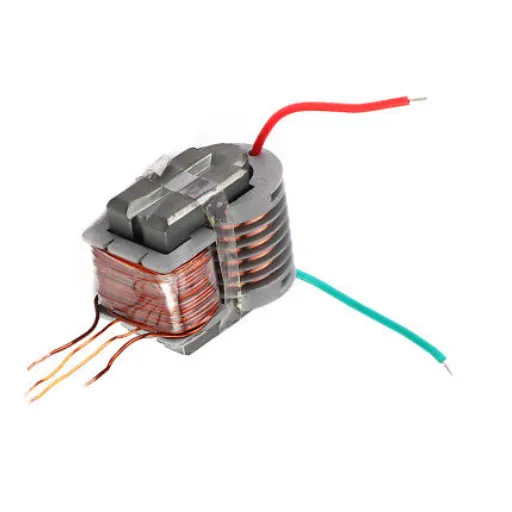
Transformers in Manufacturing Industries
Transformers are very useful devices in the manufacturing industries as they help in the optimal transport and use of electrical power. Their flexibility in terms of voltage is what makes transformers indispensable for many different manufacturing processes. Accuracy and reliability of power supply are very important factors. Five major uses of transformers in manufacturing are as follows:
- Voltage Adjustment for Machinery:
Industrial machines receive proper voltage levels because the transformers are in place and thus are not affected by the reverse flux which would put the machines in trouble. - Electric Arc Welding:
The transformer is used to get the welding machine powered and to do that a step-down transformer gets the job done. It should be pointed out that welding machines require highly dependable power from their sources, and this is where step-down transformers come into play, making the welding process more effective and safer. - Powering of Specialized Equipment:
Transformers are the ones who give power to the specialized manufacturing machines like CNC machines, robotic arms, and 3D printers and thus enable the advanced and automated industrial processes that are run by them. - Energy Distribution in Large Facilities:
Manufacturing plants are usually large and spread out along with being the location of huge amounts of electric power that is distributed by transformers. The distribution makes it possible to have efficient power supply for different production lines and no sector of the company to be left without energy. - Harmonic Mitigation and Power Quality:
Filters applied in the transformers are components that are very helpful in electrical noise reduction and neutralizing harmonic content. The two factors are mainly what causes poor energy quality that is not usable in production plants.
Role in Renewable Energy Systems
Renewables, such as wind and solar, are nowadays the faster-growing sources of energy. Transformers play a critical role in integrating these renewable energy sources into the power grid.
- Voltage Step-Up for Transmission:
Transformers in renewable energy systems amplify the voltage to prevent power loss during the long transmission lines. For instance, the solar power plants frequently employ transformers to raise the voltage from 690V at the local generators to 33kV or even more for the grid. - Grid Interface and Stability:
Transformers are a major factor in renewable energy technologies’ easy inclusion in the existing electricity grid. Changing voltages and frequencies they are indeed the most modern and fully automated way of providing smooth transition when the wind or sunlight varies. - Energy Storage Connection:
Transformers are connected from renewable energy systems to excess energy storage solutions such as batteries which store the peak production of energy. In times of sunlight absence, this is one of the decisive actions to have a constant power supply. - Harmonic Filtering and Power Quality Maintenance:
Transformers are also used to maintain the stability of the grid in renewable energy applications by the removal of power harmonics and the reduction of electrical noise. The power condition at each point of the grid is made better by putting this technology in place. - Localized Power Distribution:
Distribution transformers are an important part of an electric system that uses renewable energy, and this is because they step down the transmission voltage to a level that can be safely consumed at homes, business places, and factories as well. One example of this is that electricity coming from wind turbines is changed to 230V or 440V which are suitable for use in the population.
These five illustrations show how transformers act as the key factor in promoting the use of renewable energy, in the meantime guaranteeing efficiency, quality, and reliability for sustainable energy systems.
Transformers in Telecommunications
Transformers play a critical role in the telecommunications industry by ensuring the smooth transmission of electrical signals, managing power levels, and maintaining signal integrity across various systems. Their adaptability and efficiency make them indispensable in modern communication networks. Below are five examples of how transformers are utilized in telecommunications:
- ●
Isolation Transformers:
Isolation transformers are employed to separate equipment from direct current (DC) signals in a circuit while still allowing alternating current (AC) to pass through. This helps protect sensitive telecommunications equipment from electrical surges and interference, ensuring stable and reliable communication. - ●
Signal Transformers:
Signal transformers are utilized to transfer and receive electronic signals over long distances through wires at the other end with minimal loss in the signals. In modems, voice communications and other transmitting devices, it helps to filter out unnecessary artifacts in the signal in whatever form they may occur during the transmission. - ●
Impedance Matching Transformers:
The purpose of this type of transformers is to connect devices that have different forms of embedded impedance for the optimal power delivery and the least amount of reflected signals. These types of transformers are usually found in radio frequency (RF) circuits, antennas and telecommunication tools for better performance. - ●
Power Transformers in Base Stations:
In one base station, a power transformer supplies elements such as towers and transmitters with the necessary levels of voltage. These are usually used in the quite powerful and energy consuming structures in the contemporary telecommunication use. - ●
Balun Transformers:
Devices called ‘Balun Transformers’ are used to convert balanced lines to unbalanced and vice versa. Their main function is to aid applications performed with these lines for example connecting and disconnecting antenna from several lines, which include coaxial cables which means that communication systems will allow for the use of different standards of transmissions.
Maintenance Practices for Transformers

Inspection Tips for Transformer Health
Regularly scheduled inspections are the lifeline of transformers’ utmost efficiency and sustainability. The following are the most important to consider during inspections:
Visual Inspection
Look out for physical harm in the transformer such as rust, leaks, deformed components. Oil leakage, discoloration, or other signs of a problem should be investigated.
Oil Quality Testing
The main function of transformer oil is to act as a coolant and an insulator at the same time. Need to test the oil on a regular basis for its moisture content, acidity, and dielectric strength to estimate the quality and reveal contamination and wear or tear.
Temperature Monitoring
A transformer can be greatly damaged by overheating. One should use the infrared thermography technique or the installation of thermal sensors to detect the presence of hotspots and make sure that the cooling systems work properly.
Electrical Testing
Keep an eye on such important things, e.g., insulation resistance, winding resistance, and load tap changer operation. It becomes possible to identify the early stage of electrical faults or wear and tear with the help of these tests.
Bushing and Connection Check
Besides the normal procedure of inspecting bushings for the presence of cracks, dirt, and among others, it is very crucial to look for any loose connections because these factors are of great importance for the prevention of arcing and insulation failures.
Noise and Vibration Analysis
Mechanical or electrical problems can still be detected by hearing abnormal sounds or observing vibrations. The application for the identification of these problems specifically and thus a study of the maintenance and inspection practices would be a definite step in the right direction.
Advanced Diagnostics
The use of the latest techniques such as dissolved gas analysis (DGA) or partial discharge testing aids in the detection of conditions that affect the transformer. The health of the transformer is maintained by these detailed investigations, identifying conditions like arcing, overheating, or insulation breakdown.
These inspection tips should be part of a regularly-scheduled preventive maintenance program which decreases downtime, increases efficiency, and extends the service life of transformers. Mixing and matching the older and newer diagnostic methods lead to not only a very good understanding of the condition of the transformers but also to the prevention of occurrences of failures that can be unanticipated.
Testing Procedures for Optimal Performance
For a trouble-free working of transformers, a blend of solid testing methods and deep evaluation is needed, and DGA and IR tests cannot be ignored at all. Insulation resistance test is the one to check the condition of the insulation, and dissolved gas analysis (DGA) is the most critical method that identifies gas build-up due to faults or degradation. Oil quality test is crucial too since it informs on the strength of the dielectric and the content of the moisture in the insulating oil which will affect directly the reliability of the transformer.
Furthermore, the detection of partial discharges is very crucial in determining the future areas for failure associated with the insulation faults. New FRA methods for the transformer winding provide an insight into the insulation condition related to the mechanical aspect of a transformer and thus are essential. These methods should be used together with the most recent advancements like temperature scanning and sound monitoring in order to locate faults or defects.
Advanced diagnostic software together with the above-stated procedures greatly contributes to the analysis of data, and hence results are more conveniently accessed. Thus, through the integration of these testing methods into the planned maintenance programs, one will not only save the transformer life but also prevent the unexpected downtime resulting in a more efficient and longer-lasting performance.
Conclusion
Understanding what is a transformer, how and why step-up and step-down transformers function and what are the technological advancements being incorporated within them is imperative in order to achieve an effective electrical architecture in terms of efficiency and reliability. Their contribution is quintessential because they are the materials that power, and will power, an efficient and green energy future that has both current and anticipated loads.
References
-
Transformers – Introductory Physics – Michigan State University
This resource provides an overview of how transformers work to transform voltages from one value to another. -
Electricity Explained: Batteries, Circuits, and Transformers – U.S. Energy Information Administration
A government resource explaining the role of transformers in changing the voltage of electricity in power lines. -
Definitions of Transformers – Code of Federal Regulations
A legal and technical definition of transformers as used in specific systems, provided by the U.S. government. - Click here to read more.
Frequently Asked Questions (FAQ)
Q: Explain the concept of a transformer. Describe also its operation.
A: A transformer is a device used in electrical circuits to transmit energy from one state to another through electromagnetic induction. The main principle lies in the alternating magnetic flux throughout the core: When an alternating current voltage is applied to the primary side of the transformer, an iron core produces an alternating magnetic field throughout its length, inducing voltage in the secondary coil, thus enabling the transfer of electrical power between the two inserted windings around the magnetic core.
Q: What is a perfect transformer and in what way do the turns on the coil impact the supply voltages?
A: Ideal transformer model is referred to the condition in which transformer is expected to work without any leakage flux, losses and the iron core is assumed to have an infinite permeability. This transformer uses the turn ratios between the primary coil and the secondary coil to demonstrate the transformation of voltage levels. The primary voltage is stepped down or up to that of the secondary by the ratio of the secondary and primary turns.
Q: What describes the difference between an ideal transformer and a real one?
A: Real transformers distinguish themselves from the ideal transformer model in that they have features associated with losses like heat in the core, resistive nature of the windings, leakage fluxes and incomplete coupling of the windings. Real transformers have practical designs incorporating iron core lamination to minimize eddy current losses, and are affected by real load voltage and current.
Q: Why are there iron cores in transformer constructions and what about air core transformers?
A: With most transformers, the use of an iron core helps to channel the magnetic lines of flux and results in an increased magnetic flux within the core, thereby enhancing the efficiency and coupling. The absence of an iron core in air core transformers makes them usable for some applications that require broader bandwidth (such as RF circuits), although such transformers aren’t as efficient since they cannot appreciably trap the changing magnetic field within a core the way an iron-cored transformer can.
Q: Is it possible for transformers to both step up and step down the voltage?
A: Indeed, voltage levels can be controlled in both directions using transformers. In particular, the induced voltage in the secondary circuit is proportional to the number of turns: the more turns, the higher the voltage. It happens if there are more turns in the second circuit than in the first circuit. However, if the turns in the secondary are less, the induced voltage will also be less.
Q: Do audio transformers work differently from large power transformers?
A: Audio and power transformers look at the same principles of operation, but certain characteristics are enhanced under certain conditions. For instance, audio transformers are designed to ensure specific frequency response and minimal distortion by using proper core materials, specialized windings and techniques to maintain almost no signal distortion while large power transformers are designed to transfer power to loads with very low losses and good cooling systems.
Q: What safety factors should be considered when using transformers?
A: Safety factors such as winding insulation, heat management in the core and windings, proper earthing and providing rated transformer for the load to avoid overheating have to be taken care of. High-power transformers also contain internal protection covers and fans for cooling in the interest of transformer health.