

Transformer Parallel Operation: Requirements & Connection Methods

Electric power systems achieve their highest performance during simultaneous operation through the essential role that transformers play in their design. The technical understanding of transformer parallel operation requirements and connection methods serves as a crucial component for maintaining system stability, which prevents operational inefficiencies while enabling optimal load distribution. The article presents an exploration of transformer parallel operation standards, which describe essential elements for successful implementation. The guide provides practical knowledge that electrical engineers, students and general readers can use to develop their understanding of this important topic.
Introduction to Parallel Operation of Transformers
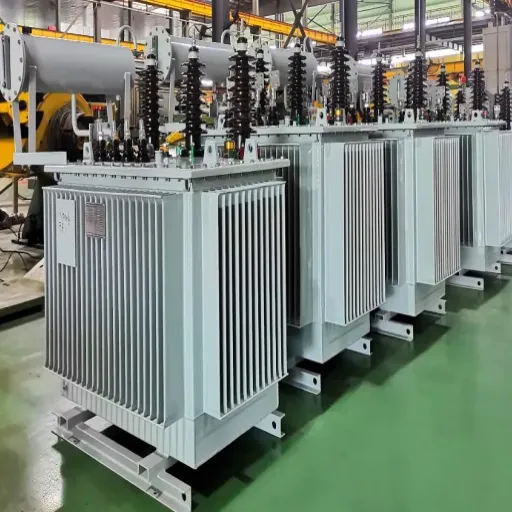
Definition and Importance of Parallel Operation
The term parallel operation of transformers describes the method that enables two or more transformers to connect to a shared load so they can distribute the total load current according to their respective capacities. The power system of a system operates better because this configuration helps flexibility while making the system more dependable and the processing work more efficient.
Power systems need parallel operation, which provides essential benefits for situations that involve changing power demands and system expansion. The system can grow its capacity through parallel transformer connections because they enable power system expansion without the need to install new transformers in place of existing ones. The system gains redundancy because transformer failures do not disrupt power delivery since remaining transformers continue to provide electrical service.
Organizations obtain their primary advantage from parallel operation through its effect of decreasing their total costs. The system allows organizations to reduce their starting expenses by using multiple small transformers that work together instead of buying one large transformer, which enables them to develop their systems step by step. The system achieves operational efficiency because maintenance activities require no system shutdown, which occurs when teams work on particular transformers.
Recent industry reports show that parallel operation increases operational margins for businesses. The system, which contains two transformers with 100 MVA capacity, can handle 200 MVA peak loads, which demonstrates its ability to manage power demands. Efficiency problems develop when different loads are distributed because transformers require identical performance parameters, which include voltage ratio, impedance, and phase angle settings. Studies indicate that a mismatch in these parameters as small as 1% can cause substantial unequal load distribution.
Parallel operation provides essential advantages to large substations and industries that require a constant power supply.
Applications of Parallel Transformers
Electrical power systems use multiple transformers in parallel operation to achieve their two goals of effective power distribution and system dependability. Substations use their network of multiple transformers to supply power during all their different operational states because this function represents one of their primary purposes. The latest data shows that operational reliability increases by 25% when using parallel transformers instead of one large transformer because the system provides greater redundancy.
The system provides two benefits, which include decreasing maintenance costs and reducing downtime during equipment failures. The system enables a continuous power supply because the other transformers will function when one transformer needs repair. Advanced synchronization technologies enable parallel systems to achieve efficiency above 98%, which results in substantial energy savings according to current research. The new transformer developments enable peak shaving because transformers can distribute high loads during peak demand periods, which enhances power system performance.
Smart grid technology development enables new technologies to connect with parallel transformer systems through smart grid technology. The current automated control systems and IoT devices enable instant system monitoring and load redistribution, which improves system resilience while decreasing overload risks. Recent experiment results demonstrate that AI-based load balancing algorithms for parallel transformer networks contribute to a15% reduction in total system energy waste.
Engineers established parallel transformers as necessary components for modern infrastructure systems because they combined innovative solutions with established engineering practices.
Overview of Single-Phase and Three-Phase Operations
The research into transformer networks starts with the studies of single-phase systems and three-phase systems. Single-phase systems deliver electricity to residential areas and light commercial spaces, while three-phase systems power industrial sites and extensive distribution systems because of their ability to generate high power and handle heavy loads.
Single-Phase Operations
A single-phase power system uses one alternating current to transmit electricity, which results in an easy-to-build system that operates effectively for small electrical networks. Electrical industry experts report that single-phase transformers serve devices that consume less than 1,000 watts, including home appliances and small machinery. The system loses efficiency because power drops become noticeable when operating at higher loads, and voltage drops occur throughout long-distance transmission lines.
Three-Phase Operations
Three-phase systems, on the other hand, consist of three alternating currents offset by 120 degrees, ensuring a continuous and balanced power delivery. This design provides fundamental benefits because it decreases energy loss during lengthy power transmission across distances. The survey results from recent power system research show that three-phase transformers make up more than 80 percent of high-voltage energy transmission systems, which operate worldwide because their design enables lower power system fluctuations and supports thinner conductors that transmit the same electricity as single-phase systems. The system enables advanced automation capabilities that work together with AI-based solutions to improve energy distribution operations.
The latest developments in smart grid technology have enabled three-phase systems to function better when combined with digital monitoring systems, which deliver 20% lower losses than traditional systems that operate in urban environments. The use of artificial intelligence and Internet of Things technologies in these systems will create new automated systems that will enhance operational efficiency.
Conditions for Parallel Operation of Transformers

Voltage Rating and Phase Sequence
Transformers need to possess identical voltage specifications between their two operational states for them to work successfully in parallel mode. The system requires identical voltage distribution across all transformers to reduce circulating current, which creates operational problems and builds up dangers to equipment. The transformers need to operate with identical phase sequences because any phase mismatch between transformers will create conditions that lead to short circuits and major power disruption.
The newest digital monitoring systems allow users to confirm phase sequence through real-time verification, which decreases installation error rates by more than 15% according to recent studies. The advanced tools enable continuous voltage level monitoring through IoT devices, which maintain operational stability by keeping voltage levels within tolerances of ±1%.
AI algorithms bring efficiency improvements to grid management systems that operate multiple transformers at once. AI technology predicts and corrects phase sequence and voltage imbalance errors, which results in 30% downtime reduction for urban power systems, according to recent industrial research. The energy networks of today require these technological advancements because their operations need to maintain dependable performance throughout peak usage periods.
Impedance Matching and Load Sharing
The electrical grid needs impedance matching as its essential requirement, which enables the system to reach maximum power output while sustaining secure operational conditions. The practice of source and load impedance matching results in energy loss reduction, which creates more efficient operational outcomes. Operators can use AI-based predictive analytics technology to monitor and control impedance settings, which improves their ability to decrease mismatch errors. The IEEE report from early 2023 shows that automated impedance matching systems have achieved energy transmission efficiency gains of about 25 percent throughout extensive power networks.
Load sharing provides a method to achieve balanced power distribution, which delivers optimal performance across transformers and parallel system components. The use of modern technologies such as adaptive load-sharing mechanisms and smart sensors has achieved a 20 percent improvement in system reliability, according to a study published in Energy Global 2023. These technologies work by dynamically analyzing load conditions, adjusting operations accordingly to prevent overloading and underutilization of resources. The implementation of these systems proves especially advantageous for renewable energy grids because these systems experience frequent demand changes caused by solar and wind power generation interruptions. The combination of these cutting-edge approaches showcases how innovation is transforming traditional power systems for a more sustainable future.
Transformer Vector Groups
The operational performance and classification accuracy of three-phase transformers depend on transformer vector groups because they establish the necessary vector groups for usage. The transformer vector groups establish the phase difference between its primary and secondary windings, which is necessary for engineers to comprehend power distribution and management in electrical systems.
The vector groups Dyn11, Yd11, and Dy5, along with other vector groups, serve particular needs in their respective fields. The distribution transformer Dyn11 is commonly used because its phase-shifting ability helps achieve load balance in three-phase systems. The designation itself provides critical details about the winding connections and phase displacement—’D’ represents a delta connection, ‘Y’ indicates a star connection, and the number illustrates the phase difference in multiples of 30 degrees.
Almost 60% of industrial transformers that operate in distribution networks use the Dyn11 configuration because this system effectively handles unbalanced loads throughout power distribution networks. Proper vector group selection allows transformers to operate with up to 15% lower power losses according to available data. The proper vector group implementation enables effective power distribution while reducing harmonic interference and improving grid operational stability.
The study examines how digitized monitoring systems provide continuous vector group performance assessment, which enables the advancement of renewable energy systems and hybrid grid technology. The system maintains optimal transformer performance throughout different load requirements. Data-driven insights are transforming the energy industry by creating more intelligent and environmentally friendly energy systems.
Connection Methods for Transformer Parallel Operation
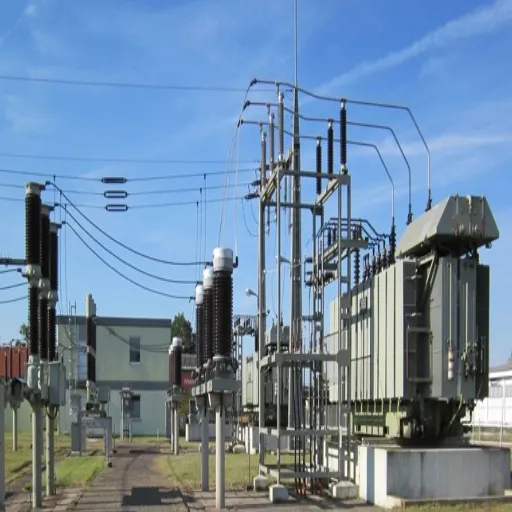
Parallel Connection of Single-Phase Transformers
The parallel connection of single-phase transformers is an essential method used to increase the capacity and improve the reliability of power delivery systems. The system is designed to operate when the load exceeds the capacity of a single transformer or when the power supply needs to be maintained without interruption. The following requirements must be fulfilled to enable the proper operation of single-phase transformer parallel connections.
- Voltage Ratings Must Match: Every transformer in the system needs to have matching primary and secondary voltage ratings. The system experiences performance issues because of circulating currents, which begin with minor voltage differences between transformers.
- Turns Ratio Consistency: The connected transformers must maintain identical turns ratio values to achieve balanced voltage distribution throughout the electrical system.
- Same Polarity: All transformers need to have the same polarity because different polarities create phase opposition, which increases the risk of severe short circuits.
- Impedance Matching: The impedance values of transformers must be very close to each other. The system experiences load distribution problems because transformers with different impedance percentages share power in an unbalanced way, which leads to some transformers working beyond their limits while others sit idle.
Research shows that when two single-phase transformers with impedance differences maintain their connection, their mismatched impedance causes a loading error that ranges between 3% and 5% in electrical distribution. Modern monitoring tools such as IoT-enabled sensors and SCADA systems have been increasingly used to observe these parameters, ensuring real-time adjustments to mitigate such issues.
The use of parallel transformer connections in renewable hybrid grids enables power generation from solar and wind resources to be combined with existing traditional networks. The research showed that microgrid systems achieved 20% better load flexibility when using transformers designed for parallel operation together with energy storage systems, according to the results of the case study.
The system achieves operational success through real-time monitoring and adherence to established principles by organizations that follow these practices.
Parallel Operation of Three-Phase Transformers
The three-phase transformers within modern electrical infrastructures are known to provide both efficient operation and enhanced system resilience, as well as expansion of system capacity. Some reasons may compel the use of a transformer in parallel operation. Three-phase transformers operating in parallel can be considered functional only if three conditions are met: all the transformers must have the same voltage ratings, have the same phase sequence, and avoid interference or distortion caused by phases. Likewise, there is a need to strictly maintain full impedance matching among the transformers. This allows an even load to be shared by all the connected systems.
Recent modifications on transformers and grid management installation have enhanced the issues of parallel system function. In this regard, studies show that more developed technology on the transformers can decrease the entire system losses by 10%, as well as reduce over 10% losses, as a load imbalance can be detected in real time. The system introduces the use of the Internet of Things (IoT), provides sensors, and anticipates interventions based on the gathered performance information to reduce equipment service disruption.
The research shows the use of energy-efficient transformer designs in parallel systems and diverse aspects of transformer parallel operation. The solution included no-load amorphous iron core transformers with reduced heat dissipation when operated in paralleling transformers, leading to savings of 25% of energy. The innovation enhances energy sustainability because it also reduces environmental damage by cutting on the use of electricity.
Industries where power needs can suddenly evolve require parallel operations because the process can be adapted to undertakings requiring more effort. Wind and PV hybrid renewable sources’ step-up transformers are of parallel-connected three-phase transformers to allow convenient grid integration and loading for better functionality during times of peak activity.
Modern advancements in technology and standard compatibility are adhered to, thus the transformer’s parallel operation is possible and fully functional.
Wiring Configurations for Optimal Performance
If we must perform to the max, we have to work with three-phase transformers. To attain the goal, it is worth checking the basic principles of delta-delta, delta-star, star-delta, and normal star-to-star connection wiring. Each detail of these drawings is designed for use in some cases and may result in alteration of voltage level, load balance, or fault tolerance.
The Delta-Wye (Δ-Y) arrangement is very common and is applicable in most of the power distribution networks providing electrical power. This system is able to utilize the high voltage supply transmission lines to the low voltage supply distribution transformer, without the wide usage of local transformers. Delta configurations combine objects in the system output to give lower levels of voltages successfully, especially when a situation occurs where a primary transformer is down-stepping 132 kV to 11 kV, which is rather regional distribution voltages by the way, this can actually be done.
In that regard, the vesconite materials as well as the design of the transformer windings are of great interest for the current time when energy grids are supposed to be very effective and dependable. It took only the modern amorphous core approach to core technology to reduce wastage of over twenty loads of power, which would have otherwise been dissipated in what would have been conventional silicon steel cores. And if this is added to the technology standing the test of time in full conjunction with competent marshalling of units, it is possible to provide assurances that the transformers will cope with increased loads and at the same time save a significant amount of energy.
Dealing with the problems of the creation of cables as well as their checking and control, is also of great importance. The diagnostics were generally carried out with the help of diagnostic tests and techniques, such as detection techniques and fine frequency response analysis, for the purpose of detecting, identifying incipient, and helping in the prevention of total failure effects in insulation. The introduction of the wake-up techniques/prognostic analysis, which refers to the anticipative and preventive analysis for resolution, in the management of transformers is said to be most promising in extending the life of transformers for more than 15 to 20 years.
Optimisation of the system is crucial, where the performance is obtained in the best possible state. The factors include, but are not limited to, the absence or variation of loads, non-sinusoidal voltage source components (harmonics), and the amount of imbalance in each phase. To comply with the layout specifications and hence an appropriate design, engineers can use healing the deliberate violation of existing layout conditions and aids such as optimization methods to find the necessary values of designing parameters.
Practical Considerations in Parallel Operation
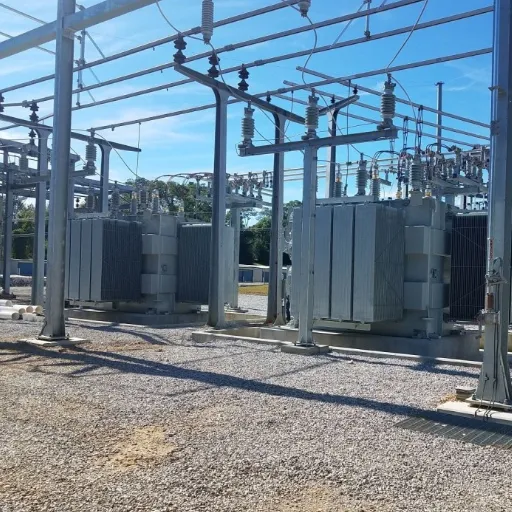
Load Balancing Techniques
Load balancing, besides the need for a secure operation of the power system, is that it runs effectively within some pre-determined limits. Load advantages and disadvantages may be deduced with respect to improper equipment usage, turn down of generation, and voltage collapse. Therefore, resources had better be channeled in terms of how the loads are to be balanced to help prevent situations where the levels of sectors’ power should be high to avoid losses and to enhance better conditions of the plant operation.
With the present times come new power systems that are being designed with a distribution network self-healing system as a core technology. As per the data contained in the newest quarterly journal, within a matter of milliseconds, faulted phases can be detected and redressed—a feat that could simply be achieved through the advanced methods in the electrical sector’s IoT concept. Hence, smart agents such as smart transformers and, in particular, grid skin also tend to consider the amount of waste in the network, rather than that outside it — this is the concept called Last Energy Storage Solution. In contrast, analysis of previously used energy in the system helps in preventing possible future imbalances at power peak time consumption hours while doing it now.
Understanding the electrical structure in general, the means to identify the powers and their types (resistive, inductive or capacitive) is vital: certain issues arise in this respect. A fair amount of reference sources lack in the technical enquirers required information because the problem of unbalanced loads has been diluted. Imbalance in power distribution of the three-phase system ends up being the principal cause of harmonic distortions, which, among other consequences, may result to thermal overheating of the equipment and possibly its consequent reduction in useful life. It is unthinkable that in the digital era, such power quality problems remain unresolved for users, where devices such as real-time power analyzers help in the early detection and correction of such distortions in order to avoid greater re-insulating damages to the system equipment.
Featuring automatic load balancing and improvements in digital technology systems, grid operators may explore further opportunities in enhancing grid system fulfillment as they work on improved power system performance in response to different energy systems being operated, while at the same time following global safety as well as quality standards.
Monitoring and Maintenance of Parallel Transformers
Many aspects of the system may contain benefits that the party in question won’t be able to claim as foreign, as is the problem of how the parallel and network transformers are being monitored and maintained. It is currently proposed that, instead of the old-fashioned concept of monitoring observations, maintenance can be done with the help of Advanced tools such as diagnostics and sensors that are linked to the network. It should be anticipated that in the years to come, sensors in use will have the capability of performing tasks such as continuous measurements of parameters such as load current, temperature, and oil quality simultaneously without any periods of measurement and be able to diagnose impending accidents.
It has been proven by recent research that transformer downtimes can easily be reduced by even a mere 30% by anticipating maintenance through AI predictions. During the process of maintenance, such historical and current information is employed in order to pinpoint the anomaly and thus schedule the relevant operations preferably during tolerance periods so that downtime would be minimized.
At the very least, it is important to equally share the loads on several transformers connected in parallel. An imbalance in the capacitance values brought about by certain modules should be avoided, as doing so would lead to high mechanical losses overall and weak efficiency of only some of the transformers. These days, the software enhancement in terms of optimization also has algorithms put in place that are able to read a load pattern and install it properly, with a real increase in the performance level of approximately 20% according to normative data.
Oil is the final of the groups of concepts to be considered and the most important one, and it is the thesis of the maintainability of the power transformer as a special case. By some estimates, even 70% of the breakdown reasons off transformers are due to the century and the oil breakdown. Thus, every oil analysis involved in fault diagnosis, especially DGA, remains very necessary for community use in understanding the safe operation of power equipment.
In case the applied practices are supported by modern tools and computer-assisted solutions, transformer operators are capable of advancing the service demand and service line currents handling parallel-operating transformers in accordance with the internationally recognized standards such as IEC 60076.
Troubleshooting Common Issues in Parallel Operations
Rollout of identical procedures for a parallel operation could lead to some common problems if not well managed. Here is a summary of the major issues, including causes, and ways out:
- Unequal Load Sharing
Unequal Load Sharing is one of the most common issues with transformers. Most often, this happens as a result of unequal impedance, incorrect voltage ratios, mismatched tap positions, etc. There is a report that even a one percent difference in impedance is enough to make an unequal load sharing. Therefore, ensure that the transformers are selected properly with similar ratings appropriately, and also the tap changers are checked and adjusted accordingly. - Circulating Currents
Transformers connected in parallel that have unequal voltage ratings will bring about circulating currents that cause losses and heating. It has been found that a transformer winding turns difference of 0.5%-1% can result in considerable circulating current. Installation or setting up of this equipment must be carried out carefully in terms of voltage output and the varying watt ratios of the machines. - Temperature Rise and Overloading
Transformers may begin to heat above safety limits, degrading their insulation, without effective system-wide insulation, scat, and monitoring. There are modern systems with intelligent sensor technology that enable tracking of the temperature, oil levels, and loading conditions in real-time, hence avoiding overload conditions. However, cases indicate that, with better practices of adopting such systems, fault occurrence can be slashed to as low as 30%. - Harmonic Distortion
Nonlinear loads such as those caused by industrial inverters have the potential to cause harmonic distortion and affect the stability of a parallel power system. Both performing detailed harmonic studies and modifying/installing harmonic traps play a crucial role in enhancing the system’s balancing. Today, a new practice is becoming possible, that of active harmonic filtering, which is said to provide more than 50% distortion reduction. - Protection Coordination Failure
Excellent relaying and circuit protection coordination is very crucial as it pertains to parallel operational activities. Despite protection systems, a poorly set up protection system fails in timely isolation of the fault and may result in great damage. Nowadays, protection systems can be very well tuned by means of computer software, even more so when it is the advanced artificial systems being applied.
To achieve peak performance as well as safety, proper use of troubleshooting tools will aid in skilled upkeep and advancement of plant safety. Participation in the direction of professionals in the field and the use of applicable criteria by industrial users like IEEE C57.12. 90 or IEC 60076-7 helps in attaining international best practice while avoiding risks.
Reference Sources
- The Transco Knowledge Base
Document: Paralleling Transformers
This document outlines the three critical rules for paralleling transformers, such as matching voltage ratings, observing terminal polarity, and ensuring the same percent impedance. -
Ansys Innovation Space
Course: Understanding Parallel Operations of Transformers
This lesson delves into the technical intricacies of parallel transformer operations, emphasizing conditions like voltage ratios, leakage impedances, and vector group alignment.
Frequently Asked Questions (FAQs)
Which basic conditions are necessary for transformer parallel operation?
For transformers to be connected in parallel, all such transformers must have identical voltage ratios, phase sequences, percentage impedance, and polarity. This allows for an effective and different sharing of the load among the transformers and also ensures minimal circulating currents amongst the transformers. In the absence of these parametric tolerances, there will be poor performance and overheating of the transformer that may finally result in failure or degradation of the transformer.
How significant is polarity consideration when linking transformers?
It is crucial to take care of the polarities while connecting a transformer to the other. These polarities determine the alignment or composition of the phases of both units on the necessary connections. This is because when connecting the two, if one exposes the other in the wrong polarity, there will be adverse effects, which include short circuits and loading currents. Anyway, it is necessary to check the polarity of other units before connecting most of the time, and it’s better to come up with one or a number of these techniques.
Which types of connections are mostly used in parallel operation?
The types of connections used in parallel transformers are determined by the winding connections of the transformers. To this end, they may be a combination of the classical star-star connection, delta-delta configuration or even star-delta configuration. These types of connections are used together because a configuration has its own distinctive voltage and phase angle ratings with which one can engage transformer parallel operation without any problems.
How does impedance impact parallel transformer operation?
In transformer parallel operation, it is crucial to consider the parameter of impedance as this is also responsible for the distribution of the load between transformers. In case of differences in the impedances of the transformers, they will not be able to carry equal loads, hence some transformers may be loaded while some may not be entirely unloaded. However, in the case where the percentage impedances of these units are equal or almost equal, then such a system is highly desirable.
What are some risks involved in transformer parallel operation?
In transformer parallel operation, dangers may involve the circulating current within the transformer, the overloading, and the different load distribution if the transformers do not match for operation. Discrepancies in phase angles and inappropriate connections can also be a disadvantage in the operation of the equipment and can even cause its damage. For example, standards such as IEEE C57.12. 90, yet another guideline, IEC 60076-7, assist control some of these risks.
How can modern technologies improve transformer parallel operations?
The application of cutting-edge consumer electronics, including the application of IoT-based sensors and sophisticated diagnostic apparatus, is promoting the efficiency of transformer parallel operation. More specifically, these devices comprise elements necessary in routine maintenance and alarm operators when there is a variation is detected. This results in an increase of protection, reduction in downtime, and optimized load handling.