
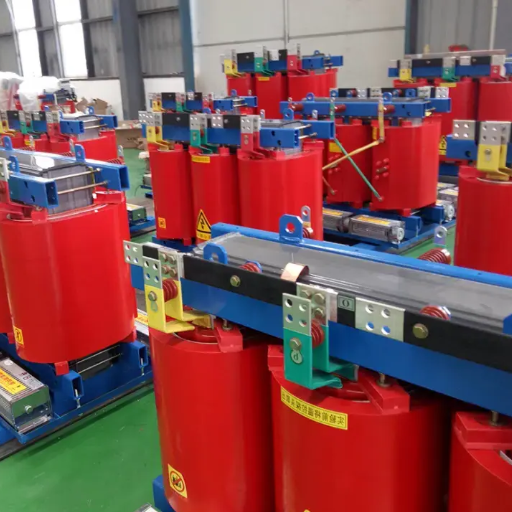
IEC Dry Type Transformer Supplier: How to Choose One

An IEC dry type transformer supplier is a manufacturer that builds dry type units to IEC 60076-11 and can prove it with test documentation. The proof matters more than the claim. Before you award an order, confirm three things: the unit is built to IEC 60076-11, you receive type and routine test reports, and the declared environmental and climatic classes match your site.
Here is the uncomfortable part. Any supplier can print “IEC” on a catalog page. Very few can hand you the paperwork a utility or consulting engineer will accept.
That gap causes real problems. A transformer that arrives without valid test documentation can sit in a warehouse for weeks while your commissioning date slips.
The cost is never just the unit. It is the delay, the demurrage, and the credibility you lose with your client.
This guide covers how to vet an IEC dry-type transformer supplier properly. You will learn what IEC 60076-11 actually requires, how it differs from ANSI and GB standards, which documents to demand, and the five questions that separate a serious exporter from a trading company.
Key Takeaways
- “IEC compliant” is not a certification a supplier holds. It is a per-unit claim proven with test reports.
- IEC 60076-11 defines environmental (E), climatic (C), and fire behaviour (F) classes. Confirm the class your site needs.
- Routine tests cover every unit. Type tests qualify the design. Buyers often need both, and suppliers often only provide the first.
- IEC, ANSI, and GB are different standards. A unit built to GB is not automatically IEC compliant.
- Ask for test reports before you pay a deposit, not after the container arrives.
What an IEC Dry Type Transformer Actually Means
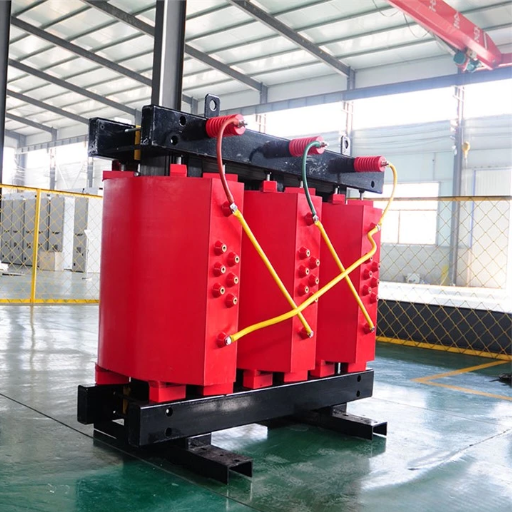
The phrase gets used loosely, so let us be precise.
IEC 60076-11 Explained
IEC 60076-11 is the international standard for dry-type power transformers. It covers construction requirements, thermal limits, insulation systems, and the testing regime a unit must pass.
A transformer built to this standard has been designed and tested against a defined set of rules. That is what “IEC” should mean on a supplier’s datasheet. It is a technical specification, not a badge.
Environmental, Climatic, and Fire Behaviour Classes
This is the detail most buyers miss, and it is where specifications quietly diverge.
IEC 60076-11 classifies dry type transformers across three dimensions:
- Environmental class (E0, E1, E2) covers exposure to humidity, condensation, and pollution.
- Climatic class (C1, C2) covers operation at low ambient temperatures.
- Fire behaviour class (F0, F1) covers fire performance and the materials used.
Two suppliers can both say “IEC 60076-11” and still deliver different classes. Same standard, different product. If your site is humid, coastal, or cold, the class matters as much as the kVA rating. Confirm it in writing.
Related: For the design fundamentals behind these units, see our three phase dry type transformer guide.
IEC vs ANSI vs GB: Which Standard Applies
Most sourcing confusion comes from mixing standards across markets. Here is how they relate.
| Standard | Region | Governs | Notes for Buyers |
|---|---|---|---|
| IEC 60076-11 | International | Dry-type transformers | Common in the Middle East, Asia, Europe, and Africa |
| ANSI / IEEE C57 | North America | Transformers broadly | Required for US and Canadian utility acceptance |
| GB | China | Domestic manufacture | A GB unit is not automatically IEC compliant |
The practical risk is simple. Many Chinese factories build to GB for the domestic market and to IEC for export. That is completely normal. What is not acceptable is a supplier quoting IEC prices while planning to ship a GB design.
Ask directly: which standard will the nameplate reference? Then ask for the test reports that correspond to it. If the answer shifts, walk away.
A project manager named Daniel learned this on a substation package in the Gulf. His specifier wrote IEC 60076-11 into the tender, and three local quotes came back referencing GB. Two of them assumed it was close enough.
It was not. The correction cost his team three weeks of re-quoting. The supplier who won the order was the one who put the standard reference on the datasheet without being asked.
Facing a project where the specifier requires IEC? Send us your standard reference and kVA requirements and we will confirm compliance before you commit.
What to Verify Before Choosing an IEC Transformer Supplier
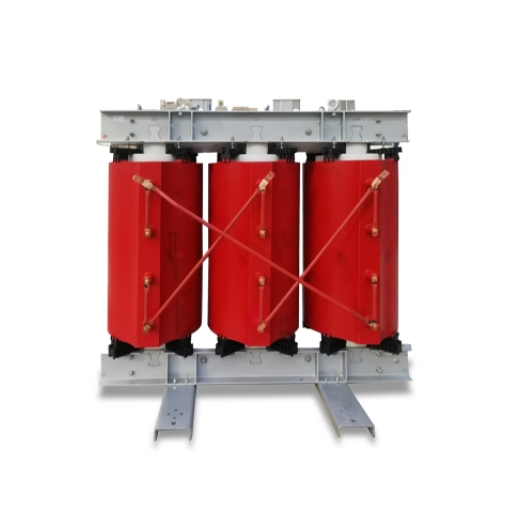
This section is the core of the article. If you remember nothing else, remember this.
Type Test Reports vs Routine Test Reports
IEC 60076-11 defines three categories of testing, and buyers routinely confuse the first two.
- Routine tests are performed on every unit that leaves the factory. They confirm the individual transformer works.
- Type tests are performed once on a representative design. They prove the design itself meets the standard.
- Special tests are performed only when agreed between buyer and supplier.
Here is why the distinction matters. A supplier can show you a routine test report for your unit and still have no type test evidence for the design. Many consulting engineers and utilities require both.
That gap catches experienced buyers. Ask for both documents, and confirm the type test covers your unit’s rating and design family.
Documentation for Import and Utility Acceptance
Equipment arriving without complete documentation stalls at the worst possible moment. Build a documentation requirement into the purchase order, not the conversation.
Confirm you will receive all of the following:
- Routine test report for the specific unit
- Type test report for the design family
- Nameplate data matching the approved drawing
- Declaration of the environmental, climatic, and fire class
- Dimensional and connection drawings
- Insulation class and temperature rise declaration
- Packing list and export documentation
Anything missing here becomes a problem later, usually when you have the least time to solve it.
Five Questions to Ask Every Supplier
Use these verbatim in your RFQ. Vague answers are the signal.
- Which standard will the nameplate reference, and which edition?
- Can you provide the type test report for this design family?
- What environmental and climatic class is declared for this unit?
- Who performs the tests, and can we witness them?
- What documentation ships with the container?
A supplier who answers all five clearly is a supplier worth a deposit. A supplier who deflects is telling you something.
A procurement lead named Aisha added these five questions to her standard RFQ template in March. Two of her regular vendors could not answer question two. She replaced both within the quarter. Her rejection rate at goods-inward dropped to almost nothing, because the documentation arrived with the units instead of chasing her.
Why Buyers Source IEC Dry Type Transformers from China
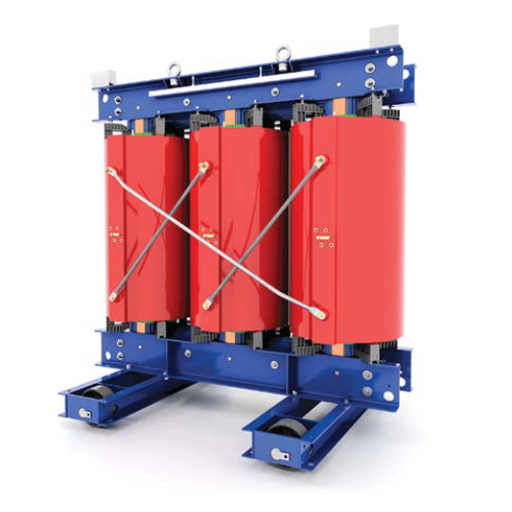
Cost and lead time drive most sourcing decisions, and both are legitimate reasons to look at Chinese manufacturers. The question is how to do it without absorbing risk.
Cost and Lead Time Reality
Chinese manufacturers offer competitive pricing on dry-type transformers for several structural reasons. Domestic supply chains for silicon steel and copper are mature. Production capacity is high. Factory-direct purchasing removes layers of middlemen.
Lead times vary by rating, quantity, and customization level. Rather than quote a number that will not hold, ask for a production schedule tied to your specific rating and confirm it in the order.
What Separates a Serious Exporter from a Trading Company
This is the distinction that determines your entire experience.
A genuine manufacturer controls its own production, testing, and quality process. A trading company brokers the order to whichever factory has capacity. Both exist, and both can deliver a working transformer.
The difference shows up when something goes wrong. A manufacturer can investigate a test failure, correct a design, and explain what happened. A trading company can only relay messages.
One owns the problem. The other forwards an email. For a project where documentation and traceability matter, that difference is decisive.
Related: Lower losses compound over decades of service. See our guide to transformer efficiency for the total-cost-of-ownership picture.
Technical Specifications Buyers Should Confirm
Beyond standards compliance, confirm the physical and electrical specifications match your application.
kVA, Voltage Class, and Insulation Class
Dry-type transformers are commonly supplied from small ratings up to several thousand kVA, at medium voltage primary and low voltage secondary. Insulation class is usually Class F (155°C) or Class H (180°C).
Confirm the temperature rise, not just the insulation class. A Class F insulation system running at a high temperature rise will have a shorter service life than the same system running cooler. The two numbers work together.
Enclosure, IP Rating, and Ambient Conditions
Dry-type transformers dissipate heat into the surrounding room, so installation conditions matter.
- Confirm the IP or enclosure rating matches the environment.
- Check the ambient temperature the design assumes.
- Verify ventilation and clearance requirements for the electrical room.
- Confirm altitude derating if the site is elevated.
If the site is coastal, dusty, or unusually hot, say so in the RFQ. These conditions change the class declaration and sometimes the design.
IEC Dry Type Transformer Supplier Checklist
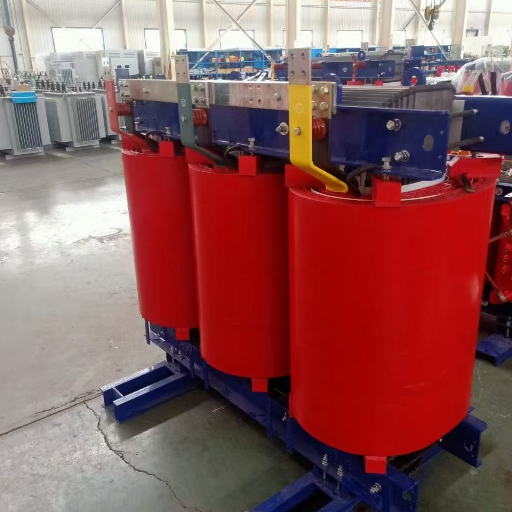
Run this before you place an order.
- Primary and secondary voltage, frequency, and phase confirmed
- Required kVA with load growth allowance
- Standard confirmed: IEC 60076-11, ANSI, or GB
- Environmental, climatic, and fire class specified
- Insulation class and temperature rise declared
- Type test report requested for the design family
- Routine test report required with each unit
- IP or enclosure rating matched to the installation
- Documentation list written into the purchase order
- Production schedule and lead time confirmed in writing
Working through this list takes an hour. Skipping it can cost a commissioning window. That trade is never worth making.
Frequently Asked Questions
What is an IEC dry type transformer?
An IEC dry type transformer is a dry type transformer designed and tested to IEC 60076-11, the international standard covering construction, thermal limits, insulation systems, and testing for dry-type power transformers.
Is IEC the same as ANSI for transformers?
No. IEC and ANSI are separate standards with different requirements and regional acceptance. IEC 60076-11 applies internationally, while ANSI and IEEE C57 series standards govern North American installations. A transformer built to one is not automatically accepted under the other.
Do dry type transformers need type test reports?
Type test reports are not always mandatory, but many consulting engineers and utilities require them for acceptance. Because type tests qualify the design rather than the individual unit, they are the strongest evidence that a supplier’s product genuinely meets IEC 60076-11.
How do I verify a supplier’s IEC compliance?
Ask for the type test report covering your unit’s design family, the routine test report for your specific unit, the declared environmental and climatic classes, and the nameplate standard reference. Confirm all four match before paying a deposit.
Is a GB transformer the same as an IEC transformer?
No. GB is the Chinese domestic standard. Many manufacturers build to GB for domestic supply and to IEC for export, but a unit built to GB is not automatically IEC compliant. Confirm which standard the nameplate will reference.
Conclusion
Choosing an IEC dry type transformer supplier comes down to documentation, not marketing. The standard reference, the type and routine test reports, and the declared environmental and climatic classes are what actually protect your project. Everything else is sales copy.
Work through the five questions before you request pricing. Confirm the standard on the datasheet. Put the documentation list into the purchase order. These steps take an hour and prevent the delays that cost weeks.
Shandong Electric Co., Ltd. manufactures dry-type transformers built to IEC 60076-11 for export projects worldwide. We supply test documentation with every unit and can confirm the environmental, climatic, and fire class declarations against your site conditions.
Send us your project standard, voltage, and kVA requirements, and our engineering team will confirm compliance and provide the documentation package you need.