
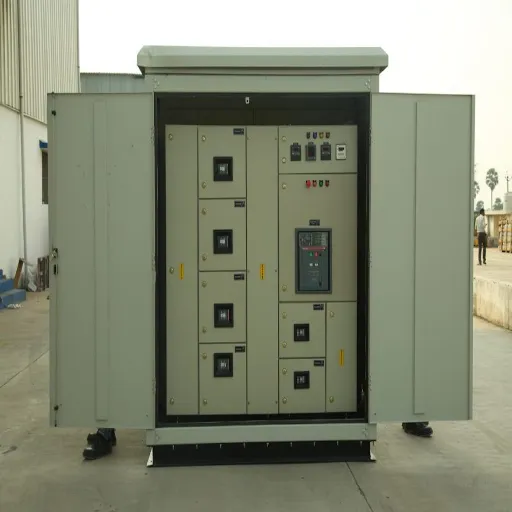
Compact Substation: A Complete Guide to Modern Power Distribution

The factory required dependable electricity service within a six-week timeframe. The traditional substation design needed four months because it required both civil construction work and permit acquisition, and actual construction operations at the site. They opted for a compact substation solution that had been prefabricated. The facility achieved complete electrical operation two weeks after its delivery.
Businesses in every field throughout the world now share this type of situation. The growing need for electricity in urban areas, together with shorter project duration, has forced engineers and procurement teams to develop new methods for constructing power distribution networks. The compact substation system provides an effective solution that enables factories to handle medium-voltage electricity through its complete protection and distribution system.
This guide explains how compact substations operate and compares them to traditional substations while defining essential project specifications and identifying their most profitable investment areas. The article guides equipment selection across various sectors, including commercial development, industrial operations, and renewable energy initiatives.
What Is a Compact Substation?
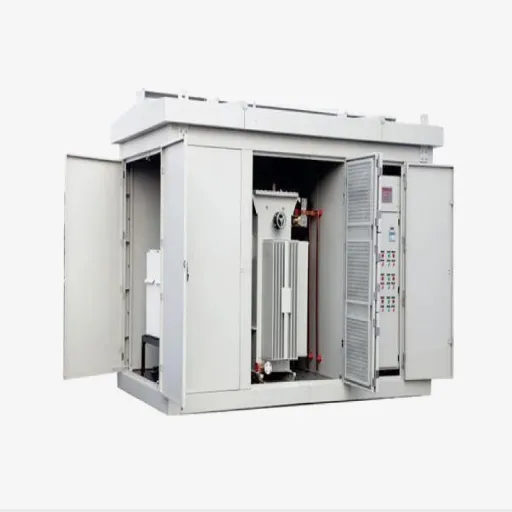
The compact substation, known as a package substation, prefabricated compact substation, and compact secondary substation CSS functions as a power distribution unit that factories assemble. The system contains three essential elements that operate inside a single protected enclosure:
- Medium-voltage (MV) switchgear for incoming power protection and control
- A power transformer that steps down high voltage to usable low voltage
- Low-voltage (LV) distribution equipment that feeds power to end users
A compact substation functions as a complete system that needs no assembly because all components arrive together. The containerized substation guide presents an in-depth analysis of modular design. The product undergoes manufacturing, wiring, and testing in a factory that maintains controlled conditions. The equipment needs only a foundation and cable connections when it arrives at the site after transportation.
The design philosophy creates a solution that solves the main problem of contemporary power distribution systems by delivering reliable substations that meet industry standards to sites with limited space and restricted project durations, and increasing workforce costs.
How Does a Compact Substation Work?
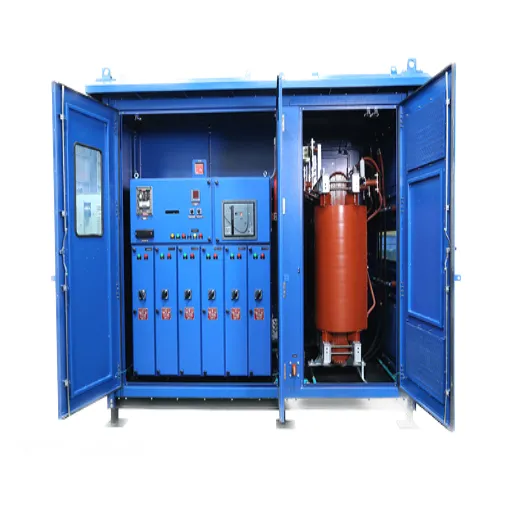
The operational flow inside a compact substation follows a clear, integrated sequence:
- Power enters through the MV switchgear, which includes circuit breakers, isolators, and surge protection to manage incoming grid power safely.
- The integrated transformer performs voltage transformation by stepping down the power from 11 kV and 33 kV to 400 V and 690 V for distribution purposes.
- Protection and monitoring systems perform continuous tracking of voltage, current, and temperature, and fault conditions. Automated relays activate isolation during overload or short circuit events.
- Power is distributed through the LV switchgear to outgoing feeders, which deliver electricity to buildings and machinery, and infrastructure.
The single weather-resistant enclosure contains all components, which prevents both environmental exposure and unauthorized access, and rodent damage. Compact substations maintain greater reliability than site-built alternatives because their factory-tested integration provides improved operational stability.
Compact Substation vs. Conventional Substation
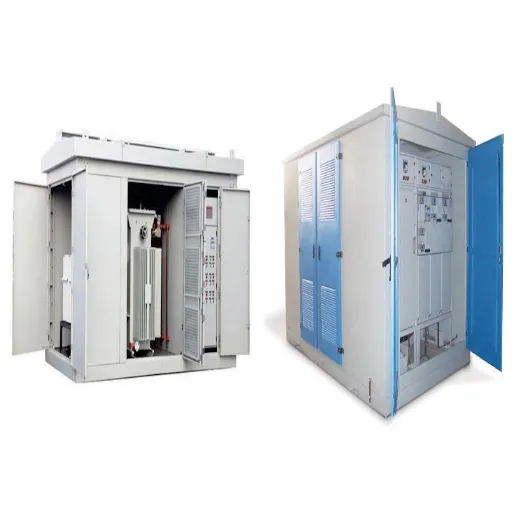
Understanding the differences between compact and conventional substations is essential for making the right technical and financial choice. This compact substation vs conventional substation comparison covers the factors that matter most to engineers and procurement teams.
| Factor | Compact Substation | Conventional Substation |
|---|---|---|
| Footprint | 15-25 m² for a typical 10 kV/0.4 kV unit | 80-120 m² for equivalent capacity |
| Installation time | 1-2 weeks | 3-6 months |
| Civil works | Minimal foundation only | Extensive construction, fencing, and fire pits |
| Energy efficiency | Up to 99% with modern dry-type designs | Often 95-96% with older oil-immersed units |
| Initial cost | Moderate to higher unit cost | Lower equipment cost, higher total project cost |
| Relocatability | Skid-mounted, easy to relocate | Permanent structure |
| Maintenance access | Enclosed, protected design | An open yard requires more environmental management |
When to Choose a Compact Substation
Compact substations excel in situations where space, speed, or mobility matters. They are the preferred choice for:
- Urban developments with limited land availability
- Commercial and residential complexes requiring basement or corner-fit installations
- Renewable energy projects, such as solar farms and wind parks, that need rapid grid connection
- Remote industrial sites, including mining operations and oil fields
- Temporary construction power where infrastructure must move as projects evolve
- EV charging hubs that require fast deployment across multiple locations
When a Conventional Substation Still Makes Sense
Traditional substations remain indispensable for very large-scale, high-voltage transmission projects. If your project involves voltages above 36 kV, requires massive future expansion, or operates in a fixed location with abundant land, a conventional design may offer better long-term scalability.
Types of Compact Substations
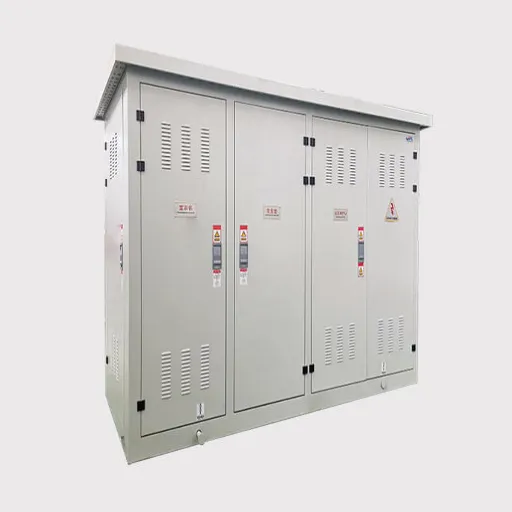
Not all compact substations share the same internal layout. The two dominant designs are the European style and the American style, each with distinct engineering characteristics.
European-Style Compact Substation
The European design arranges the transformer, MV switchgear, and LV switchboard in aligned compartments within a single metal enclosure. Think of it as building separate rooms for each component under one roof.
Characteristics:
- Larger footprint relative to capacity
- Better heat dissipation due to compartmentalization
- Clear separation between HV, transformer, and LV sections
- Common in Asia, Europe, and Africa
American-Style Compact Substation
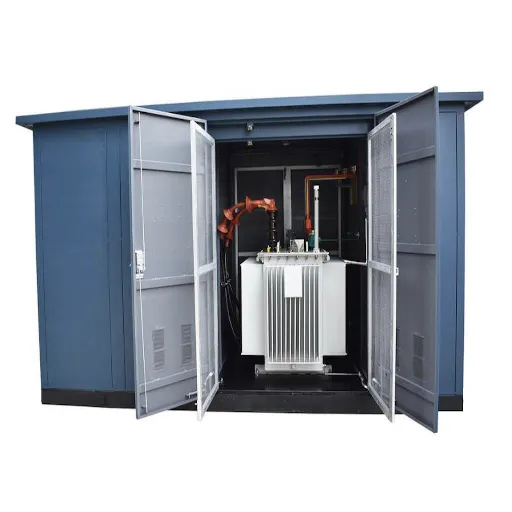
The American design takes a more integrated approach. The HV load switch and fuses are often immersed directly inside the transformer oil tank. The layout is typically triangular or more compact.
Characteristics:
- Roughly one-third the volume of a European-style unit with the same capacity
- Lower material and manufacturing cost
- Faster to produce and transport
- Widely used in North America and increasingly adopted elsewhere
When Maria Santos, a project engineer in the Philippines, needed to fit a 1,000 kVA substation into a 12-square-meter corner of a shopping mall parking structure, the American-style compact substation was the only viable option. The European equivalent would have exceeded her space budget by 40%.
Transformer Configuration Options
The overall design of compact substations facilitates creating a mix and match of various types of transformers with respective operational purposes. For reference, be prepared based on a brief comparison of these transformers:
- Oil-immersed transformers: Lower initial cost and excellent in terms of heat conductivity, this transformer is considered a good option for the installation of a compact outdoor substation.
- Dry-type transformers: Keep the fire risks at bay without the need of oil containment and can be used for ideal indoor or environmentally sensitive utility locations
- Cast resin transformers: Highest Moisture-and-Dust-proof among all three and therefore used in rougher industrial conditions
Key Components and Technical Specifications
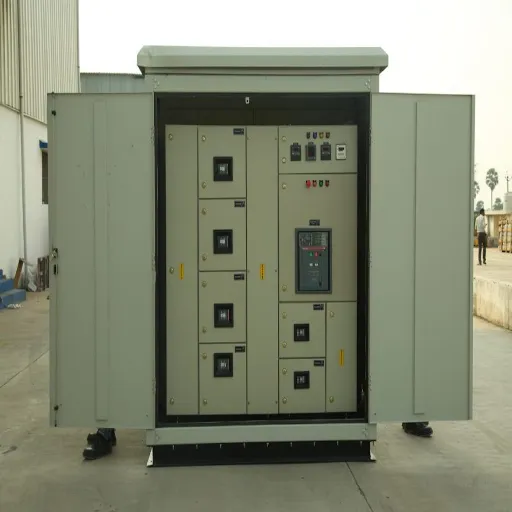
A well-specified compact substation is more than a box with a transformer inside. The system needs to have components that match its voltage requirements and load capacity, environmental needs, and protection standards.
MV Switchgear and Ring Main Units
The incoming section typically includes:
- Load break switches for safe isolation
- Circuit breakers or fuse protection for fault current interruption
- Surge arresters to protect against lightning and switching overvoltages
- Ring main units (RMUs) for looped network configurations
Power Transformer
The transformer serves as the main component that powers the entire compact substation system. The evaluation process requires assessment of the following specifications:
- Capacity: standard compact designs allow equipment operation between 100 kVA and 2,500 kVA
- Voltage ratio: the system operates at six common voltage ratios, which include 6 kV/0.4 kV, 10 kV/0.4 kV, 11 kV/0.4 kV, 20 kV/0.4 kV, and 33 kV/0.4 kV
- Vector group: Dyn11 distribution applications use this standard configuration
- Impedance voltage: units with capacity below 1,000 kVA operate between 4% and 6% impedance voltage
- Cooling method: The ONAN system operates with oil-immersed equipment, and the AN system operates with dry-type equipment.
LV Switchgear and Distribution Panels
The outgoing section distributes stepped-down power through:
- Molded case circuit breakers (MCCBs) for feeder protection
- Busbar systems rated for the full transformer capacity
- Metering and monitoring equipment for energy management
- Capacitor banks (optional) for power factor correction
Enclosure and Environmental Ratings
The enclosure protects internal components from dust, moisture, and mechanical damage. Common ratings include:
- IP33D: Basic protection against solid objects and water spray
- IP43/IP54: Enhanced dust and water protection for harsh environments
- Corrosion-resistant coatings: Essential for coastal or industrial atmospheres
- Soundproofing: Noise levels can be reduced to below 50 dB for urban installations
Applications and Use Cases
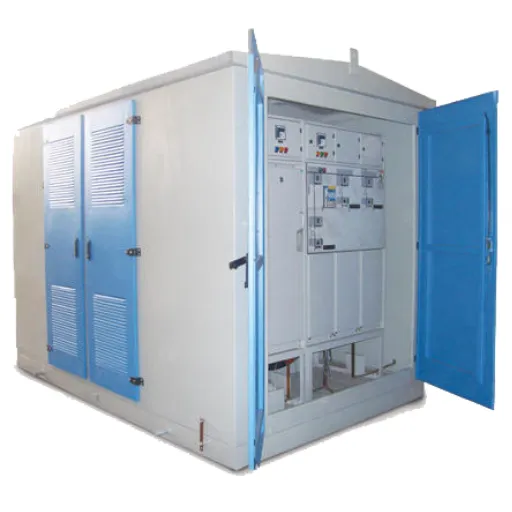
Compact substations have become the default choice for a wide range of industries where fast, reliable power distribution is critical.
Urban Residential and Commercial Complexes
The space limitations of urban areas make it impossible to use traditional substations for power distribution needs. The design of compact substations allows their installation in basement areas, parking facilities, and minor utility spaces. The system operates in multiple locations, including apartment buildings, healthcare facilities, lodging establishments, and retail shopping centers.
Industrial Plants and Manufacturing
Factories need reliable medium-voltage power systems which delivery electrical service to their manufacturing areas. The use of compact substations leads to shorter installation distances, which creates less need for physical construction work and enables system relocation during changes in production setup.
Renewable Energy Projects
Solar farms and wind parks require collector stations, which perform voltage transformation functions to enable grid connection. The pre-engineered compact substations provide complete solutions for specific applications which enable project teams to complete work at least three months faster than traditional methods. The organization CLELEK reports that compact substations now experience major worldwide growth because of increased renewable energy integration.
EV Charging Infrastructure
Growing electric vehicle charging networks require quick deployable power infrastructure that can be enlarged even further. For charging hub requirements, compact substations are fundamental medium voltage connection points since they typically have loads between 500 kVA and 2,000 kVA.
Remote and Temporary Sites
Mining operations, construction camps, and oil exploration sites operate in various locations throughout their activities. The skid-mounted compact substations enable operators to move equipment between sites while restoring power within a short time period.
The construction consortium in Saudi Arabia selected skid-mounted compact substations to power their three remote work camps for a six-month highway project because they needed temporary power solutions. The units that completed their project work moved to the next site when they were loaded onto trucks. The total savings in civil works and demolition exceeded $200,000.
Standards and Compliance
International standards ensure that every compact secondary substation is safe, reliable, and interoperable across markets. The evaluation process for manufacturers requires verification of their compliance with specific standards.
IEC Standards
- The standards of IEC 62271-202 establish requirements for prefabricated high-voltage and low-voltage substations, which include specifications for their operational performance and testing procedures, and construction standards.
- The IEC 60076 series defines power transformer specifications, which include testing requirements and performance limitations.
- The IEC 61439 standard defines the requirements for low-voltage switchgear and control gear assembly systems.
North American Standards
- IEEE C57.12. 00 and IEEE C57.12. 34 provides requirements for transformer performance and pad-mounted distribution systems.
- UL listings establish mandatory requirements that commercial and utility installations in the United States and Canada must adhere to.
- NEMA standards define equipment ratings and enclosure specifications that protect against environmental hazards.
Environmental and Safety Certifications
- IP ratings: Ingress protection standards, which measure protection against solid materials and liquid substances
- IK ratings: Impact resistance standards that protect locations that face potential vandalism and industrial work environments
- ISO 9001: The certification process, which verifies that the manufacturer has established a quality management system.
Shandong Electric designs and tests compact substations to meet these international standards, ensuring compliance for export markets and global installations.
Installation and Maintenance Best Practices
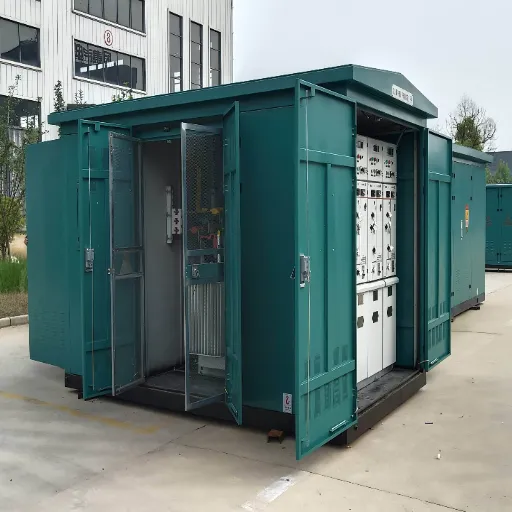
Even though compact substations arrive factory-tested, proper site preparation and ongoing maintenance are essential for long-term reliability.
Site Preparation
- Foundation: A level concrete pad or steel frame serves as adequate support for construction needs. No extensive civil works are required.
- Clearance: The maintenance area should maintain the access space that manufacturers specify for cable entry, ventilation, and equipment maintenance.
- Drainage: The system must prevent water from pooling around the enclosure and entering it during heavy rainfall.
- Cable routing: The installation team needs to establish MV and LV cable trenches before the unit delivery to decrease installation duration.
Factory Acceptance Testing
Before shipment, reputable manufacturers perform factory acceptance testing (FAT). This includes:
- Insulation resistance testing
- Dielectric withstand tests
- Protection relay verification
- Transformer ratio and polarity checks
- Thermal imaging and functional checks
Requesting a witness FAT or reviewing the test report adds confidence that the unit will perform correctly on-site.
Maintenance Intervals
- Visual inspection: Monthly inspections check for enclosure damage, corrosion, and ventilation blockages in the system
- Thermographic survey: The survey is conducted every 6-12 months to detect unusual temperature rises at connection points
- Oil testing (for oil-immersed units): The testing process occurs annually to assess moisture content, acidity levels, and dielectric strength
- Protection system testing: The tests occur every 1-2 years to check relay calibration and breaker functionality
Modern compact substations with digital monitoring capabilities can extend maintenance intervals by providing real-time alerts on temperature, load, and fault conditions.
Market Trends and Future Outlook
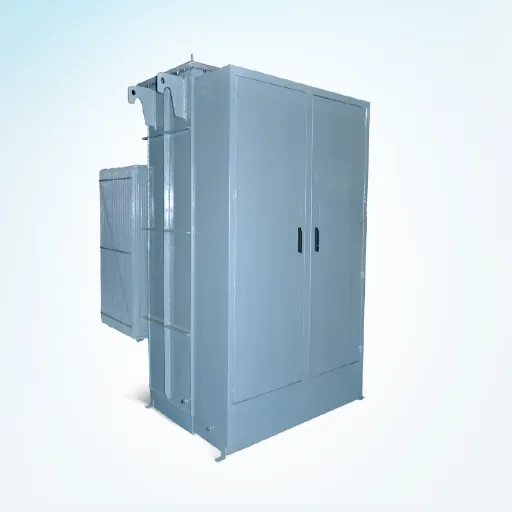
The compact substation market is experiencing strong growth driven by urbanization, renewable energy expansion, and grid modernization initiatives worldwide.
Market Size and Growth
According to Archive Market Research, the global compact substation market was valued at approximately USD 10.68 billion in 2022 and is projected to grow at a compound annual growth rate (CAGR) of 11.93% to 13.5% through 2033. According to Intel Market Research, the prefabricated box substation segment will increase its value from USD 2.02 billion in 2026 to USD 3.47 billion by 2034.
Smart Grid and Digitalization
Compact substations have developed from their original function as passive infrastructure to become active intelligent grid nodes. The system achieves faster development through the installation of IoT sensors, remote monitoring platforms and predictive maintenance algorithms. Industry analysts at Fortune Business Insights estimate that smart substation solutions could represent over 30% of total market value within the next five years. The digital capabilities of the system allow users to decrease unplanned outages by 30% while managing their loads in real time.
Sustainability and Eco-Friendly Materials
Substation designs have now been influenced significantly by environmental regulations. Some important new trends developing in substation designs include:
- SF₆ phase-down: The fact that European markets are gradually adopting gas-free equipment has become a very aggressive trend.
- Alternative insulating liquids: Natural-ester and dry-type transformers are gaining increased market shares.
- Lightweight composite enclosures: They replace conventional metallic shells and reduce weight, corrosion, and environmental burden.
Regional Dynamics
- Asia-Pacific nations experienced growth due to an increase in demand from countries like China, India, Indonesia, and Vietnam, with urban construction and the implementation of smart city projects.
- North America is engaged in infrastructure renewals for the purpose of replacing inefficient and destructive aged infrastructure and for decreased wildfire vulnerability risks.
- Europe has a strict stance on matters of decarbonization, SF₆ reduction, and reinforcement of the grid.
- Middle East and Africa have increased investments in electrification programs in Saudi Arabia, the UAE, Turkey, and South Africa.
Selecting a Compact Substation Manufacturer
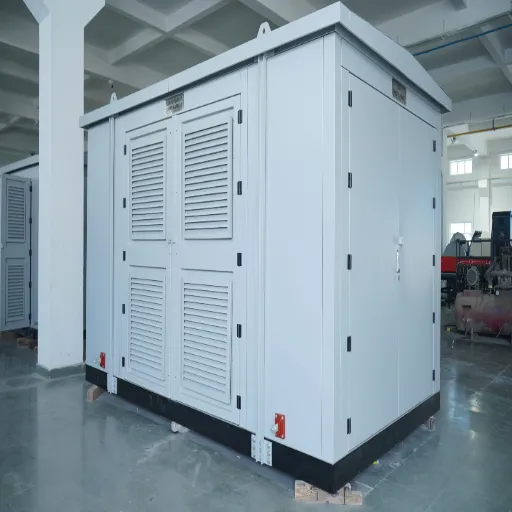
Choosing the right manufacturer is as important as selecting the right specifications. Here are the key criteria to evaluate.
Design and Customization Capabilities
Every venture demands unique voltage, capacity, and environmental requirements, and thus must be handled by a manufacturer that can provide:
- Flexible configurations up to both voltage and capacity
- Tailored enclosures in locations with hard space constraints or harsh surroundings
- Offering integrated components such as capacitor banks, metering, and SCADA interfaces optional.
Quality Assurance and Testing
Distinguish the real manufacturers from those who assemble by doing factory checks. Below are the tests to be performed on supply orders:
- Documentation for full factory acceptance testing test report
- Insulation and dielectric test on every piece
- Transformer ratio, polarity, and no-load loss testing
Export Experience and Multi-Standard Compliance
For international projects, manufacturers with global export experience understand:
- Regional certification requirements (IEC, IEEE, UL, local standards)
- Packaging and logistics for long-distance transport
- Voltage and frequency adaptations for different grid codes
Chinese manufacturers such as Shandong Electric offer competitive advantages in this area: in-house transformer production, rapid customization, cost-effective pricing, and extensive experience supplying projects across Asia, Africa, the Middle East, and the Americas.
Conclusion
The construction of compact substations has revolutionized the method of designing, constructing, and erecting the infrastructure of electricity distribution. They solve limited space, limited time, and high installation costs issues by putting three fundamental elements, i.e., power transformers at medium voltage supplying racks, the low-voltage distribution, and other related constituents in an enclosure.
The key takeaways from this guide are:
- Compact substations actually cover a space of 40 percent to 80 percent smaller compared to the conventional ones, making them the ultimate choice in urban and spatially confined environments.
- From month-long installations, they have reduced the time to only weeks, or for the lowest project overhead and the quickest startup of projects.
- With enhanced efficiency rates now reaching up to 99 percent, modern designs make it possible to achieve measurable reductions in operating losses.
- Everything from residential to commercial, industrial, renewable, and EV charging infrastructure markets is supposed to experience high growth.
- Compliance with standards like IEC 62271-202, IEC 60076, IEEE, and UL ensures safety, reliability, and global market acceptance.
By whatever prism, whether it involves a commercial development or an industrial facility or the integration of renewable energy, well-specified design compact substations can improve reliability, lower a customer’s total cost of ownership, and configure faster power connections.
If you have actually been considering compact substation options for a project, you may look into Shandong Electric. Our firm designs and manufactures compact substations that can be customized to your voltages, capacity, and environmental conditions. Meaning that every piece is factory-tested according to international standards, with all- around technical support.
Request a customized compact substation quote today and discover how factory-integrated power distribution can accelerate your next project.