
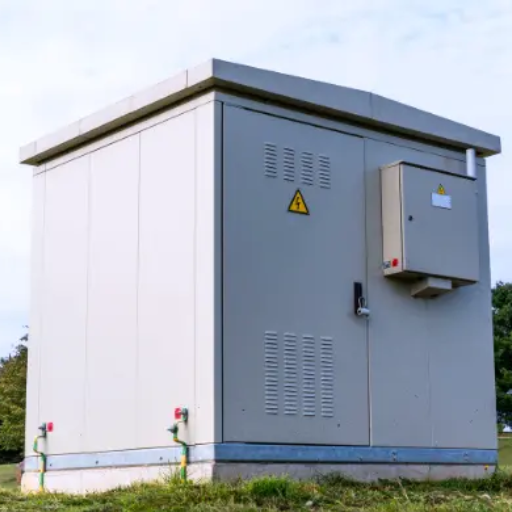
Compact Substation: Design, Selection, and Procurement Guide

A compact substation is not in itself a normal large-scale power plant; it is a kind of substation that is pre-built in a factory and can be set on a skid or inside a container. These compact subs have on them a transformer, switch-gear, and protection gear, while grounding and connection accessories are provided, and all such apparatus inch-packed into sealed rooms. These sorts of substations are majorly used when projects face slot constraint issues like being situated close to the town center of urban sites, or where installation locations are not pre-planned and work has to start immediately.
Non-availability of a substation alone might trickle down the construction delays for another couple of weeks or worse, translate into a profitable loss for another couple of months starting from construction days. Traditional outdoor substations take months in terms of civil work, foundation, fencing, and then assembly of equipment from a whole lot of contractors. In many a case, this conventional system is out of the question when the project faces a slight grid-connection deadline or finding any space to work may be an EASTLEEK affair for multiple reasons.
This very unique guide provides a how-to for the specification, design, and supply of compact substations to all global applications, including knowledge of the differences between the concrete kiosk, metal enclosure, containerized, and skid-mounted designs and their applications; reasons for specifying rating capacity; and reason must these be categorized renewable, urban, and industrial. The role of standards, transport logistics, and site preparation in ensuring the success of a compact substation project is crucial for any point.
Key Takeaways
- Compact substations integrate transformers, switchgear, and protection into a single factory-tested enclosure, cutting installation time from months to days.
- Three main construction types exist: concrete kiosk (outdoor, permanent), metal enclosure (urban, indoor/outdoor), and containerized (transportable, renewable).
- IEC 62271-202 and IEEE C37.20.3 govern compact substation design, with IP ratings from IP23D to IP54 depending on environment.
- A 2 MVA compact substation for a solar farm typically costs 15 to 25% less in total project cost than a traditional substation when civil works are included.
- A practical procurement checklist covers 12 items from kVA and voltage class to transport dimensions and foundation requirements.
What Is a Compact Substation?
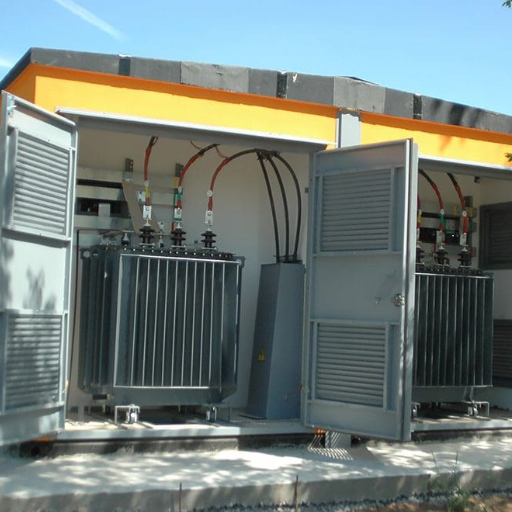
Definition and Core Components
These three substation elements, found in a distribution-network substation, form a compact substation into an out-of-factory assembled unit. High voltage switchgear is at the starting point of the utility or the generation source while the transformers switch the voltages up or down to match the distributed network. Low voltage switchgear serves and distributes loads or feeders.
All three sections share a common enclosure. The enclosure provides weather protection, security, and internal arc containment. Factory wiring, buswork, and interconnection are completed before shipment. On arrival, the installer connects incoming and outgoing cables, pours a simple foundation if required, and energizes.
How Compact Substations Differ from Traditional Substations
Traditional substations are built on site. The transformer arrives from one supplier. Switchgear arrives from another. Civil contractors pour foundations and build walls or fences. Electrical contractors install cable trenches, buswork, and control wiring. The process involves multiple trades, sequential dependencies, and weather exposure.
Compact substations reverse this model. The entire assembly is built and tested in a factory under controlled conditions. Delivery is a single event. Installation is connection and commissioning, not construction.
| Factor | Compact Substation | Traditional Substation |
|---|---|---|
| Installation time | Days to 2 weeks | 2 to 6 months |
| Footprint | 60 to 150 sqm | 200 to 500+ sqm |
| Civil works | Minimal foundation only | Extensive: walls, fencing, trenches |
| Factory testing | Complete FAT before shipment | Limited to component-level testing |
| Weather exposure during construction | None | Significant |
| Transport | Single unit, single shipment | Multiple deliveries, coordination |
| Total project cost (including civil) | 15 to 25% lower | Baseline |
Key Advantages: Speed, Space, and Cost
Speed matters for grid connection deadlines. Space matters for urban upgrades. Cost matters for project budgets. Compact substations deliver on all three dimensions.
When Maria Gonzalez, the project manager for a large 50 MW solar farm located up in the north of Chile, was looking at a six-month-long construction window before grid connection deadline, she quickly realized that setting up a traditional open-air substation was out of the question: the site lay over 200 kilometers far from the closest city, and finding local civil contractors was a day job. A traditional substation would have caught a month of civil works alone anyway.
Her team eliminated on-site installation time of only 12 days by installing a containerized compact substation. The unit for that had delivered by truck to the site pre-wired and factory-tested. Local labor simply had to pour a concrete pad, position the container atop, and connect high- and low-voltage cables-providing enough time to commission. Two weeks ahead of schedule, the project connected to the grid and started earning early generation revenue valued at about $180,000.
Want to understand which transformer type fits your compact substation design? Review our dry type transformer guide for indoor applications, or our oil immersed transformer guide for outdoor units.
Types of Compact Substations
Concrete Kiosk Substations (Outdoor, Permanent)
Kiosk substations in concrete use reinforced concrete chambers tailored for outdoor operation. Concrete provides structural strength, thermal mass, and excellent weather and damage protection. These are the units mostly implemented in European utility grids and urban distribution systems, where relatively permanent and maintenance-less installations are demanded.
The concrete enclosure is cast in a factory, not poured on site. This ensures consistent quality and reduces curing time. Kiosk substations typically house oil immersed transformers because the concrete enclosure provides sufficient fire separation and oil containment. Ventilation is passive through louvered openings.
Metal Enclosure Substations (Urban, Indoor/Outdoor)
Metal enclosure substations use painted or hot-dip galvanized steel housings. They are lighter than concrete kiosks and easier to transport. Metal enclosures are common in urban retrofit projects, commercial buildings, and industrial facilities where space is limited and crane access is restricted.
The enclosure can be designed for indoor or outdoor installation. Indoor units often use dry type transformers to eliminate fire risk. Outdoor units use oil immersed transformers with integrated oil containment. Metal enclosures can be equipped with forced ventilation, lighting, and access platforms.
Containerized Substations (Transportable, Renewable)
Containerized substations use modified ISO shipping containers as the enclosure. The container provides a rugged, standardized structure that can be transported by road, rail, or sea without special handling. This design dominates renewable energy projects because it simplifies logistics to remote sites.
Containers are typically 20-foot or 40-foot ISO standard sizes. The container walls are reinforced and fitted with HV and LV cable entry points, ventilation, and access doors. Internal layout is optimized for maintenance access. Containerized substations can be relocated if the project moves, making them suitable for temporary mining or construction applications.
Skid-Mounted Substations (Industrial, Mobile)
Skid substation features do not have an enclosure, but the utility equipment is monted on a structural steel skid or frame. Lifting lugs are welded to the skid to permit for placement under crane lifting and to provide the necessary structural integrity under skid-framing conditions. Heavy-duty electrical systems geared for operations rise and fall. A skid-mount design is employed in the mining, oil and gas sectors, or where a substation might need to be relocated with the ups and downs of operations.
Protection against weather can be either in the form of temporary protection or by the placing of shelter over the top of the skid inside some structure. They are most conducive to fast installation due to the absence of enclosure assembly. But protection and safety are compromised vis-a-vis kiosk or container designs.
Applications and Use Cases
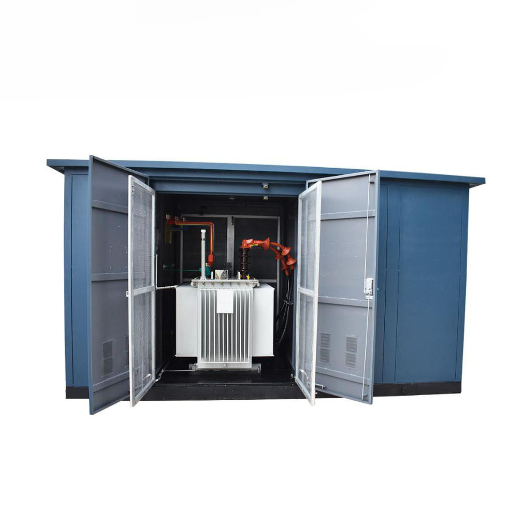
Renewable Energy Projects
Solar and wind farms require step-up substations to connect generation voltage to the transmission grid. These projects are often in remote locations with limited infrastructure. Containerized compact substations are the standard solution because they arrive pre-tested and require minimal civil work.
A typical solar farm substation steps voltage from 33 kV collector bus to 132 kV or higher for grid injection. The compact substation includes the step up transformer, HV circuit breaker, and metering in one container. Factory acceptance testing verifies performance before shipment, reducing commissioning risk at the remote site.
Urban Distribution and Infrastructure Upgrades
City centers face two constraints: no available land and strict noise and aesthetic requirements. Compact substations fit into existing utility yards, parking structures, or building basements where traditional substations would be impossible.
When an urban utility in Lagos, Nigeria, needed to upgrade a 33/11 kV distribution substation in a densely populated neighborhood, space was the primary obstacle. The existing open-air substation occupied 400 square meters and required security fencing that encroached on adjacent commercial property. A metal-enclosure compact substation reduced the footprint to 60 square meters. The unit was installed on the existing concrete pad without expanding the perimeter. The upgrade was completed in 10 days with minimal disruption to surrounding businesses.
Mining and Remote Industrial Sites
Mining operations move as ore bodies are exhausted. Fixed substations become stranded assets. Skid-mounted and containerized compact substations allow electrical infrastructure to move with the operation. The rugged construction handles dust, vibration, and temperature extremes better than site-built alternatives.
Temporary Power and Emergency Backup
Events, construction sites, and disaster recovery operations need fast, temporary power. Containerized substations can be delivered, connected, and energized within days. After the need ends, the unit is disconnected and moved to the next location. This mobility makes containerized substations a practical alternative to permanent infrastructure for short-term needs.
Compact Substation Design and Sizing
Load Calculation and Transformer Sizing
Transformer sizing starts with an honest load inventory. For a solar farm, this means summing the rated output of all inverters and applying a diversity factor. For an industrial site, it means cataloging all motor, heating, and process loads with their duty cycles.
A standard 25% growth margin should be applied to the calculated load. Solar farms may need additional margin for future panel expansion. Industrial sites should account for seasonal peak loads.
Switchgear Configuration
Compact substation switchgear typically uses ring main units (RMU) for HV incoming and outgoing connections. RMUs provide load-break and fault-make capability in a compact, SF6-insulated package. For higher fault levels or remote operation requirements, vacuum circuit breakers replace the RMU switches.
LV switchgear distributes power to feeders or loads. Molded case circuit breakers or air circuit breakers provide overcurrent protection. The switchgear must be coordinated with the transformer impedance to ensure selective tripping during faults.
Protection and Metering Integration
Protection relays monitor transformer and switchgear conditions. Typical protection functions include overcurrent, earth fault, transformer differential, and Buchholz gas detection for oil immersed units. Relays communicate via standard protocols (IEC 61850, Modbus) to the site SCADA system.
Metering includes HV and LV energy measurement for billing and performance monitoring. Revenue metering accuracy class (typically 0.2S or 0.5S) should be specified based on utility requirements.
Worked Sizing Example — 5 MW Solar Farm
Consider a 5 MW solar farm connecting to a 33 kV distribution network.
Step 1: Calculate inverter output
- 5 MW at 0.8 power factor = 6,250 kVA
Step 2: Apply 25% future growth margin
- 6,250 kVA x 1.25 = 7,812 kVA
Step 3: Select standard transformer rating
- Specify 8,000 kVA, 33/0.4 kV step-up transformer
Step 4: Select HV switchgear
- 36 kV rated RMU with 630 A load-break switches
- Short-circuit withstand: 20 kA / 3 seconds
Step 5: Select LV switchgear
- 0.4 kV switchboard with air circuit breakers
- Rated for 12,000 A busbar capacity
Step 6: Select enclosure type
- 40-foot containerized design for transport to remote site
This configuration provides full capacity for the initial 5 MW installation with room for future expansion.
Future Expansion and Modularity
Some compact substation designs allow modular expansion. Additional containers can be added in parallel to increase capacity. Busbar coupling between containers enables phased growth without replacing the original unit. When specifying a compact substation for a growing project, verify that the design supports parallel operation and future module integration.
Standards and Compliance
IEC 62271-202 — High-Voltage/Low-Voltage Prefabricated Substations
IEC 62271-202 is the international standard governing compact and prefabricated substations. It defines construction requirements, test methods, and performance criteria for factory-built assemblies up to 52 kV. Key requirements include:
- Dielectric withstand testing of the complete assembly
- Temperature rise testing under rated load
- Internal arc classification (IAC) testing for operator safety
- IP code verification for enclosure protection
Compliance with IEC 62271-202 ensures the substation has been tested as a complete system, not just as individual components. Always request the type test report and certificate of compliance.
IEEE C37.20.3 — Metal-Enclosed Switchgear
In North American markets, IEEE C37.20.3 governs metal-enclosed switchgear construction. Compact substations intended for the US or Canadian market must comply with IEEE standards for switchgear ratings, busbar bracing, and accessibility. ANSI C37.57 provides additional testing requirements for switchgear assemblies.
IP Ratings and Environmental Protection
The IP code (IEC 60529) defines the degree of protection provided by the enclosure against solids and liquids. Common ratings for compact substations include:
- IP23D: Protected against solids larger than 12 mm and rain. Suitable for sheltered outdoor locations.
- IP44: Protected against solids larger than 1 mm and water splashing. Suitable for general outdoor use.
- IP54: Dust protected and water splashing protected. Suitable for harsh environments.
The appropriate IP rating depends on the installation environment. Desert solar farms need dust protection. Tropical sites need heavy rain protection. Coastal sites need corrosion-resistant materials in addition to IP rating.
Fire Safety and Internal Arc Classification
Internal arc classification (IAC) per IEC 62271-202 defines how the enclosure contains an internal electrical fault. IAC categories specify whether the fault is contained from the front, sides, or rear of the unit. For personnel safety, specify IAC AFLR (access from front, sides, and rear) for any substation installed in an accessible area.
Fire separation between transformer and switchgear compartments prevents a transformer oil fire from spreading to energized switchgear. Concrete kiosks provide natural fire separation. Metal and container enclosures require internal fire-rated barriers.
Civil Works, Transport, and Installation
Foundation Design and Load Requirements
Compact substations must, even if minimally, always be placed on a foundation. The foundation should accommodate the load of the unit together with oil in the transformer, typically weighing 15 to 25 metric tons (33,069 to 55,116 lb) for a 2 MVA container substation. The foundation should also be designed to resist the wind and seismic forces.
At most cases, all that a containerized unit requires is an uncomplicated concrete slab foundation supplied anyhow. Skid-mounted equipment must at least be bolted to the concrete foundation or leveled supports or piers. The structural engineer should issue an initial site endorsement and develop a concept design for the footing, which is considered in view of pertinent local geotechnical conditions and earthquake requirements.
Transport Dimensions and Logistics
Containerized substations use standard ISO container dimensions. A 40-foot container is approximately 12.2 meters long, 2.44 meters wide, and 2.59 meters high. Weight typically ranges from 15 to 35 metric tons depending on transformer capacity.
Standard container dimensions allow transport by flatbed truck, rail car, or container ship. No special permits are required for width or height in most jurisdictions. However, weight limits vary by road and bridge. Always verify route-specific weight restrictions before shipment.
When a copper mining project in Mongolia ordered two containerized compact substations for a remote processing plant, the supplier specified standard 40-foot container dimensions without verifying the mountain access road. When the trucks arrived, one container was 15 centimeters too wide for a narrow bridge on the final 40-kilometer stretch. The $12,000 cost to reinforce the bridge and escort the load was avoidable. Transport dimension verification should be step one in procurement, not an afterthought.
Site Access and Crane Requirements
Compact substations require crane access for placement. A mobile crane with sufficient reach and capacity is needed to lift the unit from the transport truck to the foundation. For containerized units, the crane must handle the full container weight at the required radius.
Site access roads must support the transport truck and crane. Soft ground, steep grades, or tight turns can prevent delivery. A site survey before procurement identifies access constraints and allows the design to be adjusted if necessary.
Ventilation, Temperature, and Altitude Derating
Transformers and switchgear always generate heat. The ratings must be maintained within to keep this inside temperature limits of their enclosures. Most applications only use gravitational-style venting with louvered openings. Forced air ventilation with a thermostatically controlled fan must be readily available for particularly hot ambient temperatures, or installations with extremely high component densities.
Altitude derating is necessary for sites more than 1,000 meters in elevation. As anyone would expect, air density changes at high altitude, so the cooling efficiency is widely reduced on both the transformer and switch-body. IEC 60076-2 lists de-ration factors. At 2,000 meters, some transformers may require an overrating of about 10-15% to run at full capacity.
Ready to validate your compact substation design and logistics plan? Send your site conditions, load profile, and transport constraints to our engineering team for a detailed specification review.
Compact Substation Procurement Checklist
Use this checklist when requesting quotations or evaluating supplier proposals:
- Transformer kVA Rating: Confirm total load plus 25% growth margin
- Voltage Configuration: Primary and secondary voltages, including tap changer range
- Switchgear Type: RMU, circuit breaker, or hybrid; short-circuit rating
- Enclosure Type: Concrete kiosk, metal enclosure, containerized, or skid-mounted
- IP Rating: Minimum protection level for installation environment
- Standards Compliance: IEC 62271-202, IEEE C37.20.3, or local equivalent
- Internal Arc Classification: IAC category for personnel safety
- Transport Dimensions and Weight: Verify road, bridge, and crane capacity
- Foundation Requirements: Load, anchoring, and seismic specifications
- Ventilation and Cooling: Passive or forced; ambient temperature limits
- Factory Acceptance Testing: Routine tests, type tests, and witness test options
- Delivery Schedule and Site Support: Aligned with construction timeline; installation supervision availability
A thorough checklist forces suppliers to confirm each requirement in writing. For international projects, the checklist also becomes the basis for customs documentation, insurance, and project financing.
Conclusion
A prefabricated substation is not a smaller version of a conventional substation but an altogether different concept for a substation delivery; it addresses months of on-site construction in favor of days of connection and commissioning. Measurable advantages are related to its smaller size, lower total project cost, quick connection to the grid, and tested reliability.
The right approach combines load analysis based on facts, select enclosure types based on the competitive environment and transport constraints, and ensure that compliance is validated against either IEC 62271-202 or IEEE C37.20. 3, as well as type testing; ensure that transport dimensions conform with the route constraints and confirm that a procurement checklist for all proposals is in full compliance with every requirement.
If you are planning a renewable energy project, an urban distribution upgrade, or a remote industrial installation, send your site conditions and load profile to our engineering team. We will review your specifications, recommend the most practical compact substation configuration, and provide a detailed quotation with delivery schedule.