
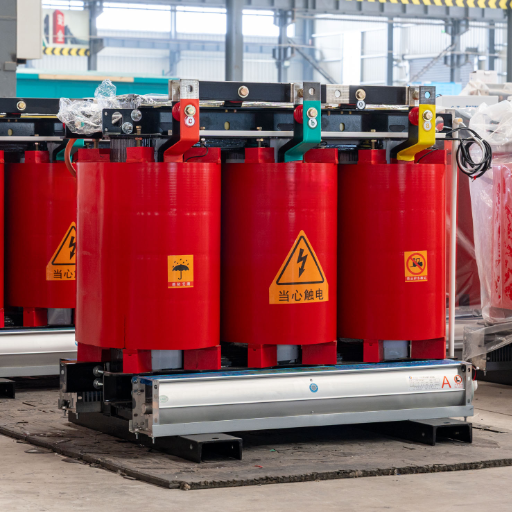
Low Loss Dry Type Transformer: Are They Worth It?

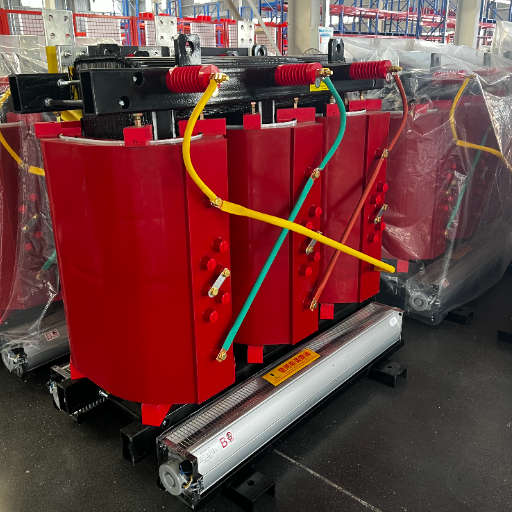
A low-loss dry-type transformer is a dry-type unit designed to reduce no-load (core) loss and load (copper) loss below standard levels, usually through higher-grade core steel or increased conductor cross-section. Whether it is worth the premium depends entirely on your load profile and your electricity tariff. On a base-loaded commercial building it can pay back in under seven years. On a lightly loaded standby unit in a low-tariff region, it may never pay back at all.
That answer is less satisfying than “always buy low loss.” It is also correct. This guide gives you the math to decide for yourself.
Here is the fact that drives everything else. A transformer sitting in a building that closed for the night is still using power. No-load loss does not stop when the lights go off. It runs 8,760 hours a year, every year, for the life of the unit.
Most buyers compare transformer prices at the quotation stage and never look at that number again. Over two decades, it can outweigh the purchase price difference several times over.
You already know efficiency matters. What you probably want is a way to justify the spend to finance. This article covers the two loss components, the core materials that reduce them, the standards that set minimums, a worked payback model, and the situations where low loss is genuinely not worth it.
Key Takeaways
- No-load loss runs 8,760 hours a year regardless of whether the facility is operating, which is why it dominates lifetime cost on lightly loaded units.
- Load loss varies with the square of the load, so a transformer at 40% average load produces only about 16% of its rated load loss.
- Efficiency standards such as DOE 2016 and EU Ecodesign Tier 2 set a floor, not a target. Exceeding them is an economic decision.
- A worked example shows payback of roughly 7 years at a 40% load factor, extending to about 18 years at a 15% load factor on a lower tariff.
- Low loss is not automatically worth it. Run the numbers for your duty cycle before paying a premium.
What Makes a Dry Type Transformer “Low Loss”?
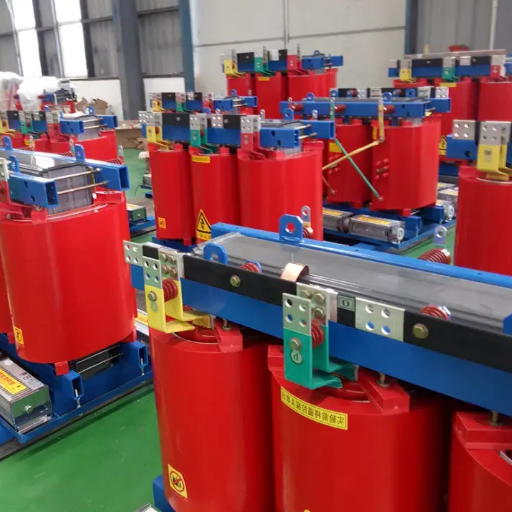
“Low loss” is a design description, not a certification. It means the manufacturer has reduced one or both loss components relative to a standard unit of the same rating.
The Two Loss Components
Transformer losses split into two categories, and they behave completely differently.
No-load loss (also called core loss or iron loss) comes from magnetising the core. It is present the moment the transformer is energised, whether or not any load is connected. It comes from hysteresis and eddy currents in the core steel, and it is essentially constant.
Load loss (also called copper loss or winding loss) comes from current flowing through the windings. It varies with the square of the load, following the I²R relationship. At half load, load loss is roughly a quarter of its full-load value.
Design Choices That Reduce Each
Because the two losses have different causes, they need different design responses.
- To cut no-load loss: use higher-grade cold-rolled grain-oriented (CRGO) steel, use amorphous metal cores, or reduce flux density by increasing core cross-section.
- To cut load loss: increase conductor cross-section, use lower-resistivity conductor material, or improve winding geometry.
A supplier can reduce one without the other. That is the trap. “Low loss” on a datasheet is meaningless until you see the split.
Related: For the design fundamentals behind these units, see our three phase dry type transformer guide.
No-Load Loss vs Load Loss: Why the Split Decides Your Payback
This distinction is where most payback calculations go wrong. Buyers compare total losses when they should compare the components against their own duty cycle.
| Loss component | Driven by | When it applies | Dominates when |
|---|---|---|---|
| No-load (core) loss | Core material, flux density | 8,760 hours a year, always | Load factor is low |
| Load (copper) loss | Current, conductor size | Varies with load² | Load factor is high |
Why No-Load Loss Runs 8,760 Hours a Year
A year has 8,760 hours. A commercial office might operate 3,000 of them. A data center runs all 8,760. Either way, the transformer’s no-load loss accrues for the full 8,760.
This is why no-load loss matters so much in buildings with long idle periods. A facility that is empty two-thirds of the time still pays full core loss around the clock.
Why Load Loss Depends on Your Duty Cycle
Load loss tracks the square of the load. The practical consequence surprises people.
At a 40% average load factor, load loss is 0.4² = 16% of its rated value. At 15%, it is 0.15² = 2.25%. A transformer that never approaches full load barely generates load loss at all. In that situation, a low-loss design that improves only the copper losses buys you almost nothing.
The component you need to attack depends on how the transformer actually runs. There is no universal answer.
Core Materials for Low-Loss Dry-Type Transformers
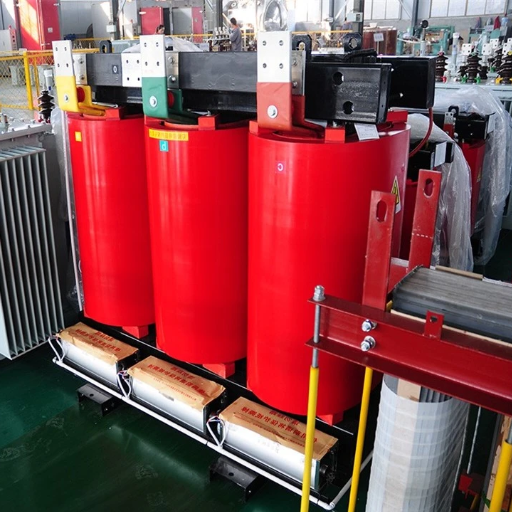
Core material is the main lever for reducing no-load loss, which is the loss that runs continuously.
CRGO Silicon Steel
Cold-rolled grain-oriented silicon steel is the industry baseline for transformer cores. Its grain structure is aligned to the rolling direction to reduce hysteresis loss. Higher grades, and thinner laminations reduce loss further at higher cost.
Most standard dry-type transformers use CRGO. A “low loss” CRGO design simply uses a better grade or more core material.
Amorphous Metal Cores
Amorphous metal cores are formed by rapidly cooling molten alloy so it never develops a crystalline structure. With no grain boundaries, hysteresis loss drops substantially compared with CRGO.
The tradeoffs are real. Amorphous cores cost more, have a lower stacking factor, and require different handling because the material is brittle.
They deliver their strongest advantage where no-load loss dominates. That means long-running, lightly loaded applications.
Cast Resin vs VPI Winding Construction
Winding construction affects load loss and thermal behaviour rather than core loss. Cast resin windings encapsulate the coil in epoxy, giving strong mechanical strength and resistance to moisture. VPI (vacuum pressure impregnated) windings offer good thermal cycling performance and are often more economical at larger ratings.
Both can be built to low-loss specifications. The choice is driven by environment and fault-current requirements, not by loss performance alone.
A specification engineer named Elena learned the difference on a hospital expansion in 2025. Her team had standardised on cast resin across the site, then found that the long-running imaging wing was the one place where a low-loss core specification delivered a clear return. The other buildings were lightly loaded and did not justify the premium. One specification, applied everywhere, would have been wrong in both directions.
Sizing a low-loss transformer for a specific duty cycle? Send us your load profile and we will model the loss difference for your rating.
Efficiency Standards Set the Floor, Not the Target
Regulation is often mistaken for guidance on efficiency. It is not.
DOE 2016
In the United States, 10 CFR Part 431 sets minimum efficiency requirements for distribution transformers, effective from 2016. A transformer sold in the US must meet these levels.
EU Ecodesign Tier 2
In the European Union, Regulation 548/2014 sets loss limits for transformers placed on the market. Tier 2 limits applied from July 2021 and are stricter than the original Tier 1 levels.
What Compliance Does Not Require
Meeting a standard is the minimum permitted. It is not the best available, and it is not tailored to your load profile.
This matters because a compliant transformer optimised for a duty cycle unlike yours may be the wrong economic choice. A standard can set a floor for the market. Only your own numbers can tell you whether to go above it.
Related: For the broader framework around efficiency and total cost of ownership, see our guide to transformer efficiency.
How to Calculate the Payback on a Low Loss Transformer
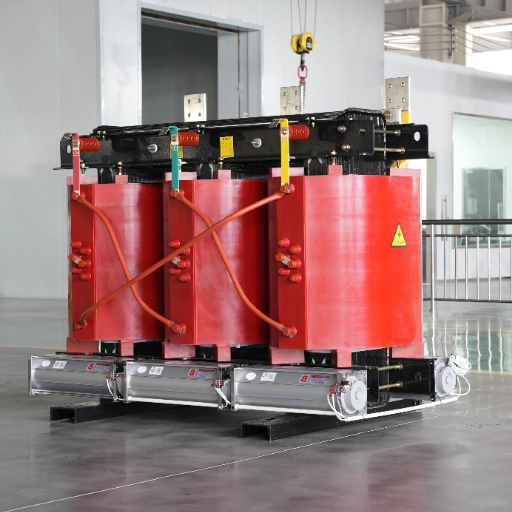
Here is a model you can run with your own figures. The numbers below are illustrative, using representative values for a 1,000 kVA dry type unit. Your actual loss figures must come from the manufacturer’s test report.
Assumptions
- Rating: 1,000 kVA dry type
- Standard unit: 1,700 W no-load loss, 11,000 W load loss at full load
- Low-loss unit: 1,100 W no-load loss, 9,500 W load loss at full load
- Price premium: $6,000
- Electricity tariff: $0.12 per kWh
- Average load factor: 40%
Step 1: Annual Losses, Standard Unit
- No-load: 1,700 W × 8,760 h = 14,892 kWh
- Load: 11,000 W × 0.4² = 1,760 W, then × 8,760 h = 15,418 kWh
- Total: 30,310 kWh per year
Step 2: Annual Losses, Low Loss Unit
- No-load: 1,100 W × 8,760 h = 9,636 kWh
- Load: 9,500 W × 0.4² = 1,520 W, then × 8,760 h = 13,315 kWh
- Total: 22,951 kWh per year
Step 3: Payback
- Annual saving: 30,310 − 22,951 = 7,359 kWh
- Value of saving: 7,359 × 0.12=∗∗0.12=∗∗883 per year**
- Payback: 6,000÷6,000÷883 = about 7 years
Over a 25-year lifespan, these savings equate to approximately 22,000 yuan in electricity costs, while similar products would incur a 6,000 yuan premium. This equipment can recoup its costs several times over.
When Low Loss Is Not Worth the Premium
Now run the same model on a different installation.
Same two transformers. Same 6,000premium.Butthisunitservesastandbybuildingwitha156,000premium.Butthisunitservesastandbybuildingwitha150.06 per kWh tariff.
- Standard unit total: 14,892 + (11,000 × 0.15² × 8,760) = 17,060 kWh
- Low loss unit total: 9,636 + (9,500 × 0.15² × 8,760) = 11,508 kWh
- Annual saving: 5,552 kWh
- Value of saving: 5,552 × 0.06=∗∗0.06=∗∗333 per year**
- Payback: 6,000÷6,000÷333 = about 18 years
Eighteen years. On a transformer with a 20 to 30-year service life, that is a marginal proposition, and it gets worse if the tariff falls or the building’s usage drops.
This is the part most suppliers will not tell you. Low loss is not universally correct.
It is correct when no-load loss dominates and the tariff is high enough to make the saving meaningful.
A procurement manager named Tom ran this model across his portfolio in early 2026 after a vendor quoted amorphous core units for every site. The numbers split cleanly. Base-loaded buildings paid back in five to seven years. Seasonal sites did not come close.
He specified low loss where it earned its place and standard units where it did not. The programme cost fell by roughly a third.
Low Loss Dry Type Transformer Selection Checklist
Use this before requesting quotations.
- Average load factor estimated from metered data, not nameplate
- Duty cycle confirmed: continuous, single shift, or intermittent
- Local electricity tariff established for the operating life
- No-load and load loss values requested separately, not combined
- Loss figures confirmed against a routine test report
- Core material identified: CRGO grade or amorphous
- Payback calculated at your load factor and tariff
- Efficiency standard confirmed for the destination market
- Service life assumption stated for the payback horizon
- Purchase decision documented for finance sign-off
The fourth item is the one most often missed. A supplier who will not separate no-load and load loss is either unable to or unwilling to have the comparison made.
Frequently Asked Questions
What is a low loss dry type transformer?
A low loss dry type transformer is a dry-type unit designed to produce lower no-load and load losses than a standard transformer of the same rating. This is typically achieved through higher-grade core steel, amorphous metal cores, or increased conductor cross-section.
Are low loss transformers worth the extra cost?
It depends on load factor and electricity tariff. A base-loaded unit on a high tariff can repay the premium in under seven years. A lightly loaded unit on a low tariff may take eighteen years or more, which can exceed its economic service life.
What is the difference between no-load loss and load loss?
No-load loss comes from magnetising the core and is present whenever the transformer is energised, running 8,760 hours a year. Load loss comes from current through the windings and varies with the square of the load, so it falls sharply at part load.
Is an amorphous core transformer better than CRGO?
Amorphous core transformers deliver substantially lower no-load loss, which makes them strongest in long-running, lightly loaded applications. They cost more and have a lower stacking factor, so they are not automatically the better choice for a heavily loaded unit.
Do efficiency standards mean I should buy the most efficient transformer available?
No. Standards such as DOE 2016 and EU Ecodesign Tier 2 set a minimum that must be met. Going beyond that minimum is an economic decision that depends on your specific load profile and tariff.
Conclusion
A low-loss dry-type transformer is a good decision when no-load loss dominates your duty cycle and your tariff makes the savings meaningful. It is a poor decision when the unit runs lightly loaded on cheap power and the premium never repays.
The method is straightforward. Get no-load and load loss separately. Estimate your real load factor. Apply your tariff.
Then compare the annual savings against the premium. Fund it on the numbers rather than the sales pitch.
Regulation sets the floor. Your duty cycle sets the target.
Shandong Electric Co., Ltd. manufactures dry-type transformers in standard and low-loss configurations, with separate loss figures declared and confirmed by routine factory test. Send us your load profile, tariff, and rating, and our engineering team will model the loss difference and tell you honestly whether the premium pays back for your application.