

Dry Type Transformer for Hospital Projects: Complete Guide

For a hospital project, a dry-type transformer is the standard indoor choice because it contains no flammable oil, needs almost no maintenance, and meets the fire-safety and code requirements of occupied healthcare buildings. Choosing the right one comes down to sizing, code compliance, noise, and harmonic handling.
Picture this. It is 2:00 a.m. in a surgical wing, and the power flickers for half a second. In a hospital, that flicker is not an inconvenience. It is a life-safety event. The transformer feeding that wing is the quiet piece of infrastructure standing between normal operation and a critical failure. Get the transformer specification wrong, and the risk is not a minor repair. It is a patient outcome.
You already know hospitals cannot afford downtime. This guide will show you exactly how to select a dry type transformer for a hospital project, from code requirements to harmonic loads to noise limits, so you can specify with confidence instead of guesswork.
Key Takeaways
- Dry type transformers are the default for indoor hospital installations because they eliminate flammable oil and cut maintenance.
- Hospital electrical systems follow NFPA 99 and NEC Article 517, which split power into life-safety, critical, and equipment branches.
- Imaging loads (MRI, CT, X-ray) create harmonics that overheat standard transformers, so K-rated units are often required.
- Low-noise cast resin designs protect patient areas, and sizing must account for emergency and backup power branches.
- Always specify kVA, voltage, insulation class, enclosure, and harmonic rating together rather than shopping on kVA alone.
Why Hospitals Use Dry Type Transformers Indoors
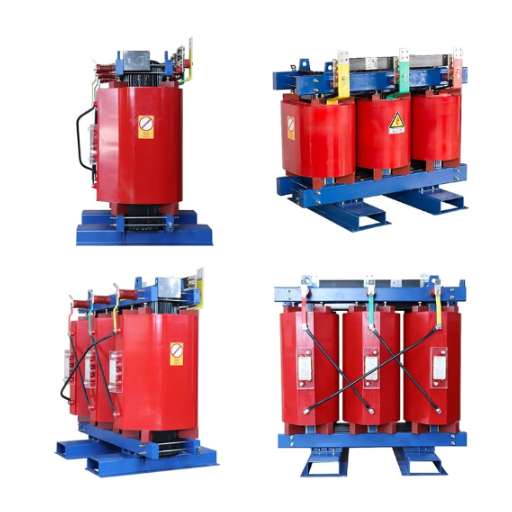
Hospitals place transformers indoors, often on mechanical floors or in dedicated electrical rooms next to occupied areas. That single fact drives most of the specification.
Fire Safety Without Oil
A dry type transformer uses air, epoxy resin, or vacuum pressure impregnation to insulate its windings instead of mineral oil. There is no liquid to ignite, leak, or contaminate. For a building packed with patients, staff, and sensitive equipment, that removes a major fire hazard and the cost of oil containment systems.
This is why healthcare electrical standards treat dry type units as the safe default for indoor medical locations. A fault that might force an oil-filled unit into a costly cleanup becomes a contained, non-flammable event in a cast resin transformer.
Low Maintenance in Occupied Buildings
Oil-filled transformers need oil sampling, leak checks, and breather maintenance. A dry type transformer needs almost none of that. There is no oil to test and no gasket to replace. For a facility team already stretched thin, that means fewer scheduled shutdowns and fewer surprises.
Related: For the engineering fundamentals behind these units, see our three-phase dry type transformer guide.
Dry Type vs. Oil Immersed for Healthcare
The choice between dry type and oil-immersed is the first decision on most hospital projects. Here is how they compare in a healthcare context.
| Factor | Dry Type Transformer | Oil Immersed Transformer |
|---|---|---|
| Fire risk | Low, no flammable liquid | Higher, oil is combustible |
| Maintenance | Minimal | Oil sampling and leak checks |
| Indoor suitability | Excellent | Limited, needs containment |
| Cost per kVA (large) | Higher upfront | Lower upfront |
| Noise | Low with cast resin | Generally lower at large sizes |
| Typical hospital role | Indoor distribution | Outdoor service/substation |
Choose dry type when the unit lives indoors near people. Choose oil-immersed when you are stepping down at the utility service point or an outdoor substation. Many hospitals use both, with a dry type unit indoors and an oil unit at the perimeter. For a deeper comparison, see our oil immersed power transformer guide.
Hospital Code and Standards You Must Meet
Hospital electrical work is regulated more strictly than commercial buildings. Skipping these standards is the fastest way to fail an inspection.
NFPA 99 and NEC Article 517
In the United States, hospital electrical systems are governed by NFPA 99, the Health Care Facilities Code, and Article 517 of the National Electrical Code (NEC). Together they divide a hospital’s power into branches with different levels of protection.
- Life-safety branch powers egress lighting, fire alarms, and emergency systems.
- The critical branch powers patient care areas where loss of power could directly threaten life.
- Equipment branch serves the mechanical and support loads that keep the facility running.
Your transformer must be coordinated with the automatic transfer switches and generators that back these branches. A transformer sized only for normal load may fail when emergency power takes over.
IEC 60076-11 and International Equivalents
For export or international projects, IEC 60076-11 defines the requirements for dry-type power transformers. It covers insulation classes, temperature rise, and testing. Buyers in the Middle East, Asia, and Europe commonly reference this standard, so specify it explicitly when your hospital project sits outside North America.
When Marco, an MEP engineer in Singapore, specified transformers for a 300-bed hospital expansion, the project required both IEC 60076-11 compliance and a specific dB noise ceiling. The winning bid was not the cheapest kVA rating. It was the unit that met both the standard and the noise spec on paper, with test data to prove it.
Sizing a Dry Transformer for a Hospital Project
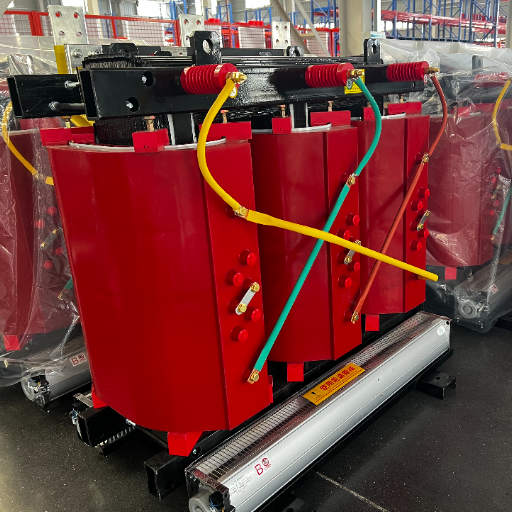
Sizing is where most mistakes happen. A hospital is not a warehouse. Its load is dynamic and critical.
How to Estimate Required kVA
Start with the connected load, then apply a realistic demand factor. Hospitals rarely run every load at full capacity at once, but they do run more than you might expect.
- List each branch: normal, life-safety, critical, equipment.
- Sum the connected kVA for each branch.
- Apply demand factors based on the facility type and local code.
- Add 15 to 25 percent headroom for future expansion.
- Confirm the transformer can carry the emergency load when the generator transfers.
Buying on kVA alone is a shortcut. A transformer that is undersized for harmonic or emergency loading will run hot and fail early, even if the nameplate number looks right.
Accounting for Emergency and Backup Power
Hospital transformers do not just serve normal power. During an outage, the generator picks up the life-safety and critical branches in seconds. Your transformer must handle that stepped load without tripping or overheating. Specify the transformer for the worst-case combined load, not the average day.
Next step: Send your voltage, kVA, and branch loading to our engineers for a sizing check before you commit to a specification.
Handling Harmonics from Hospital Imaging Equipment
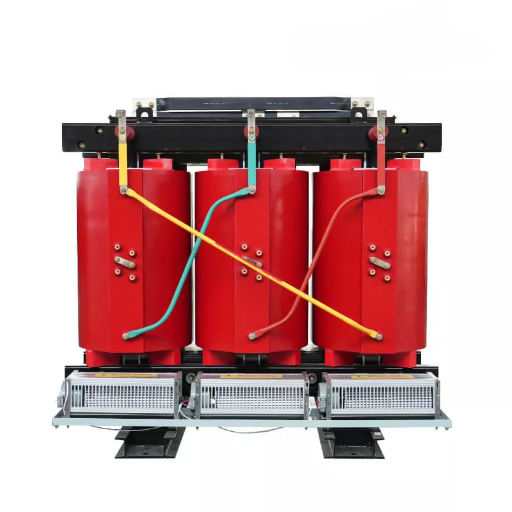
Modern hospitals are full of electronics that distort the power waveform. This is where standard transformers quietly fail.
K-Rated Transformers for MRI, CT, and X-Ray
MRI, CT, and X-ray machines, along with UPS systems and variable frequency drives, generate harmonic currents. These harmonics cause extra heating in transformer windings that a standard unit is not designed to handle.
A K-rated transformer is built with a reinforced neutral and core to tolerate these currents. K-4 is common for light electronic loads. K-13 is typical for imaging-heavy environments. If your hospital has a dedicated imaging wing, specify the K-factor from the start rather than discovering the problem after overheating begins.
Why Electronic Loads Matter to Transformer Life
When Priya, a facilities manager, took over a radiology department, she noticed the existing transformer ran hot and buzzed under load. The unit had been sized correctly for kVA but never rated for the harmonic content of two new CT scanners. Replacing it with a K-rated cast resin transformer brought the temperature down and ended the audible hum. The original “correct” transformer was simply the wrong type.
Low-Noise and Indoor Installation Requirements
Noise is a specification detail that gets skipped until it becomes a complaint. In a hospital, it becomes a complaint fast.
Noise Targets for Patient Areas
Transformer hum comes from core vibration. In patient rooms, corridors, and treatment areas, that hum is unacceptable. Cast resin dry type transformers are naturally quieter than some alternatives, but you should still set a numeric target.
Specify a maximum sound level in dB(A) at a defined distance, typically 1 meter, and ask for a factory test report. A quiet transformer placed in the right room with proper isolation pads solves most complaints before they start.
Ventilation, Clearance, and Enclosure Selection
Dry-type transformers reject heat into the room around them. They need airflow. Provide adequate clearance on all sides, plan for natural or forced ventilation in the electrical room, and select an enclosure rating that matches the environment. Indoor units usually need a ventilated enclosure, while a dust-heavy or washdown area may need a sealed, higher-rated enclosure.
Related: Lower operating temperature also means lower losses over 20-plus years. See our transformer efficiency guide for the total-cost-of-ownership math.
Hospital Transformer Selection Checklist
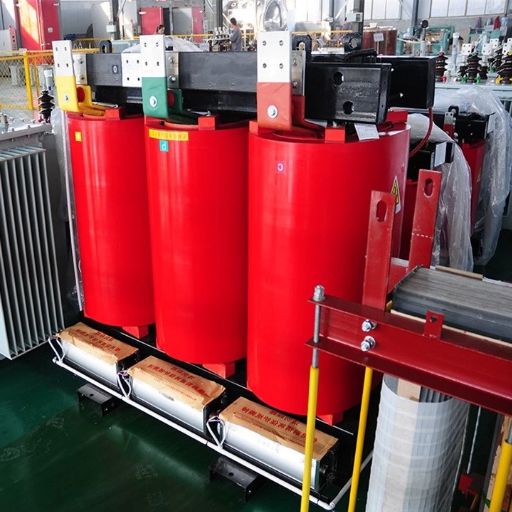
Use this checklist before you request a quotation. It covers the items that most often get missed.
- Confirmed voltage ratio and frequency for your region
- Required kVA with branch loading and demand factors
- K-factor rating for imaging and electronic loads
- Insulation class and temperature rise (commonly Class F or H)
- Noise limit in dB(A) with a defined measurement distance
- Enclosure and IP or NEMA rating for the electrical room
- Compliance standard: NFPA 99 / NEC 517 or IEC 60076-11
- Emergency and generator load coordination
- Future expansion headroom of 15 to 25 percent
- Factory test data for losses, temperature, and noise
Running through this list once will save more time than any amount of rework later.
Frequently Asked Questions About Hospital Dry Type Transformers
Why are dry type transformers used in hospitals?
Dry type transformers are used in hospitals because they contain no flammable oil, require minimal maintenance, and are safe for indoor installation near patients and staff. Their fire-safety profile and low maintenance make them the default for occupied healthcare buildings.
What size dry type transformer does a hospital need?
The size depends on the connected load, demand factors, and emergency branch requirements, not just a single number. Most hospital transformers are sized by summing branch loads, applying demand factors, and adding 15 to 25 percent for future growth.
Do hospitals need a K-rated transformer?
Hospitals with MRI, CT, X-ray, UPS, or variable frequency drives usually need a K-rated transformer to handle the harmonic heating those loads create. A K-13 rating is common for imaging-heavy environments.
Is a dry type transformer better than oil filled for indoor use?
For indoor use, yes. Dry-type transformers avoid the fire risk, oil containment, and maintenance that come with oil-filled units. Oil-filled transformers remain a good choice for outdoor service points and substations.
Conclusion
A dry type transformer for a hospital project is not a commodity purchase. The right unit balances fire safety, code compliance, harmonic tolerance, noise, and future capacity. Skip any one of these, and you trade a small upfront saving for a critical infrastructure risk.
The path is straightforward: confirm your branches and kVA, specify K-factor and noise, pick the right insulation class and enclosure, and verify compliance with NFPA 99, NEC Article 517, or IEC 60076-11. Then back the whole specification with factory test data.
Shandong Electric Co., Ltd. engineers dry type transformers for hospitals, data centers, and other critical facilities worldwide. Send us your voltage, kVA, harmonic load profile, and noise requirements, and we will recommend a unit built to your exact specification.